Chess Elo is a number that estimates your playing strength relative to the other players in the same rating pool. You gain points for beating stronger opponents and lose more for losing to weaker ones. A 400-point gap means the higher-rated player is expected to score about ten times as often.
Two things follow, and almost every argument about ratings ignores one of them. A rating is relative, so it only means something inside its own pool. And it is an estimate, a prediction about your next game rather than a measurement of your soul.
Elo is a surname, not an acronym
There is no full form. The system is named after Arpad Elo, a Hungarian-American physics professor and strong amateur player who built it for the United States Chess Federation. The USCF adopted it in 1960, replacing the older Harkness system, and FIDE adopted it internationally in 1970. So it is Elo, not ELO.
Elo's original model used a normal distribution of playing strength. The version everyone uses now is the logistic one, mathematically the Bradley-Terry model statisticians use for any paired comparison. That is why the same maths turns up rating football teams, Scrabble players and, more recently, language models on public leaderboards.
The formula, in the one line you need
Your expected score against an opponent is:
E = 1 / (1 + 10^((their rating − your rating) / 400))
The 400 in the denominator is the whole design. It is the scaling constant Elo chose, and it fixes what a rating gap means:
| Rating gap | Stronger player's expected score | In plain terms |
|---|---|---|
| 0 points | 50% | A coin flip, as far as the system knows |
| 100 points | 64% | Favoured, but losing is completely normal |
| 200 points | 76% | Roughly three wins in four |
| 400 points | 91% | About ten to one |
| 800 points | 99% | The upset is the story |
After the game, the update is new rating = old rating + K × (what you scored − what you were expected to score). Beat someone 300 points above you and you were expected to score 0.15, so you collect on 0.85 of a point. Lose to someone 300 below and you drop by nearly the full K.
This is why farming weaker opponents does not work. Against a player 400 points below you, a win is worth about a tenth of K and a loss costs nine tenths of it.
The K-factor sets how fast the number moves
K is the volatility dial. FIDE uses K = 40 for players new to the rating list until they have completed 30 games, and for juniors while they stay under 2300; K = 20 for most established players; and K = 10 once a player reaches 2400, so elite ratings move slowly.
Online, neither big site uses plain Elo. Both use descendants of the Glicko system created by Mark Glickman, which replaces the fixed K with a rating deviation: a running measure of how unsure the system is about you. A brand-new account has a huge deviation and swings hundreds of points in a session. A veteran account with thousands of games has a small one and barely moves. Lichess states this outright: ratings there are Glicko-2, and new players start at 1500 with a deviation of 1000, shown with a ? until it settles.
Why your Chess.com and Lichess ratings disagree
This is the single most common rating question, and the answer is not that one site is "inflated" out of malice. Four separate mechanisms push the numbers apart.
They start you in different places. Lichess puts every new account at 1500 and lets it fall or climb. Chess.com asks about your experience at signup and seeds you from the answer, typically much lower for a self-described beginner. Where the pool is anchored determines where everyone in it ends up sitting.
They are different pools. A rating is a position in a queue, and the two queues hold different people. Neither system knows the other exists.
They slice time controls differently. The boundary between blitz and rapid is not drawn at the same place on both sites, so even your "rapid" ratings are not computed from the same kind of game.
Pools drift. Ratings inflate or deflate depending on how points enter and leave the system, and the two pools have drifted independently for over a decade.
The practical consequence is that the gap is real, it is consistently in one direction, and it is not a measure of anything about you. The Lichess FAQ is blunt about it: "It is best not to think of ratings as absolute numbers, or compare them against other organisations." If you want the rest of the differences between the two sites, Chess.com vs Lichess covers them.
The same warning applies to FIDE. An over-the-board FIDE rating comes from a small pool of people who chose to enter tournaments, so it is not comparable to an online rating from a pool containing everyone who downloaded an app. USCF ratings are a third scale again.
What the distribution actually looks like
Lichess publishes a live rating distribution for every time control, updated weekly. On 9 August 2026 the rapid distribution page reported 466,219 rated rapid players for that week, and the blitz page reported 656,433.
We are deliberately not printing you a percentile table here. A distribution figure is only meaningful with its pool, its time control and its date attached, and every one of those changes weekly. The live page above answers "what percentile am I" better than any static number in an article can, and it will still be right next month.
What is worth saying about the shape is stable. Every online pool has a long low tail, because signing up is free and many accounts are casual or abandoned after a handful of games. That tail drags the median down and makes percentile answers flattering: being "above average" online is a statement about who creates accounts, not about how well you play.
What actually changes from band to band
Rating bands are not arbitrary. Each one has a skill that stops costing you games. These are gates we can describe from the games themselves rather than percentages we cannot source, and the measured version lives on blunder rate by rating.
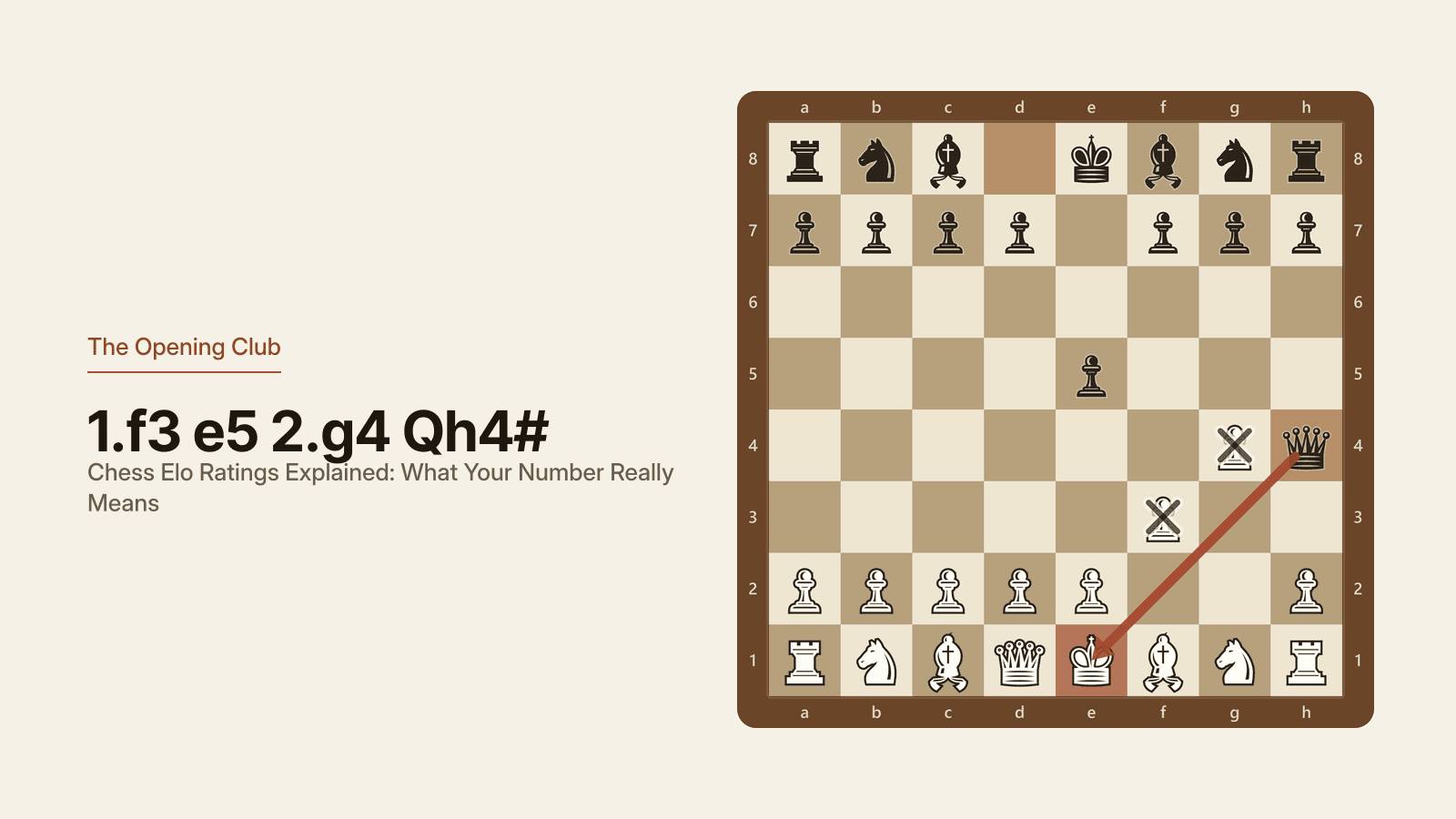
Below about 800, games end because material was left hanging or a very short mate landed. The extreme case is Fool's Mate, which ends the game on move two.
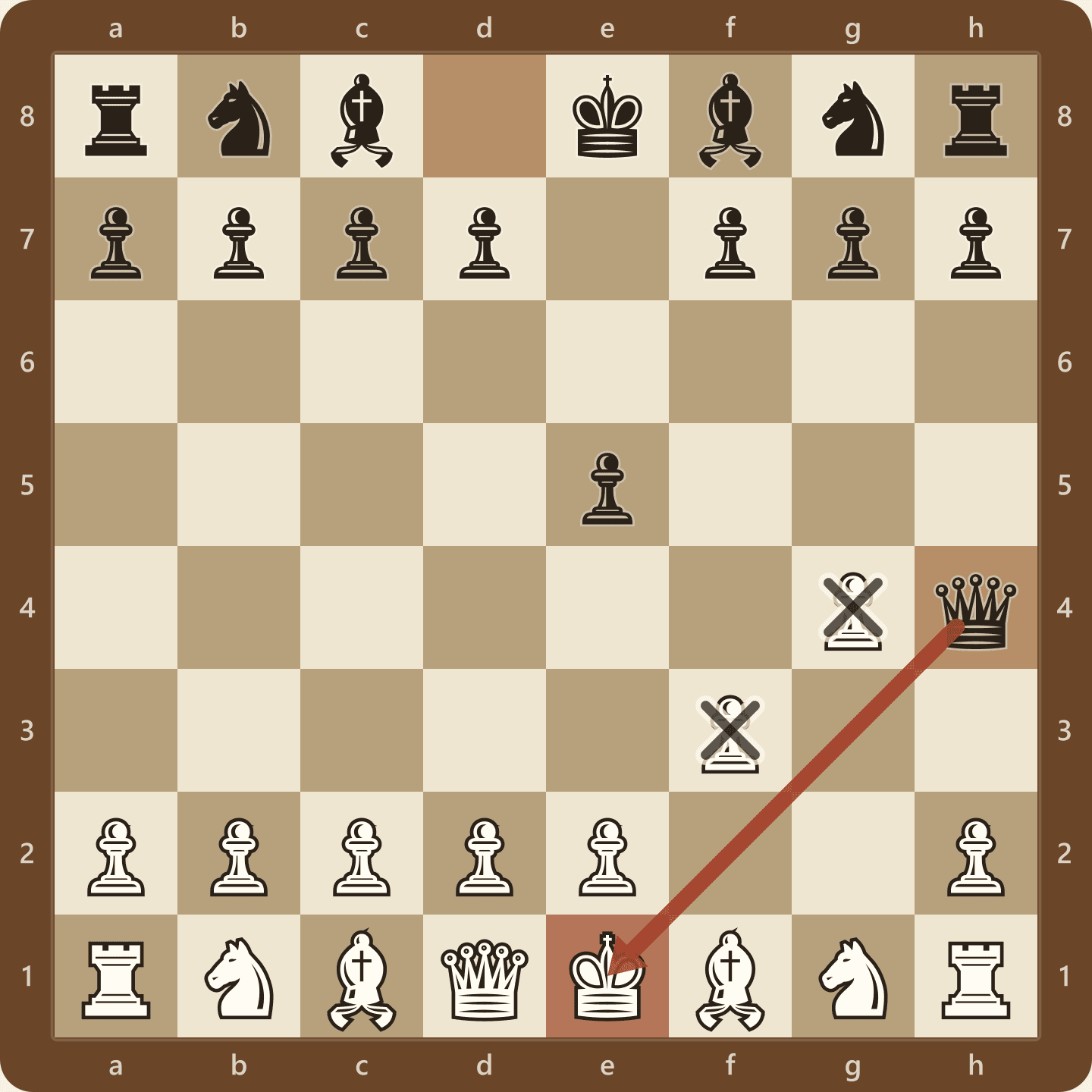
Around 800 to 1200, you stop hanging pieces for free, so opponents have to earn material with a tactic. This is the band where opening traps do the most damage, because a trap only needs you to miss one thing. The Fried Liver Attack is the canonical example: the knight lands on f7, hits the queen and the rook, and drags the king into the open.
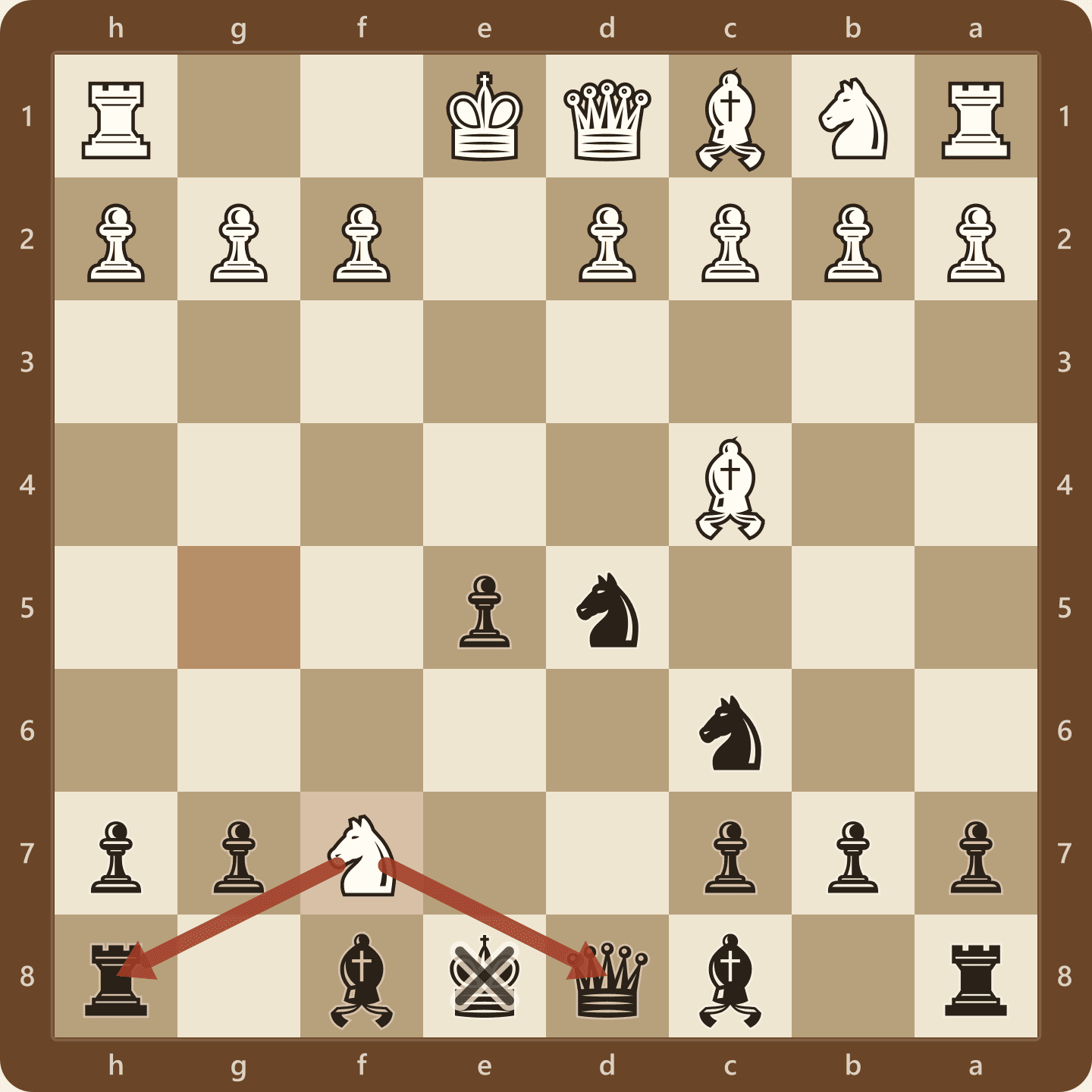
The underlying pattern is the fork, and recognising it instantly is most of what the 1000 to 1400 climb consists of.
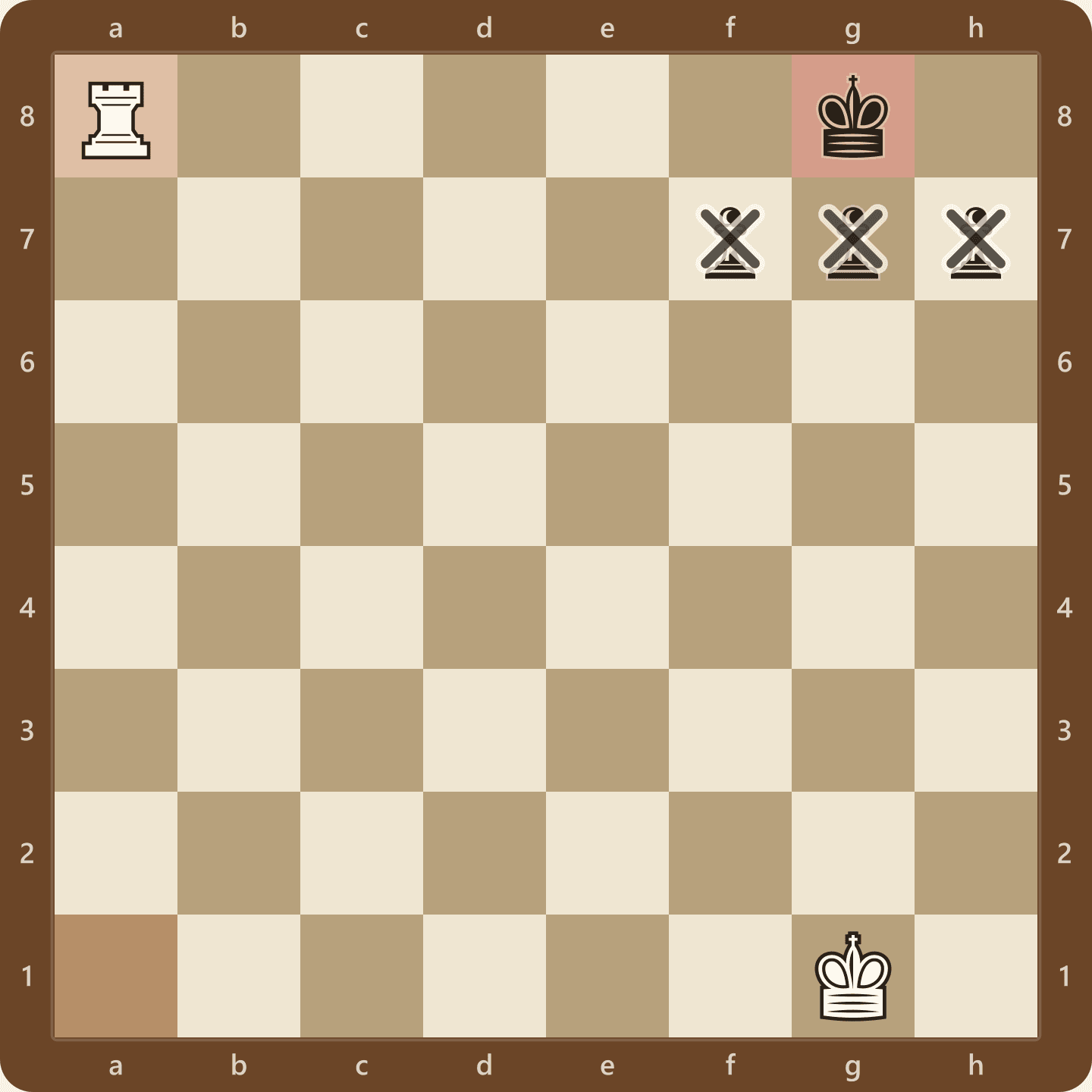
Around 1200 to 1600, the one-move shots dry up and games are lost to patterns instead. Back-rank mate is the classic: the king is safe from everything except the rank it is sitting on.
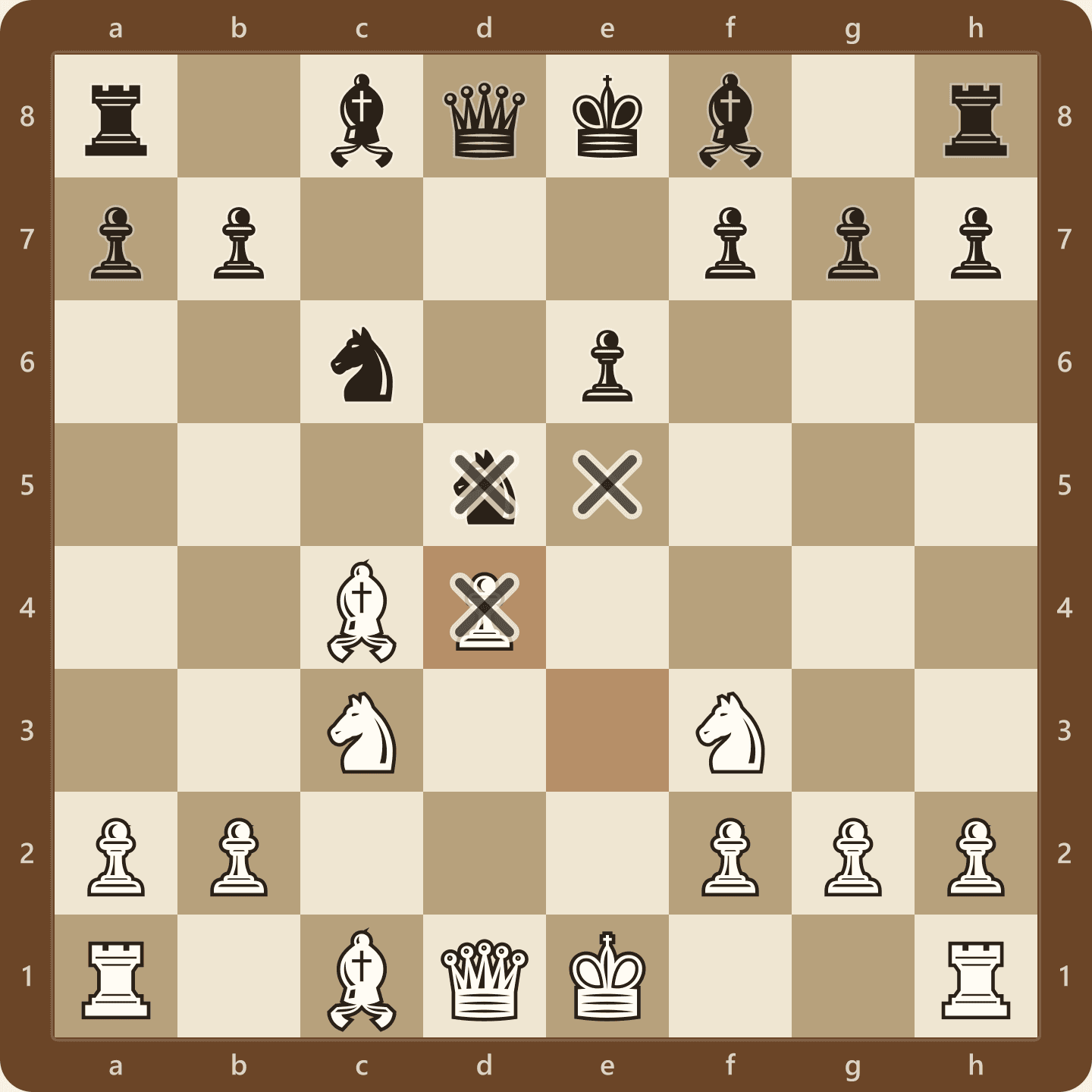
Above about 1600, structure starts deciding games. The isolated queen's pawn below is not winning or losing for anybody; it is a set of trade-offs, and knowing which side of it you are on is a different skill from spotting a fork.
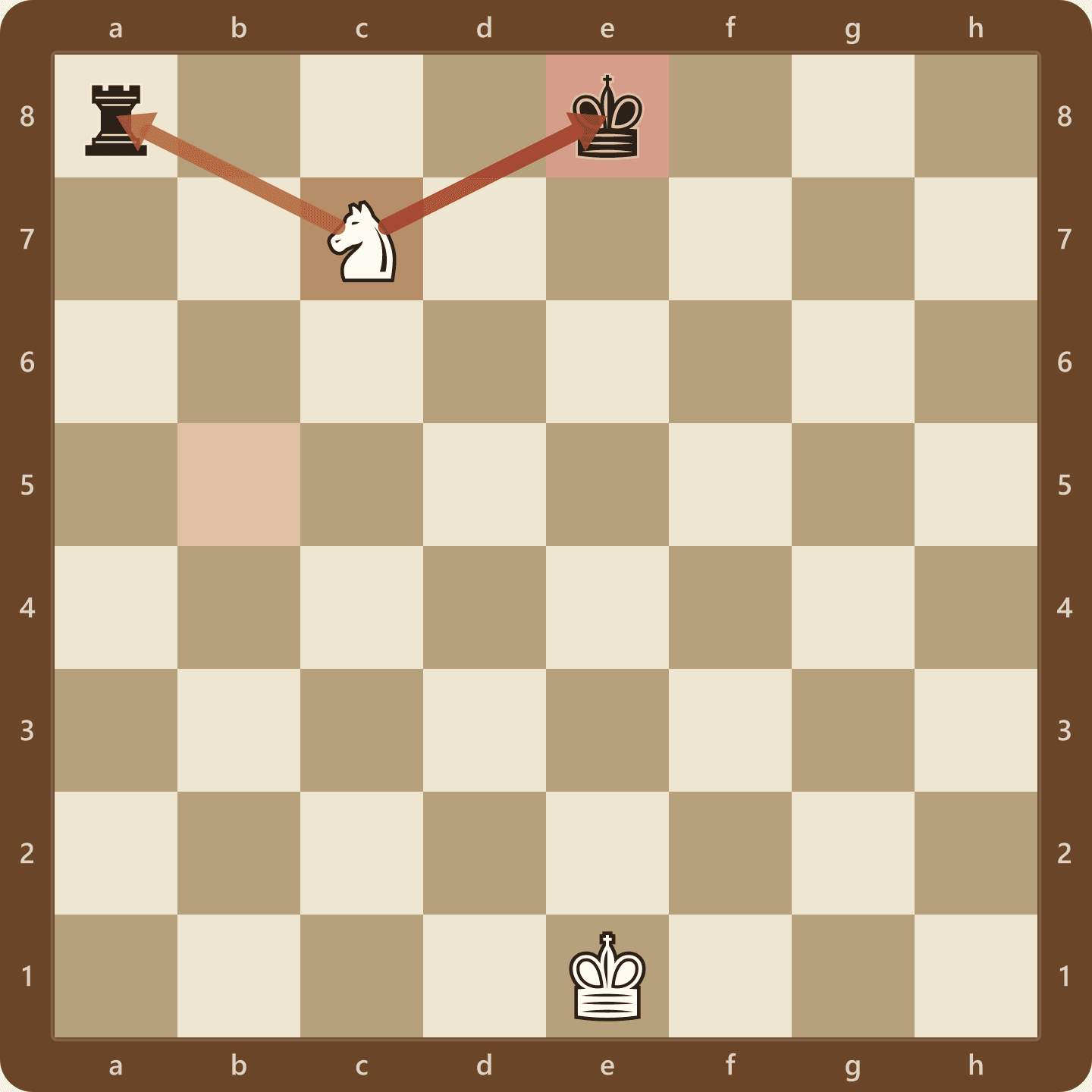
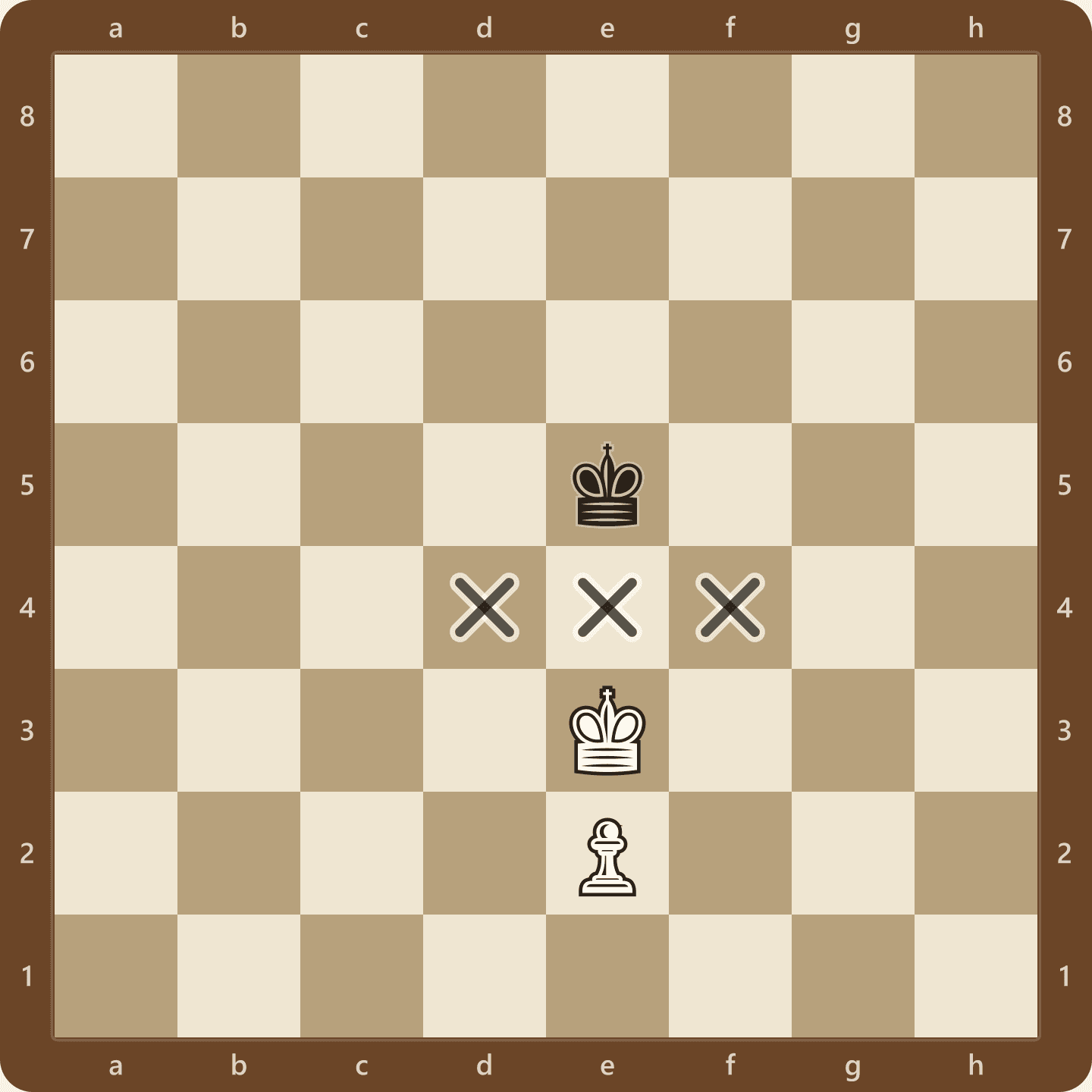
Underneath all of it is the endgame, where rating is quietly won at every level. The position below turns on a single idea, the opposition.
If you want opening advice pinned to a band rather than to a personality, the by-rating guides cover 800, 1000 and 1400.
Every diagram here was played out move by move with a chess engine library before rendering, so the positions are legal and match the notation beside them. If that notation is still slow going, chess notation explained is the prerequisite.
The top of the scale, and the titles
The highest FIDE rating in history is Magnus Carlsen's 2882, reached on the May 2014 list. Before the modern era, Bobby Fischer's 2785 in 1972 stood as the record until Garry Kasparov passed it in 1990.
FIDE titles have rating requirements attached, though the top three also need tournament norms:
- Candidate Master (CM): 2200
- FIDE Master (FM): 2300
- International Master (IM): 2400, plus norms
- Grandmaster (GM): 2500, plus norms
At the bottom, FIDE now uses a rating floor of 1400: fall below it and you are shown as unrated. The USCF operates personal rating floors instead, which stop an established player's rating from collapsing after a bad year.
The limitation nobody mentions, and FIDE proving it
Elo assumes your strength is a fixed quantity the system is trying to discover. Improving players break that assumption constantly, which is why a rising player's rating lags their real strength. It also cannot tell a good result from a lucky one, and it can be gamed by inactivity.
The cleanest proof that a rating is a position rather than a measurement came from FIDE itself. Under the rating regulations that took effect on 1 March 2024, every player rated below 2000 received a one-time increase of 0.40 × (2000 − rating), and the floor moved from 1000 to 1400. A player rated 1000 gained 400 points overnight without touching a chessboard. Their chess did not change. Their number did.
How to actually move it
- Play a slower time control. Most of the material you lose in blitz is lost to the clock, not to your understanding.
- Review losses, not wins. Find the first move the engine flags and work out what you were looking at instead.
- Keep one repertoire. Switching openings resets the pattern recognition you were building. How much opening theory you actually need sets the realistic ceiling.
- Ignore the number for fifty games at a time. Rating is a lagging indicator, and checking it every game mostly teaches you to fear losing.
Frequently asked questions
What is a good Elo score in chess?
It depends entirely on which pool you mean, which is why the honest answer is a comparison rather than a number. Beating most of the opponents you get matched with is the only definition that survives moving between sites. If you want your true standing, check the live Lichess distribution page for your time control rather than trusting a figure printed in an article a year ago.
What does 400 Elo mean in chess?
Two different things, so check the context. As a rating, 400 is near the bottom of an online pool and usually means a fairly new player. As a gap, 400 points is the scaling constant of the whole system: the stronger player is expected to score about 91%, or roughly ten to one.
Is 700 Elo good? Is 400 a bad chess rating?
Neither is bad in any meaningful sense; both are early. At those ratings games are decided by hanging material and short mates, not by opening knowledge. The fastest route up is tactics practice and a slower time control, and the number will move on its own.
What does Elo stand for?
Nothing. It is the surname of Arpad Elo, the physics professor who designed the system for the USCF in the 1950s. It is written Elo, not ELO, because it is a name and not an acronym.
What Elo is the top 1%?
There is no single answer, because each site and federation has its own pool and each pool shifts every week. A rating that is top 1% in one site's blitz pool is not top 1% in its rapid pool, let alone in FIDE's. Use the live distribution page for whichever pool you actually play in.
What is the highest Elo in chess?
Magnus Carlsen's 2882, reached on the May 2014 FIDE list, is the highest human rating ever recorded. Chess engines are rated on their own scales well above that, but engine ratings come from engine-versus-engine pools and do not sit on the same number line as human FIDE ratings.
Why is my Lichess rating higher than my Chess.com rating?
Because they are separate pools with different starting ratings, different time-control boundaries and a decade of independent drift. Neither number is the correct one. The only fair comparison is your rating against itself over time, on one site.
Do I lose rating for playing better opponents?
Not on balance. The expected-score formula already accounts for the gap, so losing to someone 300 points stronger costs very little and beating them pays a lot. Playing up is the cheapest rating risk in the system.
The short version
Your Elo is a live estimate of how you will do against the next opponent from your pool. It is not a grade, it does not transfer between sites, and FIDE rewrote hundreds of thousands of them in a single day. Treat it as a matchmaking tool that keeps score, and judge your progress by which mistakes have stopped happening. To see how openings themselves score by band rather than by reputation, the opening tier list is sorted that way.