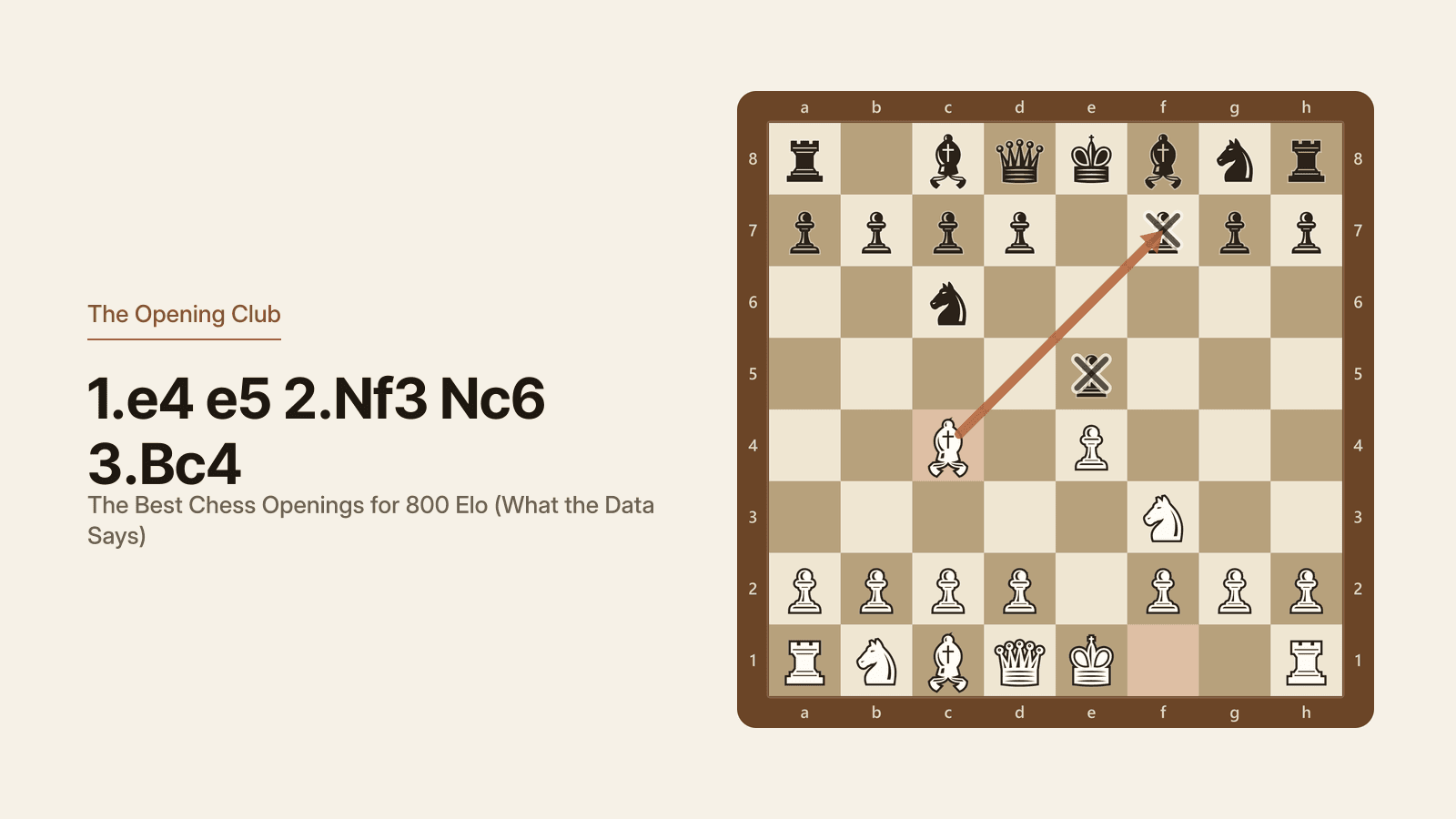
If you want the best chess openings for 800 Elo, here is the short answer and then the uncomfortable one. Short answer: play the Italian Game as White and the Caro-Kann Defense as Black. Uncomfortable answer: across the rating band these numbers come from, the spread between the best and the worst sensible opening is worth about five points of score per hundred games, and this band ties for the highest blunder rate of the four we track. Your opening choice is real. It is not the thing losing you games.
This article commits to picks anyway, because "it depends" is not an answer, and because some of the most popular choices at this level really are measurably worse than the alternatives sitting right next to them.
Which rating band these numbers actually describe
The Lichess opening explorer buckets games by rating, and the buckets are keyed by their lower bound: 600, 1000, 1400, 1800. There is no 800 bucket. There is no 1200 bucket either.
So everything below describes the 600 band, which is every game where the players sit below 1000. If you are 800 on Lichess or somewhere near it on Chess.com, this is your band, shared with everyone from roughly 600 to 999. When this page says "at this level", it means that group, not one exact Elo number.
The sample for this band is 4,206,514 games at the first-move level, which is 98.6% of the band's games falling inside the fourteen first moves we track. Source is the Lichess open database opening explorer, period 2026-05, rapid and blitz pooled. Across all four bands the disjoint total is 49,783,179 games, just under 50 million. (Summing every row in the dataset returns a much bigger number, because positions are nested and one game passes through several of them. That total is meaningless and this page does not use it.)
How the ranking works. Everything here is ordered by the Wilson lower bound on score (wins plus half of draws), not by raw win percentage. A Wilson lower bound is the pessimistic end of the confidence interval: it asks "given this sample size, how good can we be confident this line actually is?" That is what stops a 2,000-game sideline from outranking a 2-million-game main line on a lucky streak. Every figure below carries its band, its sample size, and its source. If you want the method applied across every opening at once, that is the chess opening tier list.
The best openings for White below 1000
| Opening (moves) | Tier | Wilson floor | White wins | Games | Share of band |
|---|---|---|---|---|---|
| Queen's Gambit (1. d4 d5 2. c4) | S | 0.5526 | 53.74% | 77,143 | 1.81% |
| London System, 2. Bf4 (1. d4 d5 2. Bf4) | A | 0.5474 | 53.00% | 99,835 | 2.34% |
| Scotch Game (1. e4 e5 2. Nf3 Nc6 3. d4) | A | 0.5458 | 52.87% | 75,690 | 1.77% |
| King's Knight trunk (1. e4 e5 2. Nf3) | S | 0.5416 | 52.06% | 950,740 | 22.29% |
| Italian Game (1. e4 e5 2. Nf3 Nc6 3. Bc4) | A | 0.5368 | 51.96% | 217,726 | 5.10% |
| Ruy Lopez (1. e4 e5 2. Nf3 Nc6 3. Bb5) | A | 0.5349 | 51.67% | 64,749 | 1.52% |
| Bishop's Opening (1. e4 e5 2. Bc4) | A | 0.5285 | 50.89% | 228,138 | 5.35% |
| Wayward Queen Attack (1. e4 e5 2. Qh5) | A | 0.5240 | 50.33% | 162,535 | 3.81% |
| Vienna Game (1. e4 e5 2. Nc3) | B | 0.5147 | 49.45% | 114,542 | 2.69% |
| Three Knights (1. e4 e5 2. Nf3 Nc6 3. Nc3) | B | 0.5012 | 47.91% | 152,369 | 3.57% |
Read the top and bottom rows together and you have the whole story of this article. The Queen's Gambit floor is 0.5526. The Three Knights floor is 0.5012. That is the entire realistic range: about five points of score per hundred games between the best popular choice and a perfectly respectable developing move that thousands of players make every day.
For comparison, the first move barely matters at all. 1. e4 scores a 0.5239 floor over 2,849,881 games and takes 66.82% of the band. 1. d4 scores 0.5215 over 836,518 games. That difference is 0.24 points of score per hundred games. Anyone telling an 800 that they picked the wrong first move is arguing about a rounding error.
Winner overall: the Italian Game
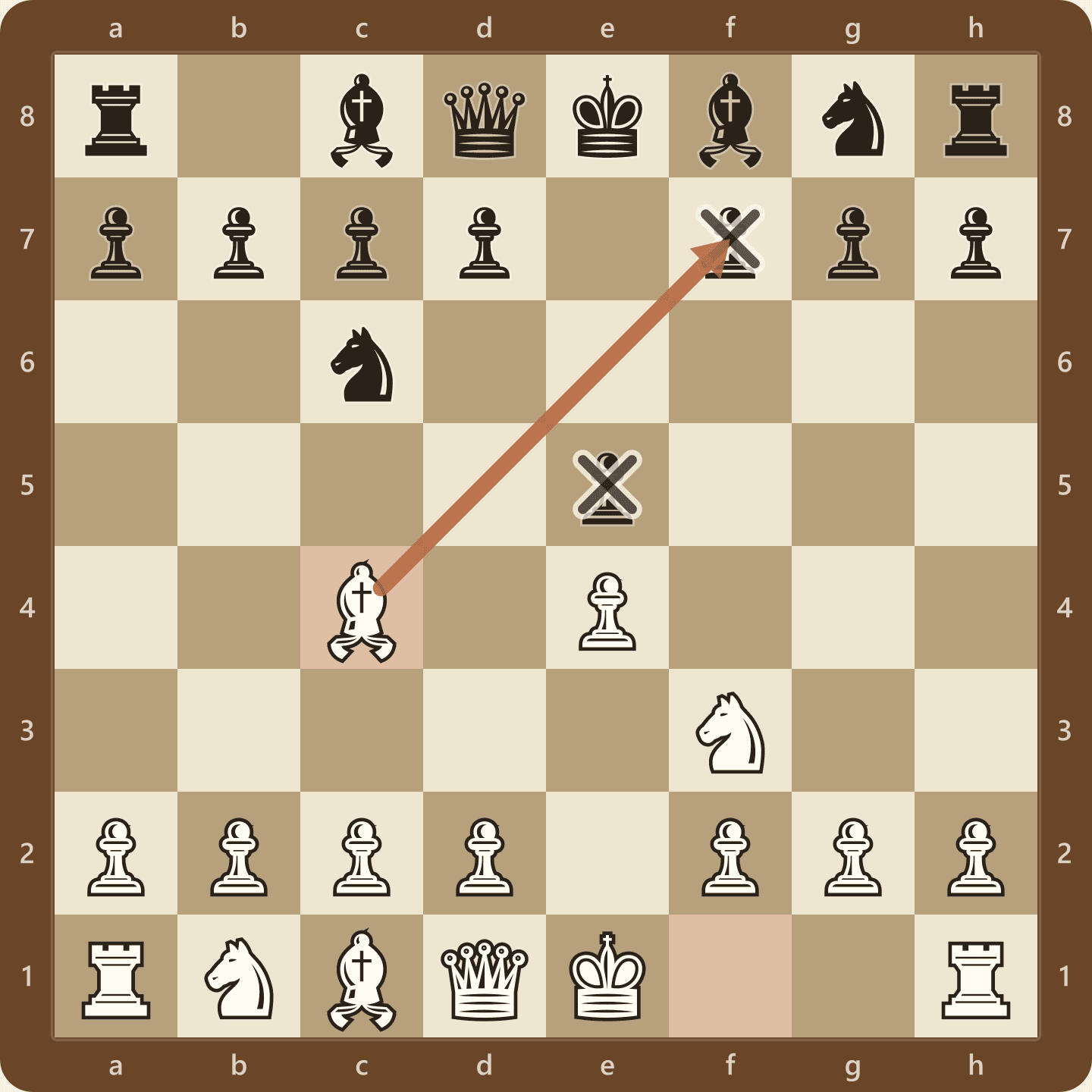
The Italian Game grades A at a 0.5368 floor over 217,726 games in the 600 band, and it appears in 5.10% of all games in the band, which makes it the most common named opening a player below 1000 actually reaches.
It wins the overall pick for three reasons, in order of importance.
First, it sits on the strongest trunk available. The move 2. Nf3 (the King's Knight Opening) grades S at a 0.5416 floor over 950,740 games, nearly a million in this band alone. Almost every good White option below 1000 runs through that one move, because it develops, hits e5, and does not create a weakness.
Second, the Italian is the shortest possible route from "opening principles" to a real position. Control the centre with a pawn, develop a knight toward the centre, develop a bishop to its best diagonal, castle. That is moves one through four. There is nothing to memorise past that and no structure to get wrong.
Third, Black gets it wrong constantly. Black's most popular reply, 3... Nf6, grades C for Black at a 0.4510 floor over 103,069 games. And then this happens.
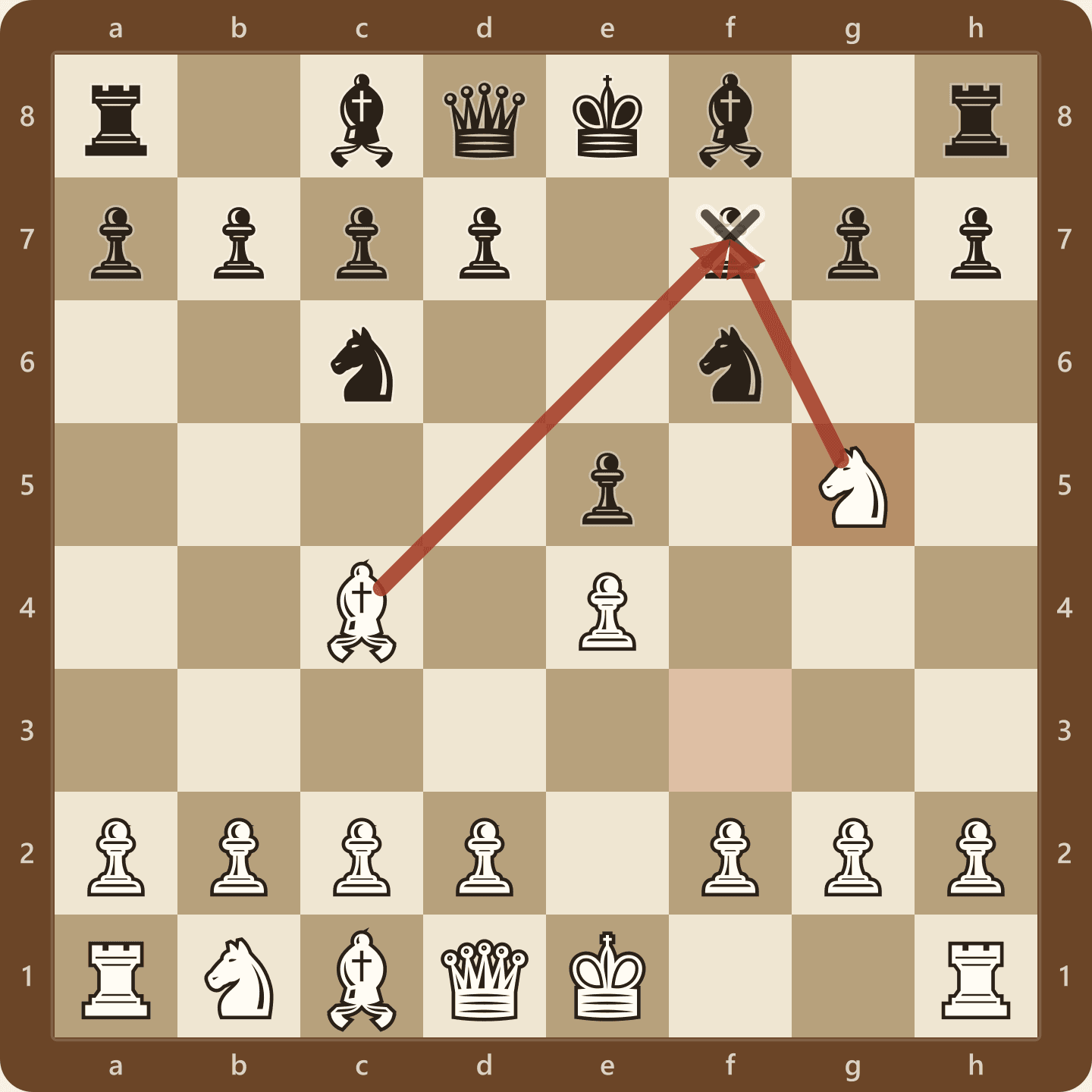
4. Ng5 is the highest-scoring line in the entire 600 band with a meaningful sample: grade S, a 0.5780 floor, White winning 56.56% across 37,919 games. Two pieces hit f7, the square Black's king is still sitting behind, and below 1000 that is usually enough. This is the position people mean when they say "the Fried Liver".
You do not need to memorise the follow-up. You need to know the move exists and that it is the reason you played Bc4 in the first place. If you want the full repertoire, the Italian Game guide covers it.
Best raw score: the Queen's Gambit
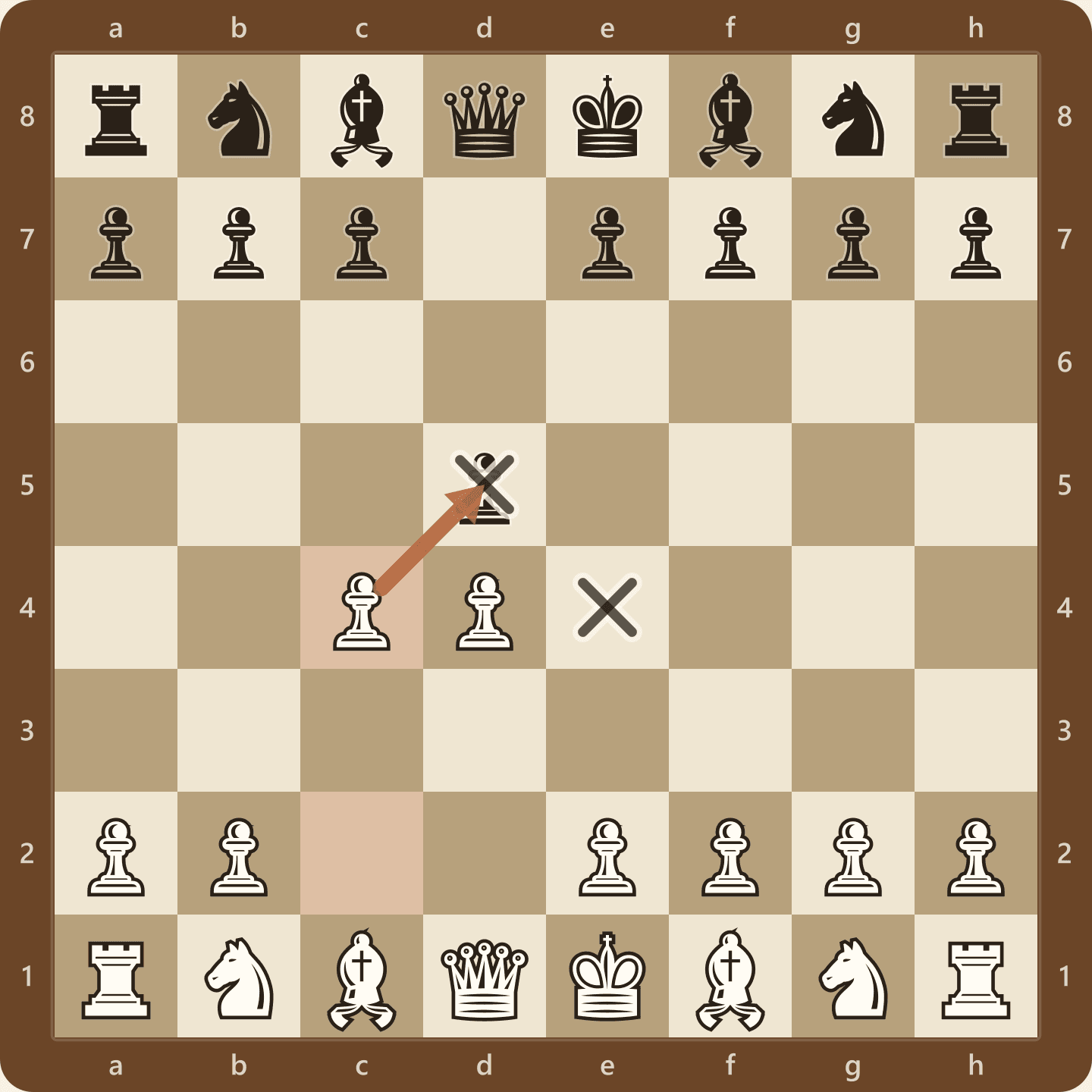
The Queen's Gambit is the highest-graded popular White line in this band: S, a 0.5526 floor, White winning 53.74% over 77,143 games. A gambit is an offered pawn, and this one is famously not a real gambit, since White wins the pawn straight back in most lines.
Two honest caveats. It appears in only 1.81% of band games, so you will spend most of your games in something else after Black declines with a move nobody wrote a book about. And there is a self-selection effect worth naming: a player below 1000 who chooses 2. c4 has usually watched a video about it, which makes the number partly a measurement of the player, not the position. The data ranks positions, not people. That caveat applies to every figure on this page, and it is the reason the practical advice below is "learn one thing properly", not "copy the top row of the table".
Best low-effort system: the London
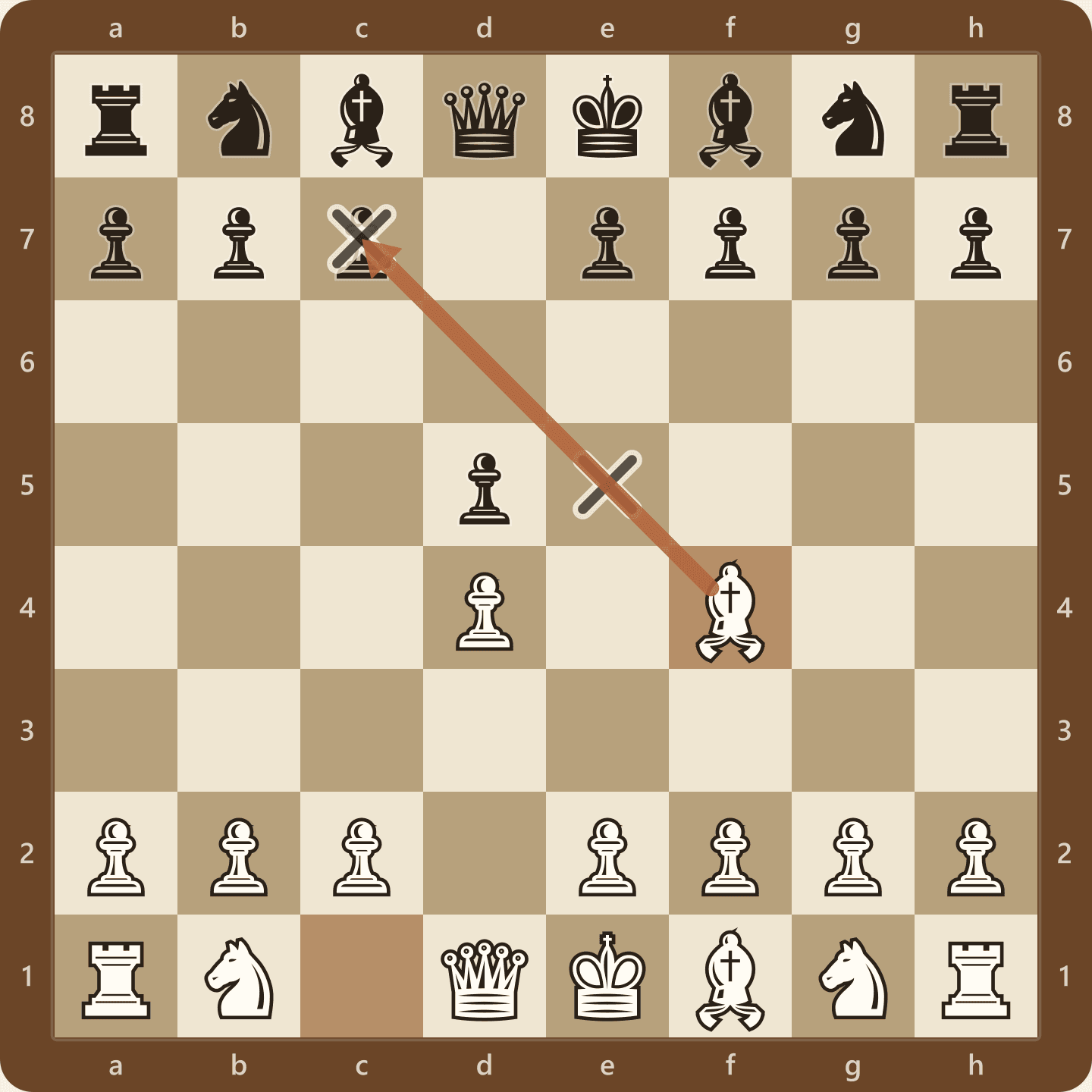
Yes, the London meme is real, and the numbers back the meme. 1. d4 d5 2. Bf4 grades A at a 0.5474 floor, White winning 53.00% over 99,835 games, second only to the Queen's Gambit among popular White choices in this band.
The reason it works below 1000 is not that it is objectively strong. It is that you play the same six moves regardless of what Black does, which means you spend the opening looking at your opponent's pieces instead of trying to recall a move order. That is worth points at a level where the average game leaves the book almost immediately. The London System guide has the move order.
Best if you want an open game: the Scotch
The Scotch Game grades A at a 0.5458 floor, White winning 52.87% across 75,690 games, which is a better floor than both the Italian and the Ruy Lopez (A, 0.5349, 64,749 games).
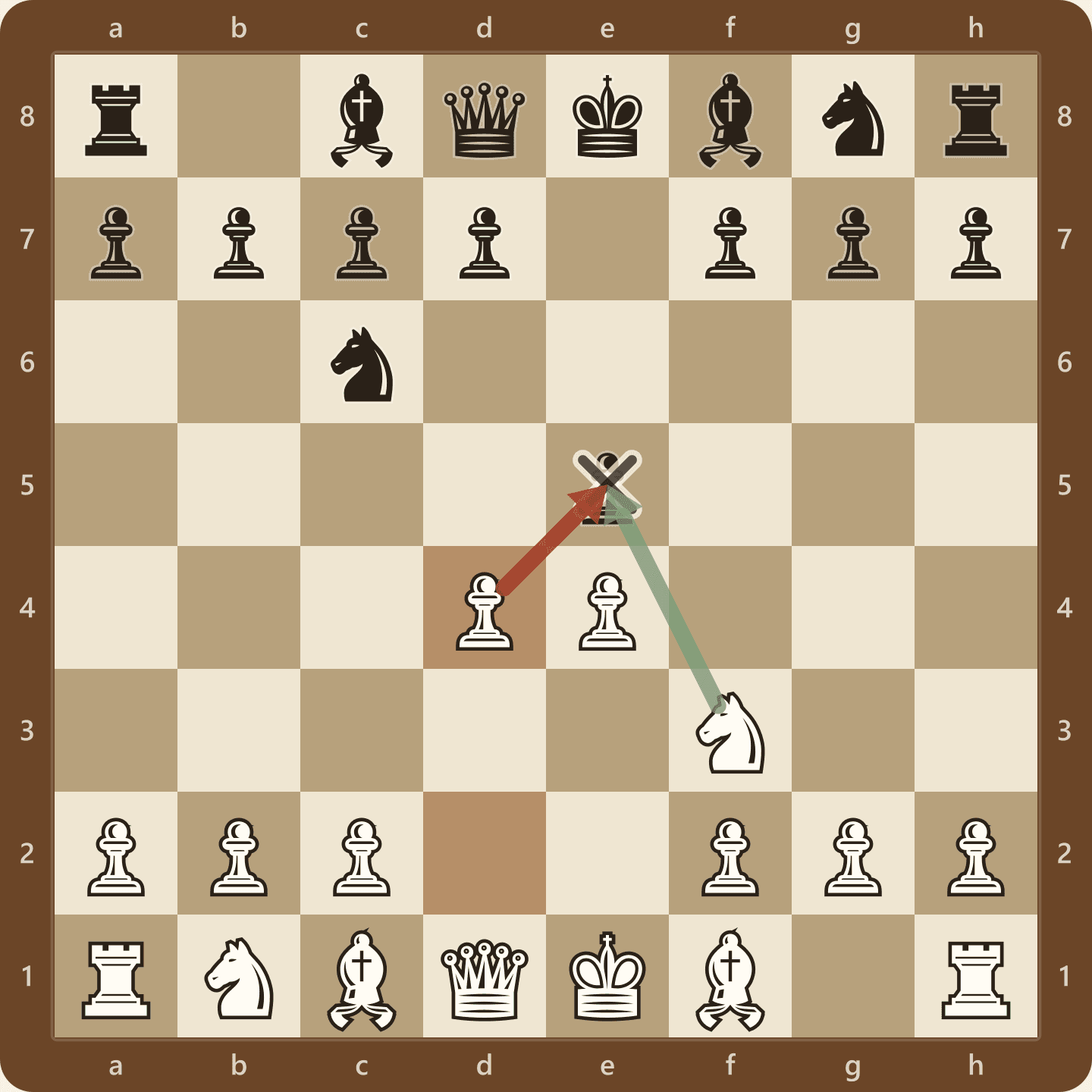
- d4 rips the centre open immediately. Below 1000 that suits the stronger tactician, and since you are reading an article about improving, that is probably you. Pick the Scotch over the Italian if you would rather calculate than manoeuvre.
The one that works now and stops working later
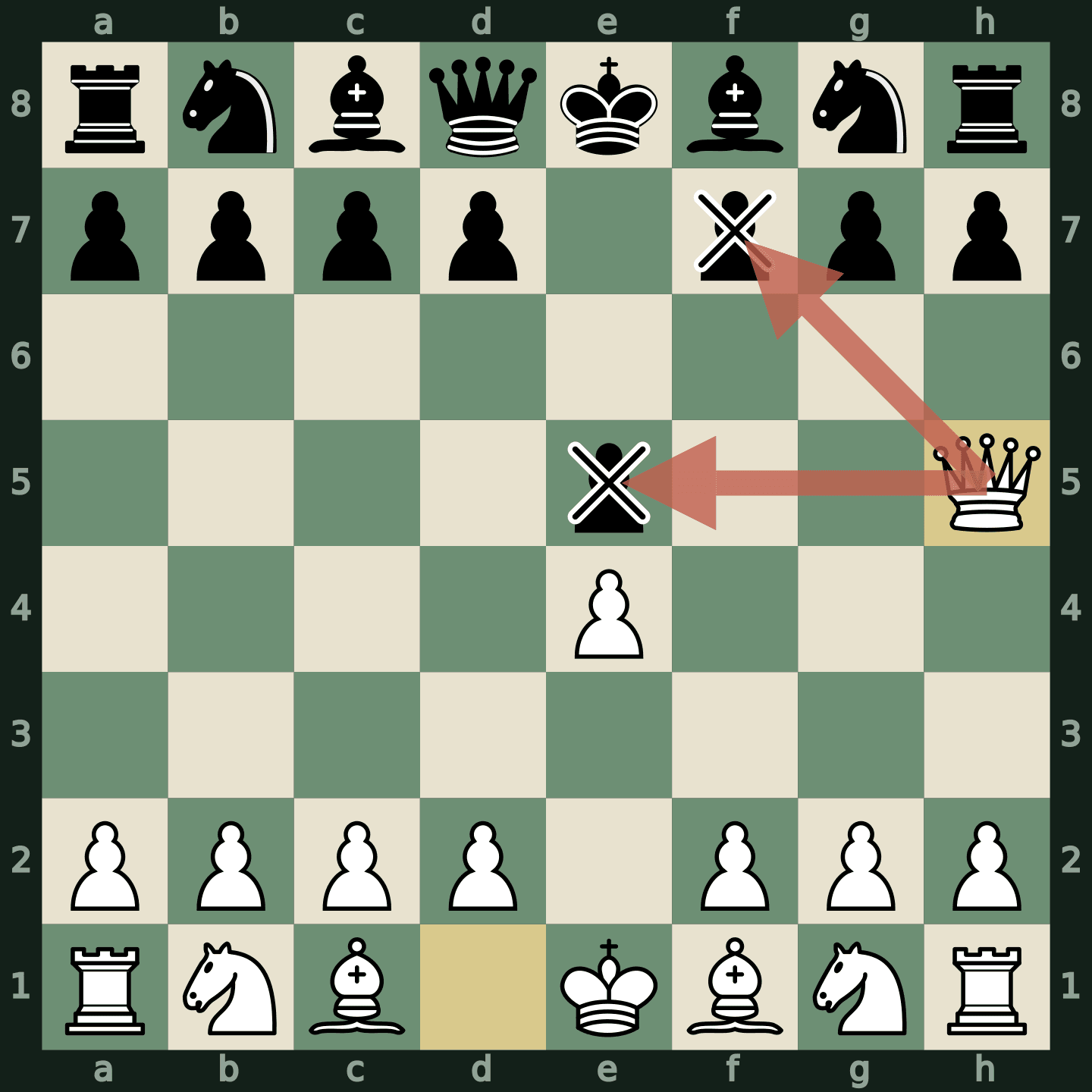
2. Qh5, the Wayward Queen Attack, is the move everyone tells you never to play, and in the 600 band it grades A at a 0.5240 floor over 162,535 games. That is the same floor as 1. e4 itself. Below 1000, the early queen sortie toward f7 (the Scholar's Mate idea) genuinely works, because the defence requires knowing one specific reply.
Then it stops. The same line falls to a 0.5109 floor in the 1000 band and 0.5068 at 1400, and its share of games collapses from 3.81% to 0.37%. Openings that depend on your opponent not knowing something are rented, not owned. This is the clearest example in the dataset, and it is the reason this page does not recommend it despite the A grade.
The best defenses for Black below 1000
Here the data gets genuinely surprising.
| Black's reply to 1. e4 | Tier | Wilson floor | Black wins | Games | Share of band |
|---|---|---|---|---|---|
| Caro-Kann Defense (1... c6) | B | 0.5077 | 49.06% | 127,035 | 2.98% |
| Sicilian Defense (1... c5) | B | 0.5042 | 48.82% | 130,324 | 3.06% |
| Modern Defense (1... g6) | B | 0.4958 | 47.83% | 39,789 | 0.93% |
| French Defense (1... e6) | B | 0.4925 | 47.27% | 163,083 | 3.82% |
| Pirc Defense (1... d6) | B | 0.4797 | 45.90% | 89,921 | 2.11% |
| Scandinavian Defense (1... d5) | B | 0.4791 | 45.77% | 306,387 | 7.18% |
| Open Game (1... e5) | B | 0.4687 | 44.67% | 1,775,723 | 41.63% |
| Alekhine Defense (1... Nf6) | C | 0.4592 | 43.73% | 71,999 | 1.69% |
| Nimzowitsch Defense (1... Nc6) | C | 0.4519 | 43.30% | 54,348 | 1.27% |
1... e5, the single most popular move in the band at 41.63% of all games, has the second-worst Wilson floor on the list. Black wins 44.67% of 1,775,723 games with it. The Caro-Kann wins 49.06% of 127,035. That is a four-point gap on samples large enough that it is not noise.
Winner for Black: the Caro-Kann Defense
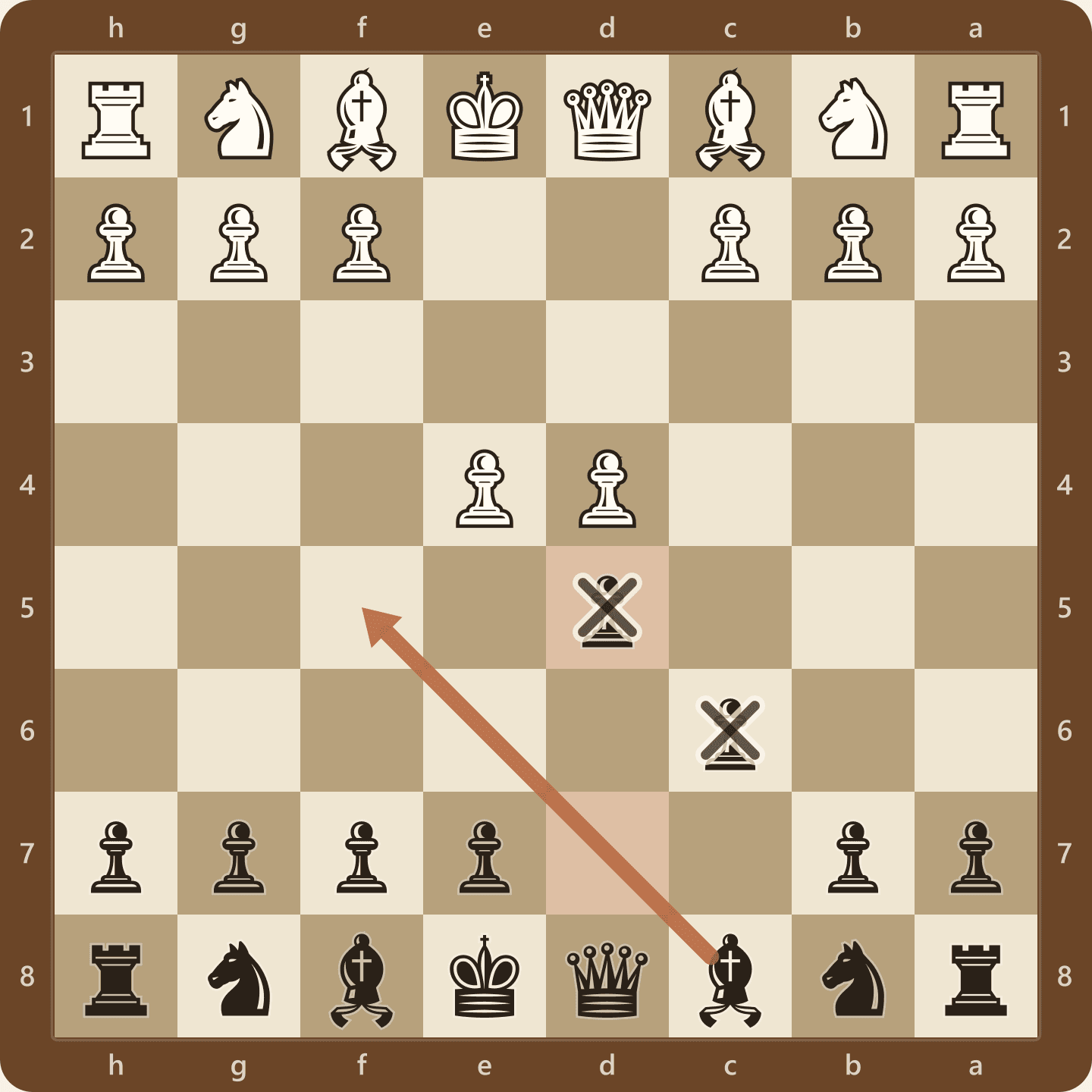
The Caro-Kann takes the top Black floor in the band at 0.5077 over 127,035 games. The mechanical reason is simple enough to explain in one sentence: 1... c6 supports the coming d5 with a pawn instead of a piece, so Black contests the centre without putting anything on a square where it can be hit with tempo (tempo meaning a free developing move gained by attacking something).
That matters more below 1000 than it does anywhere else, because the most common way an 800-rated game goes wrong is a piece coming out early and getting chased.
The Sicilian is fine, and the Scandinavian is a trap
The Sicilian Defense grades B at a 0.5042 floor over 130,324 games, essentially tied with the Caro-Kann and comfortably ahead of 1... e5. It is not too advanced for you. What is too advanced is the theory attached to it: the Najdorf Sicilian does not clear our sample floor in the 600 band at all, and first appears from the 1000 band upward. Play 1... c5, develop, and stop there.
The Scandinavian is the interesting failure. At 7.18% of band games it is the most popular non-e5 reply to 1. e4, and its overall floor is a mediocre 0.4791. Split it open and you see why.
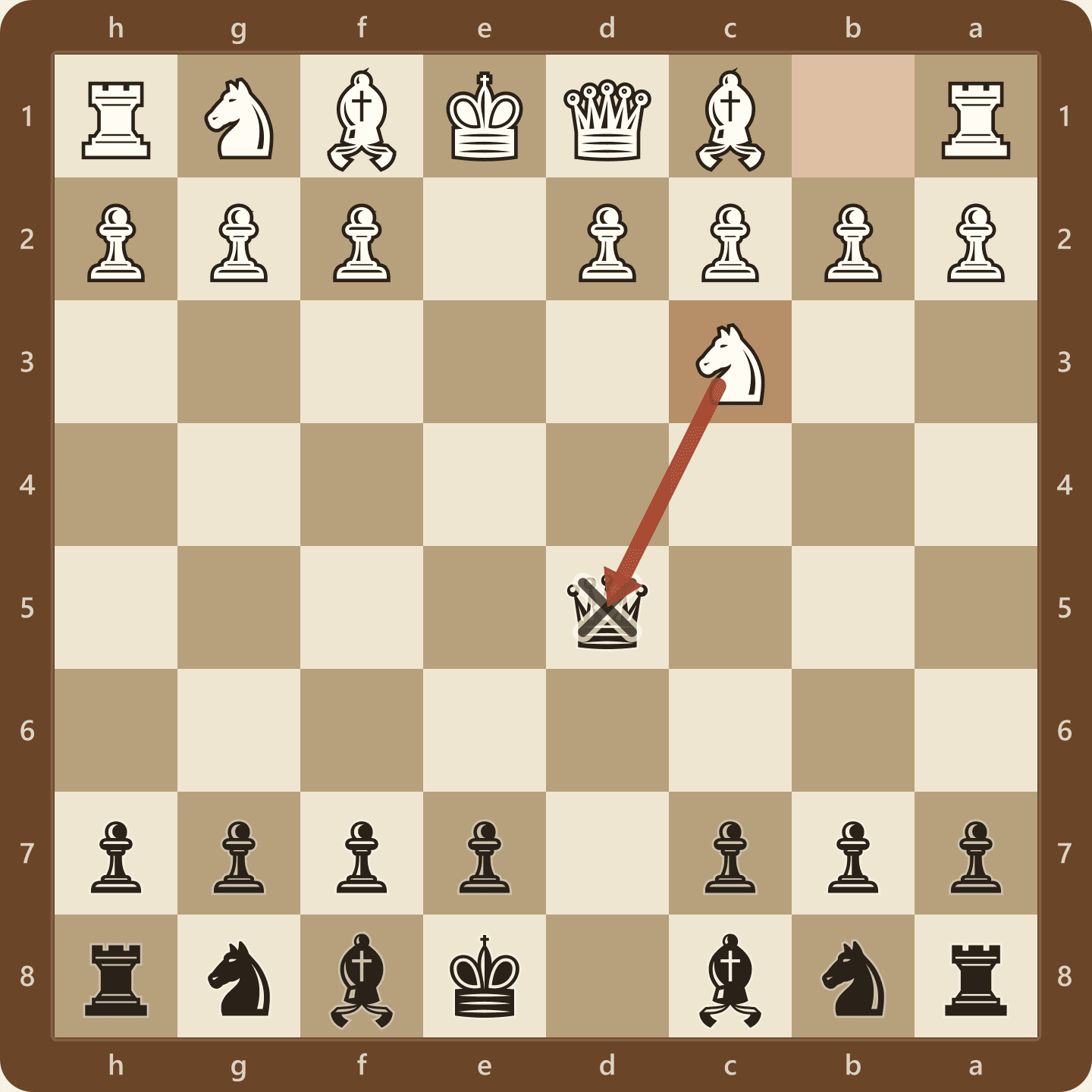
The natural recapture 2... Qxd5 grades D at a 0.4362 floor with Black winning only 41.68% over 96,492 games, because 3. Nc3 hits the queen and White develops for free. The alternative 2... Nf6 grades B at 0.4968 over 8,826 games. Same opening, same band, and one move separates a D from a B. If you play the Scandinavian, that is the move.
Against 1. d4
1... Nf6 grades B at a 0.4995 floor over 60,759 games. 1... d5, four times more popular at 457,398 games, grades B at 0.4763. Below that: the Horwitz Defense 1... e6 (C, 0.4713), the Englund Gambit 1... e5 (C, 0.4587, 83,695 games), and the Dutch Defense 1... f5 (C, 0.4582).
The King's Indian Defense belongs in a different conversation entirely. Its main tabiya (1. d4 Nf6 2. c4 g6 3. Nc3) appears in 0.036% of games in this band. You will reach it roughly once every three thousand games.
The part that actually decides your games
Now the honest headline, and it is not about openings.
The 600 band carries the joint-highest blunder rate of the four: 44.8%, level with the 1000 band on 44.8%, then falling to 41.0% at 1400 and 36.9% at 1800. So it is not a smooth decline. The first two bands are tied, and the drop only starts above 1400.
Those are games-weighted figures across the opening lines measured in each band, from a separate and much smaller sample of 8,099 games here (period 2026-07). The metric is a material-swing proxy, methodology mat-swing-v1, not engine evaluation, so treat it as an index rather than a precise count. Two caveats we apply to ourselves: a line's rate rises with how deep the line runs, so it is not comparable between lines of different lengths, and an unweighted average across lines gives a different answer because most lines carry only a few dozen games. That is why this page publishes band totals and never a per-opening blunder rate.
The same sample shows this band with the earliest average book exit, 3.3 ply, rising to 3.7 at 1000 and 3.8 by the 1800 band. Ply means a single move by one side, so 3.3 ply lands partway through move two. In other words: games below 1000 leave known theory sooner than games anywhere else, measured over the same set of lines. The Lichess opening explorer is where you can watch this happen in your own games.
Put those two together. You exit theory first, and you blunder most. The opening you chose is worth up to five points of score per hundred games. A single hung knight is worth roughly a whole game. This is the arithmetic behind every strong player telling beginners to stop studying openings, and it is why blunder rate by rating gets a page of its own.
Traps are the same story in miniature. The trap hit rate across this band works out at 0.5% on that 8,099-game sample, and it falls further in every band above. Losing in fifteen moves to a trap everyone else seems to know is a genuinely common fear and a genuinely rare event. What is not rare is a piece left en prise on move 19. If you are not sure what counts, start with what a blunder actually is.
What to actually do instead
- Blunder-check before every move. Ask one question: what does that last move attack? Below 1000, that habit is worth more than any repertoire.
- Clock discipline. Most hung pieces at this level are hung with time still on the clock. Spending eight seconds instead of two is free rating.
- Simple tactics, daily. Forks, pins, skewers, back-rank mates. That small pattern set decides games in this band.
- Basic endgames. King and pawn versus king, and the two-rook and queen mates. A won middlegame you cannot convert is a draw.
- One opening per colour. Not five. Play it until the middlegame it produces feels familiar.
What not to study yet
Not because you could not understand it, but because you will not get to use it.
- Deep Sicilian theory. The Najdorf has no row in the 600 band at all.
- The Benko Gambit and the Catalan Opening. Both need a specific move order from your opponent that almost never arrives below 1000. Same for the English Opening as a system, though 1. c4 itself grades A here on 57,286 games if you like it.
- Anti-trap moves. Black's 3... h6 against the Italian, played specifically to prevent Ng5, grades C at a 0.4872 floor here and gets steadily worse as you climb: 0.4707 in the 1000 band, 0.4610 at 1400, and D at 1800. Playing a move out of fear rather than for a reason is a habit, and that is the data showing what the habit costs.
- Anything Magnus Carlsen played last week. GothamChess and Anna Cramling videos are a fine way to enjoy chess and a poor way to build a first repertoire, because the content that gets made is the content that is interesting, not the content that is common at your rating. Scholar's Mate gets a hundred videos; hanging a bishop on move 14 gets none.
Verdict
Where to go next
This page is one of three, one per rating band the data actually has: this one for the 600 band, then 1000 Elo for players who have stopped hanging pieces every game, and 1400 Elo for the level where bad structures start getting punished. For the picture across every band at once, see the chess opening tier list, the underlying chess opening win rates, and the site's main best chess openings ranking.
Frequently asked questions
Is 800 Elo decent in chess?
It is an ordinary rating for an adult who plays online regularly and has not studied much, and it is well above someone who has just learned the moves. In this dataset the entire under-1000 group is one bucket, which tells you something: the site that produced the data did not think 700 and 900 were worth splitting. Ratings are also not comparable across sites, so an 800 on Lichess is not an 800 on Chess.com. What Elo actually measures is the longer answer.
What are the best chess openings for 800 Elo beginners?
One opening per colour. As White, the Italian Game (1. e4 e5 2. Nf3 Nc6 3. Bc4), grade A with a 0.5368 Wilson floor over 217,726 games in the 600 band. As Black, the Caro-Kann Defense (1... c6), the band's best Black floor at 0.5077 over 127,035 games. If you would rather never think about the opening again, the London System (0.5474 floor, 99,835 games) plays the same setup regardless of what your opponent does.
What is the #1 best chess opening?
There is no single answer that survives contact with a rating band, which is why this page keeps naming the band. In the 600 band the highest Wilson floor among popular White openings belongs to the Queen's Gambit at 0.5526 over 77,143 games. In the 1800 band the ordering is different, and several openings that grade well below 1000 fall a full tier. Any article that names one best opening without naming the rating band and the sample size is guessing.
Should an 800-rated player learn the Sicilian Defense?
Yes, if you play the first move and stop. 1... c5 grades B in the 600 band with a 0.5042 floor over 130,324 games, which beats 1... e5 by a clear margin. What you should not do is learn Najdorf theory: that variation does not clear the sample floor in this band at all and first appears from the 1000 band upward.
Do openings even matter at 800 Elo?
A little. The spread between the best popular White opening (Queen's Gambit, 0.5526 floor) and the weakest (Three Knights, 0.5012) is about five points of score per hundred games. The choice of first move is worth even less: 1. e4 and 1. d4 differ by 0.24 points. Meanwhile this band ties for the highest blunder rate of the four measured (44.8%, games-weighted, on an 8,099-game sample). Pick a reasonable opening in twenty minutes and put the rest of your time into tactics and blunder-checking.
Figures throughout: Lichess open database opening explorer, rapid and blitz pooled, period 2026-05, rating band 600 (games below 1000). Blunder and book-exit figures come from a separate material-swing sample, methodology mat-swing-v1, period 2026-07. Every opening line is identified by its verified move sequence rather than its name, because the same name covers several different move orders.