Every chess opening tier list you have seen was somebody's opinion. The Hikaru Nakamura and Levy Rozman videos (there is a Lichess study of their beginner list), the TierMaker grids, the Chess.com forum threads: all entertaining, all built from the judgement of strong players about what is objectively good.
This one is built from results, and it produces a different answer, because it grades each opening four times. An opening that is S tier against 600-rated opposition can be C tier against 1800s, and the tier list that hides that is hiding the single most useful thing in the data.
Grades come from the Lichess open database of rapid and blitz games, computed per rating band and separately for White and Black: 1,229 grades across 314 opening lines. Here is how they are made, then the lists.
How the grades are computed
Every graded line gets a composite score from 0 to 1, built from three parts:
composite = (0.55 x performance) + (0.30 x safety) + (0.15 x popularity)
- Performance is not the raw win rate. It is a Wilson lower bound on the line's score (wins plus half of draws), which is the pessimistic end of the confidence interval given the sample size. That is what stops a 400-game line from outranking a two-million-game one on a lucky streak. It is rescaled so a one percentage point edge in that lower bound moves performance by 6.25 points.
- Safety compares the line's blunder rate to the median blunder rate for that rating band. Play a line where people blunder less than usual for their level and safety goes up. This comes from a much smaller sample than the performance term, which is covered in blunder rate by rating.
- Popularity is a square-root-scaled share of that band's games, capped once a line reaches 5% of the band. It stops the list being dominated by obscure lines nobody has to prepare for, without letting the most-played move win by default.
The grade boundaries are fixed cutoffs on the composite:
| Grade | Composite score | Lines graded (of 1,229) |
|---|---|---|
| S | 0.78 and above | 15 |
| A | 0.62 to 0.78 | 126 |
| B | 0.46 to 0.62 | 448 |
| C | 0.30 to 0.46 | 451 |
| D | below 0.30 | 189 |
Those cutoffs hold for 1,226 of the 1,229 grades. The exceptions are near-unplayed lines held back from the top tiers, of which the clearest is a Lasker Trap position that reaches a 0.79 composite off a 0.004% share of games and is graded B rather than S.
Two consequences of that formula are worth stating before you read the tables, because they will explain results you would otherwise think are wrong.
Gambits get punished by the safety term. A gambit is a deliberate material sacrifice, and the blunder metric behind safety cannot tell a sacrifice from a giveaway. The Vienna Gambit posts a maximum performance score of 1.000 at three separate bands and still falls out of S tier, because its safety score at the 1800 band is 0.067.
A defense is graded on how Black actually does, not on theory. Openings that are respectable at master level can grade badly here if White scores heavily against them in rapid and blitz at these ratings.
The tier list for White
| Opening (graded for White) | 600 | 1000 | 1400 | 1800 |
|---|---|---|---|---|
| 1.e4 e5 2.Nf3 (King's Knight Opening) | S | S | A | A |
| 1.d4 d5 2.c4 (Queen's Gambit) | S | A | A | A |
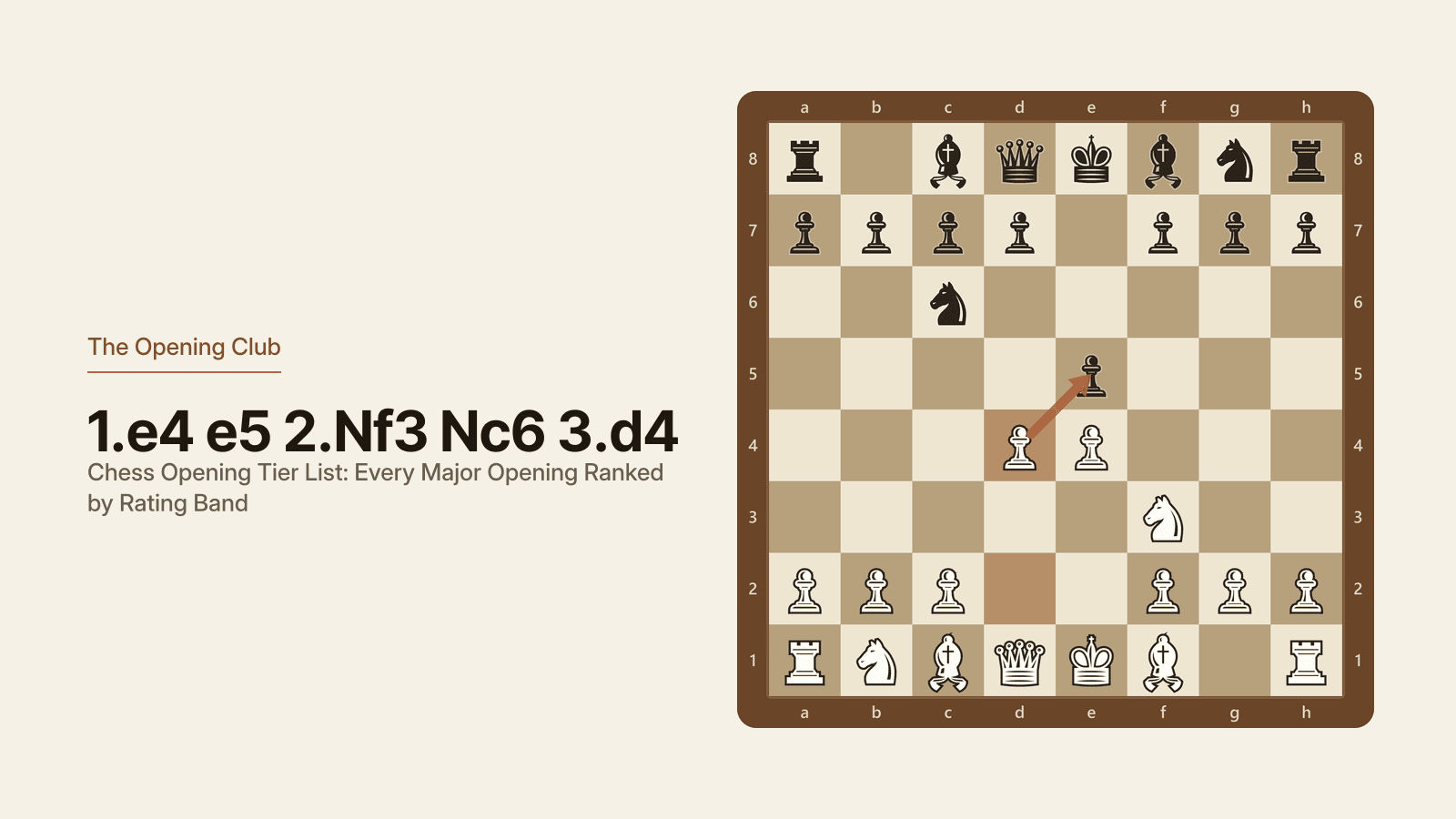
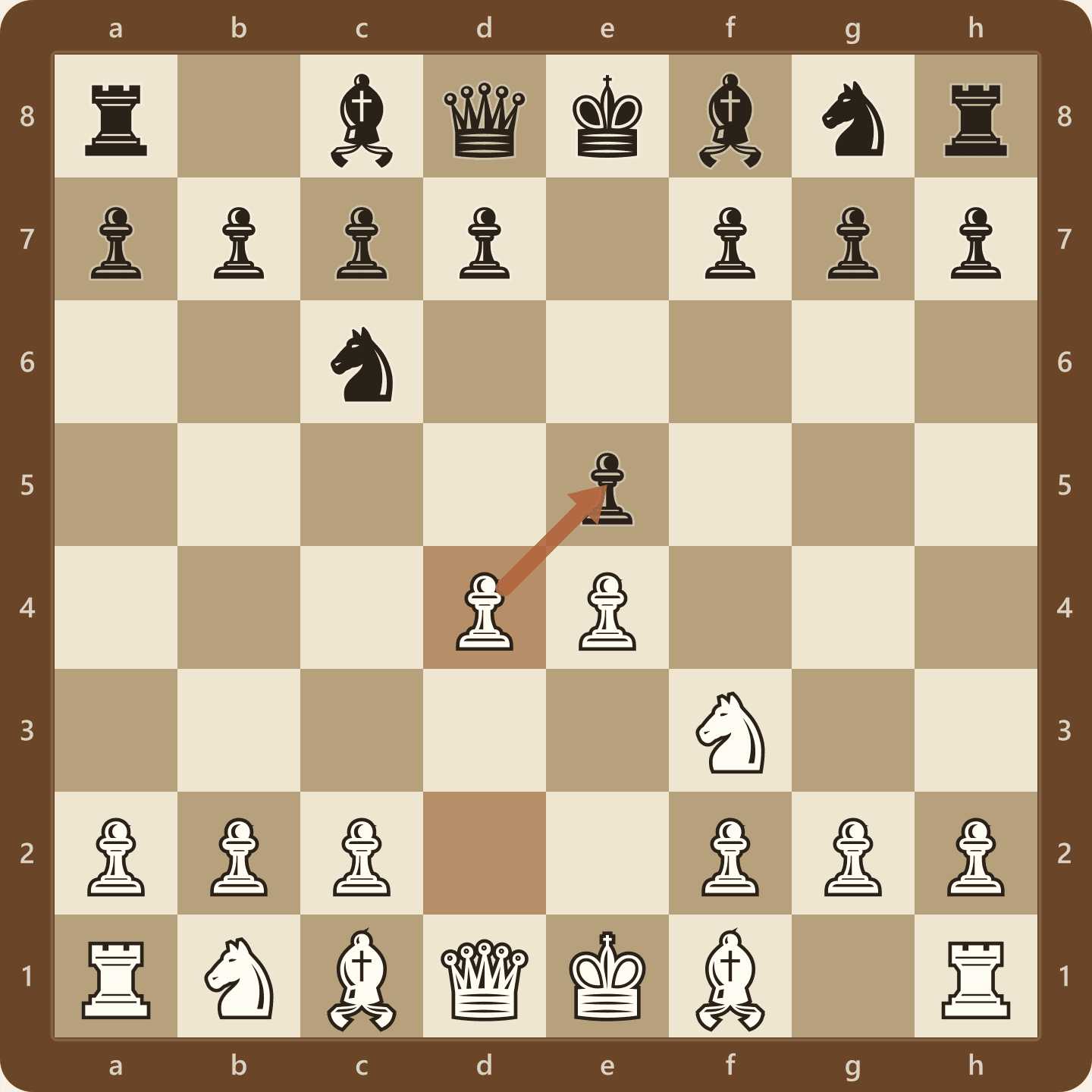
| 1.e4 e5 2.Nf3 Nc6 3.d4 (Scotch Game) | A | A | A | A |
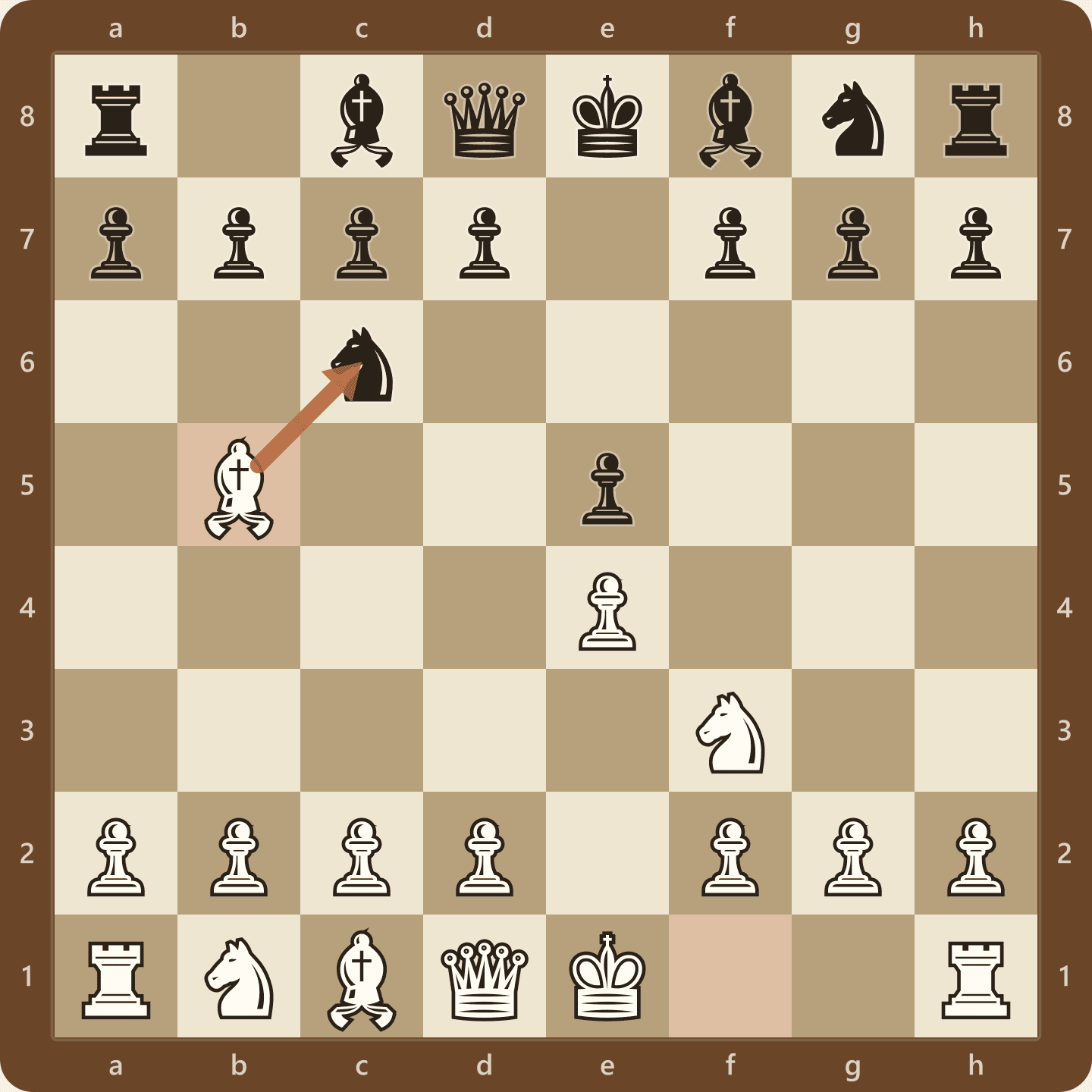
| 1.e4 e5 2.Nf3 Nc6 3.Bb5 (Ruy Lopez) | A | A | A | A |
| 1.c4 (English Opening) | A | B | A | A |
| 1.Nf3 (Zukertort Opening) | B | A | A | A |
| 1.e4 e5 2.d4 (Center Game) | B | A | A | A |
| 1.e4 e5 2.Nf3 Nc6 3.Bc4 (Italian Game) | A | A | B | B |
| 1.e4 e5 2.Bc4 (Bishop's Opening) | A | A | B | B |
| 1.d4 d5 2.Bf4 (London System, accelerated) | A | B | B | B |
| 1.e4 e5 2.f4 (King's Gambit) | B | A | B | B |
| 1.e4 c5 2.d4 (Smith-Morra Gambit) | B | B | B | A |
| 1.e4 c5 2.Nf3 Nc6 3.Bb5 (Rossolimo Attack) | B | B | B | A |
| 1.e4 c5 2.c3 (Alapin Sicilian) | B | B | B | B |
| 1.e4 e5 2.Nc3 (Vienna Game) | B | B | B | B |
| 1.Nf3 d5 2.c4 (Reti Opening) | B | C | B | A |
| 1.d4 d5 2.e4 (Blackmar-Diemer Gambit) | D | B | B | B |
| 1.e4 c5 2.Nc3 (Closed Sicilian) | D | C | B | B |
| 1.d4 Nf6 2.Bg5 (Trompowsky Attack) | C | C | B | B |
| 1.g4 (Grob Opening) | D | C | B | B |
| 1.d4 Nf6 2.c4 g6 3.Nc3 (vs King's Indian Defense) | D | C | C | C |
| 1.f3 (Barnes Opening) | D | D | D | C |
The Scotch Game and the Ruy Lopez are the only two mainstream White openings graded A at all four bands. Neither one depends on the opponent walking into anything.
The bottom of the White table is more interesting than the top. The Grob (1.g4) and the Blackmar-Diemer both start at D in the 600 band and climb to B by 1400. These are not openings that get better as opponents get stronger in some cosmic sense. They are openings that need the person playing them to know what they are doing, and at the 600 band nobody does, including the person playing them.
The tier list for Black
| Opening (graded for Black) | 600 | 1000 | 1400 | 1800 |
|---|---|---|---|---|
| 1.e4 e6 (French Defense) | B | A | A | B |
| 1.e4 c5 (Sicilian Defense) | B | B | B | A |
| 1.e4 c6 (Caro-Kann Defense) | B | B | B | B |
| 1.e4 d5 (Scandinavian Defense) | B | B | B | B |
| 1.e4 d6 (Pirc Defense) | B | B | B | B |
| 1.e4 g6 (Modern Defense) | B | B | B | B |
| 1.d4 Nf6 (Indian Defense) | B | B | B | B |
| 1.e4 e5 | B | B | C | B |
| 1.d4 d5 | B | B | C | B |
| 1.e4 c5 2.Nf3 e6 (French Sicilian) | C | B | B | B |
| 1.d4 Nf6 2.c4 e6 3.Nc3 Bb4 (Nimzo-Indian Defense) | C | B | B | B |
| 1.e4 c5 2.Nf3 d6 3.d4 cxd4 4.Nxd4 Nf6 5.Nc3 a6 (Najdorf) | not graded | B | B | B |
| 1.d4 e5 (Englund Gambit) | C | B | B | B |
| 1.e4 Nf6 (Alekhine's Defense) | C | C | C | B |
| 1.d4 d5 2.c4 c6 (Slav Defense) | C | C | C | C |
| 1.d4 d5 2.c4 e6 (Queen's Gambit Declined) | C | C | C | C |
| 1.e4 Nc6 (Nimzowitsch Defense) | C | C | C | C |
| 1.e4 c5 2.Nf3 Nc6 3.d4 cxd4 4.Nxd4 g6 (Accelerated Dragon) | D | C | C | C |
| 1.d4 f5 (Dutch Defense) | C | D | C | C |
| 1.e4 e5 2.Nf3 Nf6 (Petrov's Defense) | D | C | C | C |
| 1.e4 e5 2.Nf3 Nf6 3.Nxe5 Nc6 (Stafford Gambit) | C | A | B | C |
| 1.d4 d5 2.c4 dxc4 (Queen's Gambit Accepted) | D | D | D | D |
| 1.e4 e5 2.Nf3 Nc6 3.Bb5 Nf6 (Berlin Defense) | D | D | D | D |
| 1.d4 d5 2.c4 c6 3.Nf3 Nf6 4.Nc3 e6 (Semi-Slav Defense) | D | D | D | D |
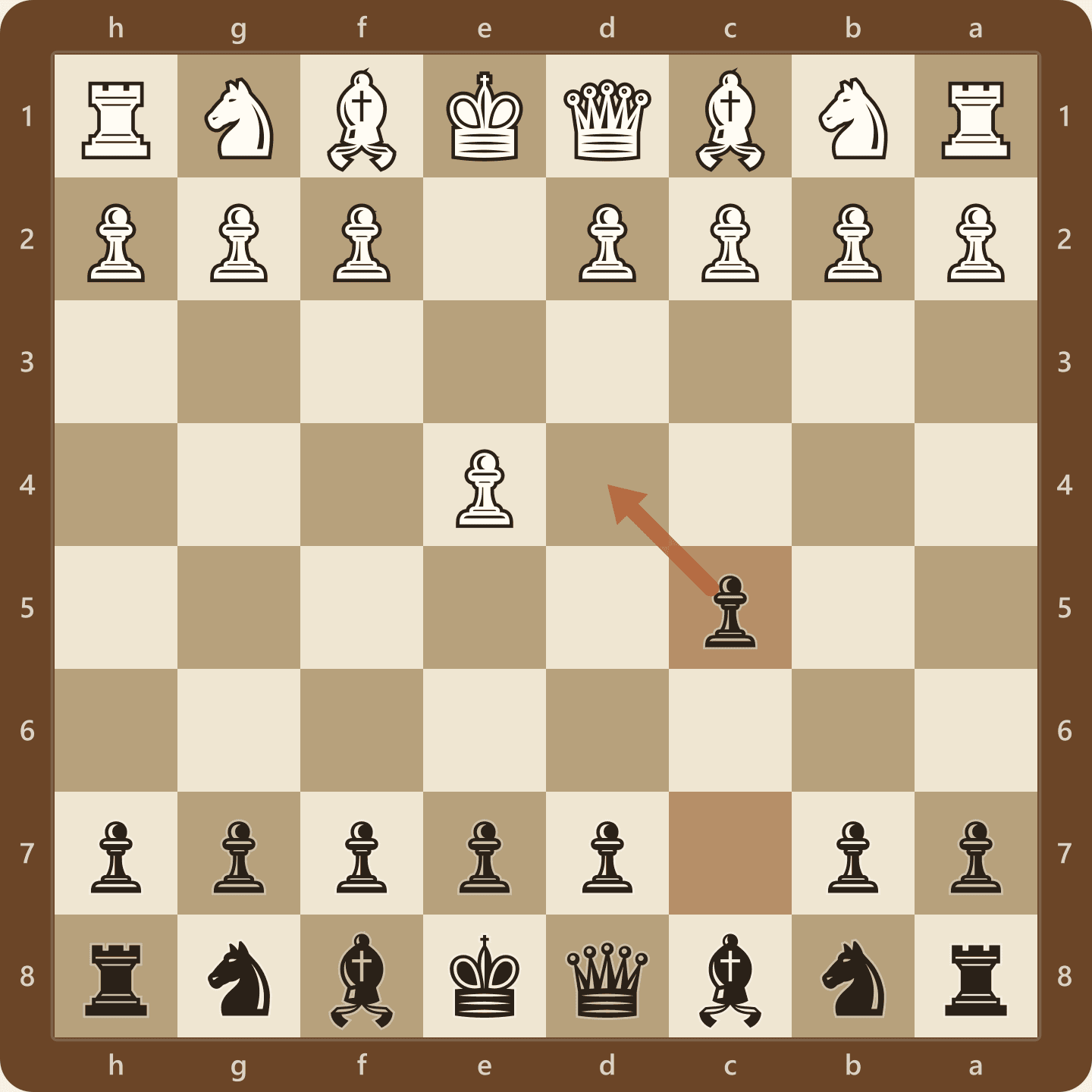
Black's list runs colder than White's, which is what you would expect from a game where White moves first. There is no S tier for Black at any band.
The grades that change, and why
The Sicilian is the cleanest example of the whole exercise. Black's raw win rate in it goes down as the bands rise: 48.82% at 600, down to 47.59% at 1800. Its grade goes up, from B to A. That is not a bug. The safety component climbs from 0.334 to 0.715 because Sicilian games at 1800 contain far fewer material accidents than the typical 1800 game, while its popularity share more than doubles. A defense that stops being a liability is worth more than one that wins a fraction more.
The opposite case is the Two Knights Knight Attack, the position the Fried Liver Attack fires from.
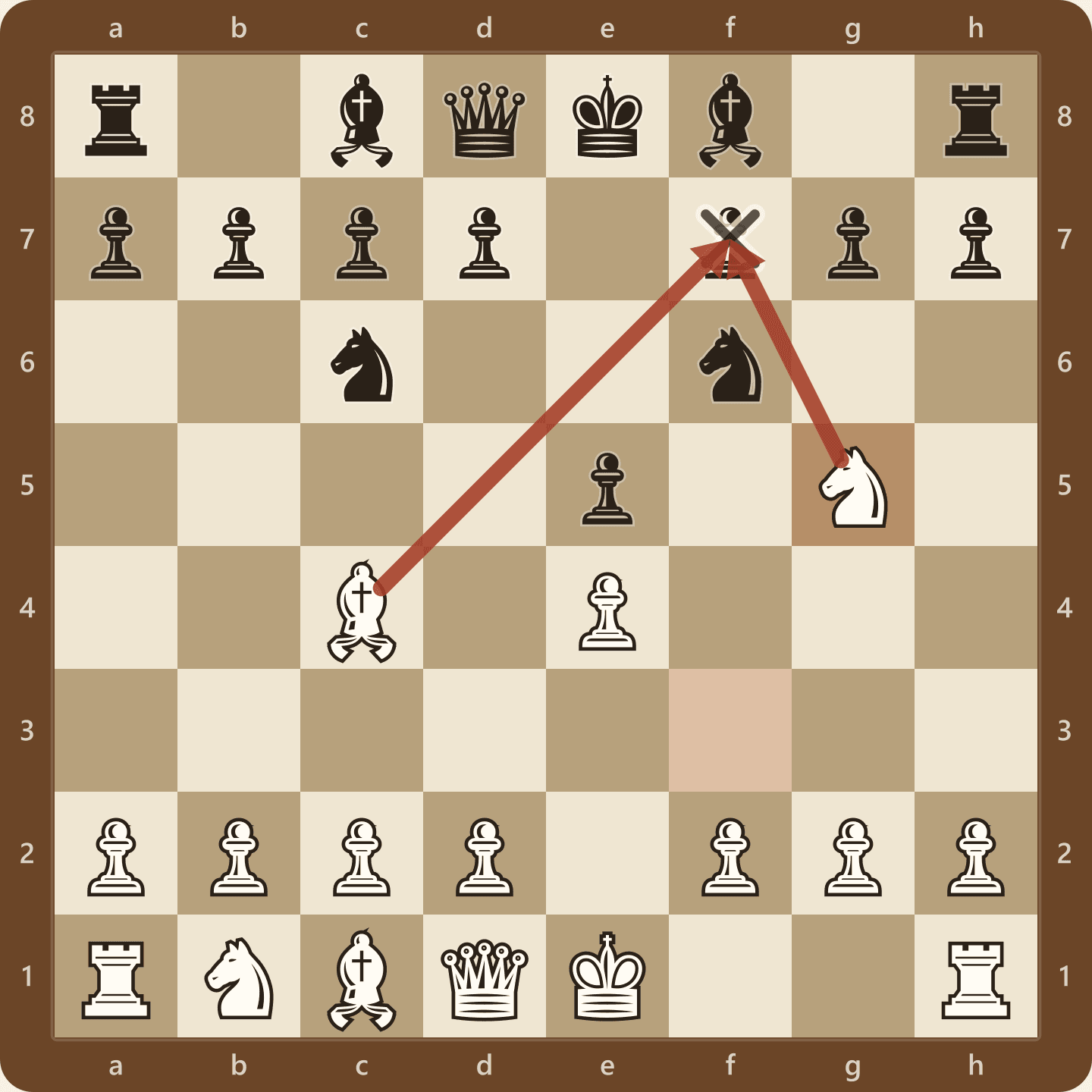
S, S, B, C. Its composite drops from 0.904 in the 600 band to 0.453 in the 1800 band, the steepest fall in the whole dataset. If you learned this line and it stopped working, the data agrees with you and can tell you roughly when.
The Vienna Gambit tells the third story, the one about the method's own bias.
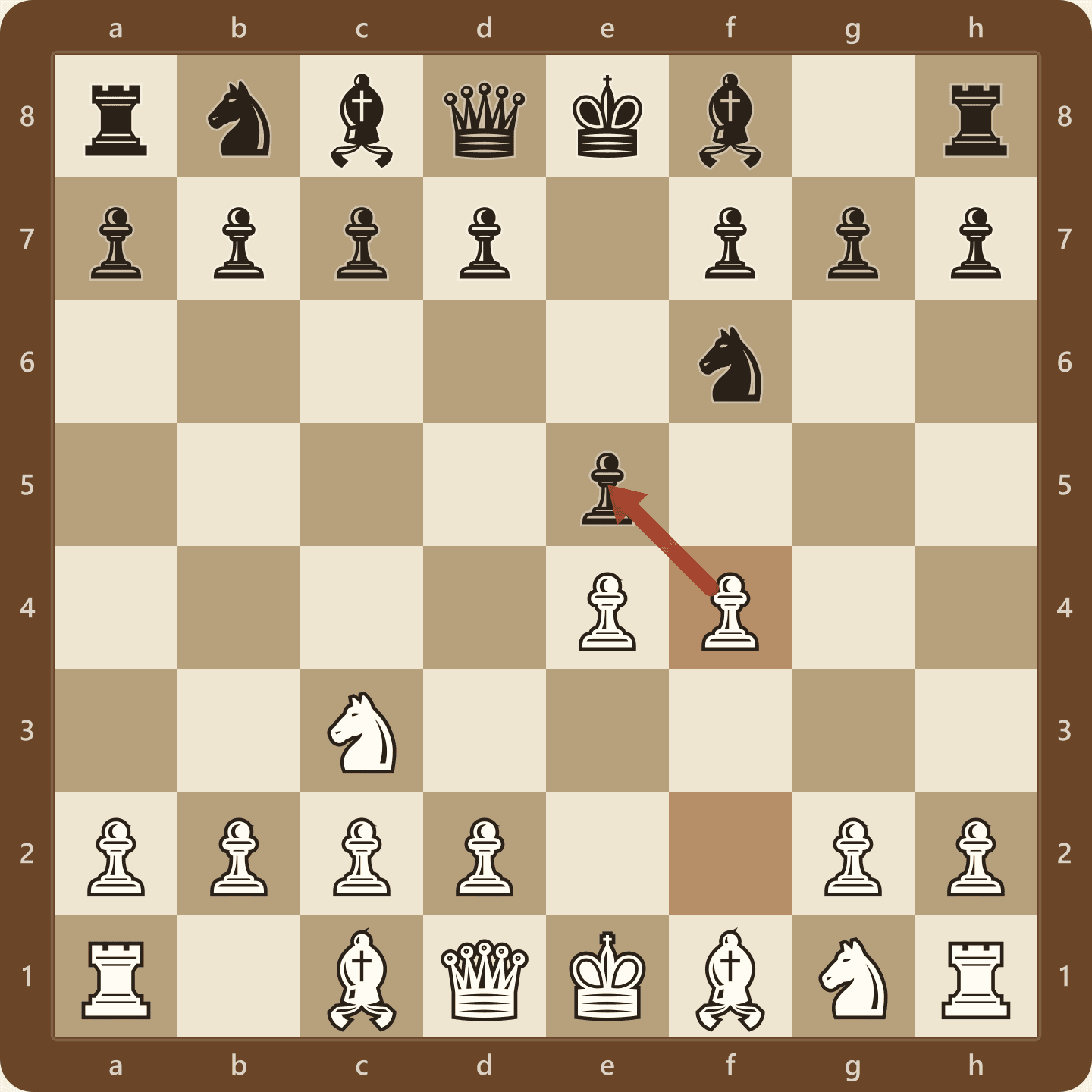
S at 600, A at 1000, B at 1400 and B at 1800, despite a maximum performance score. The safety term is doing the damage, and the safety term cannot distinguish a gambit from a hung pawn. Read every gambit's grade on this page as an underestimate, and read the accompanying performance figure instead.
The results that will annoy people
The Berlin Defense is D tier for Black at every band. The opening that made Vladimir Kramnik a world champion and that Stockfish calls dead equal grades 0.147 to 0.236. That is not a claim that the Berlin is bad. It is a measurement of what happens when players rated 600 to 1800 play it: White scores 51.56% to 52.87% from that position, and Black's safety score is 0.000 at three of four bands.
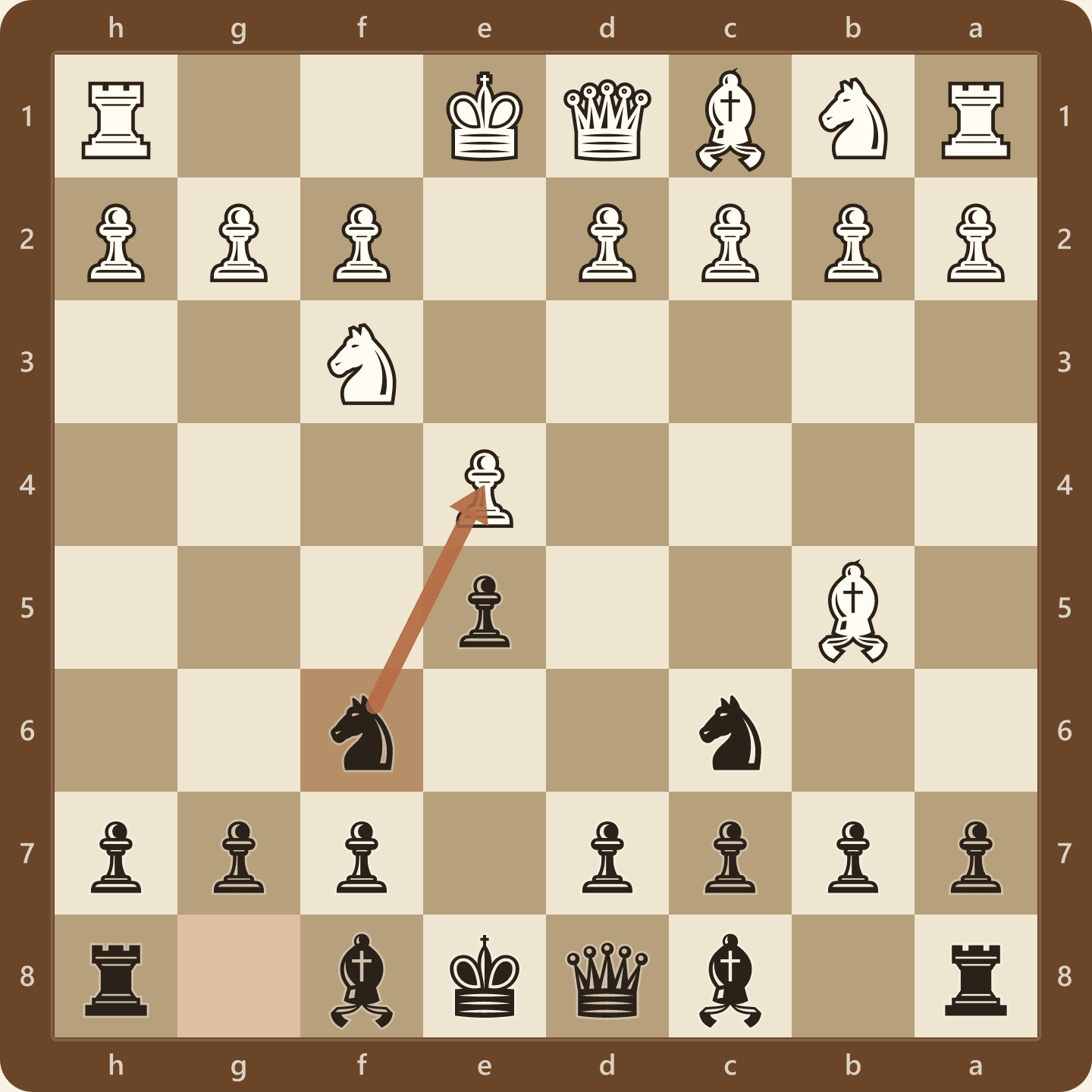
The Queen's Gambit Accepted is D tier for Black at every band, and the same position is a strong White result. Black's performance component is 0.039 at the 1000 band. Taking the pawn on c4 is one of the worst-scoring popular decisions in the entire dataset.
The Semi-Slav and the Slav grade D and C. Both are excellent master openings. Both require a plan that survives forty moves, which is not what these games are.
1.f3 is the only opening graded D at three of four bands. It is also, in fairness, the only opening in the set that loses more than it wins in every band.
Openings this tier list cannot grade
Being straight about the gaps: the tracked set is 314 lines, and some famous openings have no rows in it at all. There is no grade anywhere on this page for the Catalan Opening, the Grünfeld Defense, the Benko Gambit, the Evans Gambit, the Marshall Attack, the Latvian Gambit, the Stonewall Attack, the Grand Prix Attack, the Portuguese Gambit, the Jerome Gambit or the Bongcloud. Not because they are unrankable, but because they are not in the data, and inventing a grade for them would defeat the point of publishing the formula.
Some tracked lines are also too thin to trust at the bottom. The King's Indian Defense has 1,551 games in the 600 band against 124,899 at 1800, so its D grade down there is close to meaningless.
How this compares to the tier lists you have seen
The Hikaru Nakamura and Levy Rozman opening tier lists are made by very strong players ranking openings by soundness. They are right about soundness. They are answering a different question from this page, which is: given who you actually play, what happens?
Both answers matter, and they disagree in a predictable direction. Streamer tier lists tend to rate objectively sound but slow openings highly (the Berlin, the Slav) and dismiss crude attacking lines. This data does the reverse at the 600 and 1000 bands, then gradually comes round to agreeing with them by 1800. That convergence is the most reassuring thing in the whole dataset: it means the grades are tracking something real about who is playing, not just noise.
Reading the grades honestly
A grade is a summary, and summaries lose things. Four rules:
- Read your own band's column, nothing else. Half the value of this list is that the columns disagree.
- A one-grade difference is not much. The B band is 0.46 to 0.62, which is wide. A high B and a low A are nearly the same opening.
- Discount the safety term for gambits. It is structurally unfair to them, as the Vienna Gambit row shows.
- Check the sample. Grades built on a few thousand games in one band are hints.
The underlying results, with every sample size printed, are at chess opening win rates. The mistake side of the composite is at blunder rate by rating. What people actually play, as opposed to what scores, is the most popular chess openings. To look any of it up yourself, how to use a chess opening explorer covers reading these statistics directly, and the map of the whole subject is chess openings.
Frequently asked questions
What is the strongest opening in chess?
On this data, for White: 1.e4 e5 2.Nf3 is S tier at the 600 and 1000 bands and A above that, and the Queen's Gambit is S tier at 600 with a composite of 0.839. For a line that never drops below A at any band, the Scotch Game and the Ruy Lopez. For Black, nothing reaches S at any band; the ceiling is A, held by the French Defense at 1000 and 1400 and the Sicilian Defense at 1800.
What is the most brutal chess opening?
By grade, the Two Knights Knight Attack (1.e4 e5 2.Nf3 Nc6 3.Bc4 Nf6 4.Ng5), which reaches an S tier composite of 0.904 in the 600 band on the back of a 56.56% White win rate. It is also the fastest-decaying line in the set, falling to C tier by 1800. The Vienna Gambit is the runner-up and posts a maximum performance score at three separate bands.
What is the stupidest chess opening?
1.f3, the Barnes Opening. It is graded D in the 600, 1000 and 1400 bands and C at 1800, and it is the only first move in the dataset that loses more games than it wins at every level, bottoming out at a 37.63% White win rate in the 600 band. The Bongcloud, its main rival for the title, is not in the tracked set so it has no grade here.
Is there a chess opening tier list for beginners?
The 600 band column in both tables above is exactly that. The short version for a beginner: as White play 1.e4 e5 2.Nf3 (S tier) or the Queen's Gambit (S tier); as Black play the French Defense or the Caro-Kann, both B tier and both graded on more than a hundred thousand games in that band. Avoid the Berlin Defense and the Queen's Gambit Accepted, both D.
How does this differ from Hikaru's opening tier list?
Hikaru Nakamura and Levy Rozman grade openings on objective soundness, from the perspective of players who can actually punish an unsound one. This list grades them on measured results in rapid and blitz games between players rated 600 to 1800. The two agree more and more as the rating band rises, and disagree most at the bottom, where soundness matters less than whether your opponent knows the position.
What is Bobby Fischer's favourite opening?
Fischer is famous for the line "1.e4, best by test", and for the Ruy Lopez as White and the Najdorf Sicilian as Black. On this data all three hold up: 1.e4 is A tier at every band, the Ruy Lopez is A tier at every band, and the Najdorf is B tier at 1000, 1400 and 1800. Magnus Carlsen, by contrast, is best known for having no favourite, and a repertoire wide enough that opponents cannot prepare for it.