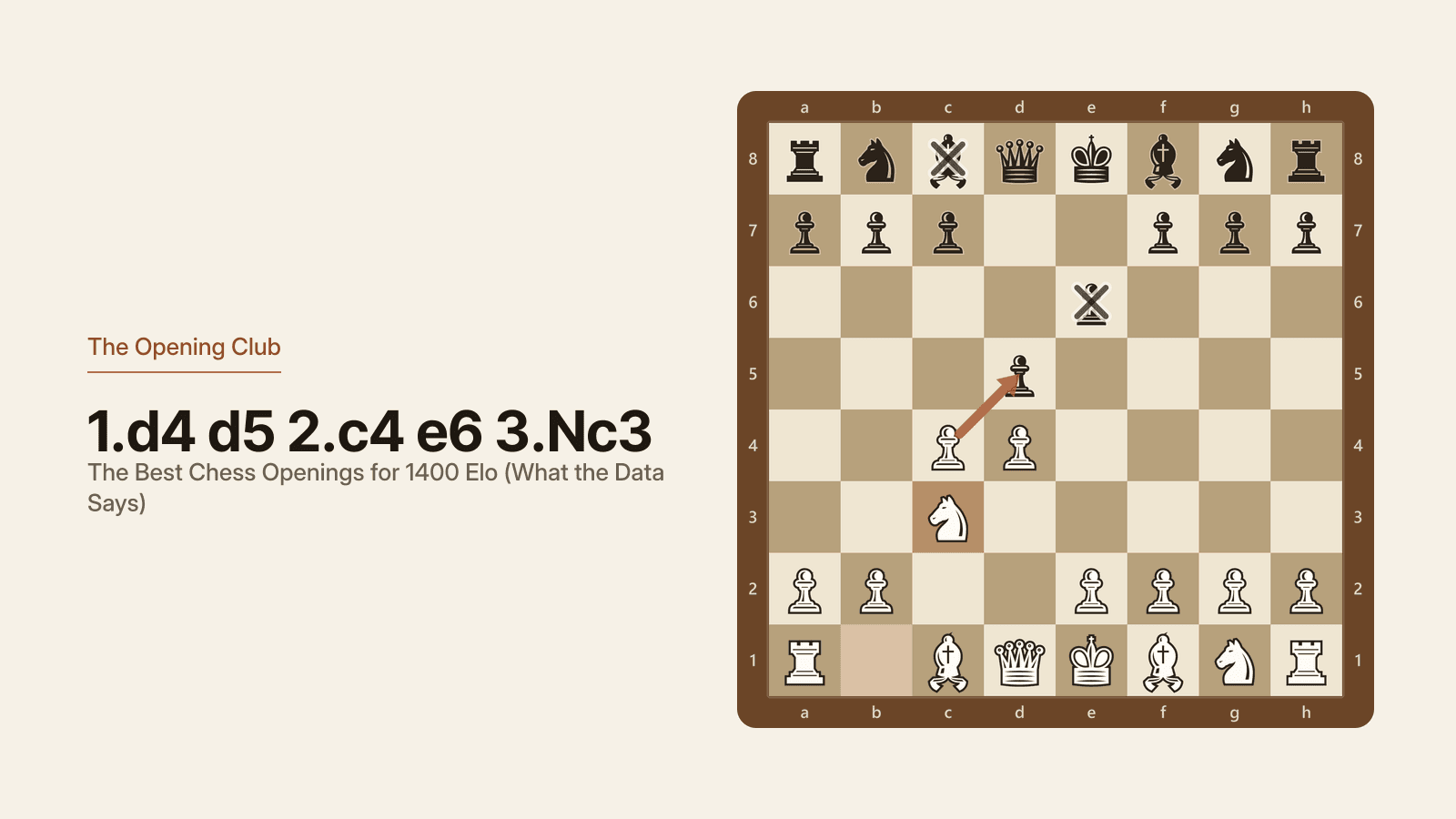
The best chess openings for 1400 Elo are the sound ones, and that sentence is only worth writing because it was not true two bands lower. Play the Queen's Gambit as White and the Caro-Kann Defense as Black.
What changed is your opponent. At 1400 they punish a bad pawn structure instead of dying to a tactic first, which means an opening's advantage now has to survive contact with someone who knows what they are doing. Trap-shaped openings that graded S below 1000 are graded B here. Solid, slightly passive defences that graded C below 1000 are graded A or B here.
At this level the real question is not "what is good" but "which of these two", because almost every 1400 has already narrowed it down to a pair. So this page settles four match-ups, and everything else on it is evidence for one of them:
- Queen's Gambit against the Scotch Game, for your main White opening.
- English against the London, if you want a system rather than a repertoire.
- Caro-Kann against the Sicilian, for your answer to 1. e4.
- 1... Nf6 against 1... d5, for your answer to 1. d4.
Each one gets a winner and the case where the loser is the better choice.
Understanding the 1400 level, and which band these numbers are
The Lichess opening explorer buckets games by rating, and the buckets are keyed by their lower bound: 600, 1000, 1400, 1800. There is no 1600 bucket.
So this page describes the 1400 band, meaning every game where the players sit between 1400 and 1799. Every number on this page is computed from public game records rather than from private testing: the Lichess open database opening explorer, period 2026-05, rapid and blitz pooled. In that snapshot the band holds 10,678,582 games at the first-move level, 99.5% of its games falling inside the fourteen first moves tracked.
This is not the top of the data. The 1800 band above it is the largest sample in the set, and several trends on this page keep running in the same direction there, which is why the tables below carry all four bands rather than stopping at yours.
Everything is ranked by the Wilson lower bound on score (wins plus half of draws), not raw win rate. It is the pessimistic end of the confidence interval, which is what stops a 5,000-game sideline from outranking a 2-million-game main line on noise. Every figure carries its band, its sample size and its source. The full grid is the chess opening tier list.
The one trend that explains this whole band
| Line | 600 | 1000 | 1400 | 1800 | Games at 1400 |
|---|---|---|---|---|---|
| Two Knights, 4. Ng5 (White) | S / 0.5780 | S / 0.5551 | B / 0.5283 | C / 0.5146 | 59,351 |
| Wayward Queen, 2. Qh5 (White) | A / 0.5240 | B / 0.5109 | B / 0.5068 | B / 0.5352 | 40,006 |
| Italian Game, 3. Bc4 (White) | A / 0.5368 | A / 0.5257 | B / 0.5200 | B / 0.5183 | 602,367 |
| Four Knights Italian, 4. Nc3 (White) | B / 0.5218 | C / 0.5055 | C / 0.4900 | D / 0.4859 | 85,069 |
| Ruy Lopez, 3. Bb5 (White) | A / 0.5349 | A / 0.5346 | A / 0.5323 | A / 0.5349 | 251,104 |
| English Opening, 1. c4 (White) | A / 0.5047 | B / 0.5283 | A / 0.5290 | A / 0.5297 | 270,653 |
| Vienna Game, 2. Nc3 (White) | B / 0.5147 | B / 0.5245 | B / 0.5275 | B / 0.5364 | 229,998 |
| French Defense, 1... e6 (Black) | B / 0.4925 | A / 0.4986 | A / 0.5012 | B / 0.4974 | 632,985 |
| Scandinavian, 2... Qxd5 (Black) | D / 0.4362 | C / 0.4542 | B / 0.4786 | B / 0.4876 | 339,514 |
| Alekhine Defense, 1... Nf6 (Black) | C / 0.4592 | C / 0.4573 | C / 0.4831 | B / 0.5084 | 64,296 |
| Open Game, 1... e5 (Black) | B / 0.4687 | B / 0.4706 | C / 0.4723 | B / 0.4710 | 3,190,593 |
Read down the first four rows and then the next four. The lines whose value came from your opponent not knowing something decay from S to C. The lines whose value came from a structure hold flat or climb.
The clearest single pair: 4. Ng5 in the Two Knights, the Fried Liver move, is the best line in the whole 600 band at a 0.5780 floor. Here it is a B at 0.5283 over 59,351 games and it keeps sliding to a C at 1800. Meanwhile the Ruy Lopez sits at 0.5349, 0.5346, 0.5323, 0.5349 across all four bands, which is as close to a flat line as this dataset produces. One opening is rented. The other is owned.
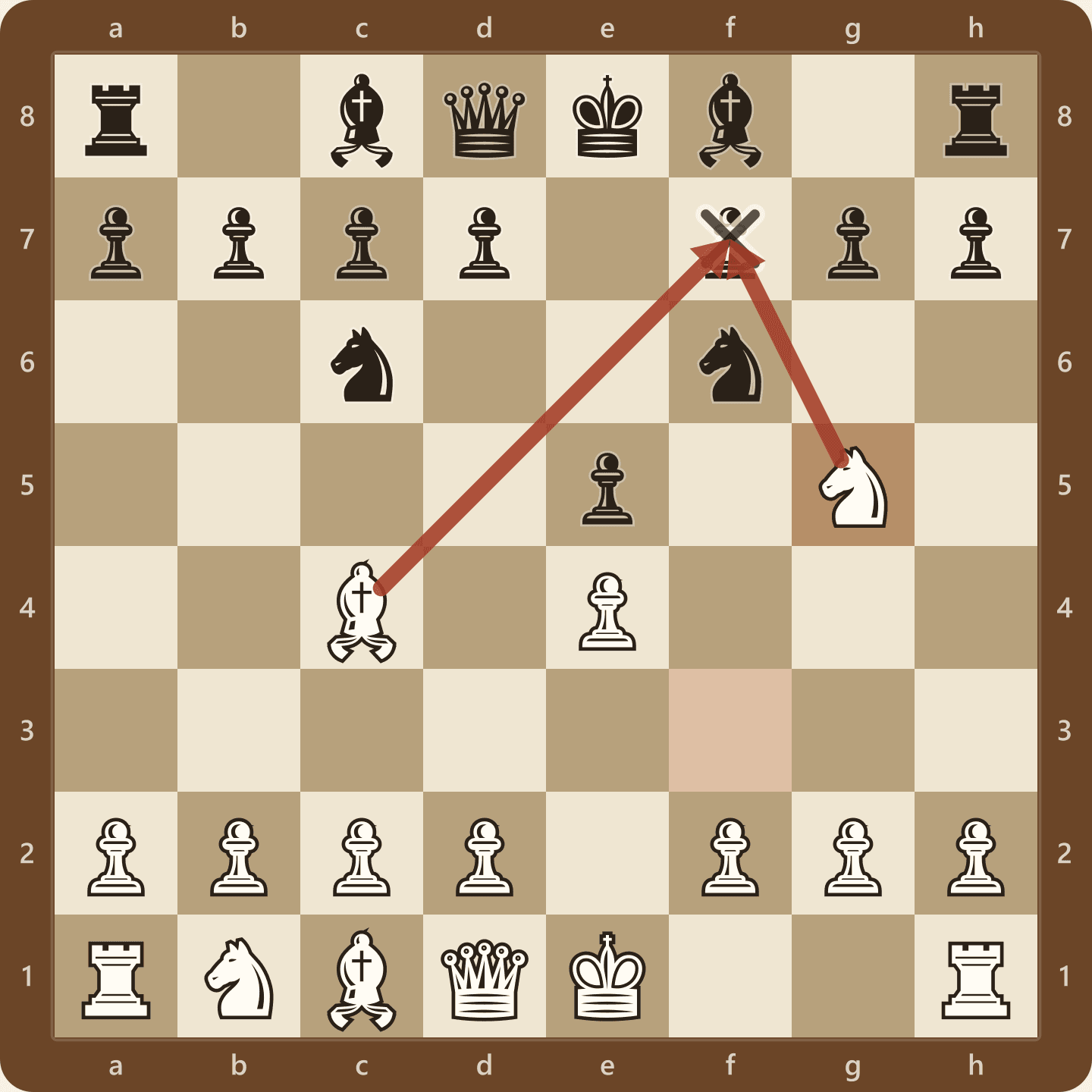
That is the position in question. Nothing about it changed. The people sitting opposite it did.
Match-up 1: the Queen's Gambit against the Scotch Game
First the field both of them beat, so the two finalists are not just asserted.
| Opening (moves) | Tier | Wilson floor | White wins | Games | vs the 1000 band |
|---|---|---|---|---|---|
| Scotch Game (1. e4 e5 2. Nf3 Nc6 3. d4) | A | 0.5494 | 53.17% | 282,455 | down from 0.5574 |
| King's Gambit (1. e4 e5 2. f4) | B | 0.5456 | 53.36% | 182,940 | down from 0.5476 |
| Queen's Gambit (1. d4 d5 2. c4) | A | 0.5452 | 52.77% | 415,763 | down from 0.5498 |
| Center Game (1. e4 e5 2. d4) | A | 0.5368 | 52.18% | 191,440 | up from 0.5268 |
| Ruy Lopez (1. e4 e5 2. Nf3 Nc6 3. Bb5) | A | 0.5323 | 51.34% | 251,104 | level at 0.5346 |
| London System, 2. Bf4 (1. d4 d5 2. Bf4) | B | 0.5299 | 51.08% | 298,278 | down from 0.5415 |
| Zukertort (1. d4 d5 2. Nf3) | B | 0.5296 | 51.08% | 240,861 | level at 0.5293 |
| English Opening (1. c4) | A | 0.5290 | 51.19% | 270,653 | level at 0.5283 |
| Vienna Game (1. e4 e5 2. Nc3) | B | 0.5275 | 51.10% | 229,998 | up from 0.5245 |
| King's Knight trunk (1. e4 e5 2. Nf3) | A | 0.5257 | 50.70% | 1,979,043 | down from 0.5317 |
| Bishop's Opening (1. e4 e5 2. Bc4) | B | 0.5251 | 50.83% | 385,812 | down from 0.5266 |
| Italian Game (1. e4 e5 2. Nf3 Nc6 3. Bc4) | B | 0.5200 | 50.30% | 602,367 | down from 0.5257 |
| Caro-Kann, 2. d4 (1. e4 c6 2. d4) | A | 0.5053 | 48.85% | 245,998 | down from 0.5126 |
| Three Knights (1. e4 e5 2. Nf3 Nc6 3. Nc3) | C | 0.5025 | 48.31% | 168,111 | level at 0.5014 |
| Open Sicilian start (1. e4 c5 2. Nf3) | B | 0.4977 | 48.07% | 466,086 | level at 0.4991 |
Note the first move. 1. d4 holds a 0.5235 floor over 2,614,908 games against 0.5128 over 6,813,943 for 1. e4, the widest gap of any band so far, and it widens again at 1800. The reason is visible in the table: almost every 1. e4 line above is drifting down, and the 1. d4 lines are flat.
Winner overall: the Queen's Gambit
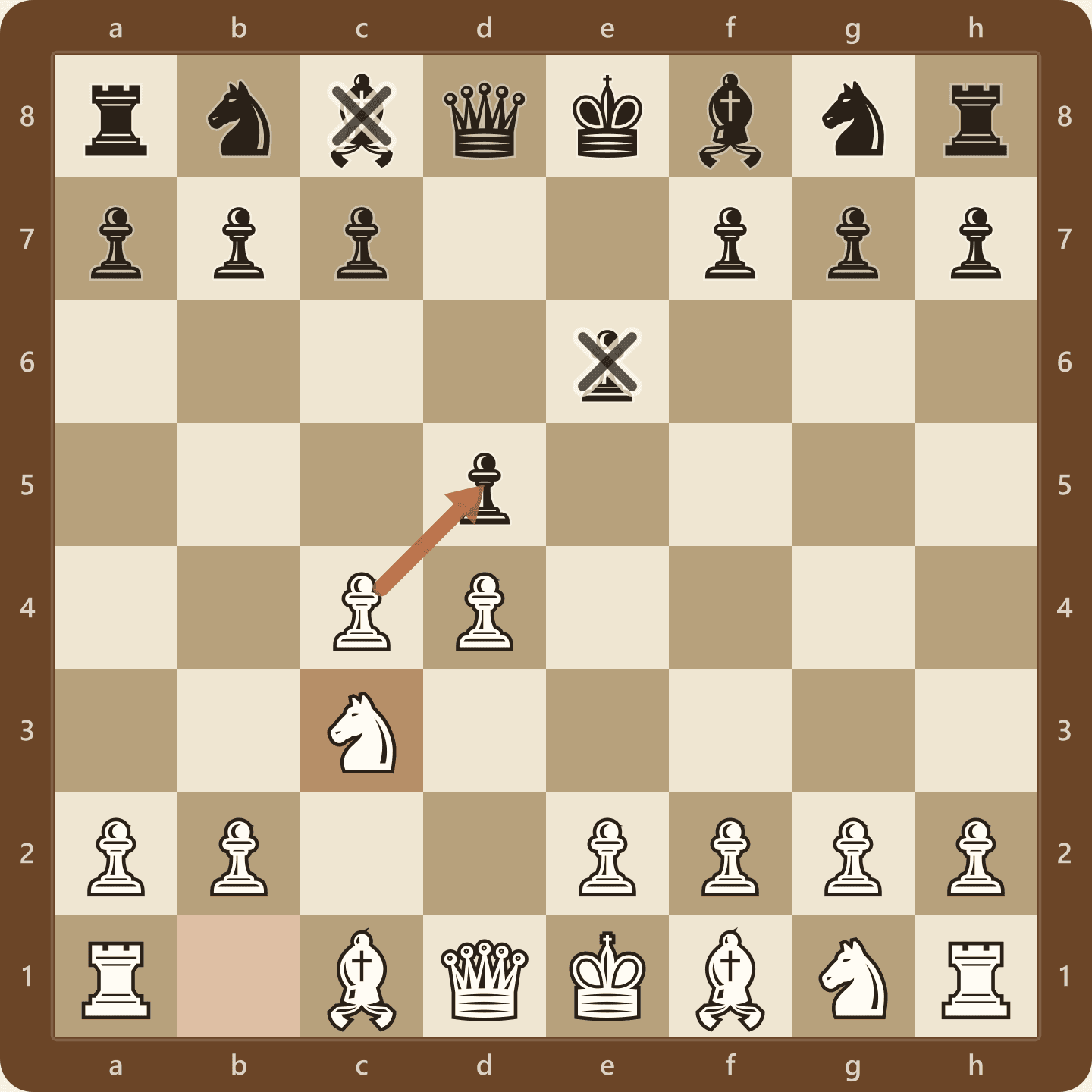
The Queen's Gambit grades A at a 0.5452 floor over 415,763 games, White winning 52.77%, and it is the opening to build a repertoire on at this level.
Its closest rival is the Scotch, which actually has the higher floor: 0.5494 over 282,455 games, a lead of 0.0042, or four tenths of a point of score per hundred games. The Queen's Gambit takes the pick anyway, on three tiebreaks.
Direction of travel. The Scotch's floor is falling: 0.5574 at 1000, 0.5494 here, 0.5449 at 1800. The Queen's Gambit falls more slowly and holds its A grade at 1800 too.
Sample and frequency. The Queen's Gambit is played in 3.87% of band games against the Scotch's 2.63%, so its advantage arrives more often.
Where the advantage comes from. The Scotch's edge is an open position, which helps whoever calculates better and therefore erodes as opponents improve. The Queen's Gambit's edge is that Black has no good answer, and that has not moved in four bands. Every popular reply here still grades C or D:
- 2... dxc4 (accepting): D, a 0.4277 floor, Black winning 41.23% over 115,410 games. It graded D in every band we measure. Nothing about improving fixes it.
- 2... Nf6 (Marshall Defense): D, 0.4462, 89,013 games.
- 2... e6 (the Queen's Gambit Declined): C, 0.4611, 128,803 games.
- 2... c6 (the Slav Defense): C, 0.4661, 90,731 games, still the least bad.
White's side of those same positions is the mirror image: 3. Nc3 against the QGD grades B at a 0.5357 floor over 69,144 games, and against the accepted line 3. e3 grades S at a 0.5751 floor over 27,668 games. If you want one line of theory that pays for itself at this level, that is the one.
Best 1. e4 pick: the Scotch
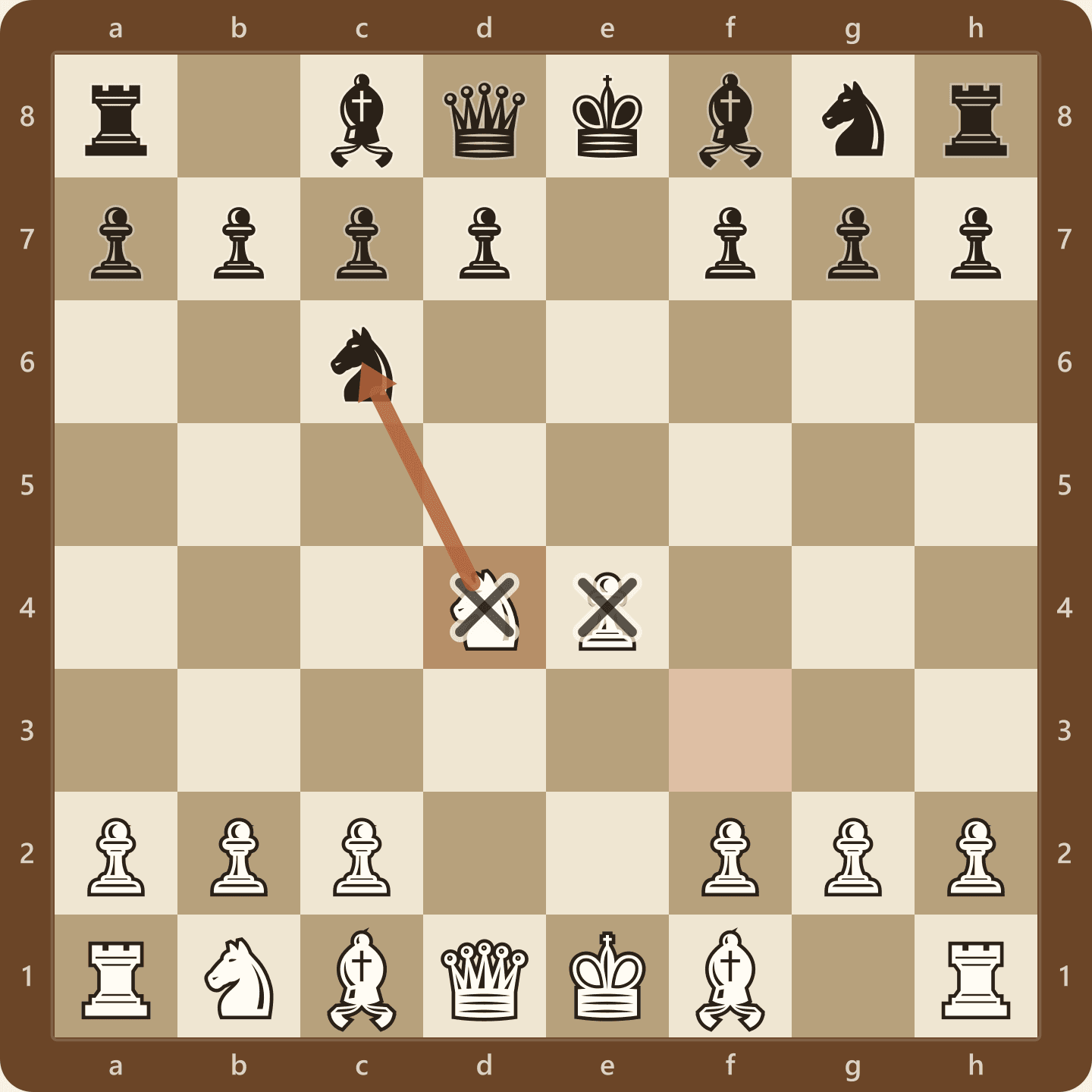
The Scotch Game still holds the highest floor of any popular White opening in the band: A, 0.5494, 282,455 games, White winning 53.17%. The Scotch Gambit (4. Bc4) is better still at a 0.5600 floor over 54,398 games and holds its A grade here, one of the very few sharp lines that does.
Take this over the Italian Game if you play 1. e4. The Italian has slipped to B at a 0.5200 floor over 602,367 games, and the reason is the same as everywhere else on this page: it relies on the f7 pressure, and at 1400 Black covers f7. The one Italian line that still holds up is the main line, 4. c3 in the Classical Variation (Giuoco Piano), at a B and a 0.5368 floor over 54,251 games, which beats the Italian's own average by more than a full point.
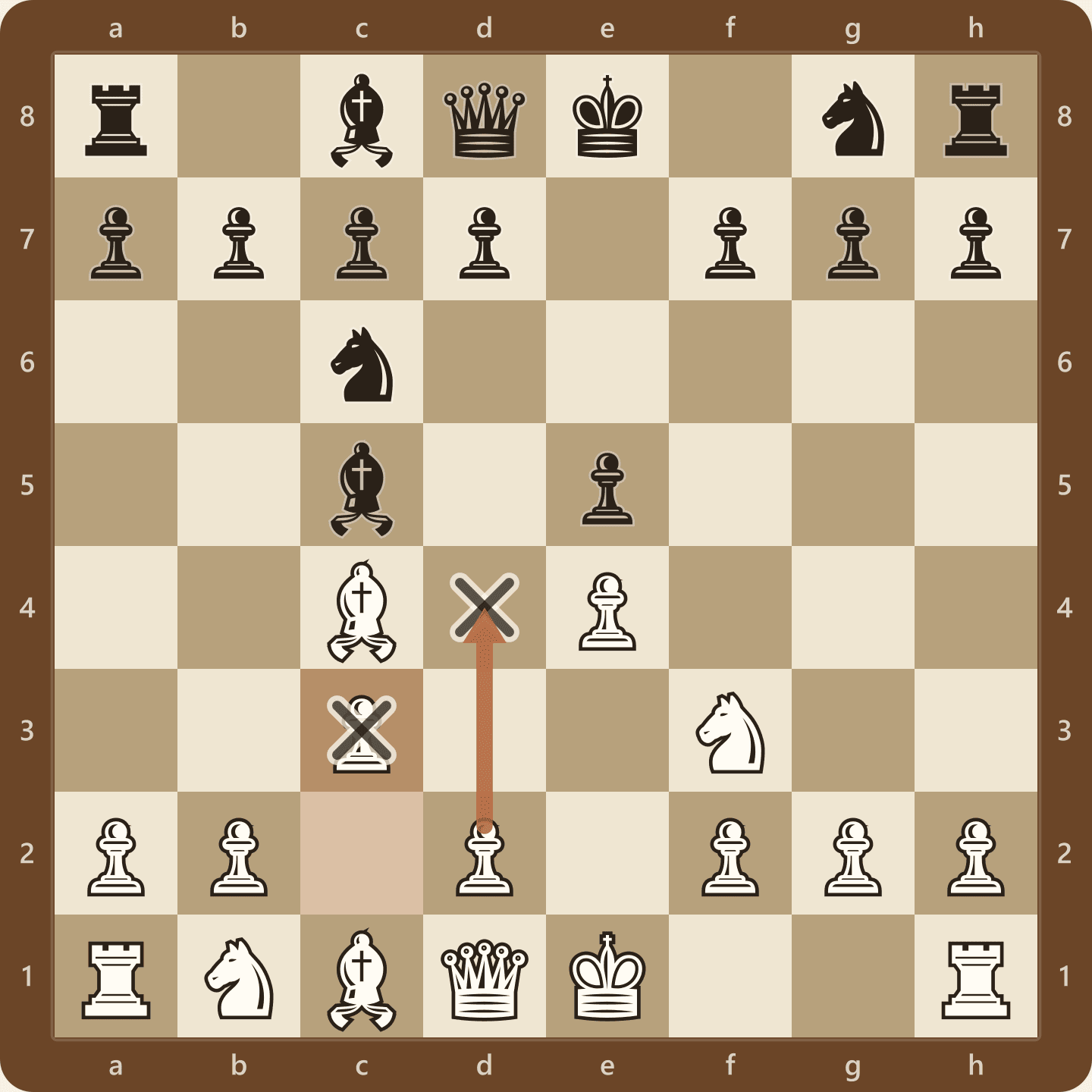
The c3 and d4 plan builds a centre instead of aiming at a square, and building a centre is the kind of advantage that survives your opponent improving.
Match-up 2: the English against the London
A system-based opening is one where you aim for the same setup regardless of what your opponent does. The two candidates are almost tied here: the English Opening at a 0.5290 floor over 270,653 games and grade A, the London System at 0.5299 over 298,278 and grade B.
The tiebreak is the trend, and it is stark. The English rises at every band: 0.5047, 0.5283, 0.5290, 0.5297. The London falls at every band: 0.5474, 0.5415, 0.5299, 0.5277.
So the English is the pick, because it is the only opening in the dataset whose floor improves monotonically as opponents get stronger, which means nothing you learn now gets thrown away later. Stay with the London only if minimum study time is the real goal: it is still the same six moves every game and still a good B on nearly 300,000 games in this band. It is not broken. It is the one you will eventually have to leave.
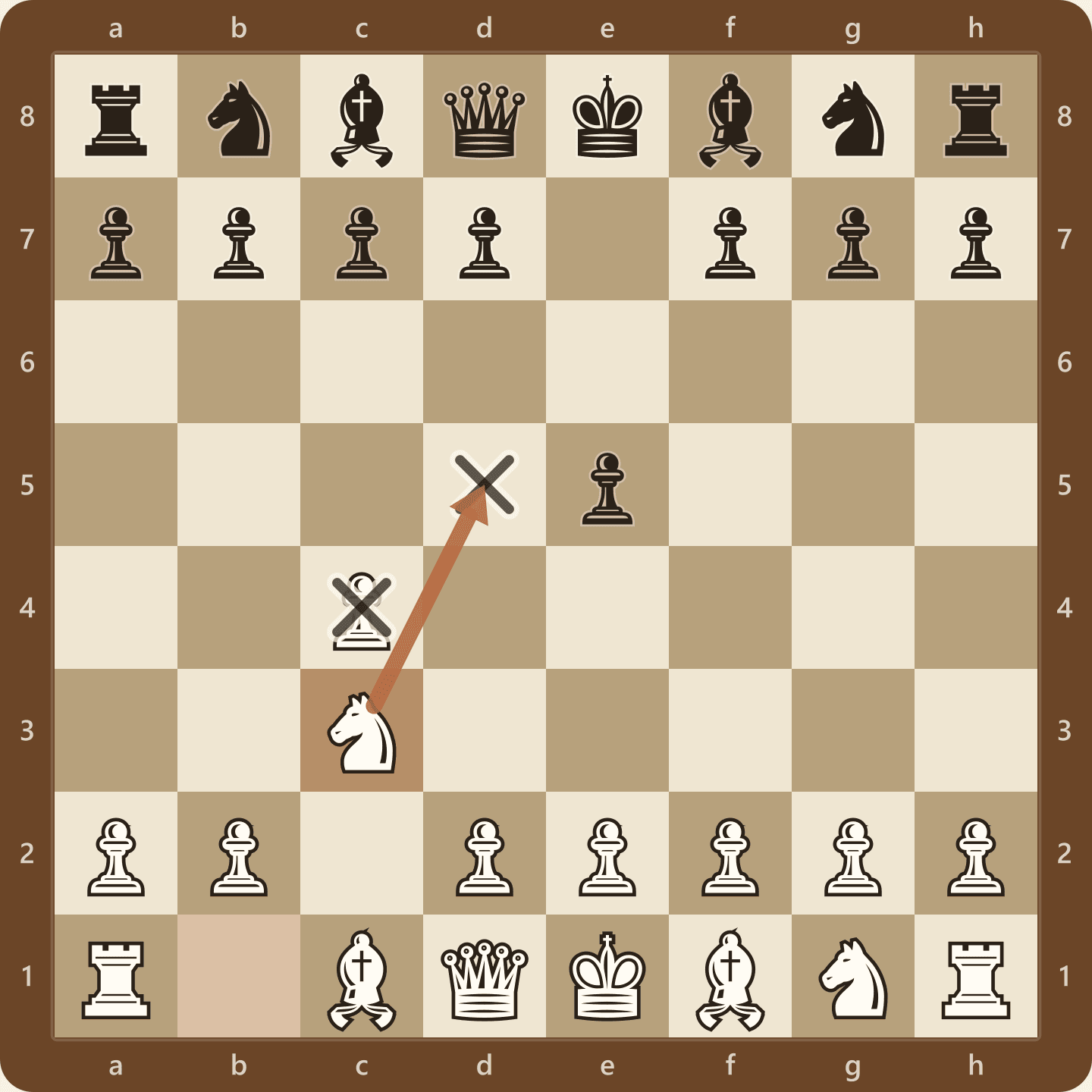
What you are playing is a Sicilian with colours reversed and a spare move, which is why the structures feel familiar the moment you have played fifty of them.
Match-up 3: the Caro-Kann against the Sicilian
Again, the field first.
| Black's reply | Tier | Wilson floor | Black wins | Games | vs the 1000 band |
|---|---|---|---|---|---|
| Caro-Kann Defense (1. e4 c6) | B | 0.5072 | 48.91% | 576,216 | up from 0.5038 |
| Sicilian Defense (1. e4 c5) | B | 0.5045 | 48.77% | 937,107 | down from 0.5068 |
| Sicilian, 2... d6 (1. e4 c5 2. Nf3 d6) | B | 0.5033 | 48.67% | 119,088 | up from 0.5004 |
| French Defense (1. e4 e6) | A | 0.5012 | 48.35% | 632,985 | up from 0.4986 |
| Benoni, 1... c5 (1. d4 c5) | B | 0.4971 | 48.36% | 75,568 | up from 0.4921 |
| Englund Gambit (1. d4 e5) | B | 0.4952 | 48.06% | 205,528 | up from 0.4886 |
| Old Sicilian (1. e4 c5 2. Nf3 Nc6) | B | 0.4935 | 47.73% | 231,635 | down from 0.4959 |
| Scandinavian Defense (1. e4 d5) | B | 0.4924 | 47.42% | 669,283 | up from 0.4805 |
| Indian Defense (1. d4 Nf6) | B | 0.4892 | 47.19% | 360,947 | level at 0.4885 |
| Modern Defense (1. e4 g6) | B | 0.4892 | 47.19% | 192,251 | level at 0.4896 |
| Pirc Defense (1. e4 d6) | B | 0.4845 | 46.73% | 241,975 | level at 0.4833 |
| Dutch Defense (1. d4 f5) | C | 0.4770 | 46.44% | 47,895 | up from 0.4671 |
| Nimzo-Indian Defense (3... Bb4) | B | 0.4750 | 46.63% | 13,689 | up from 0.4688 |
| Open Game (1. e4 e5) | C | 0.4723 | 45.40% | 3,190,593 | up from 0.4706 |
| Queen's Pawn Game (1. d4 d5) | C | 0.4642 | 44.49% | 1,269,910 | level at 0.4630 |
Winner for Black: the Caro-Kann Defense
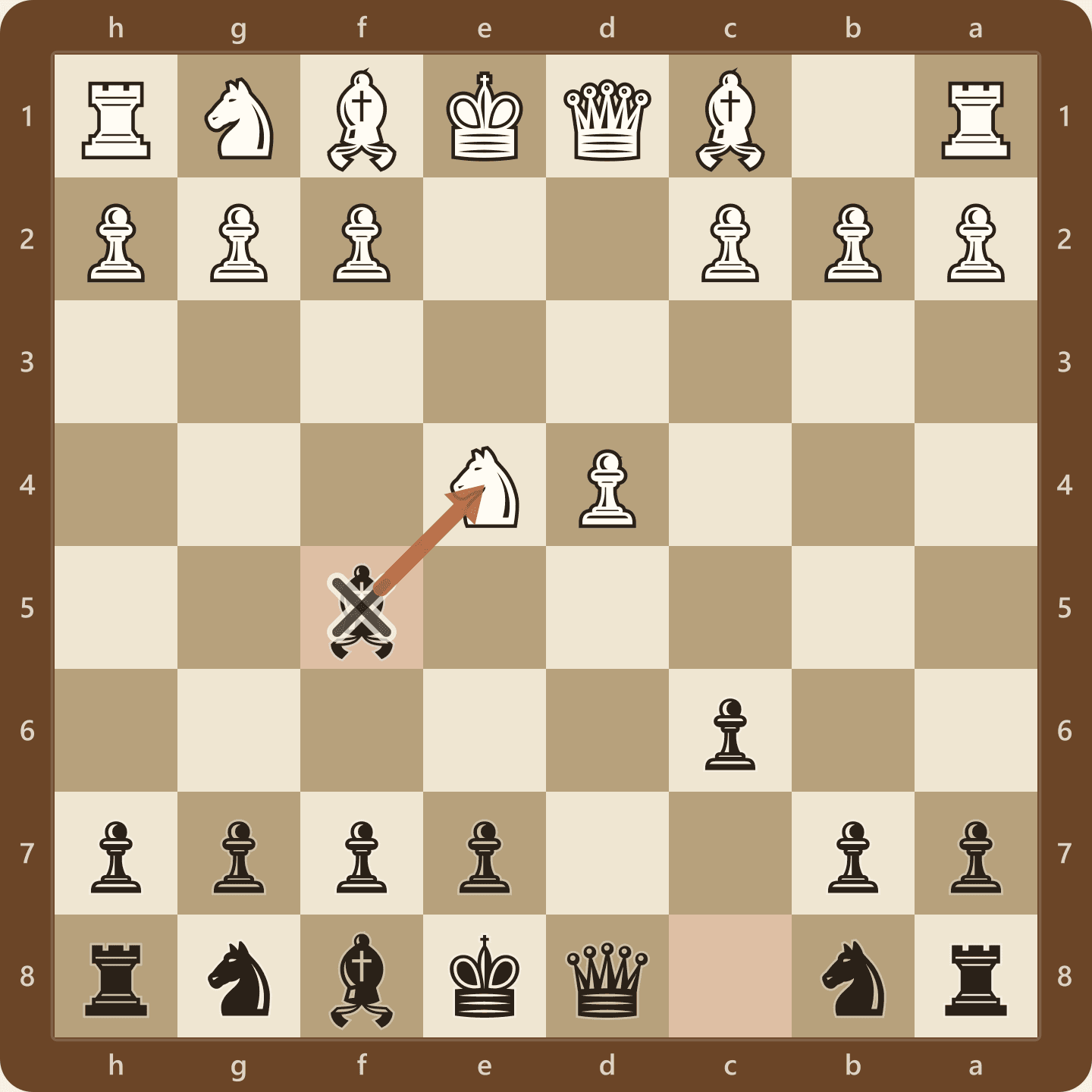
The Caro-Kann takes the top Black floor at 0.5072 over 576,216 games. The Sicilian is right behind at 0.5045 over 937,107, and these two have swapped the lead at every band: the Caro-Kann led below 1000 (0.5077 to 0.5042), the Sicilian led the 1000 band (0.5068 to 0.5038), and the Caro-Kann takes it back here.
So the pick depends on one thing, and it is not the number. Take the Caro-Kann if you want a defence you can play imperfectly and still survive: that is the higher floor and the lower maintenance cost. Take the Sicilian if you want winning chances rather than a floor, because it draws less and produces the unbalanced positions where a lower-rated player can outplay a higher-rated one. Both are B grades here and neither is a mistake.
The mechanism is the one thing you should take from this article. Black plays 1... c6 so that d5 is supported by a pawn, and the light-squared bishop reaches f5 before the pawn chain closes. That is a structural feature, not a trick, so it does not decay. White's most popular attempt to punish it, the Advance Variation 3. e5, has fallen from an A and a 0.5275 floor below 1000 to a C and 0.4906 here over 115,529 games, because at 1400 Black actually plays ...Bf5 instead of shuffling.
The Sicilian, and how deep to take it
The Sicilian Defense is a hair behind at a 0.5045 floor over 937,107 games, and it is now the most-played non-e5 reply in the band at 8.73% of all games. The two mainline entries both grade B here: 2... d6 at 0.5033 over 119,088 games and 2... Nc6 at 0.4935 over 231,635.
This is also the band where the famous variations finally exist in usable numbers. The Najdorf grades B at a 0.5003 floor over 11,796 games. The Dragon grades C at 0.5061 over 5,289. Both are perfectly playable and both are about 0.1% of games in the band, which answers the "how deep should I study" question: deep enough to know your first eight moves and the pawn break that follows them, not deep enough to have opinions about move 18.
The French is the only A grade
The French Defense is the only Black reply in the table graded A, at a 0.5012 floor over 632,985 games, and it has climbed at every band from 0.4925 below 1000. White's Advance Variation against it is the mirror image, falling to a C and a 0.4727 floor over 109,055 games, the weakest popular White line in the entire band.
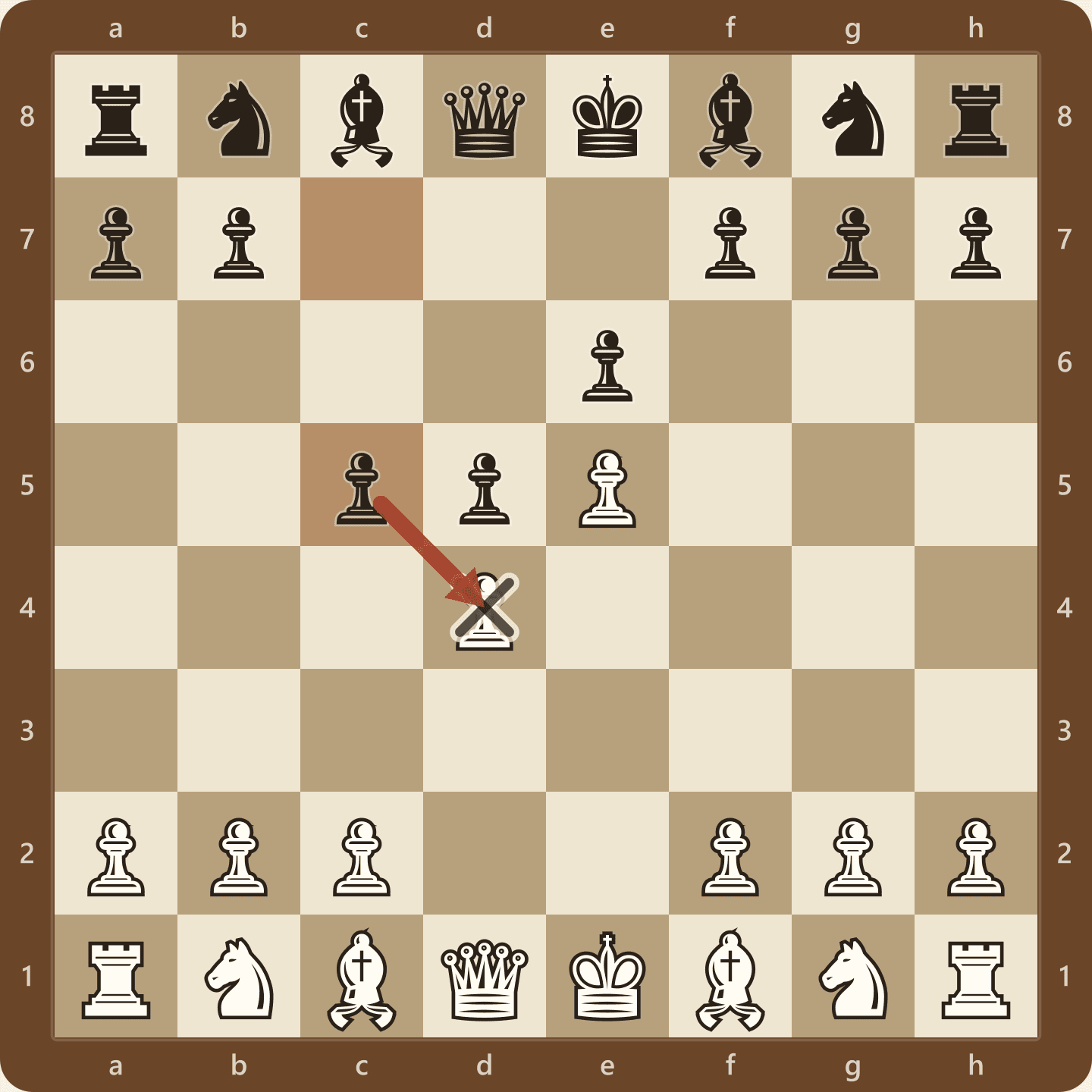
The move that does the damage is 3... c5, hitting the base of the pawn chain. Cramped and sound beats spacious and loose once your opponent knows what a pawn break is. That is the same sentence as the Caro-Kann paragraph, which is the point.
Against 1. d4
Match-up 4: 1... Nf6 against 1... d5
This one is no longer close. 1... Nf6 grades B at a 0.4892 floor over 360,947 games. 1... d5 is three and a half times more popular at 1,269,910 games and has dropped to a C at 0.4642. Below 1000 both graded B and the difference was 0.023; here it is a full tier. Winner: 1... Nf6, and the margin is wider at every band you climb.
The King's Indian Defense becomes genuinely findable at this level, though still rare: its main starting position appears in 0.28% of band games, and Black's side of the main line grades B at a 0.4819 floor over 17,503 games. The Nimzo-Indian grades B at 0.4750 over 13,689. Neither the Catalan Opening nor the Benko Gambit clears the sample floor in any of the four bands, which is a reasonable answer to the question of whether they belong in a 1400 repertoire.
The Scandinavian finally works
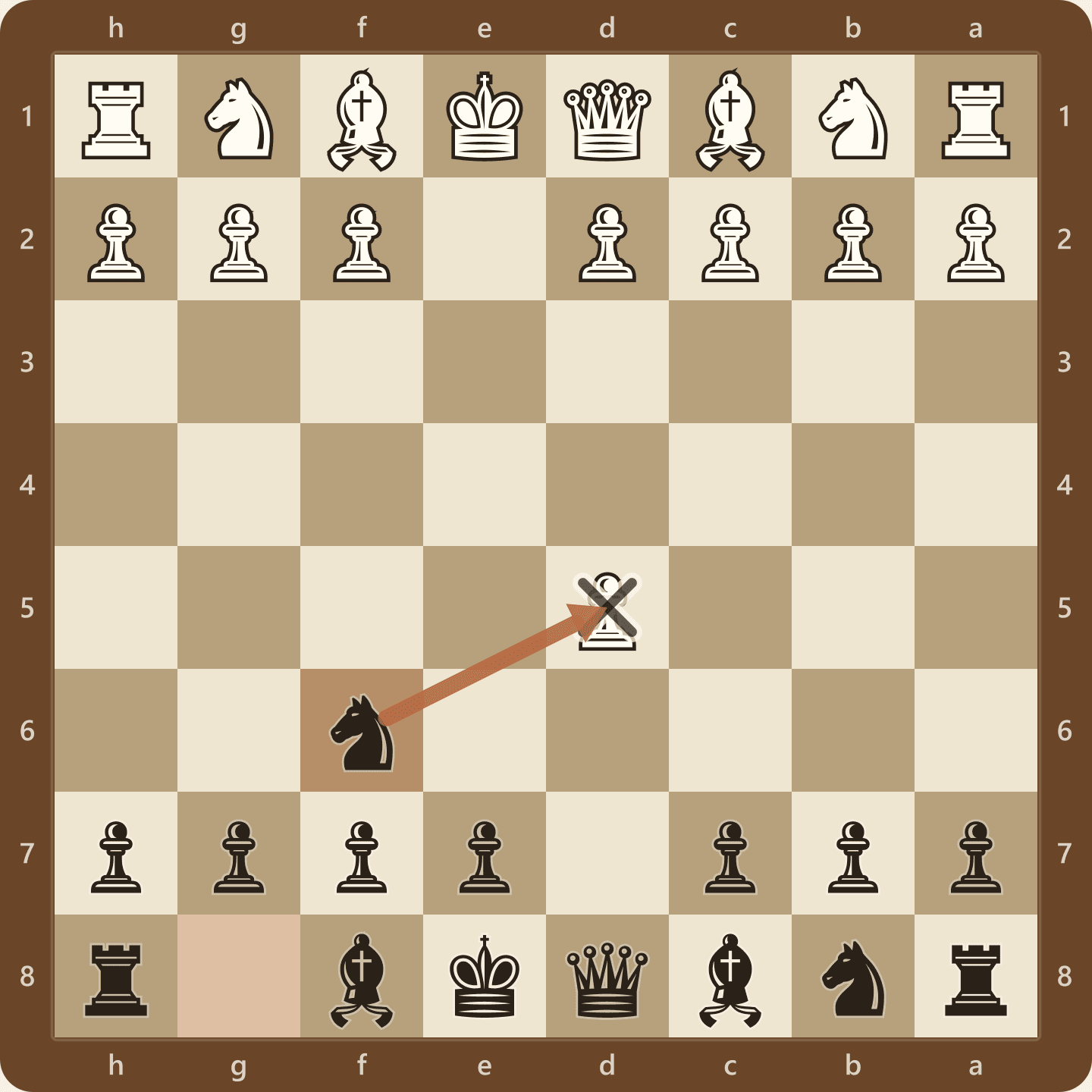
The Scandinavian is this band's best comeback story. The queen recapture 2... Qxd5 graded D below 1000 at a 0.4362 floor and grades B here at 0.4786 over 339,514 games, because 1400-rated opponents no longer win a free tempo out of it every game. The Modern Variation 2... Nf6 grades A at a 0.5070 floor over 90,848 games and is the better move at every band.
Common mistakes at 1400, in the data
Defaulting to 1... e5. It has dropped to a C at a 0.4723 floor, on 3,190,593 games, which is 29.73% of the band. It is the single most-played thing on this list and it is the worst-graded popular reply to 1. e4. Playing it because it is what you have always played is the most common expensive habit at this level.
Playing 3... h6 against the Italian. The Anti-Fried-Liver move grades C at a 0.4610 floor over 101,486 games, worse than it scored below 1000 and heading for a D at 1800. 3... Bc5 grades B at 0.4844 over 190,700 games instead.
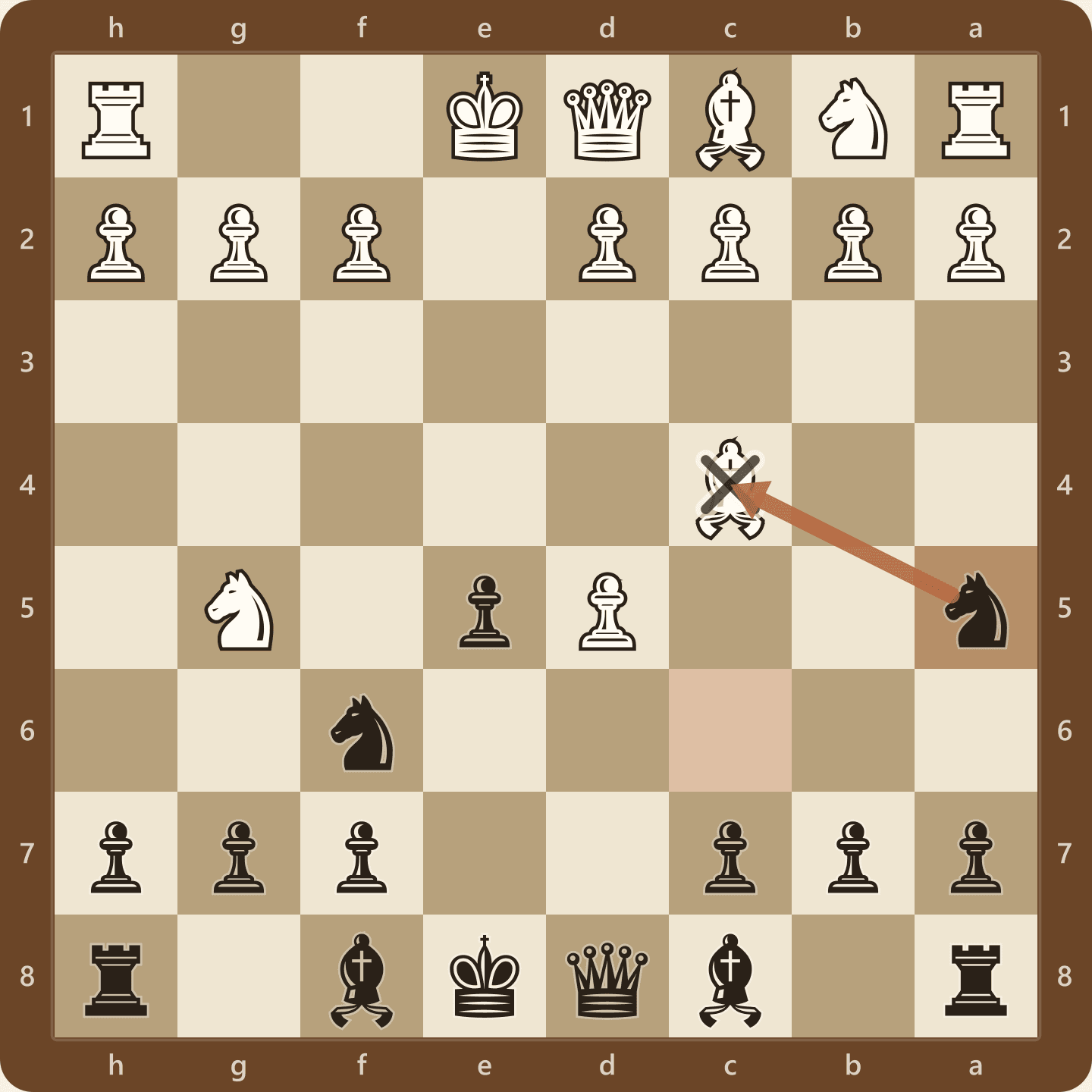
If someone still tries 4. Ng5 on you, 5... Na5 is the answer: grade B, a 0.5158 floor over 19,437 games, and one of very few positions in this dataset where Black's floor is above 0.51. Taking with 5... Nxd5 is the Fried Liver and it is how the trap works.
Adding a fourth opening before understanding the first. The band's blunder rate is 41.0%, games-weighted across the lines covered, drawn from a separate and much smaller public sample of 21,300 games (period 2026-07, methodology mat-swing-v1, a material-swing proxy rather than engine evaluation). This is the band where that number finally moves: it sat at 44.8% in both the 600 and 1000 bands, tied, and only starts falling here, reaching 36.9% at 1800. See blunder rate by rating for the method.
That is the quantitative version of this whole page. The reason sound openings start paying at 1400 is that this is the first band where opponents stop handing the game back. Blunders are still the largest single term in your results, and they are no longer large enough to cover for a bad structure.
The trap hit rate goes the same way, falling to 0.31% here from 0.45% in the band below. Traps are not the threat. Being slowly outplayed from a worse pawn structure is.
When to expand your repertoire
The honest answer from the data: when the position you keep getting is one you understand, not when you get bored of the moves.
- Go deep on one line per colour first. The Ruy Lopez holds an A grade and a floor between 0.5323 and 0.5349 in every band from 600 to 1800. There is no rating at which learning it goes to waste.
- Study the pawn structure, not the move order. The Caro-Kann, the French and the Queen's Gambit Declined are all the same lesson about where your bad bishop lives, and all three keep paying above this band.
- Have a plan for sidelines, not a line. The Three Knights (0.5025) and the Four Knights Italian (0.4900, grade C) are what people play when they have no plan, and both grade below the openings they are avoiding.
- Expand when you can name the plan. If you can say what your pawn break is and which piece is worst, you are ready for a second opening. If you cannot, a second opening is a second set of positions you will not understand.
Levy Rozman (GothamChess) videos, Hikaru Nakamura streams and Magnus Carlsen's games are worth watching and none of them are a repertoire. What they are good for is the middlegame plan after the moves run out, which is what this band rewards.
Verdict
Where to go next
This page is one of three, one per rating band: 800 Elo for the band below 1000, 1000 Elo for the band below this one, and this page for 1400 to 1799. The 1800 band is in the dataset with the largest sample of all and does not have its own page yet; its grades appear in the trend table above and in full on the chess opening tier list. See also the raw chess opening win rates and the main best chess openings ranking. Opening guides: Italian Game, Vienna Game, Scotch Game, Ruy Lopez, French Defense, London System.
Frequently asked questions
Is 1400 a good Elo in chess?
It is a solid club-level online rating and it is the level where opening choice starts to be worth studying. Two data points from this band: the openings that win are the structurally sound ones, and it is the first band where the blunder rate drops, to 41.0% from the 44.8% that the 600 and 1000 bands share. Ratings are site-specific, so 1400 on Lichess and 1400 on Chess.com are not the same strength. What Elo actually measures has the longer answer.
What are the best openings in chess at 1400?
By Wilson lower bound in the 1400 band: for White the Scotch Game (0.5494 over 282,455 games), the King's Gambit (0.5456 over 182,940) and the Queen's Gambit (0.5452 over 415,763). This page picks the Queen's Gambit overall because its edge is structural and holding, while the sharp 1. e4 lines are decaying band over band. For Black, the Caro-Kann Defense at 0.5072 over 576,216 games.
What is the best chess defence for a club player?
Against 1. e4, the Caro-Kann Defense: the top Black Wilson floor in this band at 0.5072 over 576,216 games, and it is a structure rather than a trap, so it keeps working. The French Defense is the only Black reply here graded A (0.5012 over 632,985). Against 1. d4, 1... Nf6 at a 0.4892 floor over 360,947 games, now a full tier ahead of 1... d5.
How deep should I study openings at 1400?
About eight moves and one pawn break per line. The band's games-weighted book exit sits at 3.7 ply across the lines measured, and the named deep variations are rare: the Najdorf is 0.11% of games in this band and the Dragon 0.05%. Knowing the plan after your theory ends is worth more than four extra moves of theory, because the blunder rate here is still 41.0%.
Should I switch from the London System at 1400?
Only if you want to. The London still grades B at a 0.5299 floor over 298,278 games in this band, which is a good opening. But its floor has fallen at every band, from 0.5474 below 1000 to 0.5277 at 1800, while the English Opening has risen at every band to an A and 0.5290 here. If you want a system-based opening that gets better as you do, that is the swap the data supports.
Figures throughout: Lichess open database opening explorer, rapid and blitz pooled, period 2026-05, rating band 1400 (games from 1400 to 1799), with the 600, 1000 and 1800 bands shown for trend. Blunder, trap and book-exit figures come from a separate material-swing sample, methodology mat-swing-v1, period 2026-07, 21,300 games across 306 lines in this band. Openings are identified by their verified move sequence rather than by name, because the same name covers several different move orders.