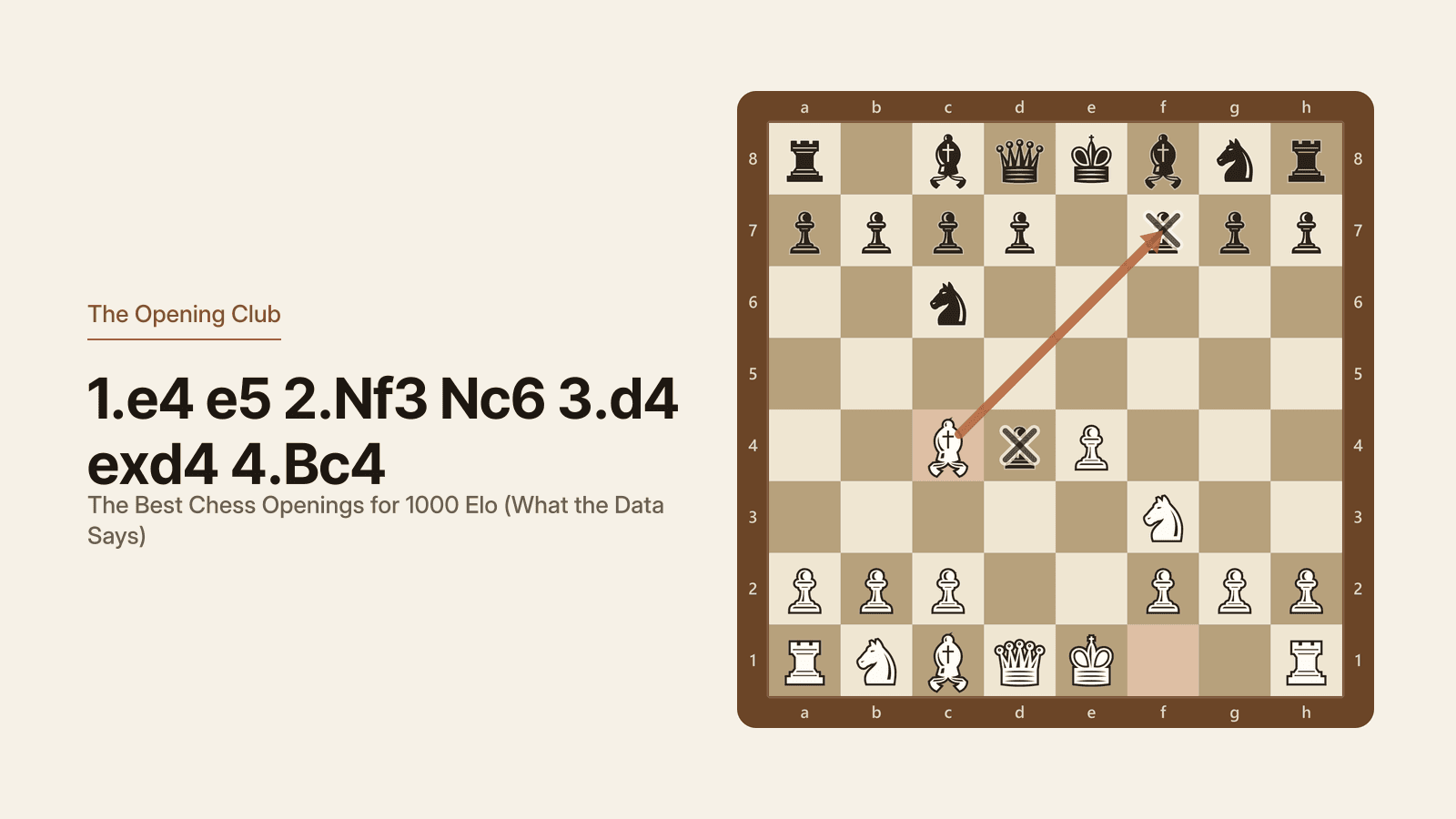
The best chess openings for 1000 Elo are not the ones that worked two hundred points lower, and that is the whole point of this page. Play the Scotch Game as White and the Sicilian Defense as Black. Then read the second half, because the more useful list at this level is the one titled "stop playing these".
Something specific changes around here. You have mostly stopped hanging pieces in one move, so the games that used to end on move 12 now reach a middlegame. An opening's job changes from "survive to move 10" to "give me a position I understand", and several openings that were graded A in the band below fall a full tier here.
Most players at 1000 have already narrowed the choice to a pair, so this page settles four match-ups and treats everything else as evidence for one of them:
- Scotch Game against the Italian Game, for your main 1. e4 opening.
- Queen's Gambit against the London System, for your main 1. d4 opening.
- Sicilian against the Caro-Kann, for your answer to 1. e4.
- 1... Nf6 against 1... d5, for your answer to 1. d4.
Each gets a winner and the case where the loser is the better choice.
Which rating band these numbers describe
The Lichess opening explorer buckets games by rating, and the buckets are keyed by their lower bound: 600, 1000, 1400, 1800. There is no 1200 bucket.
So this page describes the 1000 band, which is every game where the players sit between 1000 and 1399. If you are 1000, 1100 or 1250, this is your band. It is also the biggest sample we have: 14,075,034 games at the first-move level, 99.3% of the band's games falling inside the fourteen first moves tracked. Source is the Lichess open database opening explorer, period 2026-05, rapid and blitz pooled.
Everything is ranked by the Wilson lower bound on score (wins plus half of draws), not by raw win rate. It is the pessimistic end of the confidence interval, which is what keeps a 3,000-game sideline from outranking a 3-million-game main line on noise. Every number below carries its band, its sample size and its source. The same method across all four bands is the chess opening tier list.
Match-up 1: the Scotch Game against the Italian Game
First the field both of them beat, so the two finalists are not just asserted.
| Opening (moves) | Tier | Wilson floor | White wins | Games | vs the 600 band |
|---|---|---|---|---|---|
| Scotch Game (1. e4 e5 2. Nf3 Nc6 3. d4) | A | 0.5574 | 54.05% | 394,743 | up from 0.5458 |
| Queen's Gambit (1. d4 d5 2. c4) | A | 0.5498 | 53.34% | 455,625 | down from 0.5526 |
| King's Gambit (1. e4 e5 2. f4) | A | 0.5476 | 53.64% | 164,805 | up from 0.5218 |
| London System, 2. Bf4 (1. d4 d5 2. Bf4) | B | 0.5415 | 52.35% | 438,927 | down from 0.5474 |
| Ruy Lopez (1. e4 e5 2. Nf3 Nc6 3. Bb5) | A | 0.5346 | 51.62% | 369,070 | level at 0.5349 |
| King's Knight trunk (1. e4 e5 2. Nf3) | S | 0.5317 | 51.33% | 3,200,738 | down from 0.5416 |
| Zukertort (1. d4 d5 2. Nf3) | B | 0.5293 | 51.11% | 311,568 | up from 0.5196 |
| English Opening (1. c4) | B | 0.5283 | 51.22% | 265,462 | up from 0.5047 |
| Center Game (1. e4 e5 2. d4) | A | 0.5268 | 51.01% | 329,560 | up from 0.5168 |
| Bishop's Opening (1. e4 e5 2. Bc4) | A | 0.5266 | 51.02% | 582,830 | down from 0.5285 |
| Italian Game (1. e4 e5 2. Nf3 Nc6 3. Bc4) | A | 0.5257 | 50.89% | 965,410 | down from 0.5368 |
| Vienna Game (1. e4 e5 2. Nc3) | B | 0.5245 | 50.69% | 332,383 | up from 0.5147 |
| Three Knights (1. e4 e5 2. Nf3 Nc6 3. Nc3) | C | 0.5014 | 48.11% | 366,559 | level at 0.5012 |
| Open Sicilian start (1. e4 c5 2. Nf3) | B | 0.4991 | 48.37% | 385,369 | down from 0.5063 |
Two things worth noticing before any individual pick.
The first move flips. In the 600 band, 1. e4 had the better floor (0.5239 against 0.5215 for 1. d4). Here 1. d4 is ahead: 0.5273 over 3,174,376 games against 0.5185 over 9,343,706 games for 1. e4. Both differences are small, and both are dwarfed by everything else on this page, but the direction is real and it continues upward through the bands.
The quiet developing move is now a liability. The Three Knights (3. Nc3) sits at a 0.5014 floor over 366,559 games and grades C. Bishop out, knight out, pawn in the centre, all fine, and it scores worse than every committal alternative. At this level your opponent survives long enough that a move which does not create a problem for them is a move you have wasted.
Winner overall: the Scotch Game
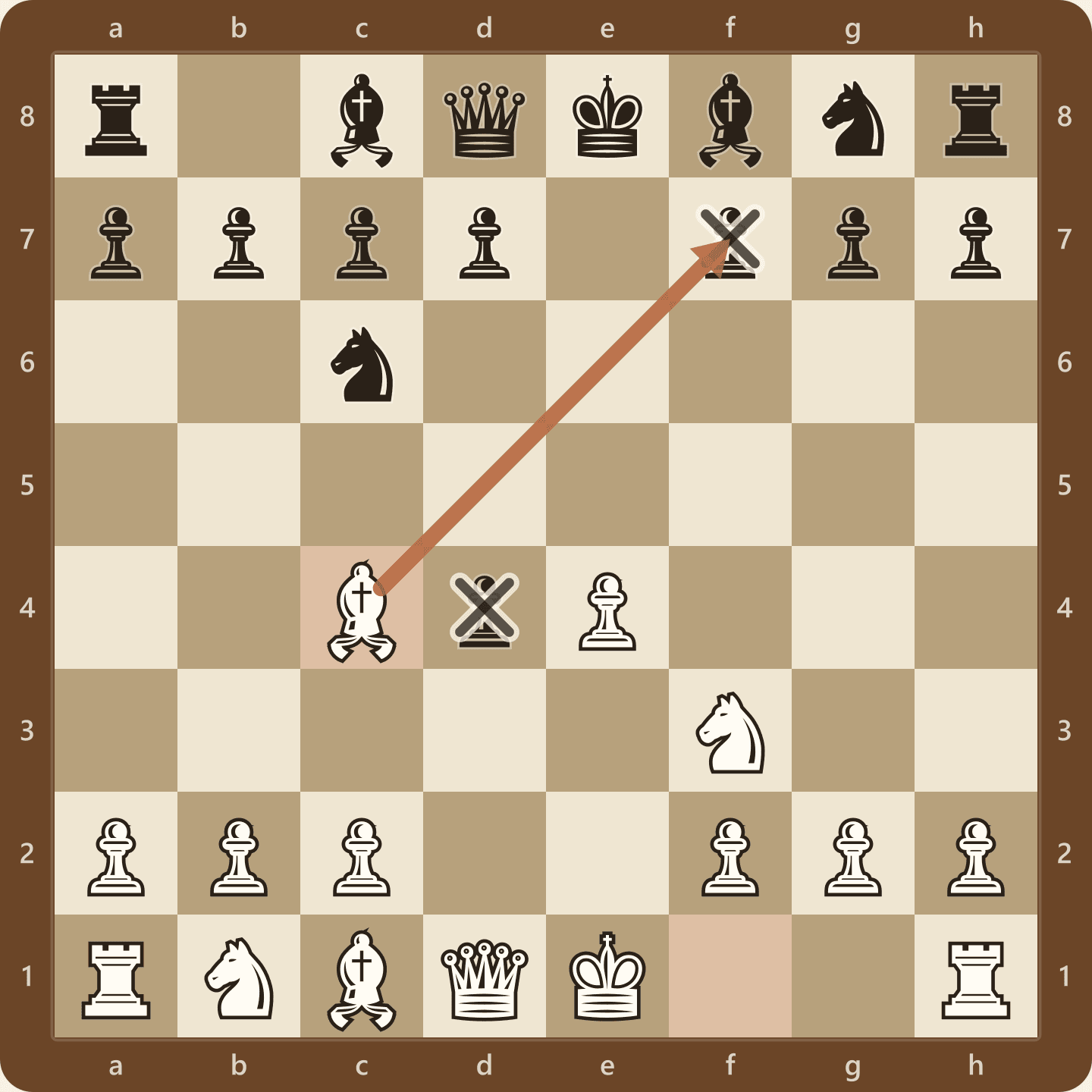
The Scotch Game takes a 0.5574 Wilson floor over 394,743 games, White winning 54.05%, and it is the only major 1. e4 line whose floor is higher here than in the 600 band. Everything else on the e4 side of the table decayed as opponents improved. The Scotch got better.
The reason is structural. 3. d4 opens the centre before Black has developed anything except a knight, and open positions reward whoever is better at calculating. Below 1000 that advantage gets drowned in blunders on both sides. At 1000 it starts paying.
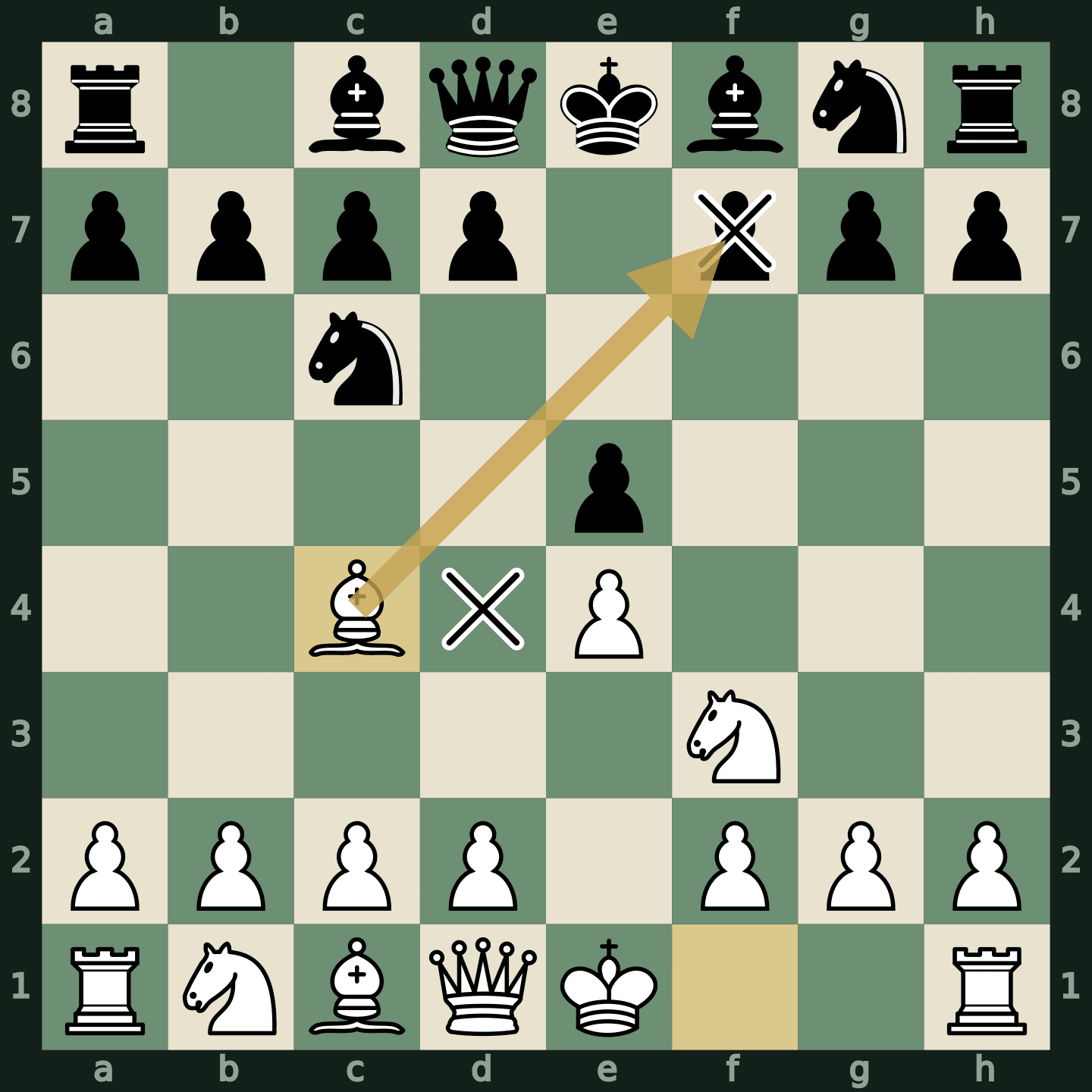
The Scotch Gambit (4. Bc4 instead of recapturing) grades A at a 0.5642 floor over 50,294 games, White winning 55.46%. You give the pawn back in most lines and you get the bishop pointing at f7 in exchange for one move of theory. Of everything in this article, that is the best return on twenty minutes of study.
Scotch or Italian, side by side
| Dimension | Scotch Game (3. d4) | Italian Game (3. Bc4) |
|---|---|---|
| Tier and Wilson floor, 1000 band | A, 0.5574 | A, 0.5257 |
| White win rate | 54.05% | 50.89% |
| Games in sample | 394,743 | 965,410 |
| Share of band games | 2.79% | 6.81% |
| Floor across the four bands | 0.5458 / 0.5574 / 0.5494 / 0.5449 | 0.5368 / 0.5257 / 0.5200 / 0.5183 |
| What it does to the position | Opens the centre on move three | Leaves the centre closed, aims at f7 |
| Black's most popular reply here | 3... exd4, and White picks the structure | 3... Nf6, which allows 4. Ng5 (S, 0.5551) |
| Theory needed to get value | One move: 4. Bc4 for the gambit | One move: 4. Ng5, plus what to do when it is prevented |
Winner: the Scotch, by 0.0317 of Wilson floor, which is three points of score per hundred games and the largest gap between two mainstream openings on this page. Its floor also rose from the band below while the Italian's fell.
Take the Italian instead if you want the position more often than you want the edge. It appears in 6.81% of band games against the Scotch's 2.79%, so it is the one you will actually get to play, and 4. Ng5 against the Two Knights is still an S grade at a 0.5551 floor over 127,363 games. If you like closed manoeuvring more than calculating, that is a real reason to choose it, and it costs you about three points of score per hundred games to do so.
Match-up 2: the Queen's Gambit against the London System
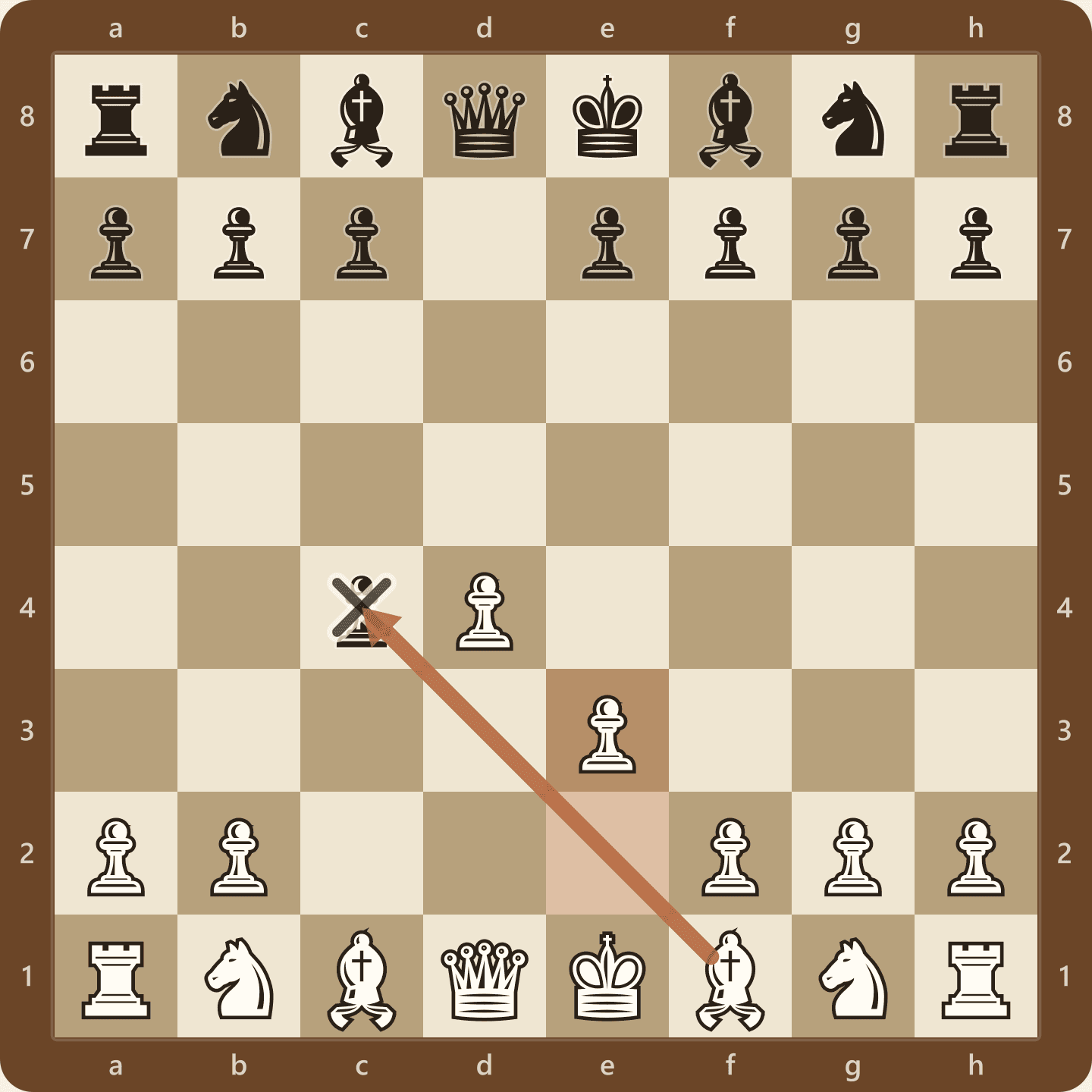
The Queen's Gambit grades A at a 0.5498 floor over 455,625 games. What makes it the pick is not that number, it is what happens next. Every popular Black reply in this band grades C or D:
- 2... dxc4 (accepting): grade D, a 0.4263 floor, Black winning 41.07% over 164,935 games. This is the worst-scoring popular reply anywhere in the band. White plays 3. e3 and scores an S-graded 0.5863 floor over 36,451 games, or 3. e4 for an A at 0.5621 over 62,516.
- 2... Nf6 (Marshall Defense): D, 0.4491, 96,039 games.
- 2... e5 (Albin Countergambit): D, 0.4522, 14,773 games.
- 2... e6 (the Queen's Gambit Declined): C, 0.4597, 112,347 games.
- 2... c6 (the Slav Defense): C, 0.4692, 79,276 games, the least bad of the five.
That is a complete map of a popular opening in which Black has nothing. If you play 1. d4 and your opponents keep grabbing on c4, learn 3. e3 and stop reading.
The London side of it
The London System (1. d4 d5 2. Bf4) holds a 0.5415 floor over 438,927 games and grades B here, down from A. It is still the second-best 1. d4 move in the band and it is still the same setup every game, which is exactly what a system-based opening is for: you trade a little theoretical bite for never being surprised.
The honest note is the direction of travel. The London's floor slips at every band above this one, from 0.5474 below 1000 to 0.5415 here to 0.5299 at 1400. It is not falling off a cliff, but it is not the free rating it looks like on YouTube either.
Winner: the Queen's Gambit, on a higher floor (0.5498 to 0.5415), a higher grade (A to B) and a shallower decline. Take the London instead if the honest constraint is study time. The Queen's Gambit only pays if you learn 3. e3 against the accepted line; the London pays if you learn nothing at all. That is a fair trade and this page will not pretend otherwise, but it is a trade, not a free lunch.
Best attacking option: the King's Gambit
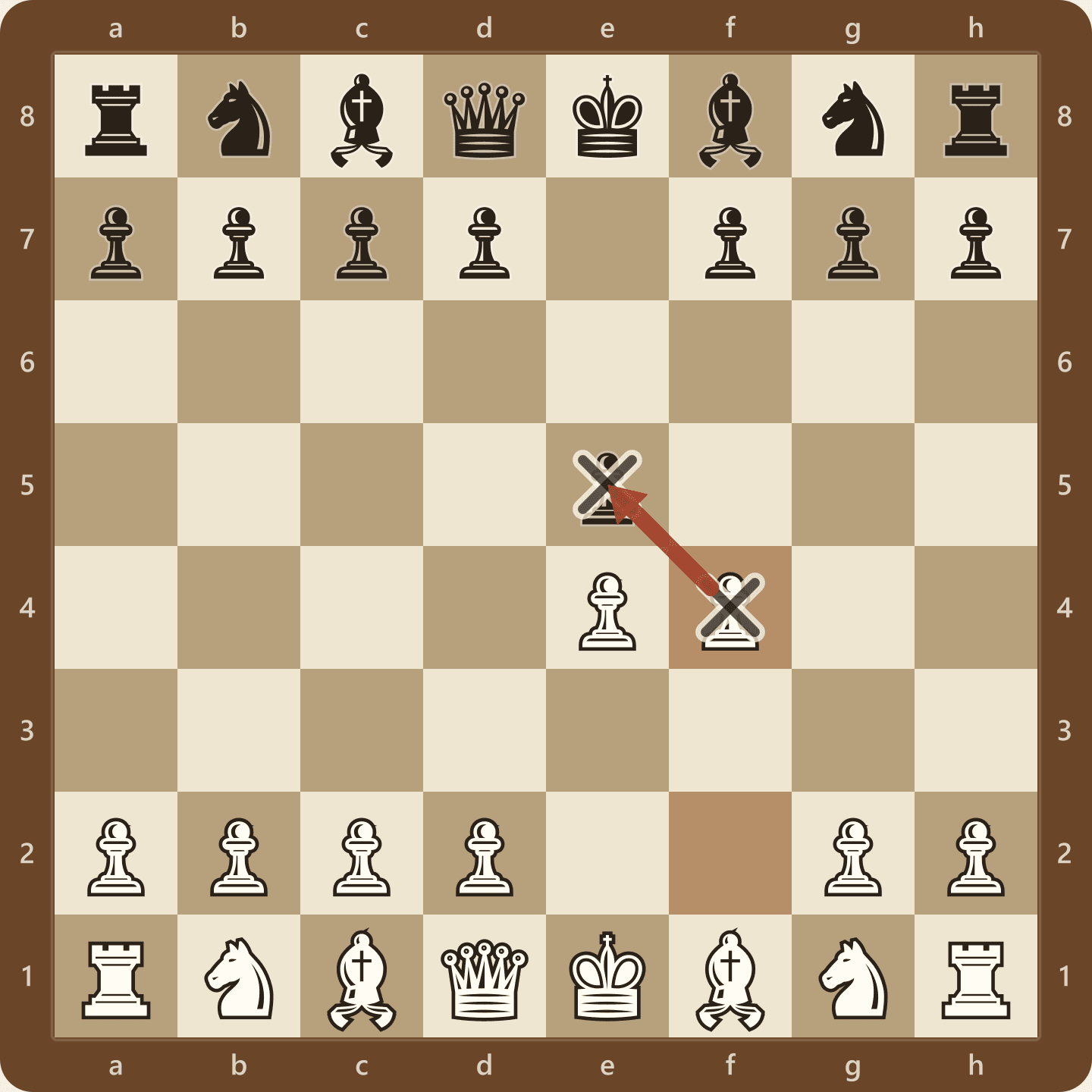
The King's Gambit is the biggest riser in this band: from a B and a 0.5218 floor below 1000 to an A and a 0.5476 floor over 164,805 games, White winning 53.64%.
That is counter-intuitive, and the explanation is worth understanding because it generalises. The King's Gambit gives up a pawn for a lead in development and an open f-file. Below 1000, that lead gets squandered. At 1000, players convert development into an attack often enough that the pawn is worth it. Aggressive openings improve as the attacker improves, right up until defenders catch up too.
Match-up 3: the Sicilian against the Caro-Kann
The field first.
| Black's reply | Tier | Wilson floor | Black wins | Games | vs the 600 band |
|---|---|---|---|---|---|
| Sicilian Defense (1. e4 c5) | B | 0.5068 | 49.12% | 850,797 | up from 0.5042 |
| Caro-Kann Defense (1. e4 c6) | B | 0.5038 | 48.69% | 658,827 | down from 0.5077 |
| French Defense (1. e4 e6) | A | 0.4986 | 48.12% | 724,903 | up from 0.4925 |
| Modern Defense (1. e4 g6) | B | 0.4896 | 47.34% | 201,267 | down from 0.4958 |
| Indian Defense (1. d4 Nf6) | B | 0.4885 | 47.24% | 338,880 | down from 0.4995 |
| Pirc Defense (1. e4 d6) | B | 0.4833 | 46.57% | 321,699 | up from 0.4797 |
| Scandinavian Defense (1. e4 d5) | B | 0.4805 | 46.25% | 947,614 | up from 0.4791 |
| Open Game (1. e4 e5) | B | 0.4706 | 45.22% | 5,115,257 | up from 0.4687 |
| Slav Defense (1. d4 d5 2. c4 c6) | C | 0.4692 | 45.40% | 79,276 | n/a |
| Dutch Defense (1. d4 f5) | D | 0.4671 | 45.52% | 46,979 | up from 0.4582 |
| Queen's Pawn Game (1. d4 d5) | B | 0.4630 | 44.44% | 1,684,690 | down from 0.4763 |
| Alekhine Defense (1. e4 Nf6) | C | 0.4573 | 44.19% | 104,834 | down from 0.4592 |
| Queen's Gambit Accepted (2... dxc4) | D | 0.4263 | 41.07% | 164,935 | n/a |
Sicilian or Caro-Kann, side by side
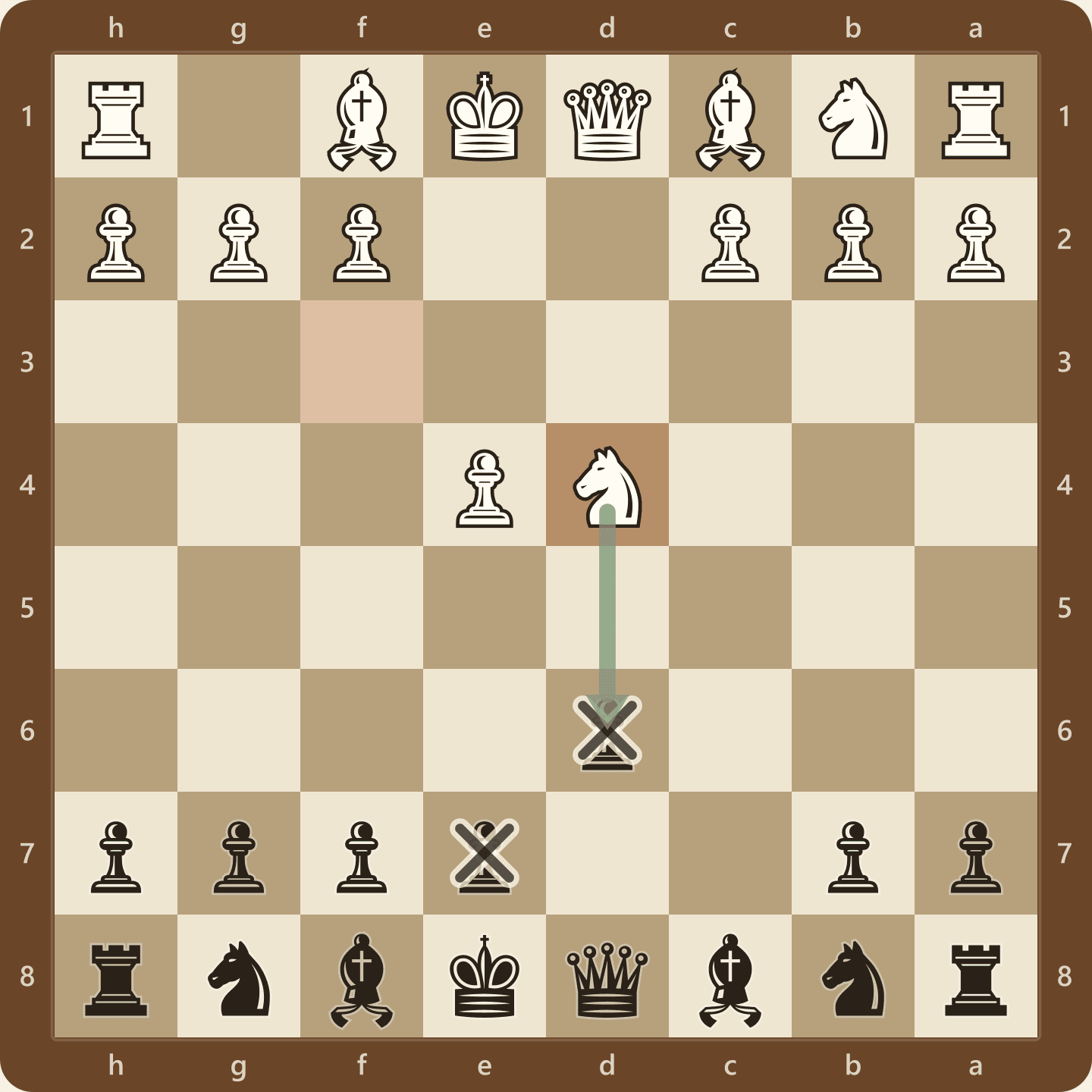
The Sicilian takes the top Black floor in the band at 0.5068 over 850,797 games, and it is one of the few Black replies whose floor improved from the band below. The Caro-Kann, which won the 600 band, slipped to 0.5038 over 658,827 games and is now second. The gap is 0.0030, or three tenths of a point of score per hundred games, so this one is genuinely close.
Winner: the Sicilian, on the higher floor, on the direction of travel (up from 0.5042 while the Caro-Kann fell from 0.5077), and on the fact that it is the only major Black defence gaining share as the bands rise.
Take the Caro-Kann instead if you want a defence that forgives inaccuracy. The Sicilian's positions are unbalanced, which is what makes it win and also what makes it lose badly when you misplay it. The Caro-Kann's whole idea is a pawn structure that does not need you to be precise. Both are B grades here and the choice is about temperament, not strength.
You still do not need Najdorf theory. 2... d6 grades C at a 0.5004 floor over 95,162 games and 2... Nc6 grades C at 0.4959 over 190,959, both perfectly playable. The actual Najdorf Variation grades B at 0.4965 on 5,223 games, which is to say it is fine and it is also 0.04% of the games in this band. The Sicilian's value at 1000 is the asymmetric structure, not the twenty-move lines.
The French is the quiet riser
The French Defense is the only Black reply in the table graded A, at a 0.4986 floor over 724,903 games, up from 0.4925 below 1000. And White's most popular attempt to punish it is going the other way: the Advance Variation (3. e5) falls from a 0.5169 floor in the 600 band to 0.4921 here over 130,608 games.
That pairing is the clearest single example of the theme of this article. The French gives Black a cramped but structurally sound position. Below 1000 nobody knows what to do with it. At 1000 the person who has seen the pawn break twenty times starts winning those positions.
Match-up 4: 1... Nf6 against 1... d5
1... Nf6 grades B at a 0.4885 floor over 338,880 games. 1... d5 is five times more popular at 1,684,690 games and scores worse, a 0.4630 floor. Winner: 1... Nf6, and the gap widens at every band above this one, reaching a full tier by 1400.
One result deserves a flag rather than a recommendation. The Englund Gambit (1. d4 e5), which every book calls unsound, posts a 0.4886 floor over 268,668 games, which is a dead tie with 1... Nf6 in this band and stays level in the 1400 and 1800 bands too. We are publishing that because it is what the data says, not as advice: a gambit that scores on surprise value is renting its results, and the recommendation is still 1... Nf6, which gives you a position rather than a trick.
The rest of the Black options against 1. d4 land where you would guess: the Benoni (1... c5) at a 0.4921 floor over 71,554 games, the Dutch Defense at a D and 0.4671 over 46,979, and the Nimzo-Indian at 0.4688 on 7,892 games.
The King's Indian Defense is barely present. Its main starting position (1. d4 Nf6 2. c4 g6 3. Nc3) appears in 0.14% of games in this band. Neither the Catalan Opening nor the Benko Gambit clears the sample floor in any of the four bands, which is a reasonable answer to whether you should be studying them.
Stop playing these
This is the list that matters more than the rankings. Five things that worked below 1000 and do not work here.
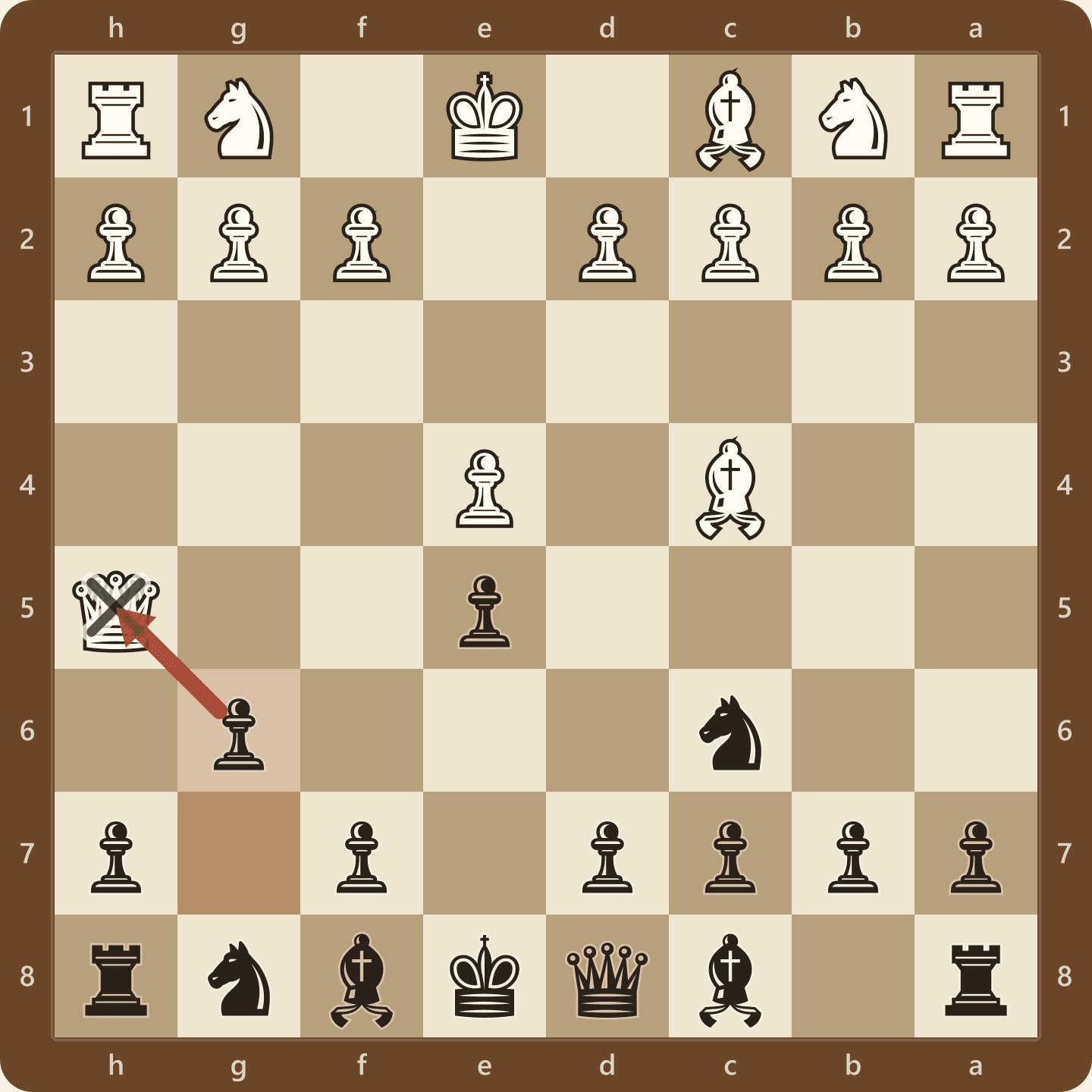
1. The Wayward Queen Attack (2. Qh5). Graded A below 1000 at a 0.5240 floor. Here it is B at 0.5109, and its share of games has collapsed from 3.81% to 1.13%. People learned the defence. The Scholar's Mate idea has an expiry date and this is roughly it.
2. Taking the gambit pawn (2... dxc4). A D grade and a 0.4263 floor over 164,935 games, the worst popular result in the band. Grabbing a pawn you cannot hold and losing three tempi is the most expensive habit on this list.
3. Playing 3... h6 against the Italian. The Anti-Fried-Liver move grades C at a 0.4707 floor over 167,407 games, down from 0.4872 below 1000, and it keeps falling to a D by the 1800 band.
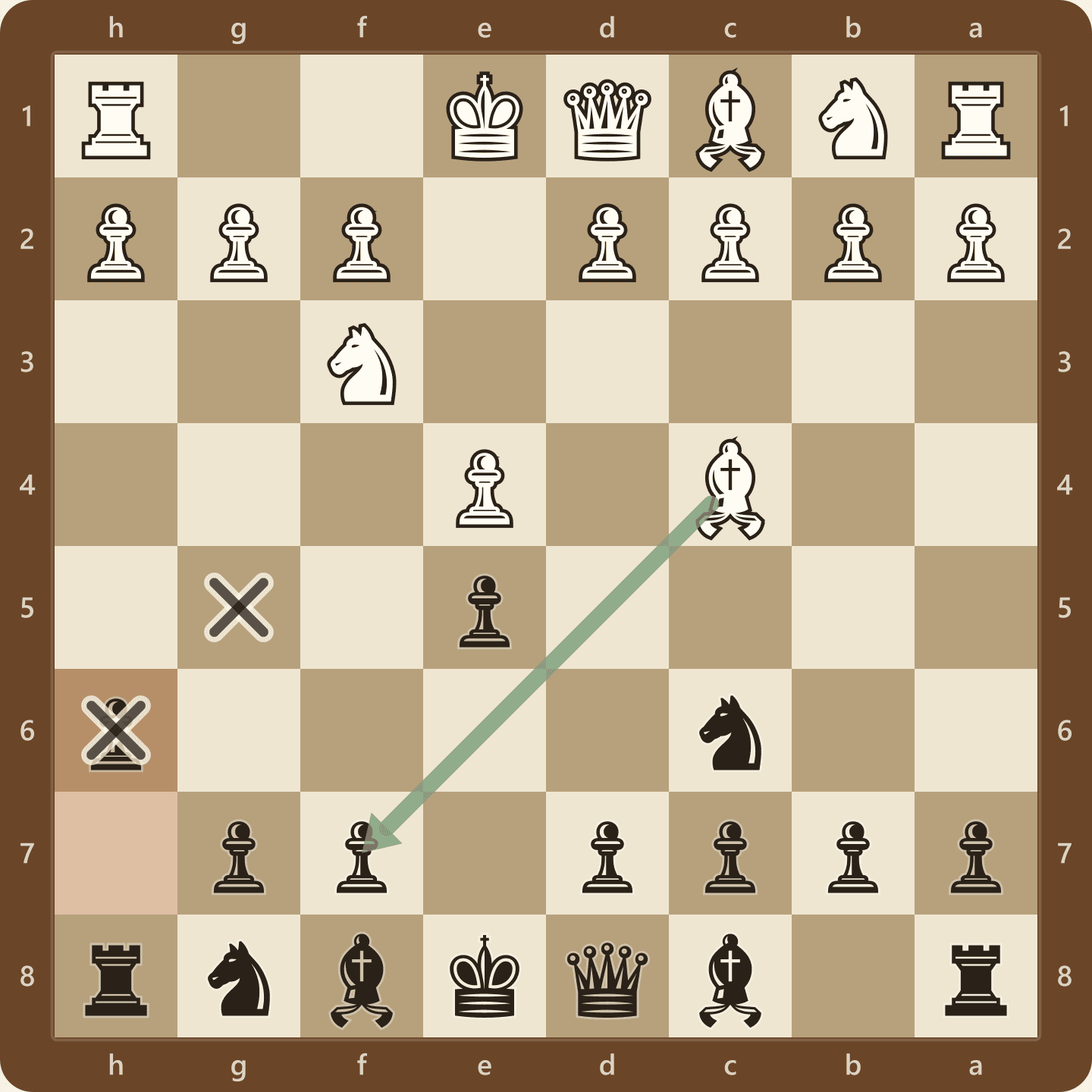
You spent a move stopping a knight that had not moved yet. 3... Bc5 grades B at 0.4862 over 262,080 games instead. Play the move that develops.
4. The Caro-Kann Advance as White (3. e5). Falls from A and a 0.5275 floor below 1000 to C and 0.5075 here, over 133,351 games. The point of 1... c6 is that Black's light-squared bishop gets out before the pawn chain closes, and at this level Black actually plays ...Bf5.
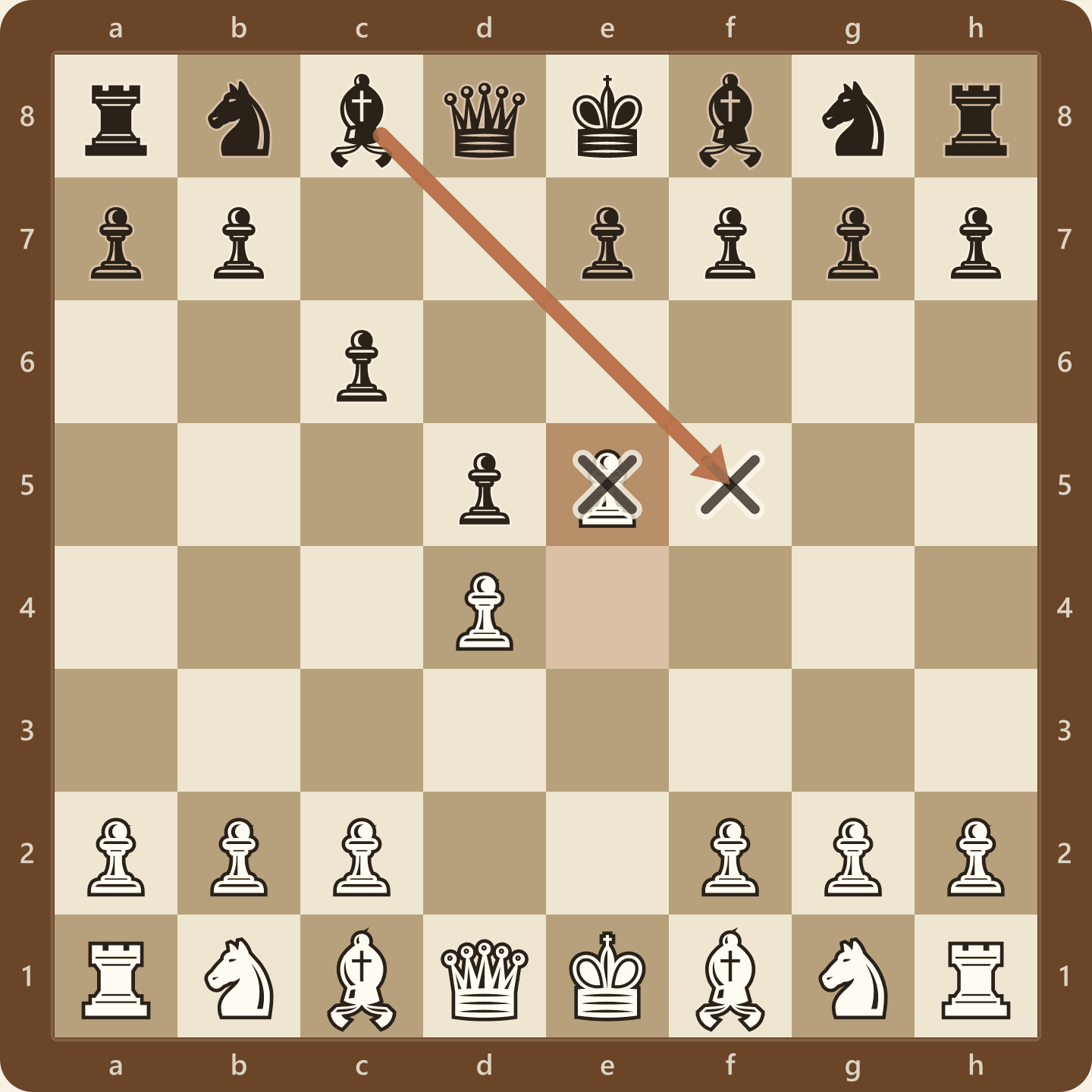
5. The Berlin move order against the Bishop's Opening (2... Nf6). Was B at a 0.5043 floor below 1000. Here it is C at 0.4755 over 197,739 games. Same for grabbing the Center Game pawn with 2... exd4, which drops from A at 0.5166 to C at 0.4927 over 190,895 games. The free pawn stops being free.
What to study instead of openings
The blunder rate in this band is 44.8%, games-weighted across the lines measured, from a separate and much smaller sample of 27,898 games (period 2026-07, methodology mat-swing-v1, a material-swing proxy rather than engine evaluation). That is not down from the band below at all. It is a dead tie: 44.8% there, 44.8% here, and the decline only starts above this band, at 41.0% for 1400 and 36.9% for 1800.
Read that again, because it is the most useful number on the page. You have stopped hanging pieces in one move. You have not started making fewer serious mistakes. The average book exit does creep out, from 3.3 ply below 1000 to 3.7 ply here, so the mistakes simply arrive slightly later. More on the method in blunder rate by rating and what a blunder actually is.
So the study order at 1000 is:
- Tactics daily. Forks, pins, discovered attacks, deflection. This is still where the points are.
- Analyse your own losses. Not with the engine's top line, with one question per game: what was the first move I would not play again? The Chess.com and Lichess analysis boards both do this for free.
- Endgame fundamentals. Rook endings, opposition, and pawn promotion races. At 1000 you reach endgames, so they now decide games.
- Middlegame plans, not moves. After your opening, ask what the pawn structure wants: which side of the board is yours, which pawn break creates play, which piece is worst and how does it get better.
- How to study an opening properly. Play it, note the position where you stopped knowing what to do, look up that one position, repeat. Watching a two-hour repertoire video and remembering none of it is the most common way improvers waste a weekend. This is also why opening traps are a poor investment: the trap hit rate across this band works out at 0.45% on that 27,898-game sample, and it keeps falling in the bands above.
Verdict
Where to go next
This page is one of three, one per rating band the data has enough of: 800 Elo for the band below 1000, this one, and 1400 Elo for the level where bad pawn structures start getting punished properly. For everything at once, see the chess opening tier list, the raw chess opening win rates, and the main best chess openings ranking. Opening-specific guides: Italian Game, Vienna Game, Ruy Lopez, Caro-Kann, Scandinavian.
Frequently asked questions
Is 1000 Elo considered good in chess?
It is squarely mid-table for online rapid, and it is a real threshold: it is where games stop ending in one-move blunders and start reaching middlegames. Note that ratings are site-specific, so 1000 on Lichess and 1000 on Chess.com are not the same strength. What Elo actually measures has the longer version.
How do you beat a 1000 Elo player in chess?
Open the position and do not blunder. The data in this band rewards exactly that: the Scotch Game (0.5574 floor over 394,743 games) and the King's Gambit (0.5476 over 164,805) both trade structure for open lines and both outscore the quiet Three Knights (0.5014 over 366,559). Then convert. The band's blunder rate is 44.8%, identical to the band below it, so most decided games are still decided by a mistake rather than a plan.
What are the best chess openings for 1000 Elo beginners?
One per colour, and pick from the top of the table. White: the Scotch Game, grade A at a 0.5574 Wilson floor over 394,743 games in the 1000 band. Black: the Sicilian Defense, grade B at 0.5068 over 850,797 games. If you want to think about the opening as little as possible, the London System (0.5415 floor, 438,927 games) is the system-based choice and the Queen's Gambit (0.5498, 455,625) is the stronger one if you are willing to learn a single reply to 2... dxc4.
What are the best chess openings by rating?
They genuinely differ, which is why this site publishes one page per band. Two examples from this dataset: the King's Gambit goes from a 0.5218 floor below 1000 to 0.5476 at 1000, while the Wayward Queen Attack goes the other way, from 0.5240 to 0.5109, and its share of games falls from 3.81% to 1.13%. The chess opening tier list grades every opening in all four bands side by side.
Should I learn opening traps at 1000 Elo?
Learn to survive them, not to play them. The trap hit rate across the 1000 band is 0.45%, games-weighted, on a 27,898-game sample. GothamChess videos on traps are entertaining and they are describing an event that decides roughly one game in a hundred. The exception is worth knowing: 4. Ng5 in the Two Knights still grades S here at a 0.5551 floor over 127,363 games, because it is not really a trap, it is a genuinely strong move.
Figures throughout: Lichess open database opening explorer, rapid and blitz pooled, period 2026-05, rating band 1000 (games from 1000 to 1399). Blunder, trap and book-exit figures come from a separate material-swing sample, methodology mat-swing-v1, period 2026-07, 27,898 games across 305 lines. Openings are identified by their verified move sequence rather than by name, because the same name covers several different move orders.