You practice chess openings by drilling positions from memory, then playing games that start from those positions rather than from move one, then reviewing where you actually went wrong. Three activities, about forty minutes a week, in that order.
Reading about an opening is not practising it. Watching a video about it is not practising it either. Practice means producing the move yourself, under some pressure, and finding out whether you were right. Everything below is a way of doing that.
What you need before you start
- A repertoire. Three openings: one as White, one against 1.e4, one against 1.d4. If those slots are empty, fill them first with how to build a chess opening repertoire. Drilling without a repertoire is drilling someone else's homework.
- A place to store it. A Lichess study, a Chessable course, or a PGN file (the plain-text format that holds a game's moves) on your computer. Any of these works. A mental note does not.
- Somewhere to play. Lichess or Chess.com, at 10+0 or 15+10. Blitz is not practice, it is a test of what you already own.
The weekly loop
Step 1
Drill your positions cold, ten minutes
Open your repertoire and try to produce each move before you reveal it. Spaced repetition tools do the scheduling for you, showing a card just before you would have forgotten it. Getting a card wrong is the point of the exercise, not a failure of it.
Step 2
Play five or six rapid games
10+0 or 15+10 on Lichess or Chess.com. Play your repertoire even when you suspect a different move is better in that specific game. You are testing the repertoire, and a test you keep opting out of measures nothing.
Step 3
Play one thematic game from a set position
Set up a position out of your own opening on the board editor and play from there against the computer. This is the highest-value drill on the list and the one almost nobody does. Details in the next section.
Step 4
Find the departure point in each loss
Step forward from move one and mark the first move where you were guessing rather than knowing. Not the blunder, the guess. The opening explorer will show you where the game count collapses, which is usually the same move. See how to use a chess opening explorer.
Step 5
Add two or three cards, and only two or three
One position, one move, one sentence of why. A deck that grows faster than five cards a week becomes a chore, and a chore gets abandoned. Prune anything you have not met in a real game in two months.
That is the whole week. Forty minutes if you are efficient, an hour if you linger, and none of it requires paying anyone.
Drill 1: recall, not recognition
The mistake most people make with opening drills is practising recognition instead of recall. Clicking through a line and nodding along feels like study and produces almost nothing. You have to make the move before you see it.
The test position should be a real branch point out of your own repertoire. Here is one that catches a lot of French Defense players.
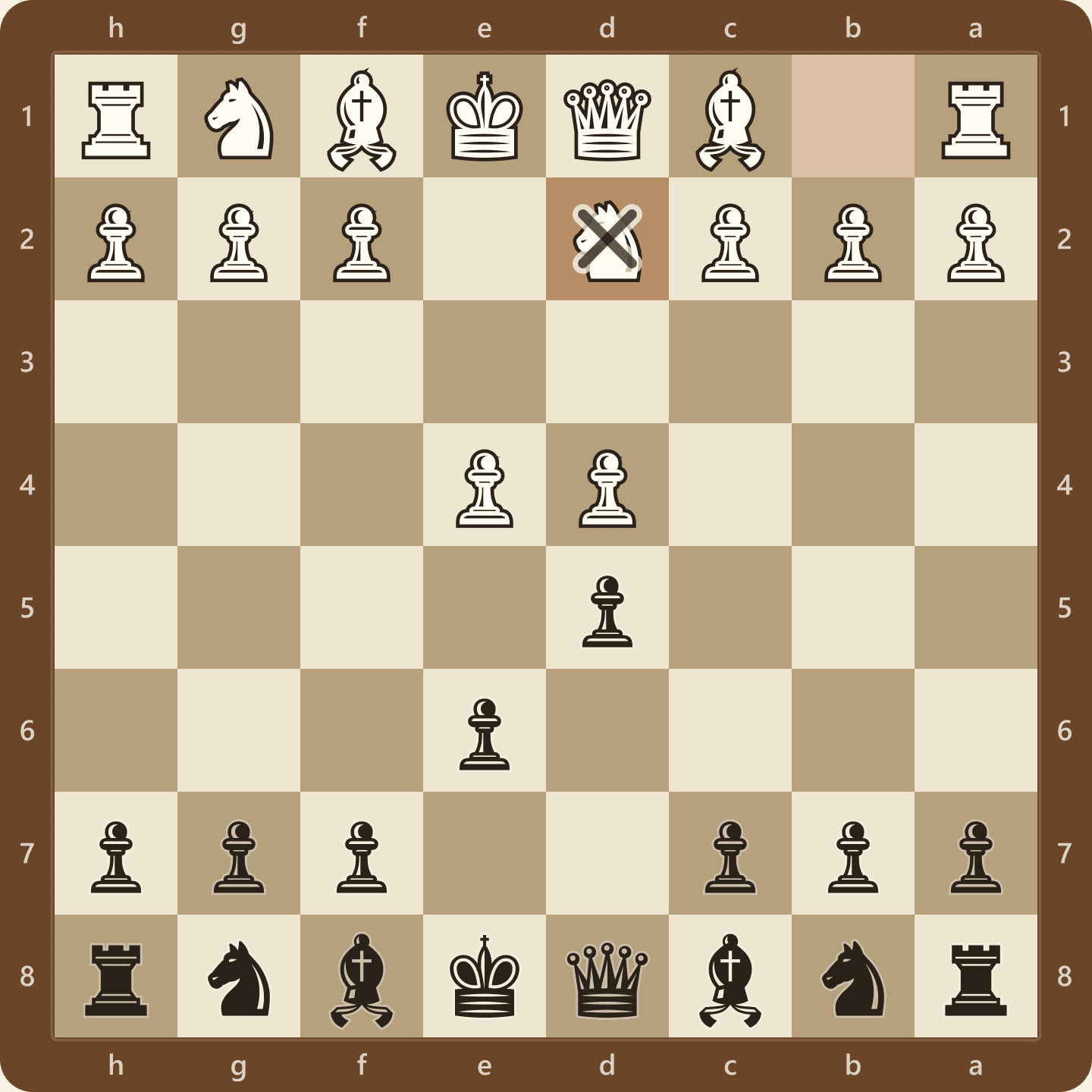
The card is the position. The answer is your move plus one sentence about why. If you cannot write the sentence, do not add the card, because a move without a reason is a move you will forget the week after your review streak breaks.
Spaced repetition is the scheduling layer on top of this: it shows you a card at growing intervals so you meet it right before it fades. Chessable does this with a real algorithm behind it, ChessTempo and Listudy both offer drilling modes, and a Lichess study plus a calendar reminder does a rough version for free.
Drill 2: thematic games from a set position
This is the one to steal. Instead of playing from move one and hoping you reach your opening, start the game from a position inside it.
On Lichess, open the analysis board, play the moves of your opening or paste a FEN into the board editor, then choose to play against the computer from that position. On Chess.com the same trick lives in the Analysis board setup. Either way, you now get a full game beginning where your knowledge ends.
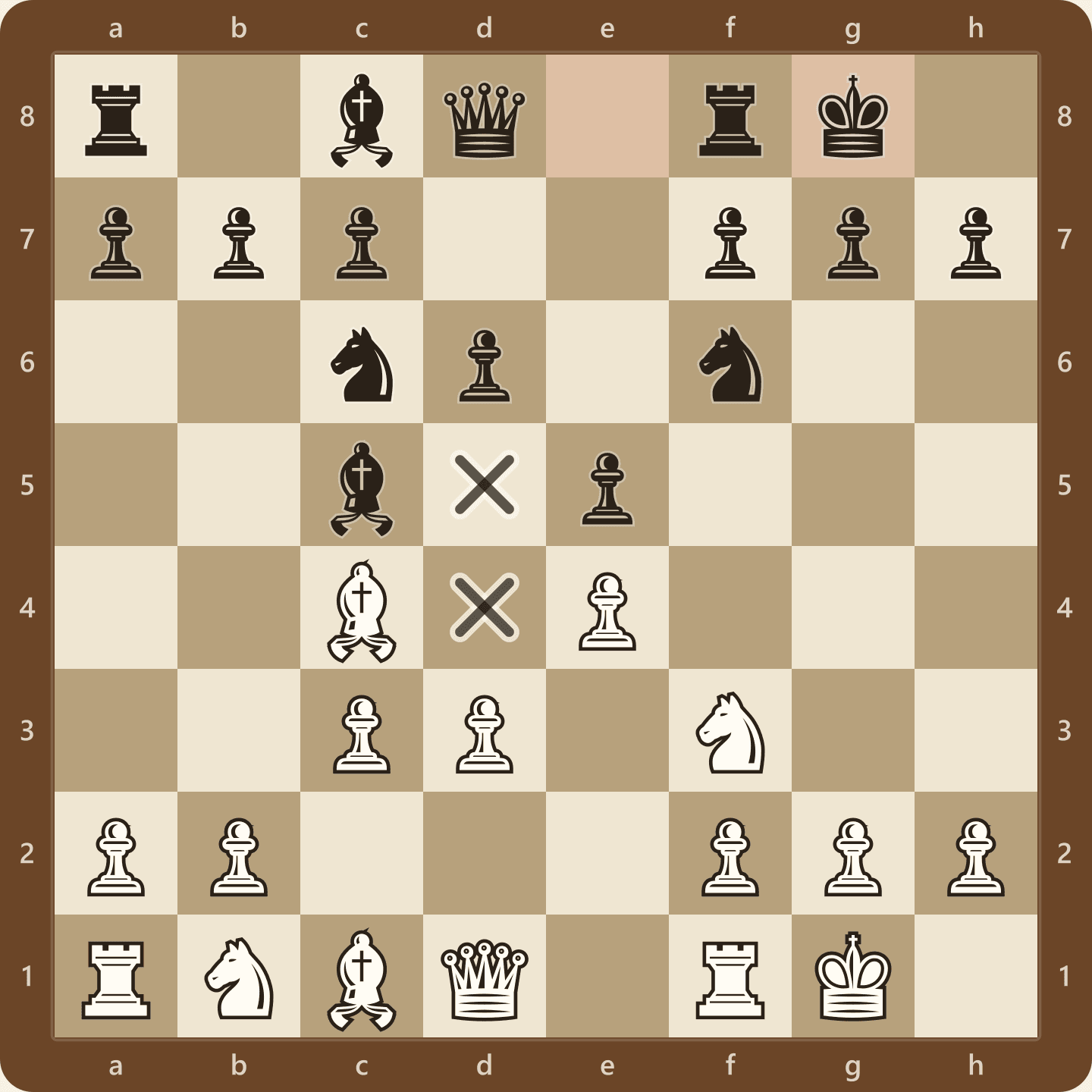
A position like that is called a tabiya, a standard starting point that a whole opening funnels into. Playing ten games from one teaches you the middlegame the opening actually produces, which is the part no opening course spends enough time on.
Two rules make it work. Play both sides, alternating, so you learn what your opponent is trying to do. And play it out to a result rather than resigning at the first inaccuracy, because the endgames a given opening produces are part of the opening.
Drill 3: sparring at a level you can beat
Practising against a full-strength engine is pointless. Stockfish will punish you for things you cannot yet see, in ways you cannot yet learn from.
Set the computer to a level where you win maybe six games in ten. Lichess offers eight Stockfish levels; Chess.com has a bot ladder with ratings attached. Noctie is a newer option built to play like a human at a chosen rating rather than like an engine playing badly on purpose, which makes its mistakes more like the ones you will actually get to punish.
Sparring is where you find out whether your one-sentence plan survives contact. It usually does not, the first three times. Here is a good position to spar from if you play 1.e4 and want something sharper than the Italian.
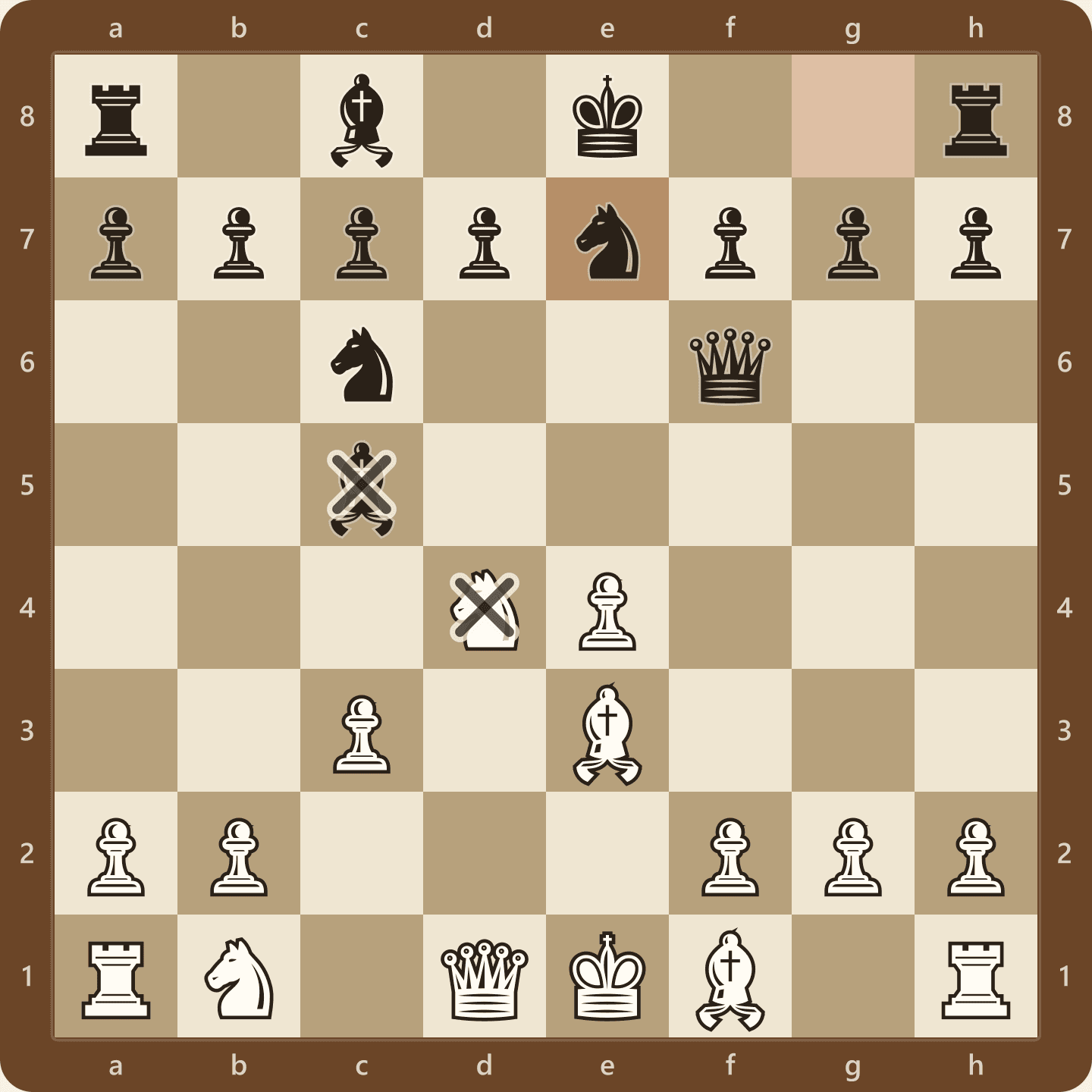
Drill 4: pawn structures, not moves
Openings hand you a pawn structure, and the structure decides the plans. Practising the moves without the structure is why people know their opening and still have no idea what to do on move fifteen.
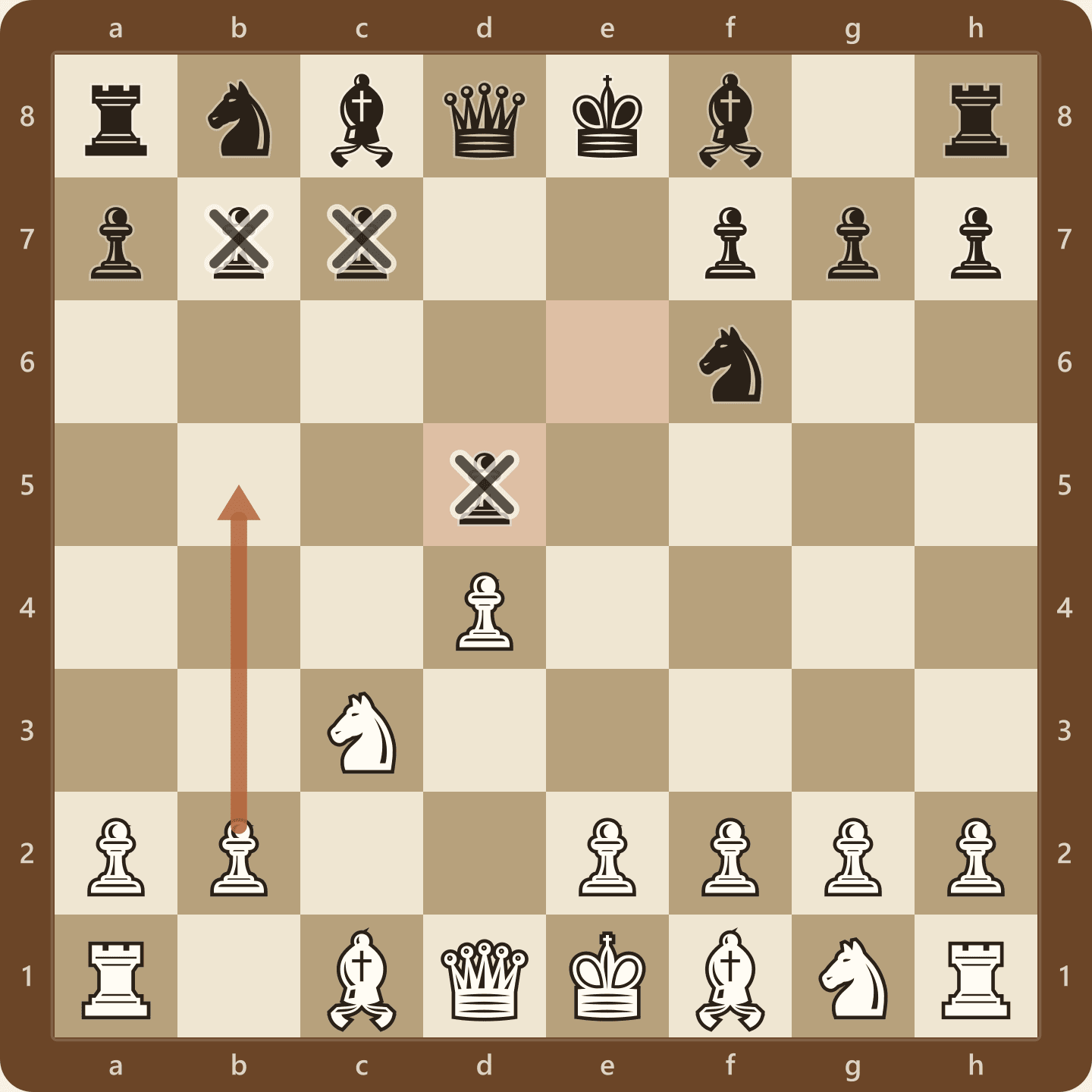
Practise this by setting the structure up and playing it out, then reading two annotated master games in the same structure and comparing what they did to what you did. Two games is enough. The point is not to memorize their moves, it is to notice which side of the board they thought mattered.
Structures repeat across openings, which is why this drill compounds. The same structure shows up out of the Queen's Gambit, out of some Caro-Kann lines, and out of several move orders that never called themselves either.
Drill 5: the sideline sweep
Once a month, go through your repertoire and list the replies you have never explicitly prepared. These are where your losses live, because you drill your main line and your opponents keep not playing it.

Sweep method: play through your first move, list every reply with meaningful frequency in the explorer at your rating band, and check that each one has a written answer. Five moves deep is plenty. Breadth beats depth every time at club level, and the Vienna Game is a good example of why: it is not rare, it is just not in most people's notes.
Tools, and which are free
| Tool | What it does best | Cost |
|---|---|---|
| Lichess | Studies for your repertoire, board editor for thematic games, explorer, engine, all in one | Free, everything, no account needed for most of it |
| Chessable | Spaced repetition on prebuilt or custom courses, the strongest scheduling of the group | Large free course tier, paid courses on top |
| Chess.com | Opening practice modules, bot ladder, Game Review for finding departure points | Some free, most behind a membership |
| ChessTempo | Opening training against a database, plus serious tactics training | Free tier, paid upgrade |
| Listudy | Drilling any PGN file you already have, open source and private | Free |
| Chessreps | Short prebuilt repertoires when you would rather not build your own | Free tier, paid upgrade |
| Opening Trainer | Focused repetition drilling with progress tracking | Free tier, paid upgrade |
| Chess Position Trainer | Deep offline repertoire management, the old-school power tool | Free, Windows only, dated interface |
| Noctie | Sparring against a human-like bot at a chosen rating | Free tier, paid upgrade |
The all-free path covers everything on this page: Lichess for storage, thematic games, sparring and analysis, Listudy for drilling the PGN you exported. Add Chessable when you want the scheduling handled for you, which is worth real money if you are the kind of person who forgets to review.
Time management, in the drill and in the game
Two different clocks matter here.
Study time. Opening practice should be the smallest slice of your training. Tactics move your rating faster at every level below expert, and basic endgames turn drawn positions into wins. If openings are eating more than a third of your chess time, the balance is wrong.
Game time. A well-drilled opening should cost you almost no clock. If you are burning three minutes on move six of your own repertoire, that is not thinking, that is a gap in your notes. Note the position and drill it later. The whole practical value of opening preparation is arriving in the middlegame with time on the clock and a plan in your head.
Where practice goes wrong
- Recognising instead of recalling. Clicking through a line is not a drill.
- Drilling depth you never reach. Move eighteen of the main line, while a move three sideline still beats you.
- Practising the opening you wish you played. Drill your actual repertoire, not the one from the video you watched last night.
- Sparring at full engine strength. You cannot learn from a punishment you cannot understand.
- Skipping the review. Playing is only practice if you look at the result. Otherwise it is entertainment with a rating attached.
Underneath all of these is the same trade: understanding regenerates a forgotten move, and memorization does not. The opening principles are the fallback when a drill fails you mid-game, which is why they are worth more than the twentieth card in your deck.
Frequently asked questions
What is the best way to practice chess openings?
Drill your positions from memory, then play games that start from those positions rather than from move one, then review where you actually deviated. The middle step is the one most players skip and the one that teaches the most, because it forces you to play the middlegame your opening produces instead of stopping at the end of the line.
How can I practice chess openings for free?
Lichess covers the entire loop at no cost: studies to store your repertoire, the board editor to start games from any position, eight levels of Stockfish to spar against, and the opening explorer to find your departure points. Listudy is free and open source for drilling a PGN file, and Chessable has a large free course tier.
What is the best chess opening trainer?
Chessable for spaced repetition, because its scheduling is the most developed and its free tier is large enough to test properly. Lichess for everything else, because storage, sparring, the explorer and the engine live in one free place. Chess Position Trainer remains the deepest offline repertoire manager if you are on Windows and do not mind an older interface.
How long should I spend practising openings?
Around forty minutes a week for most improving players, split as ten minutes of drilling, one thematic game, and a review pass over your losses. Keep it under a third of your total chess time. Tactics and endgames pay more per hour at every level below expert, and an opening advantage you cannot convert is not an advantage.
Should I practice openings against an engine?
Yes, but not at full strength. Set the level so you win roughly six games in ten. A weakened Stockfish plays strangely rather than badly, so bots designed to play like humans at a given rating, such as Noctie or the Chess.com bot ladder, give you mistakes that resemble the ones you will actually face.
How do I stop forgetting my openings?
Attach a reason to every move you store, keep the deck small enough to review twice a week, and play the openings often enough that the drills get reinforced by real games. Forgetting is almost always a symptom of one of those three being missing, most often the first.
Start this week
Drill ten minutes, play five rapid games, play one thematic game from a position in your own repertoire, then find the departure point in each loss and write one card for it. Repeat next week.
For the study side that feeds this, read how to learn chess openings. For the tooling, how to use a chess opening explorer. And our complete guide to chess openings is the map of everything you might end up drilling.