Chess opening principles are the handful of rules that tell you what to do in the first ten moves when you have no memorized line: fight for the center, develop your pieces, castle your king, and do not waste moves. They are not a beginner's substitute for opening theory. They are what the theory is made of.
Every opening ever named is an argument about how to obey those rules, or a specific reason to break one. That is why a player who understands the principles can produce sensible moves in an opening they have never seen, and a player who only memorized lines cannot.
Below are the ten rules, one board diagram each. Every position here is played out move by move with a chess library before the diagram is drawn, so the board matches the notation beside it.
1. Fight for the center
The four central squares are d4, d5, e4 and e5. A piece standing in the center touches more squares than the same piece standing on the edge, and a pawn in the center takes away squares your opponent's pieces want.
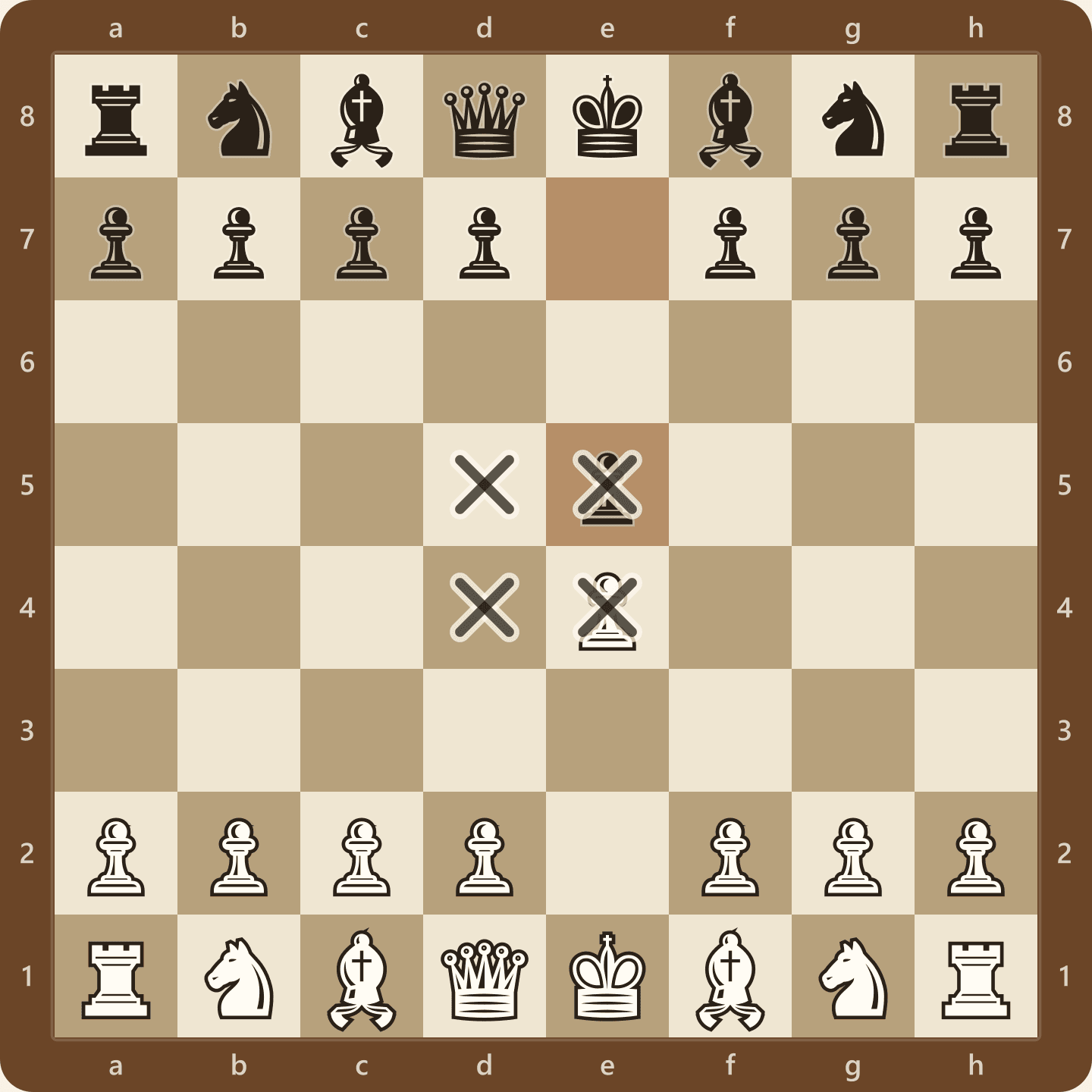
This is why 1.e4 and 1.d4 are the two most played first moves in the game, as any run through the Lichess opening explorer will show you. Both occupy a center square and both open a line for a piece. Note that fighting for the center is not the same as occupying it: the Sicilian Defense answers 1.e4 with 1...c5, a pawn that does not stand in the center but attacks d4 from the side.
2. Develop a piece on almost every move
Development means bringing a piece off its starting square to somewhere it does something. In the opening, a move that develops nothing is usually a move you will wish you had back.
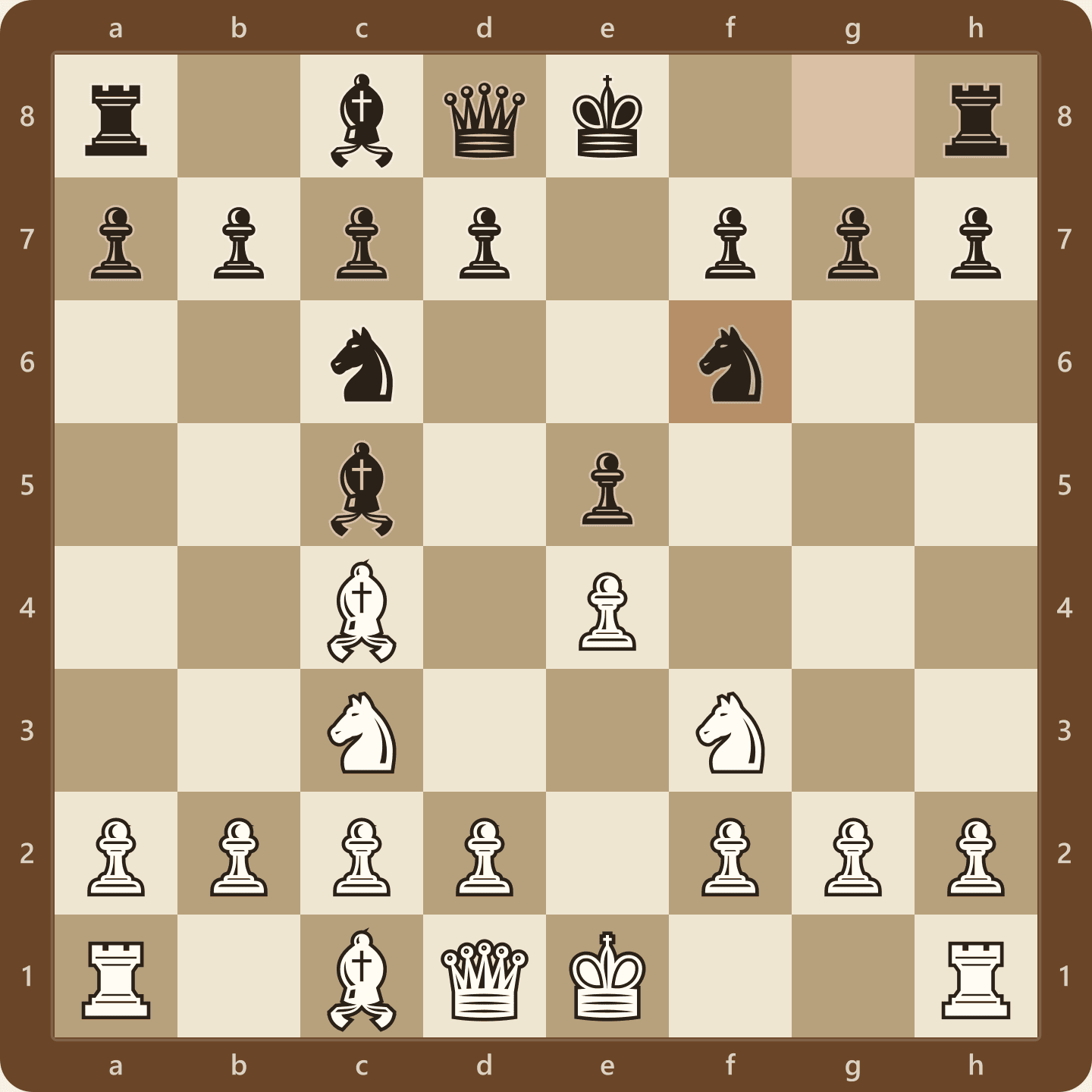
That is the Italian Game. Nobody memorized anything to reach it. Both sides played a center pawn, then a knight, then a bishop, then a knight, and every one of those moves obeys rules 1 and 2 at the same time.
3. Minor pieces first, then the queen, then the rooks
Knights and bishops are the minor pieces. They come out first because they are cheap to move and they reach useful squares in one hop. The queen and the rooks are worth more, so they are easier to harass, and they work best once the board opens up.
Rooks are the last to arrive, and they arrive by having everything else get out of the way. When the queen and both minor pieces have left the back rank and the king has castled, the rooks are connected: they defend each other along the first rank.
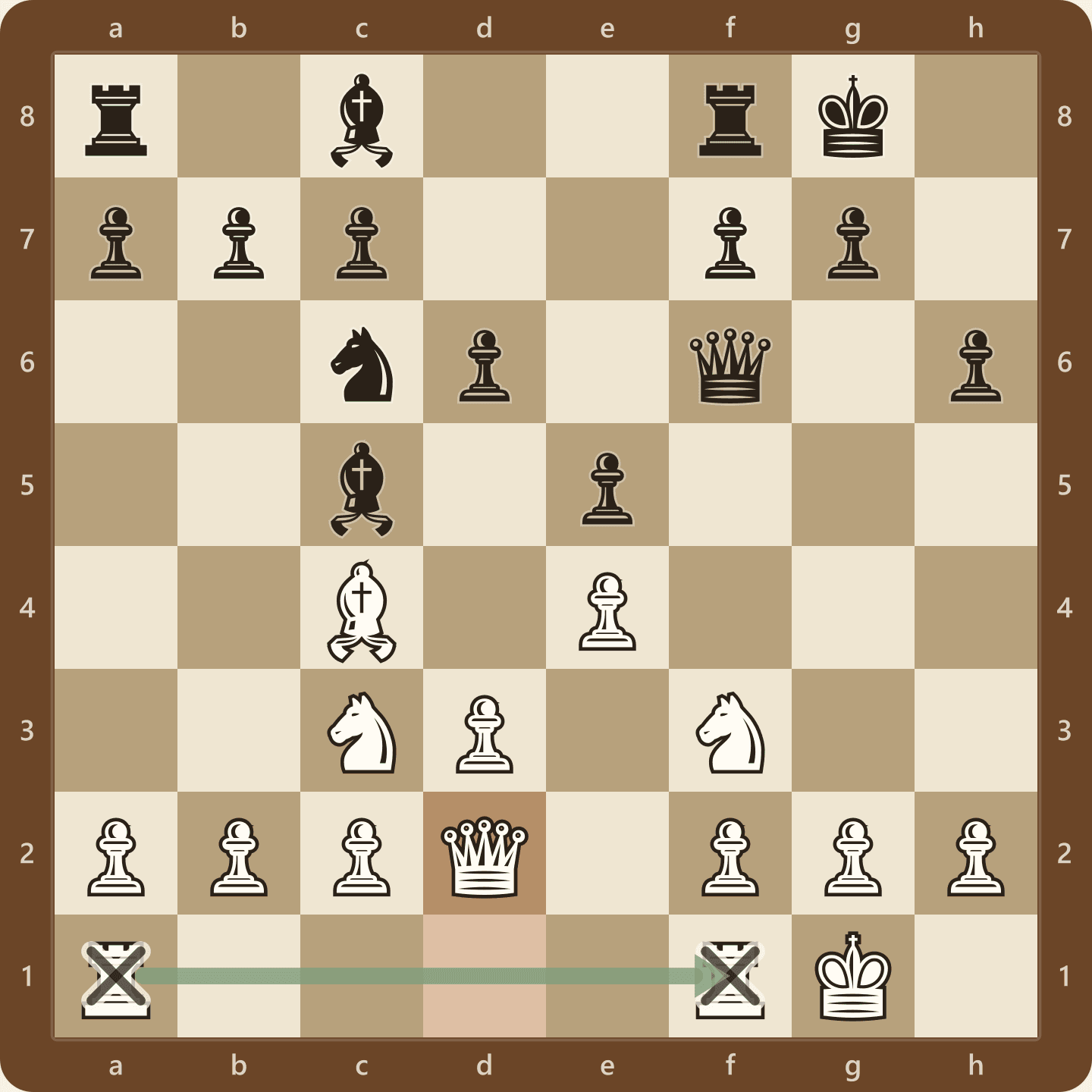
If you want a single test for whether your opening is over, this is it. Connected rooks and a castled king means you have arrived in the middlegame with the paperwork done.
4. Develop toward the center, not toward the edge
A knight on the rim controls half as many squares as a knight in the center. The old phrase is "a knight on the rim is dim", and unusually for chess proverbs it is just arithmetic.
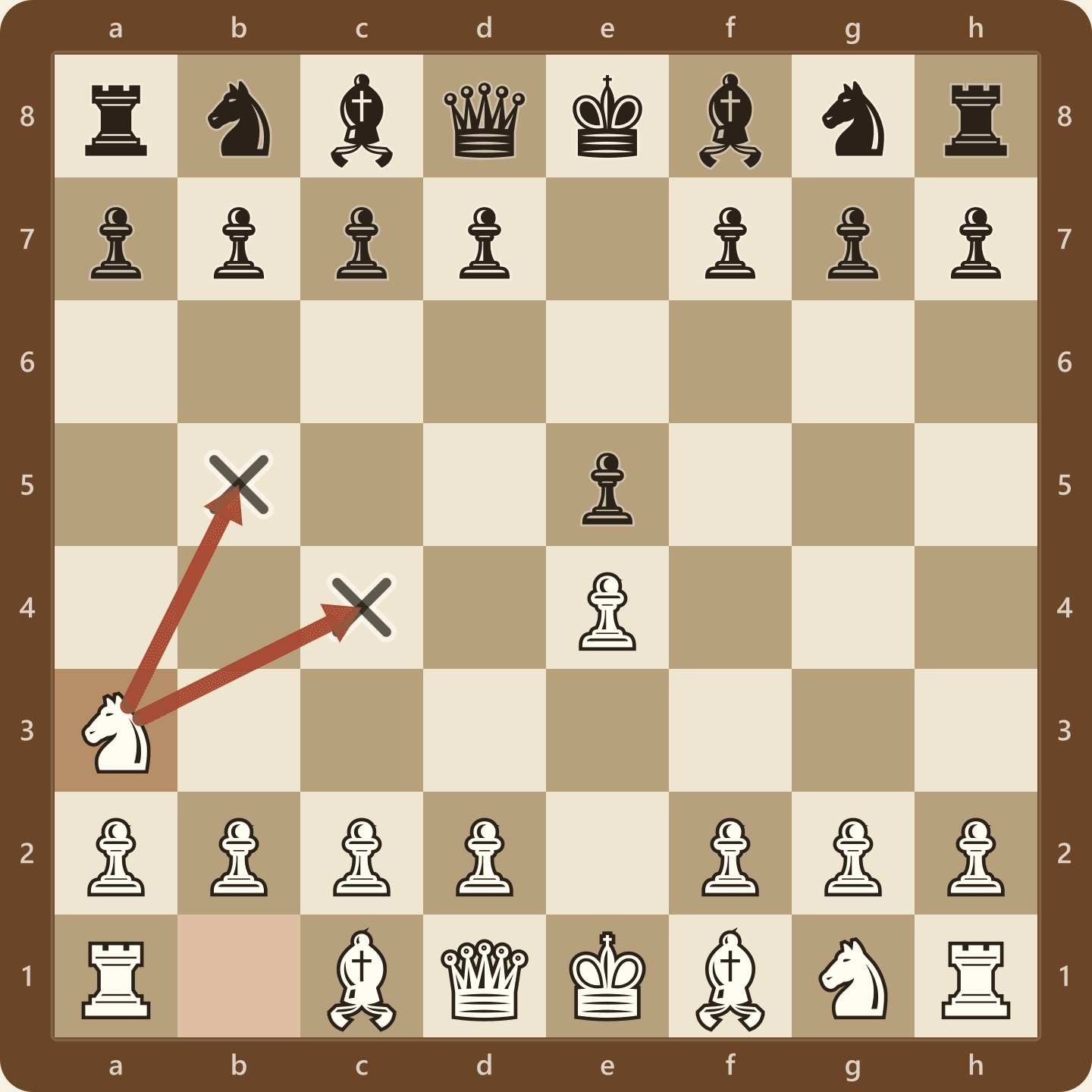
The same logic applies to bishops. A bishop on c4 or f4 is looking at the board. A bishop that shuffles to b1 or a2 is looking at the wall. Piece coordination is mostly this: pieces that point at the same part of the board support each other, and pieces on the edge point at nothing.
5. Castle by about move ten
Castling does two jobs in one move. It tucks the king behind a wall of pawns on the side of the board, and it brings a rook toward the center. A king left in the middle is the single most common reason club games end early, because every open file and diagonal eventually points at it.
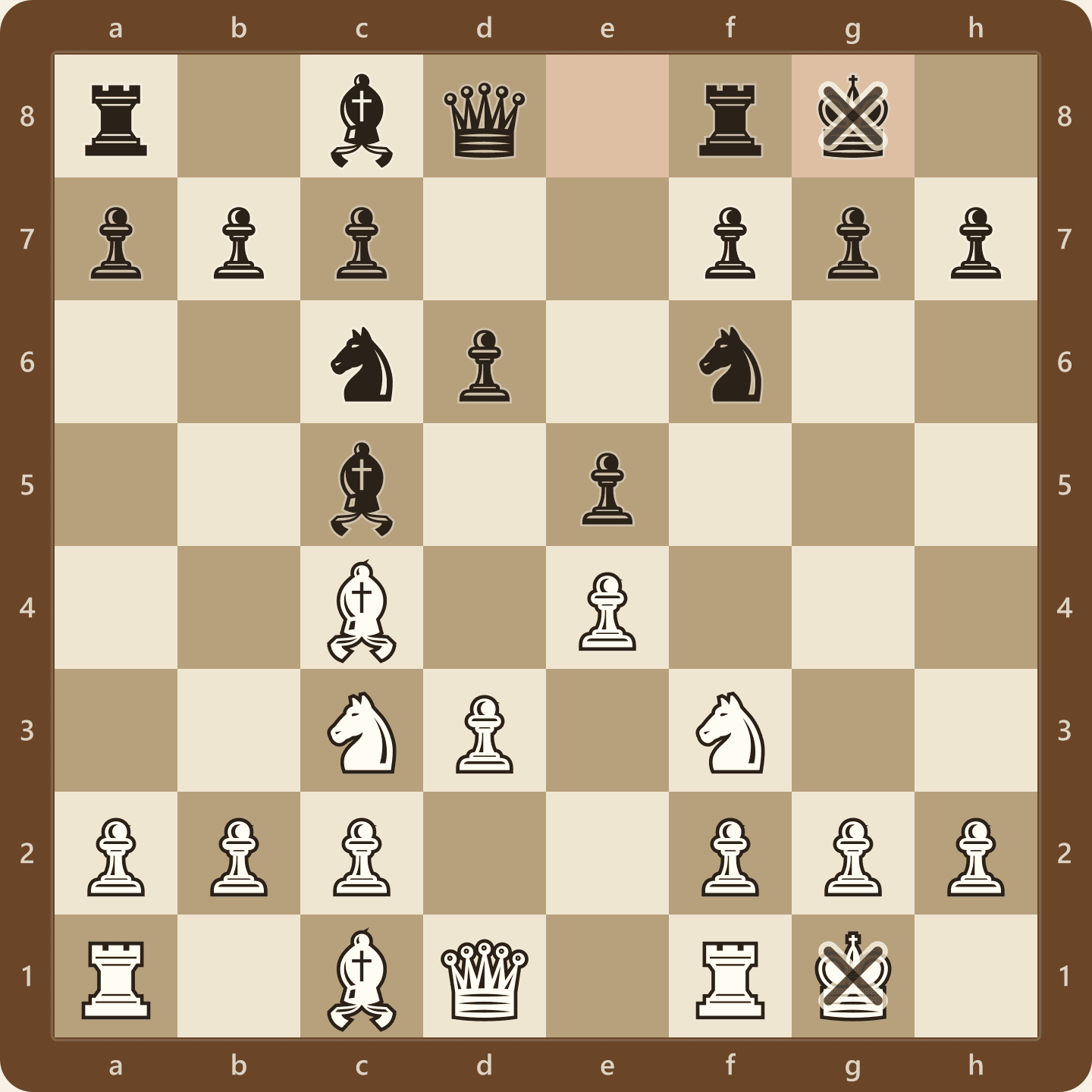
Move ten is a rough deadline rather than a law. The real rule is that you castle before the position opens, because once the center pawns come off, a king on e1 or e8 is standing in a corridor.
6. Do not move the same piece twice in the opening
Every move you spend moving an already-developed piece is a move your opponent spends developing a new one. Chess players call that unit of time a tempo, and in the opening it is the currency.
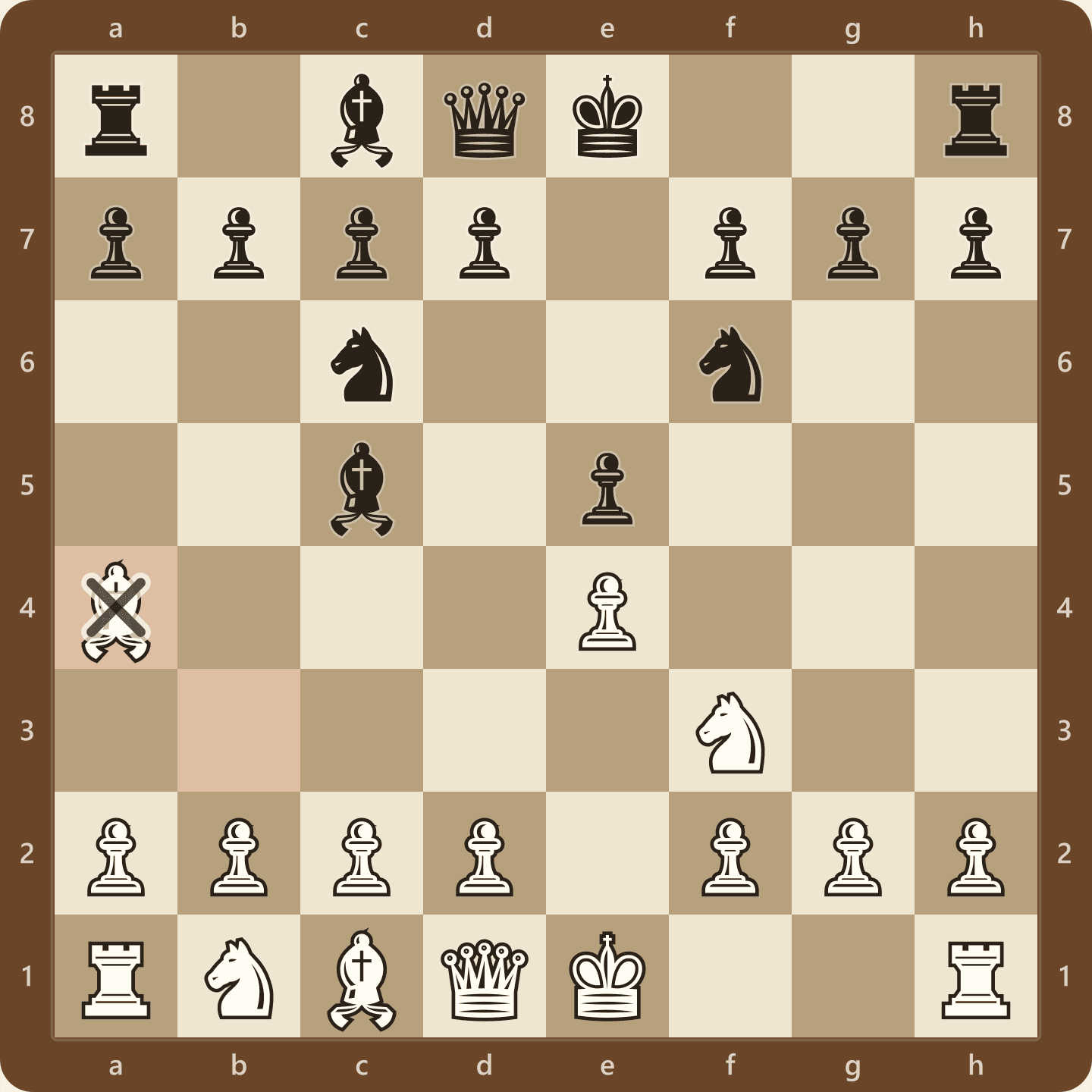
White has made five moves and developed one piece. Black has made four and developed three. Nothing dramatic has happened yet, and White is already worse.
7. Keep your queen home until she has a job
The queen is the most valuable piece and therefore the easiest to attack. Bringing her out on move two feels aggressive and hands your opponent free development, because every move that attacks the queen also improves a piece.
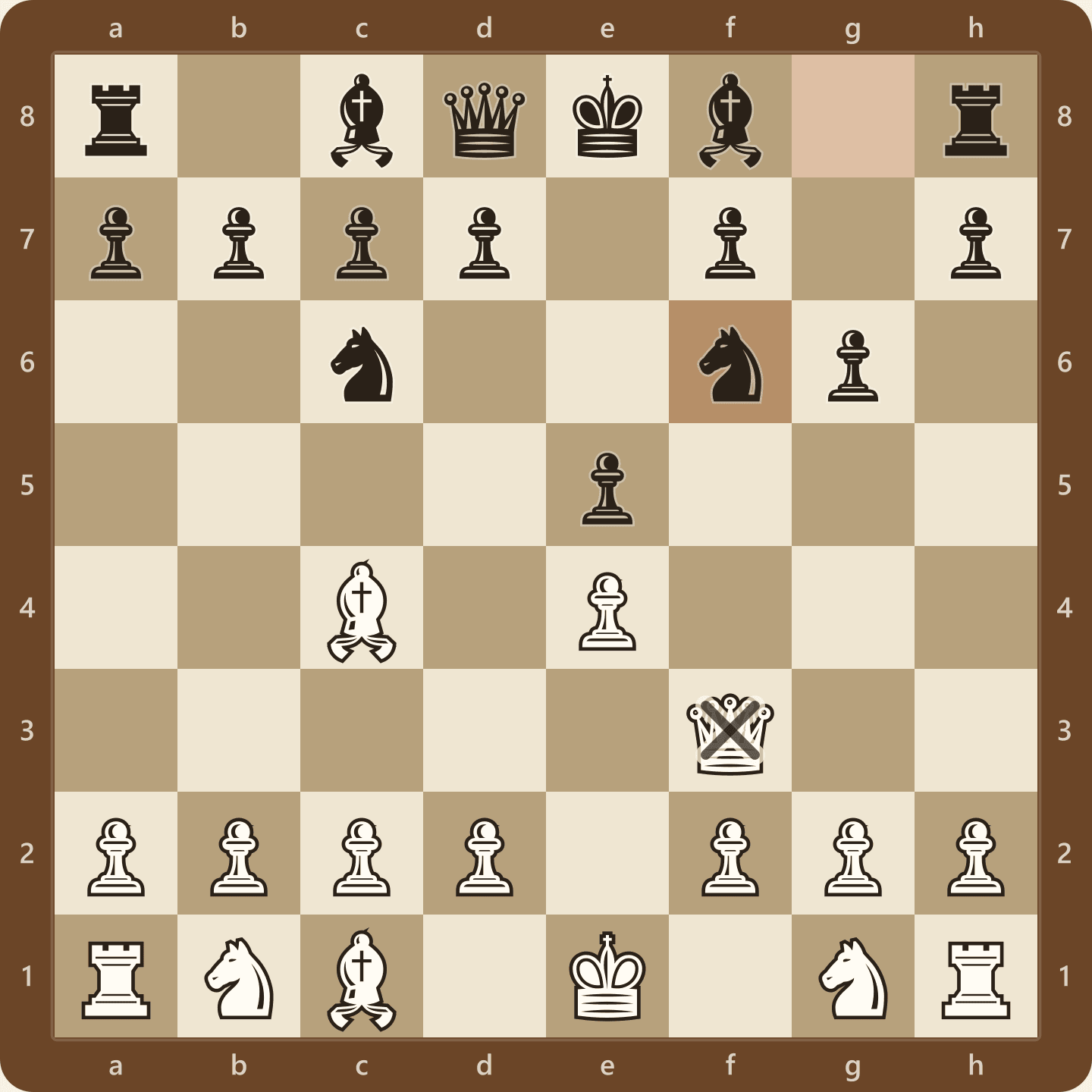
Early queen sorties do win games, against opponents who have not seen the pattern. That is exactly why they stop working: the first time someone answers 3.Qh5 with 3...g6 and 3...Nf6, the attack is over and the position is not.
8. Two or three pawn moves, then stop
Pawns cannot go backward. Every pawn move is permanent, and permanent decisions made before you know what the position needs tend to age badly. You usually want one or two center pawn moves to open lines for your pieces, and possibly one more to support the center.
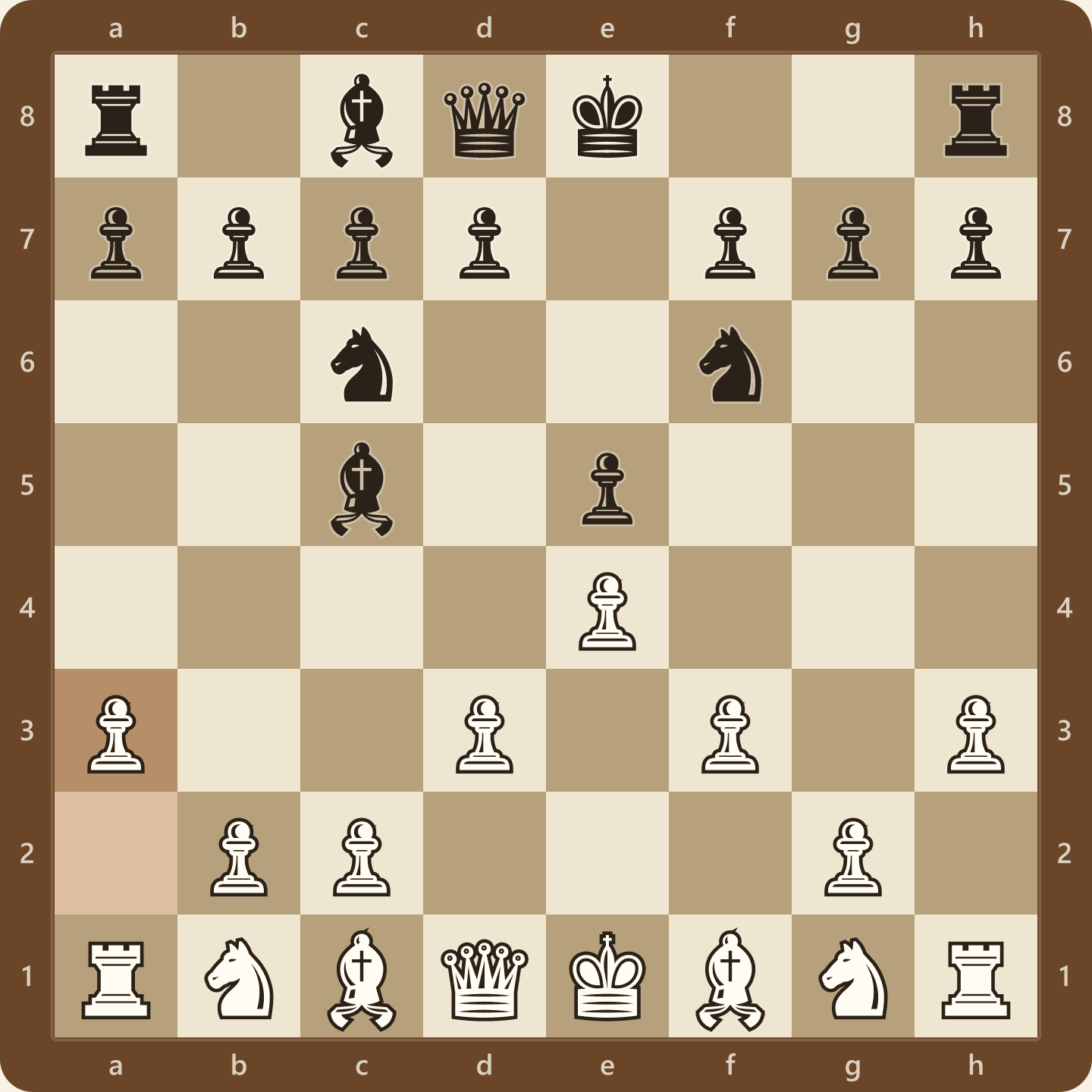
There is one honorable exception hiding here: the pawn move that fianchettoes a bishop, meaning g3 or b3 to put the bishop on the long diagonal, buys a real square for a real piece. The rest of these are just moves.
9. Do not create pawn weaknesses you cannot defend
A pawn weakness is a pawn or a square that cannot be defended by another pawn. Doubled pawns (two of your pawns stuck on the same file) and holes (a square in front of your pawns that no pawn can ever cover again) are the two you will meet most.
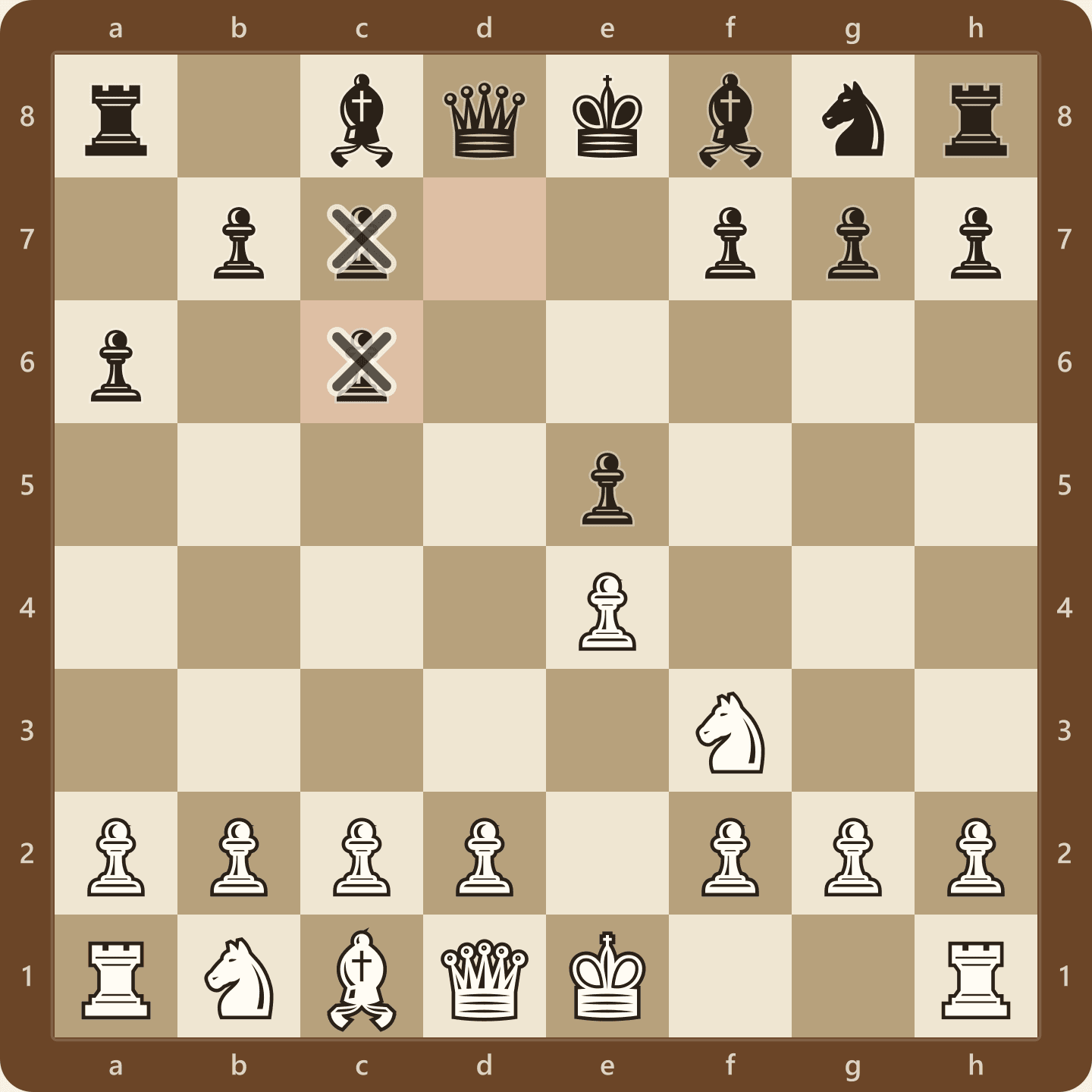
That is the Exchange Variation of the Ruy Lopez, and it is a good example of why rule 9 is a guideline rather than a commandment. Black takes a structural weakness knowingly, in return for something concrete. The mistake is not having doubled pawns. The mistake is having them by accident.
10. Do not start an attack before your king is safe
An attack costs moves. If you are spending moves attacking while your opponent is spending moves developing, you will run out of pieces before they run out of defenders, and then their counterattack arrives at a king still standing in the middle.
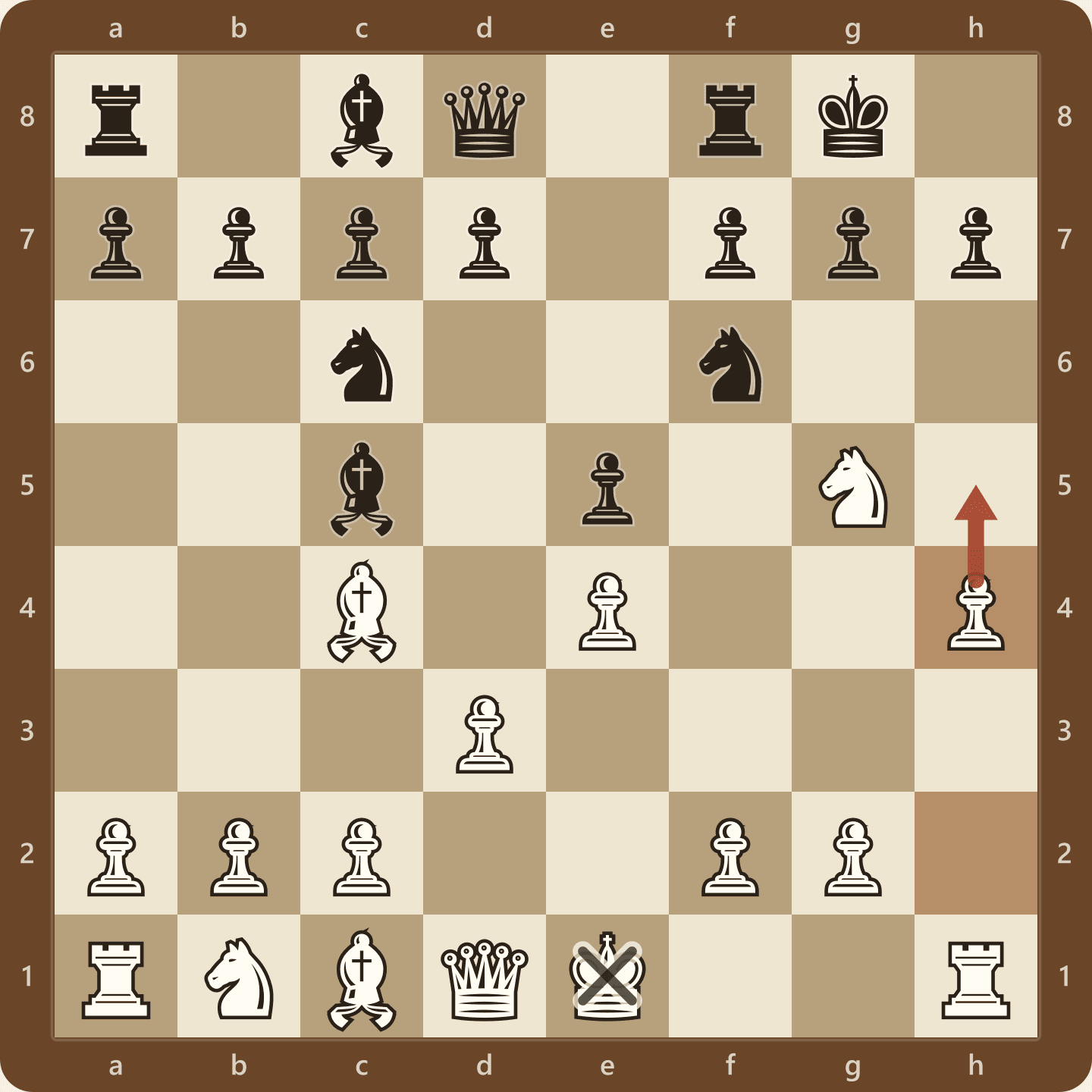
The reliable version of this rule: count your developed pieces before you launch anything. If the answer is fewer than three, you are not attacking, you are hoping.
When to break the rules
Every principle above has a respected opening that ignores it, which is what makes them principles rather than laws.
The hypermodern openings, meaning the ones built on controlling the center from a distance instead of occupying it, break rule 1 on purpose. The King's Indian Defense lets White build the big pawn center and then tries to knock it down.
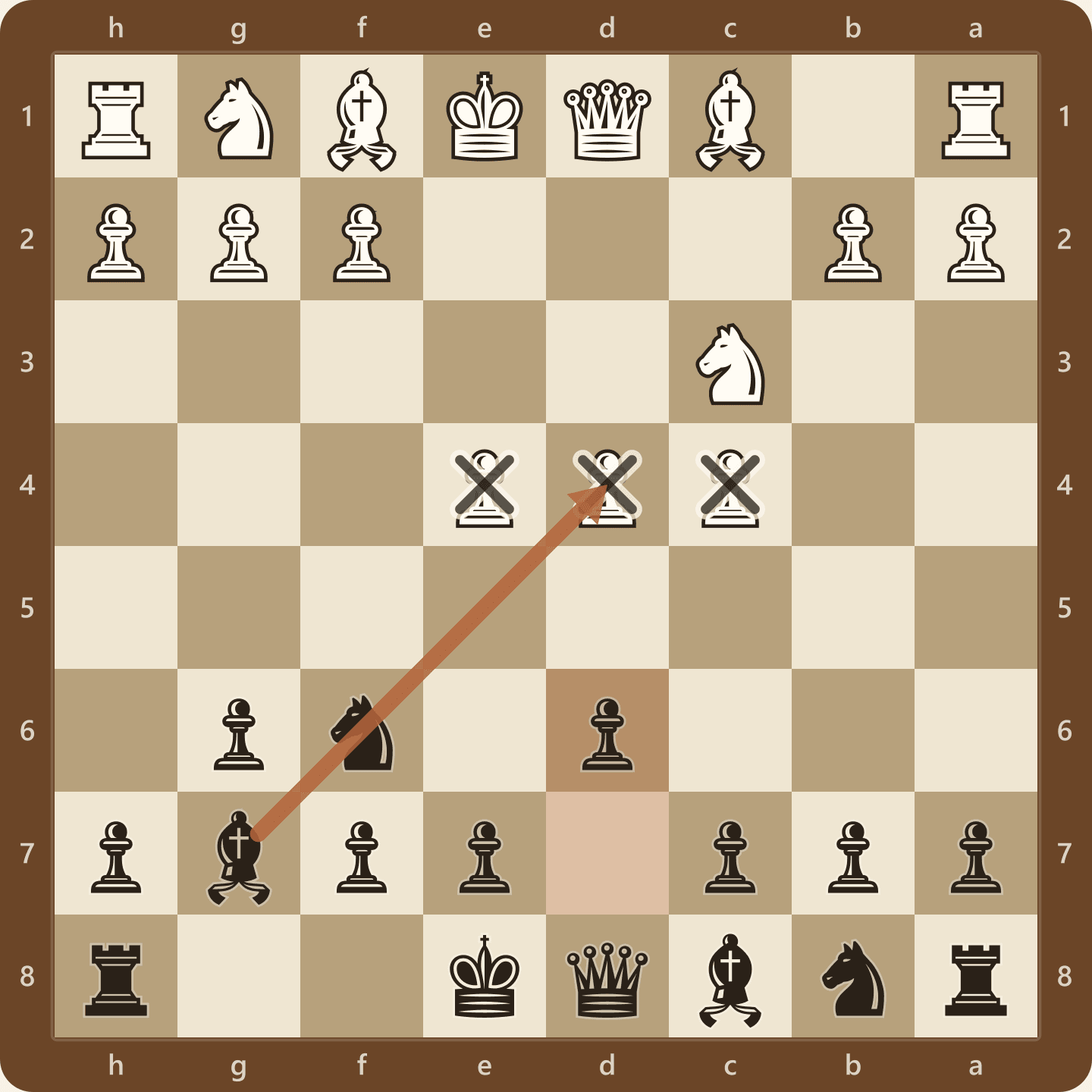
Elsewhere: the French Defense blocks in its own light-squared bishop with 1...e6, accepting a bad piece for a solid center. The Ruy Lopez moves the same bishop twice, from f1 to b5 to a4, because Black spent a tempo on ...a6 to make it happen. The Scandinavian brings the queen out on move two.
The pattern is always the same. Breaking a principle is fine when you can name what you are getting for it. "I felt like it" is not a name.
The three that matter most
If you remember nothing else from this page, keep these:
- Center. Put a pawn there and point your pieces at it.
- Development. A new piece almost every move until they are all out.
- King safety. Castle before the position opens.
Those three explain most of what happens in a normal opening, and between them they prevent the four mistakes that decide most club games: the uncastled king, the wandering queen, the piece that moved four times, and the attack launched with two pieces developed.
Where principles stop being enough
Principles get you a playable position out of the opening. They do not tell you which of two playable moves is better on move twelve, and they do not save you from a specific trap that has been sharpened over a century.
That is the honest boundary. Somewhere around the point where you can reliably reach a middlegame with equal material and a safe king, the marginal value of one more principle drops and the marginal value of knowing your own openings rises. Neither side of that line is a shortcut past the other.
Frequently asked questions
What are the three golden rules of the opening in chess?
Control the center, develop your pieces, and get your king castled. Almost every other opening rule is a detail of one of those three. Develop toward the center rather than the edge, avoid moving a piece twice, and keep the queen home are all really about developing efficiently.
What are the five opening principles of chess?
The most common five-rule version is: fight for the center, develop your minor pieces (knights and bishops), castle early, do not move the same piece twice, and do not bring the queen out early. The longer lists on this page add pawn-structure rules and the order in which the queen and rooks should follow the minor pieces.
What are chess opening principles for beginners?
Start with three: a center pawn on move one, a new piece on almost every move after that, and castling by around move ten. Those three alone produce a reasonable position against most opponents below club level, and they let you play openings you have never studied without guessing.
Do opening principles still work at higher ratings?
They keep working, but they stop being sufficient. Strong players obey the principles by default and spend their preparation on the positions where two principled moves disagree. The principles never become wrong, they just stop being the hardest part of the position.
Is it bad to break opening principles?
Only when you cannot say what you are getting in return. Openings break these rules constantly and on purpose: the King's Indian gives up the center for a counterattack, the Ruy Lopez moves one bishop twice, the Scandinavian develops the queen on move two. Each of those is a trade, not an accident.
Further reading
The principles are the map; the openings are the roads. Our complete guide to chess openings lays out how the named openings relate to each other, and how to learn chess openings covers the study method that turns principles into a repertoire you can actually play. If any of the notation above slowed you down, chess notation explained is the fastest fix.