A chess opening explorer is a searchable database of real games that shows, for any position, which moves have been played, how often, and how they scored. You use it by walking one of your own games into it and reading the game counts before you read any percentage.
That last part is the whole skill. An opening explorer will show you a move with a spectacular score and no warning that six people played it. Everything below is about not being fooled by that.
What is on the screen
Open the Lichess opening explorer or Chess.com's explorer, play a few moves on the board, and you get a table of candidate moves. Each row carries four things:
- The move, in algebraic notation.
- The number of games in the database that continued with it from this exact position.
- A result bar, splitting those games into White wins, draws and Black wins.
- An average rating, on the explorers that track one.
Above the table you usually get the opening's name and its ECO code, the letter-and-number classification (A00 to E99) that the Encyclopaedia of Chess Openings uses to file every opening. Underneath, most explorers list recent games you can open in full.
The database itself is built from PGN files, the plain-text format that stores a game's moves and tags. When you paste a FEN, the notation that describes a single position, the explorer jumps straight to that position without needing the moves that led there.
How to use one, step by step
Step 1
Set the filters before you look at anything
This is step one for a reason. On Lichess, switch the source to the Lichess player database, set the rating bands to the two nearest your own, and set the time control to the one you play. The default view is not your world. A move's score in 2200+ classical games has close to nothing to do with what happens to you in 1200 rapid.
Step 2
Load one of your own games, not a famous one
Paste the PGN of a game you lost into the analysis board. Step forward from move one with the explorer panel open. You are retracing a real decision, which is the only way this tool teaches you anything you did not already know.
Step 3
Find where the game count falls off a cliff
Watch the total number of games as you step forward. It drops steadily, then at some point it collapses. That move is your departure point: the place where you and your opponent both left the territory other people play. Note the move number.
Step 4
Go back one move and read the candidates
At the last position with a healthy game count, look at what everyone else plays. Usually two or three moves carry most of the games. Those are the moves worth knowing, and one of them is probably the move you did not consider.
Step 5
Check the count before the percentage, every time
Sort by games played, not by score. If a move has fewer than a few hundred games in your rating band, treat its percentage as decoration. The next section gives you the actual numbers for this.
Step 6
Confirm with the engine, then write it down
The database says what people do. The engine says what is good. When they agree, you have your answer. When they disagree, that disagreement is interesting and the next sections explain why. Either way, add the position and your chosen move to your repertoire file.
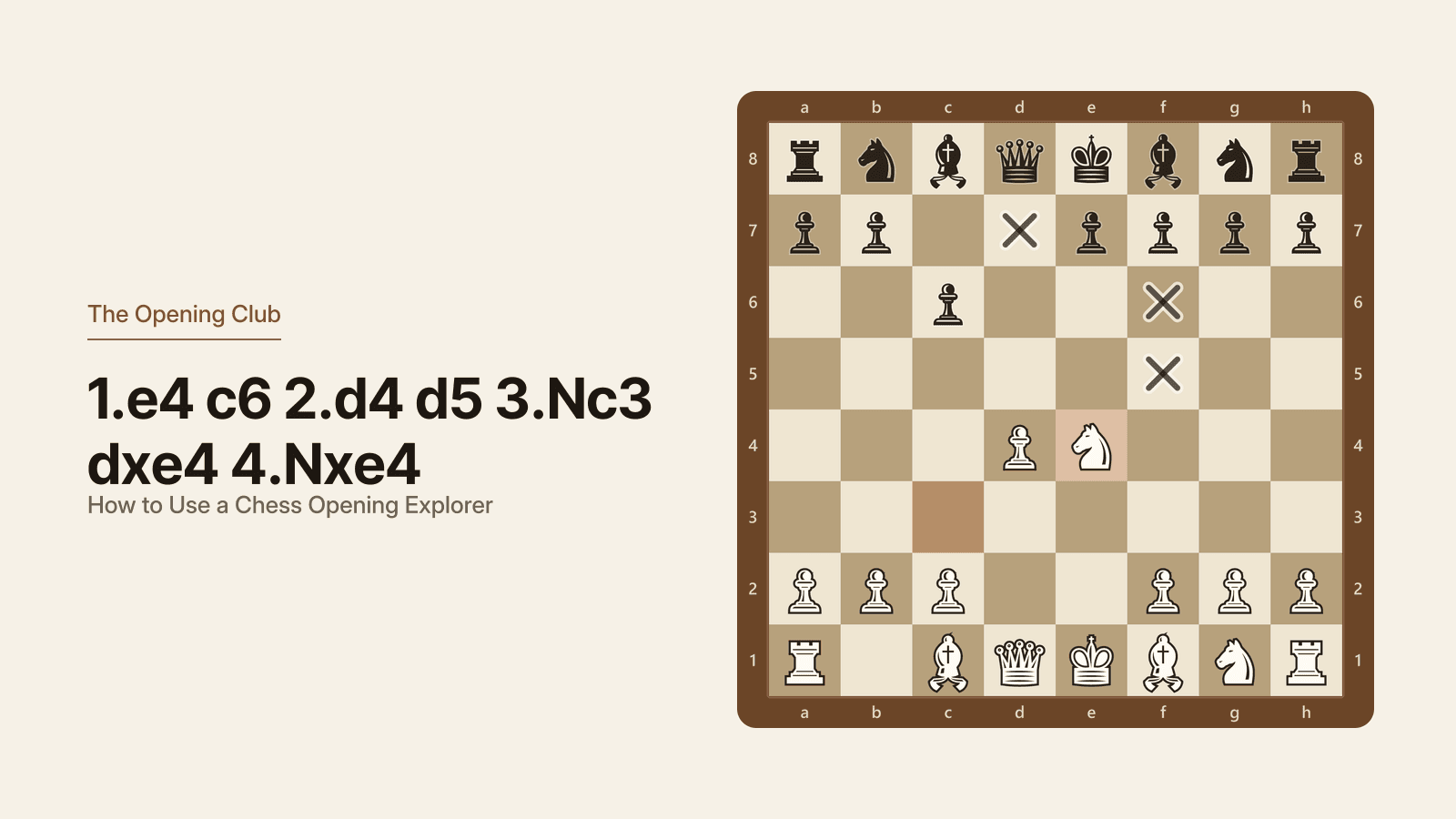
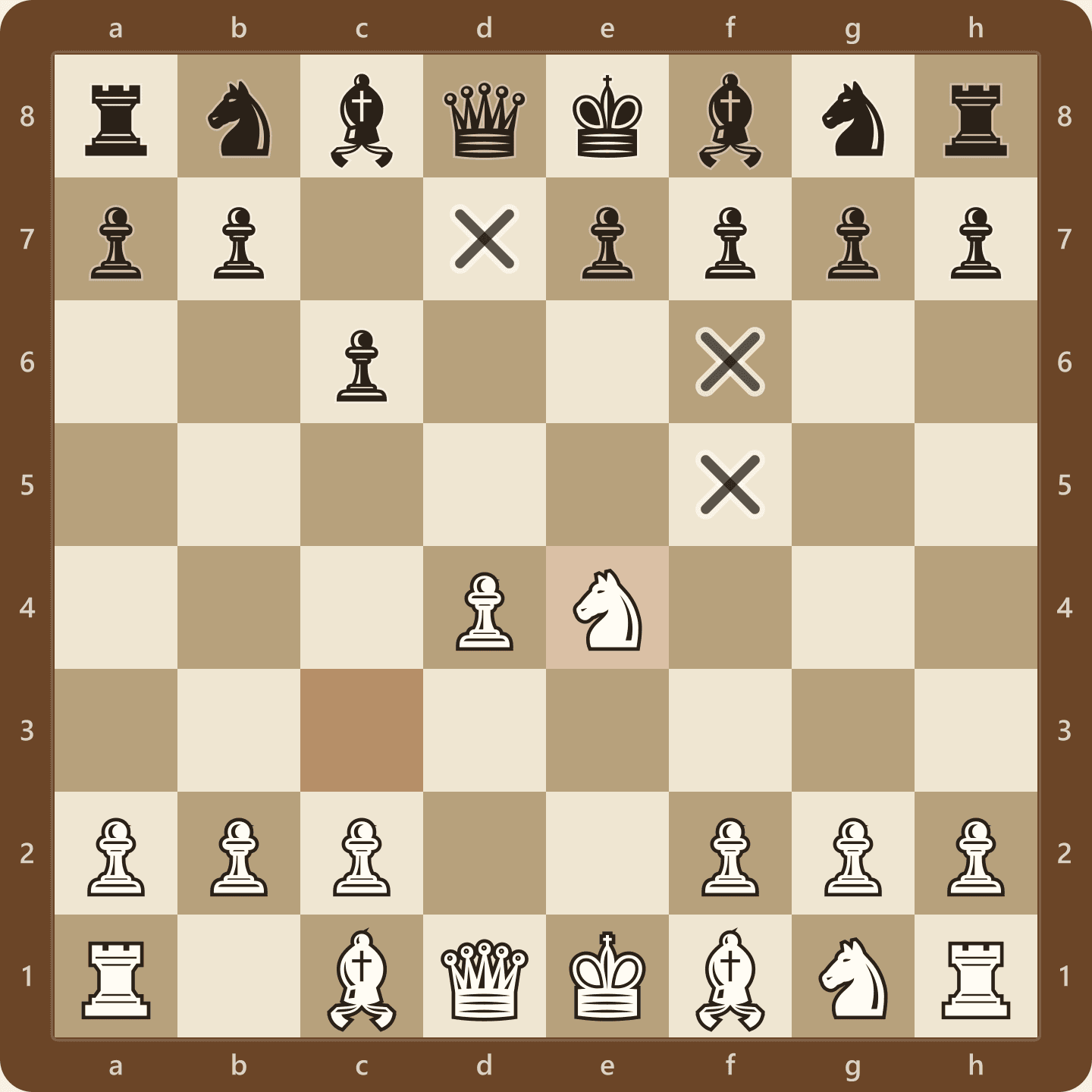
Here is a position worth trying it on. This is the Caro-Kann after 1.e4 c6 2.d4 d5 3.Nc3 dxe4 4.Nxe4, where Black has three genuinely popular moves and no obvious one.
Sample size, the part nobody explains
A percentage from a small number of games is not a weak signal. It is noise wearing a number's clothes.
The rough maths: for a result that lands near 50 percent, the range you should expect from chance alone is about one divided by the square root of the number of games. Run that out and it is brutal.
| Games in this position | How far off the true score can be, from chance alone | What you can honestly conclude |
|---|---|---|
| 10 | Around 30 percentage points | Nothing at all |
| 50 | Around 14 points | Nothing you should act on |
| 100 | Around 10 points | Whether the move is played, not whether it is good |
| 500 | Around 4 points | Big differences only, above roughly 10 points |
| 5,000 | Around 1.4 points | Real differences of a few points |
| 50,000 | Around half a point | Fine distinctions, if the games are from your rating band |
That is the conservative version, since draws pull results toward the middle and shrink the spread a little. It is close enough for the decision you are making, which is whether to believe a number at all.
Two practical rules fall straight out of it. First, a move with a four-figure game count and a two-point score edge is telling you nothing useful. Second, a move with fifty games and a twenty-point edge is also telling you nothing useful, and it is the one that will tempt you, because twenty points looks enormous.
This is also why we do not print win rates on this site without the rating band and the game count beside them. A number without those two things is not a fact, it is a vibe. When our own database is ready, every figure on chess opening win rates will carry both.
The master-database trap
Most explorers offer a masters database alongside the general one. It is the most interesting collection of games in existence and the most misleading thing on the page.
The problem is that master games are selected, in every sense of the word. They are the games somebody thought worth recording. The players chose those openings because they suited their style, their opponent and their tournament situation. And critically, once a line gets refuted, strong players stop playing it, which means the database keeps the wins and stops adding the losses.
So a sideline can sit in the masters database showing an outstanding score off a handful of games, purely because six strong players tried it in the 1990s, it worked twice against unprepared opponents, and everyone else quietly avoided it ever since. The score is real. The conclusion is backwards.
Three checks defuse this:
- Look at the game count first. Under a few hundred, stop reading.
- Look at the dates. If the most recent game is from 2004, the line was not forgotten, it was buried.
- Ask the engine. A move with a great practical score and a bad evaluation is usually a trap, and the master database is exactly where a trap looks best.
When a good score means a bad move
Practical score and objective quality are different measurements, and the explorer only knows one of them. Two examples make the gap obvious.
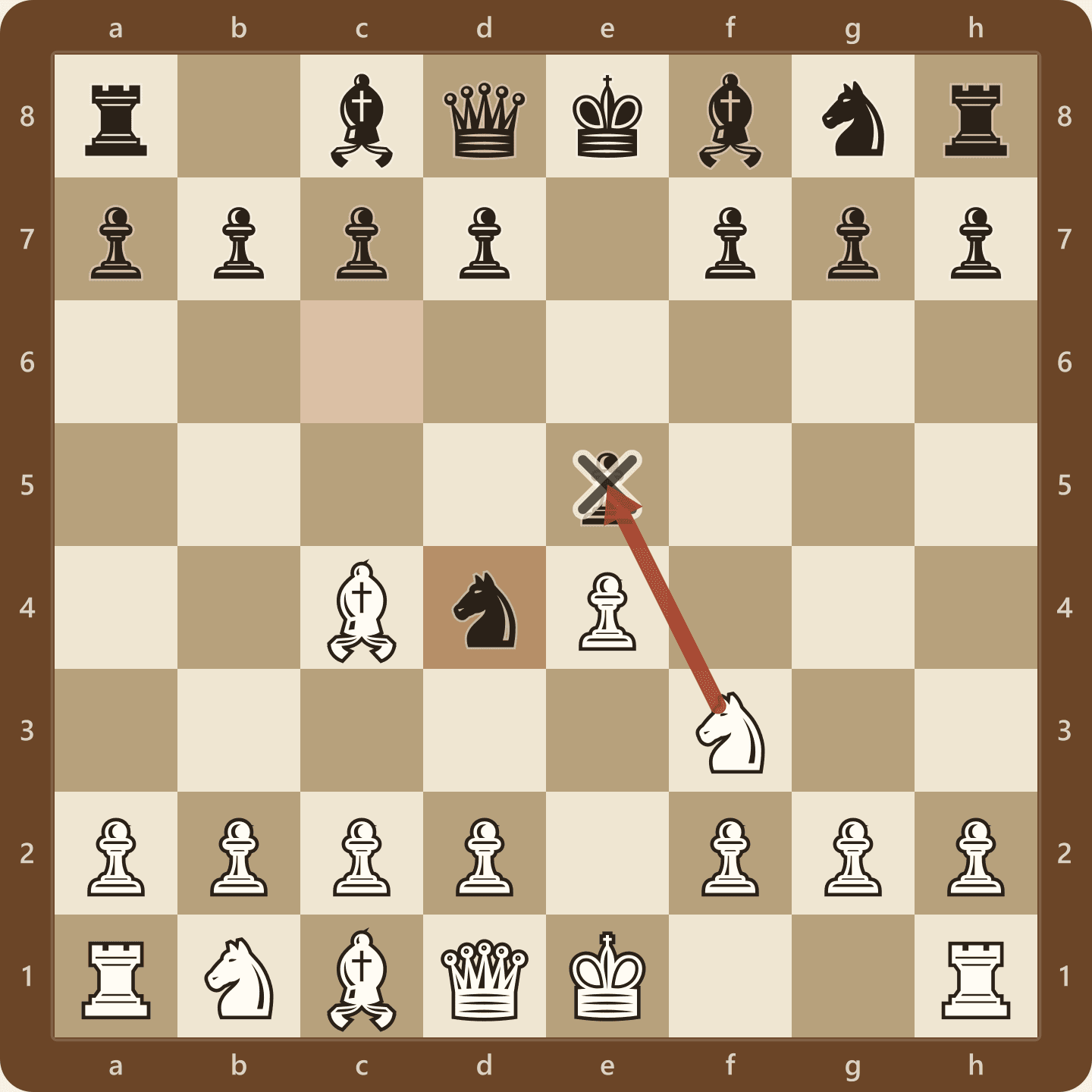
That is the Blackburne Shilling Gambit, a trap dressed as an opening. Filter the explorer to a low rating band and Black's score looks tempting. Filter it upward and it falls apart, because the whole thing depends on White playing the one greedy move. The database is not wrong. It is answering the question "what happens when people play this", and that answer changes completely depending on who the people are.
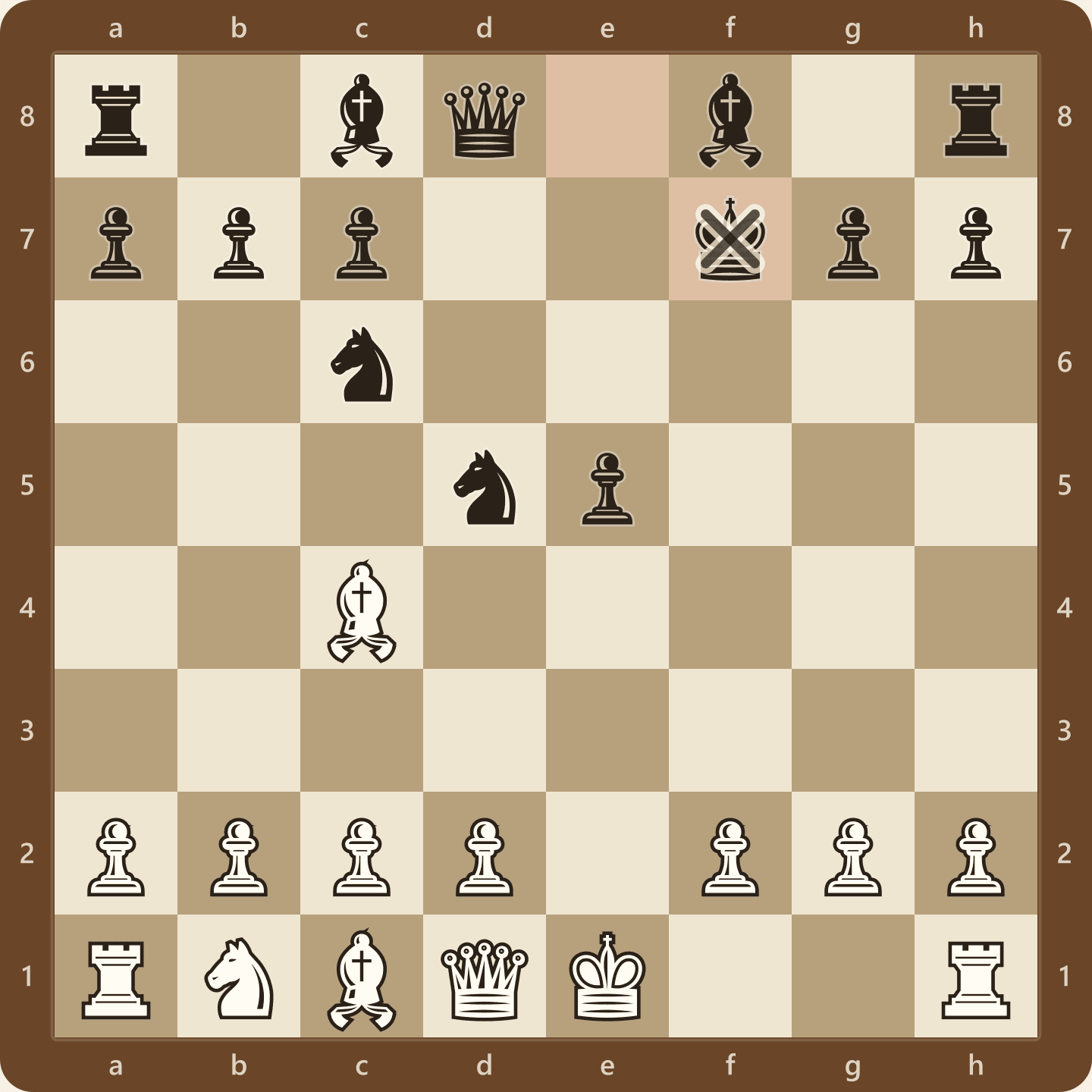
The Fried Liver Attack is the same story from the other side. It is genuinely dangerous and genuinely unsound, and its explorer score is a near-perfect graph of how well people defend at each rating.
The reverse case exists too. Some lines score well for the side that is theoretically worse, because the resulting position is simply harder to play.
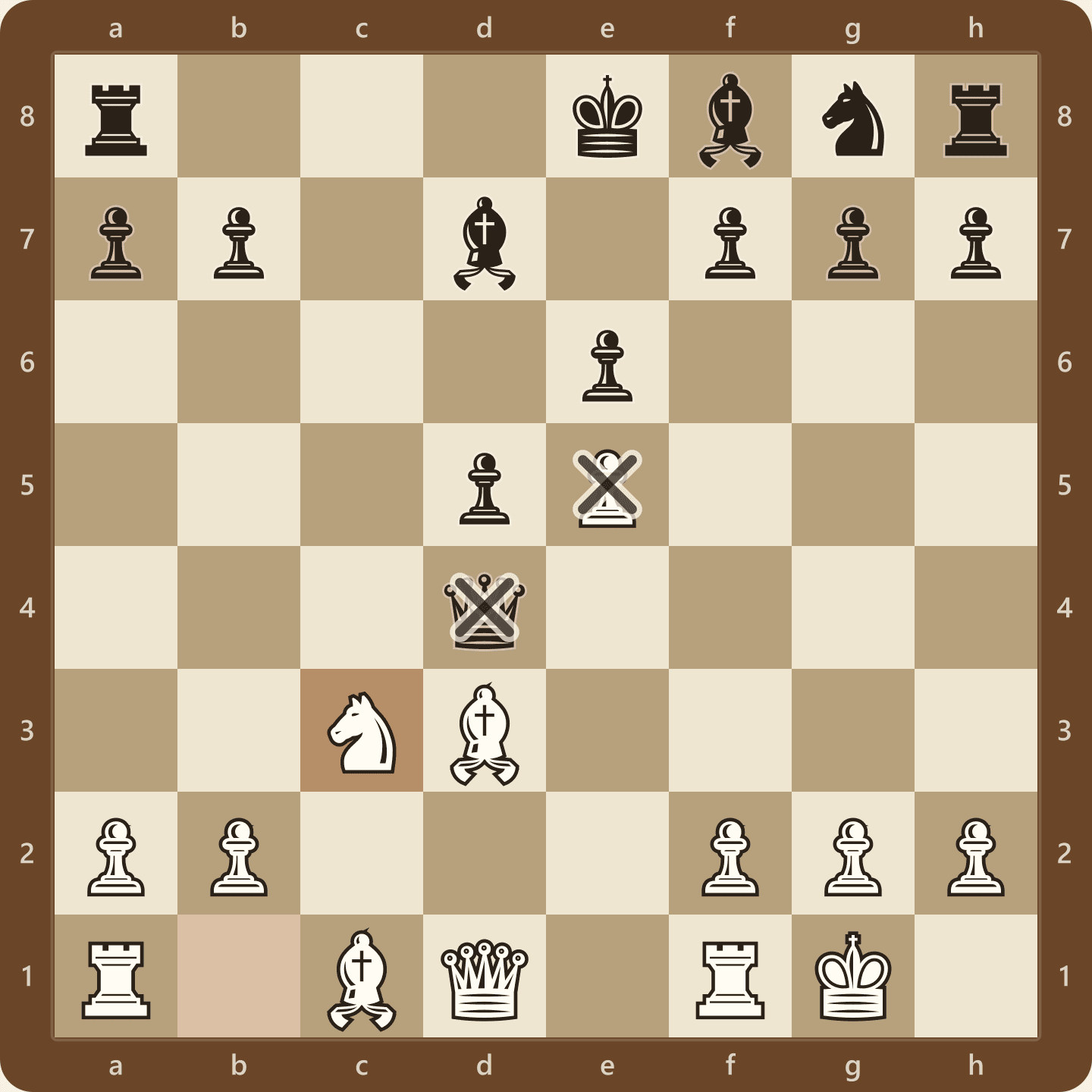
That is the Milner-Barry Gambit against the French Defense. If you only read the engine you would never play it. If you only read the database you would never understand why strong players avoid it. You need both numbers on the screen at once.
Three more ways the numbers mislead
Time control changes everything. Bullet and blitz reward tricks and punish nothing. If you play 15+10 and read bullet statistics, you are studying a different game. Every serious explorer lets you filter this. Use it.
Draws are half a point, and they hide. A "55 percent for White" figure in a master database is mostly draws, not wins. In amateur databases draws are rare, so the same 55 percent means something completely different. Always check whether the result bar is showing you a fat middle band.
Transpositions merge the counts. The explorer keys on the position, not the move order, which is usually a feature: it folds every route into one honest total. It becomes a trap when you conclude that "this line is popular" and go looking for it, when in fact almost everyone arrives from a different opening entirely.
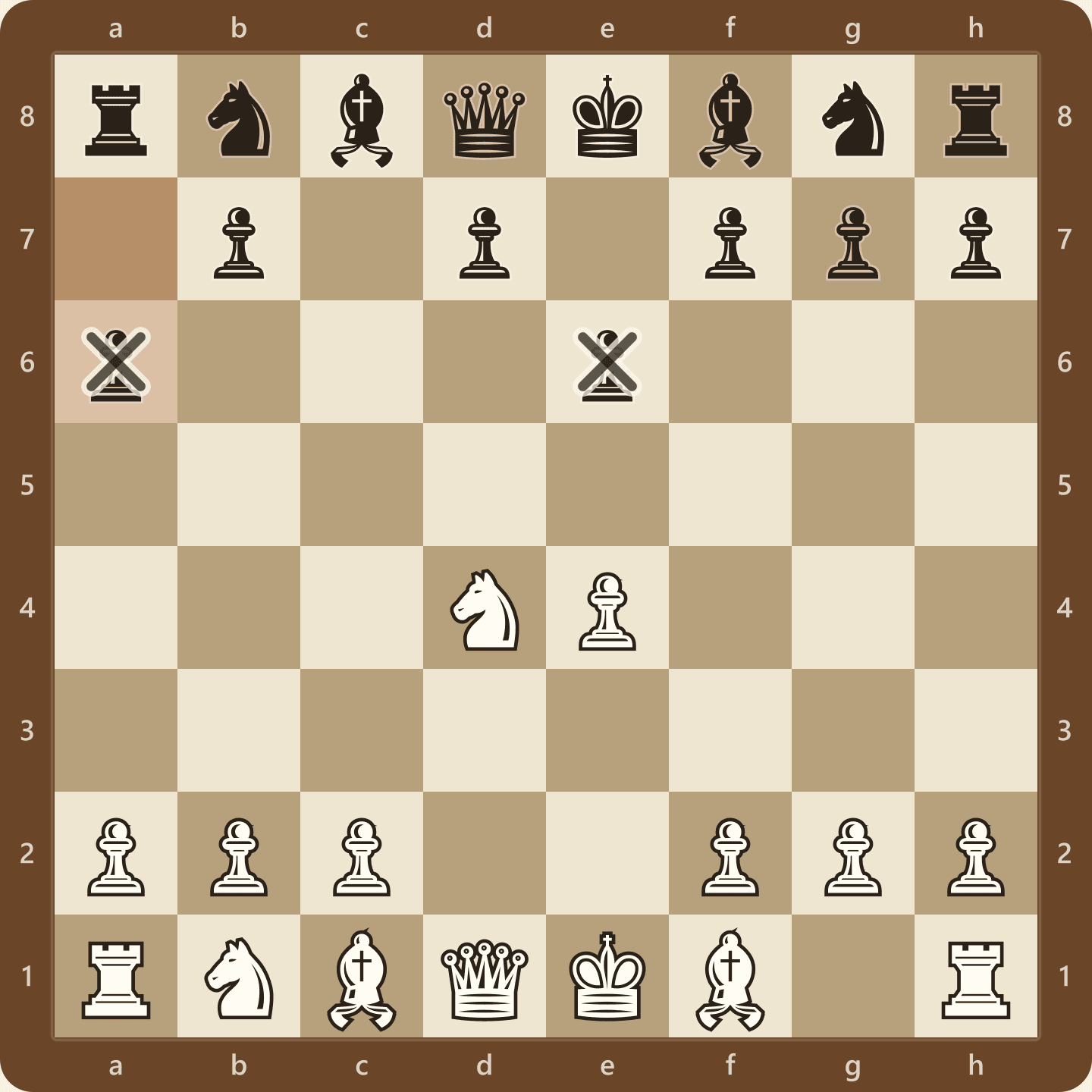
The fix is to check which move order the recent games actually used before you file a line in your repertoire. We cover the practical side of that in how to build a chess opening repertoire.
Which explorer should you use
| Explorer | What is in the database | Filters | Cost |
|---|---|---|---|
| Lichess | Billions of Lichess games, plus a masters set and player-specific search | Rating band, time control, date range, colour | Free, no account needed |
| Chess.com | Master games plus Chess.com member games | Rating and time control on the member database | Basic access free, deeper analysis with membership |
| 365Chess | Large curated database of over-the-board games with ECO browsing | Player, ECO code, year | Free |
| ChessGames.com | Historic and annotated master games, strong on famous players | Player, event, year | Free with a premium tier |
| ChessTempo | Game database plus dedicated opening training | Rating, result, player | Free tier, paid upgrade |
| Shredder Chess | Compact online opening database, quick lookups | Minimal | Free |
| FICS Games Database | Games from the Free Internet Chess Server, an amateur pool | Rating, time control, date | Free |
For the job described on this page, Lichess is the one to use, and it is free with no account. The rating and time-control filters are the reason: they are what turn a database of other people's games into a database of games like yours. Use 365Chess or ChessGames.com when you want to study a specific strong player's opening choices, which is a different and equally valid use of the tool.
What the explorer is not for
It will not tell you the best move. It tells you the popular move and the move that has worked, which are three different things that happen to share a table.
It also will not build your repertoire for you. The explorer is a diagnostic instrument: it finds the positions you should be studying. Deciding what to play there is a judgment call informed by the engine, the plans you understand, and how much time you have. That decision process lives in how to learn chess openings.
Frequently asked questions
What is the Lichess opening explorer?
It is the free opening database built into the Lichess analysis board. It can search billions of games played on Lichess, a curated masters database, or a single player's games, and it filters by rating band, time control and date. For an improving player it is the most useful of the explorers because the rating filter lets you see the openings as your actual opponents play them.
Is there a free chess opening explorer online?
Several. Lichess, 365Chess, Shredder Chess and the FICS Games Database are all free with no account required, and ChessGames.com and ChessTempo have free tiers. Chess.com's explorer is partly free with the deeper analysis behind a membership.
What is 365Chess?
365Chess is a free online database of over-the-board games organised by ECO code, with an opening explorer and player search. It is stronger than Lichess for browsing named openings and historic tournament games, and weaker for the thing improvers need most, which is filtering by amateur rating band.
How many games do I need before a win rate means anything?
Several hundred at minimum, and a few thousand before small differences mean anything. With 100 games, chance alone can move the score by roughly 10 percentage points. With 50 games it is closer to 14. Any percentage attached to a handful of games should be read as no information rather than weak information.
Should I use the masters database or the amateur one?
The amateur one, filtered to your rating band, for deciding what to play. The masters database for understanding what a line is trying to do, since master games show you the plans. Using master statistics to choose your own moves is the most common way people misuse an explorer.
Can an opening explorer replace an engine?
No, and it is not trying to. The database records what humans did; the engine evaluates what is objectively best. The interesting positions are the ones where they disagree, which is usually a sign of a trap, a gambit, or a position that is simply unpleasant to defend.
The one-line version
Filter to your rating band, find where the game count collapses, read counts before percentages, and treat any move with a small sample and a big score as a rumour rather than a fact.
If you want the study loop this feeds into, read how to practice chess openings. Our complete guide to chess openings is the map of everything you will be looking up.