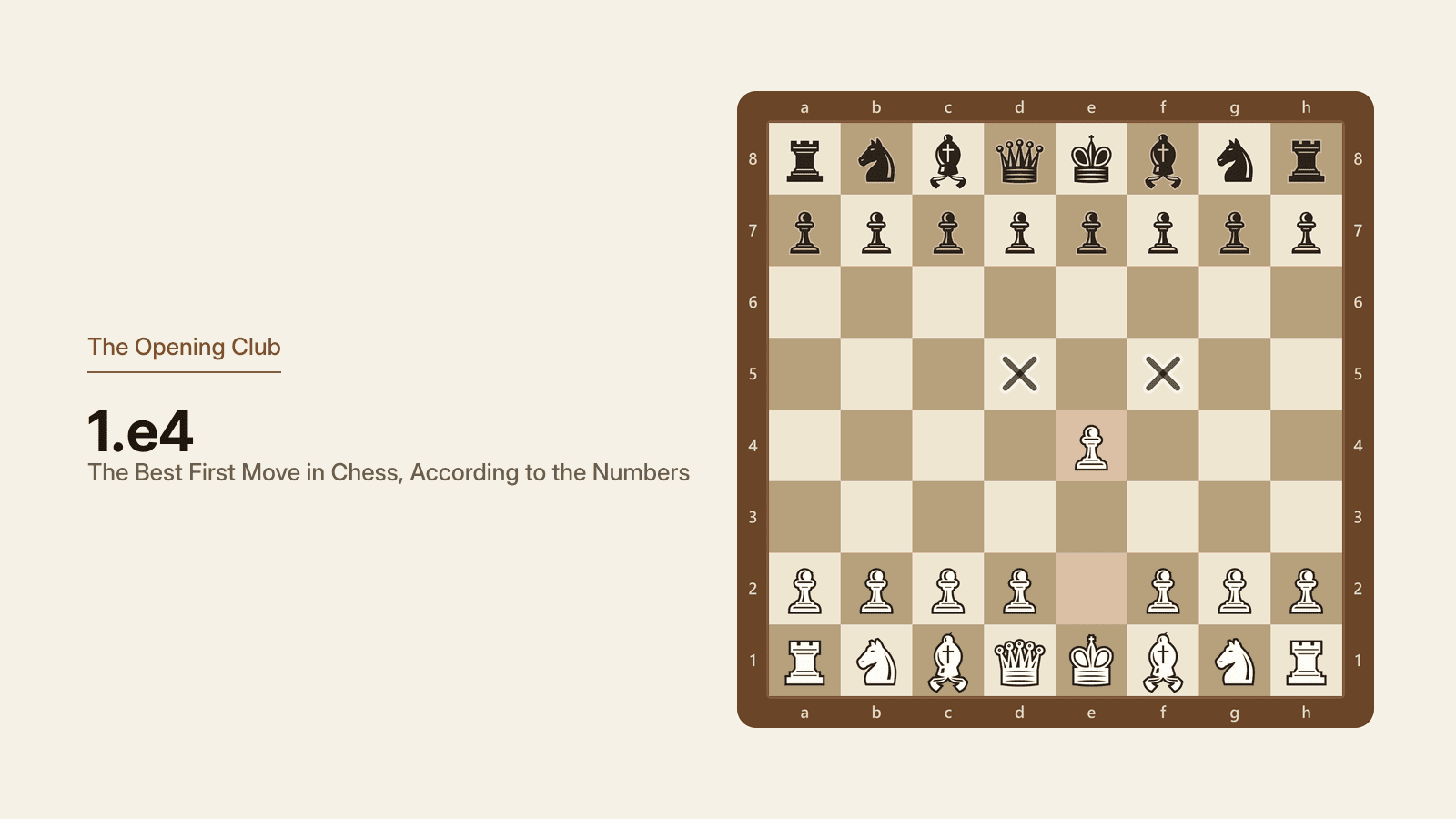
The best first move in chess is 1.e4 or 1.d4. Both place a pawn in the centre, open a line for a piece, and score better than the alternatives once sample size is accounted for. In the Lichess open database for May 2026, 1.d4 scores 52.8% for White and 1.e4 scores 51.9% at the 1000 rating band.
That is the short answer. The longer answer is more interesting, because the raw ranking has a surprise at the top of it, and understanding why that surprise is not the real answer explains more about chess openings than the ranking itself does.
The figures throughout come from the Lichess open database for May 2026: 49.8 million rapid and blitz games, split into four rating bands (4,206,514 at the 600 band, 14,075,034 at 1000, 10,678,582 at 1400 and 20,823,049 at 1800). Those bands are Lichess bucket lower bounds, so the 1000 band covers players rated 1000 up to the next bucket. There is no 800 or 1200 band.
Every first move, ranked
A "score" is wins plus half of draws, from White's side. Fourteen of the twenty legal first moves appear often enough to measure, and together they account for about 98.6% of games at the 600 band. Anyone wanting to check a single line against the source can query it directly in the Lichess opening explorer. The other six are so rare they leave no useful trace.
| First move | Name | 600 band | 1000 band | 1400 band | 1800 band | Games (1800 band) |
|---|---|---|---|---|---|---|
| 1.b4 | Polish Opening | 47.6% | 54.2% | 53.9% | 53.4% | 100,838 |
| 1.c4 | English Opening | 50.9% | 53.0% | 53.1% | 53.1% | 741,296 |
| 1.d4 | Queen's Pawn | 52.3% | 52.8% | 52.4% | 52.4% | 5,546,280 |
| 1.e4 | King's Pawn | 52.4% | 51.9% | 51.3% | 51.3% | 12,493,284 |
| 1.Nf3 | Zukertort / Reti | 50.7% | 51.9% | 52.3% | 53.2% | 644,679 |
| 1.b3 | Nimzo-Larsen Attack | 51.0% | 51.8% | 52.0% | 51.6% | 232,339 |
| 1.g3 | Hungarian Opening | 51.4% | 51.0% | 51.1% | 51.5% | 237,894 |
| 1.f4 | Bird Opening | 46.8% | 50.9% | 51.7% | 52.2% | 269,015 |
| 1.c3 | Saragossa Opening | 48.1% | 50.1% | 49.1% | 50.9% | 45,076 |
| 1.g4 | Grob Opening | 44.0% | 49.5% | 50.5% | 53.0% | 65,755 |
| 1.e3 | Van't Kruijs Opening | 49.4% | 49.3% | 49.3% | 49.4% | 252,191 |
| 1.Nc3 | Van Geet Opening | 48.7% | 49.1% | 49.9% | 52.1% | 74,836 |
| 1.d3 | Mieses Opening | 47.5% | 48.4% | 48.3% | 49.9% | 106,460 |
| 1.f3 | Barnes Opening | 41.0% | 43.3% | 42.1% | 48.8% | 13,106 |
Sorted by the 1000 band, the top of that table reads 1.b4, 1.c4, 1.d4, 1.e4. Which looks like it says a beginner should open with the Polish Opening.
It does not say that.
Why the top of the table is not the answer
Look at what 1.b4 does across the four bands: 47.6%, then 54.2%, then 53.9%, then 53.4%. It is one of the two worst moves in the 600 band and one of the best everywhere above it.
A move cannot get better as the opposition gets stronger. What changes is who is playing it.
At the 600 band, 1.b4 is played by accident, or as a joke, or by someone who saw it once. By the 1000 band, almost everyone pushing that pawn on move one has chosen it deliberately, owns a system for it, and is meeting an opponent who has never seen it before and has no prepared reply. The score is measuring the specialist, not the move.
The same signature appears on 1.g4, which climbs from 44.0% at the 600 band to 53.0% at the 1800 band, and on 1.Nc3, which climbs from 48.7% to 52.1%. Meanwhile 1.f3, a move nobody specialises in because it has nothing to offer, stays near the bottom at every band.
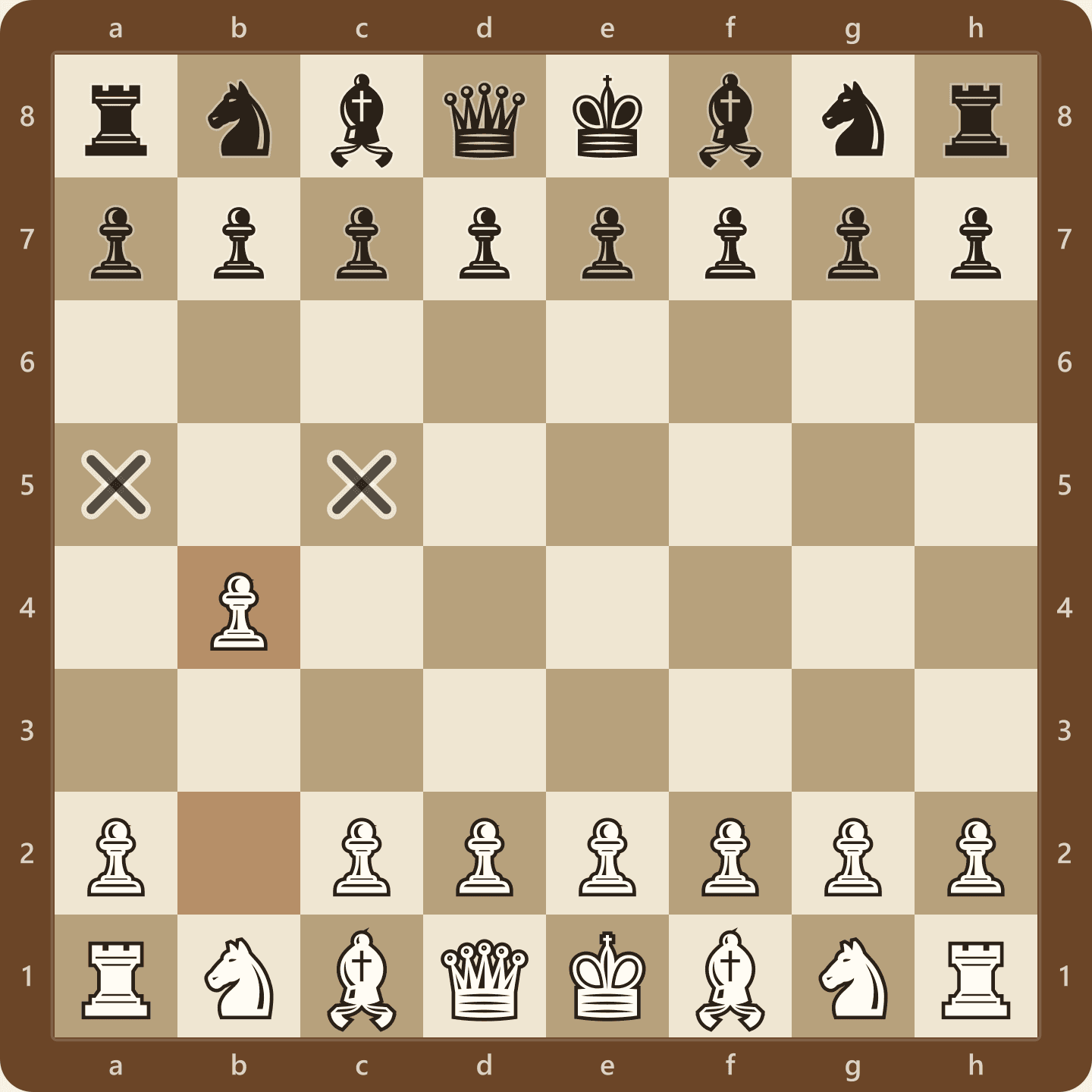
Contrast that with 1.e4 and 1.d4, which are played by 88% of the field. Their scores are what an average player achieves with them against an average opponent who knows what is coming. That number is far less flattering and far more useful.
So the honest ranking is: among first moves played at scale, 1.d4 scores highest, with 1.e4 just behind and ahead at beginner level. The surprise-value openings score better on paper and will not transfer to you, because the moment you play 1.b4 regularly against people who have seen 1.b4, you become the average rather than the specialist.
What actually makes a first move good
Three opening principles decide the value of move one, and they are the same three that decide the next ten.
Control the center. The four central squares are where pieces have the most scope. A knight on e4 attacks eight squares; the same knight on a1 attacks two. Both 1.e4 and 1.d4 occupy a central square immediately, which is most of why they lead the table.
Develop pieces quickly. 1.e4 opens two lines at once, for the queen and the light-squared bishop. 1.d4 opens one, for the dark-squared bishop. Every move that does neither, such as 1.a3 or 1.h3, gives Black a free tempo, meaning a free move of development.
Castle early and keep the king safe. This is where the bottom of the table lives. 1.f3 and 1.g4 both tear holes near the square the king wants to castle into, before either side has developed anything.
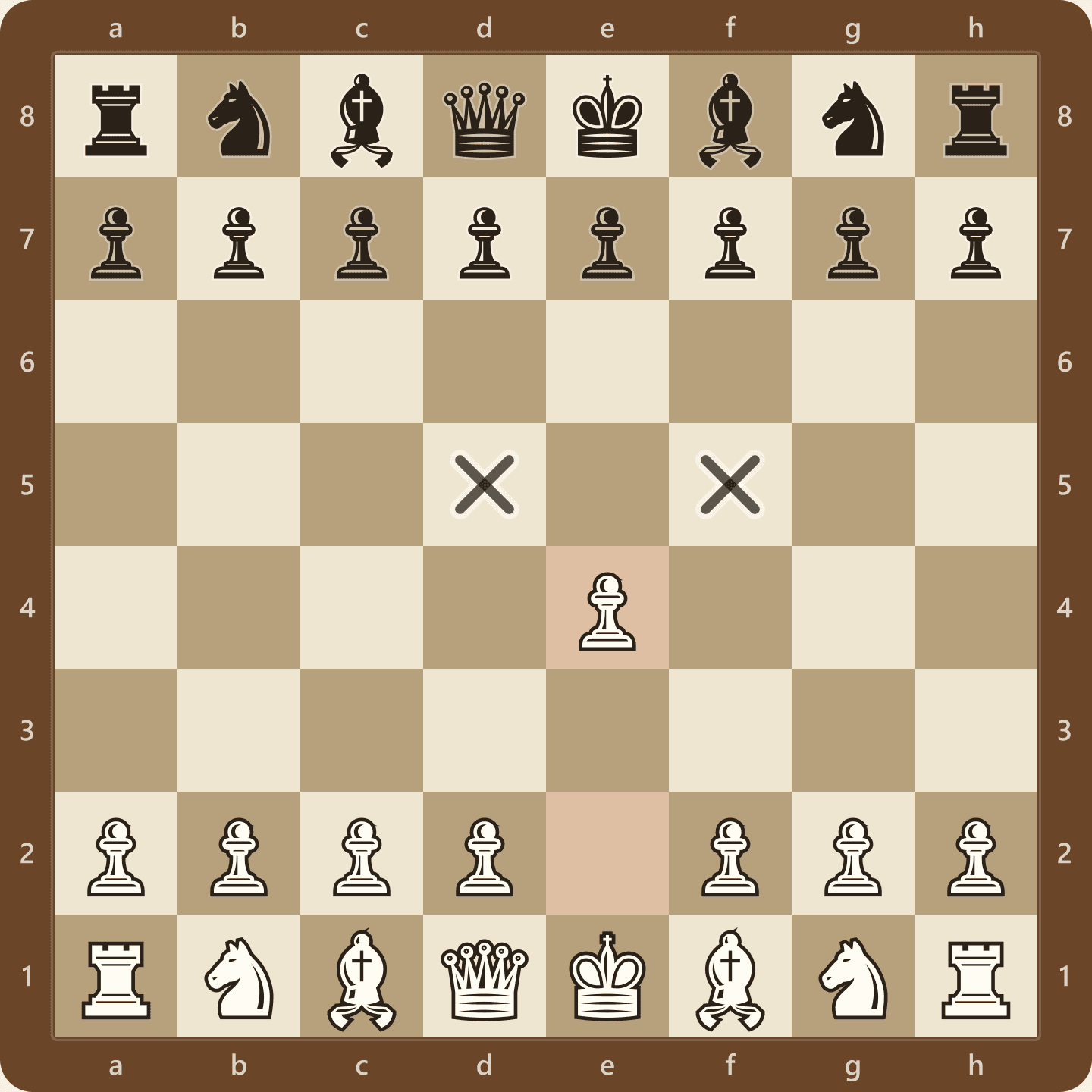
1.e4, the most popular move in chess
1.e4 accounts for 66.8% of all games in the 600 band and 59.7% at the 1800 band. It is the move most players learn first, and for good reason: it produces open positions where pieces collide early and games are decided by tactics, which is the skill that improves an amateur's results fastest.
Bobby Fischer built a career on it almost exclusively. Garry Kasparov produced some of the most famous 1.e4 games ever played while opening 1.d4 more often. Magnus Carlsen plays everything, including the English Opening, in world championship games.
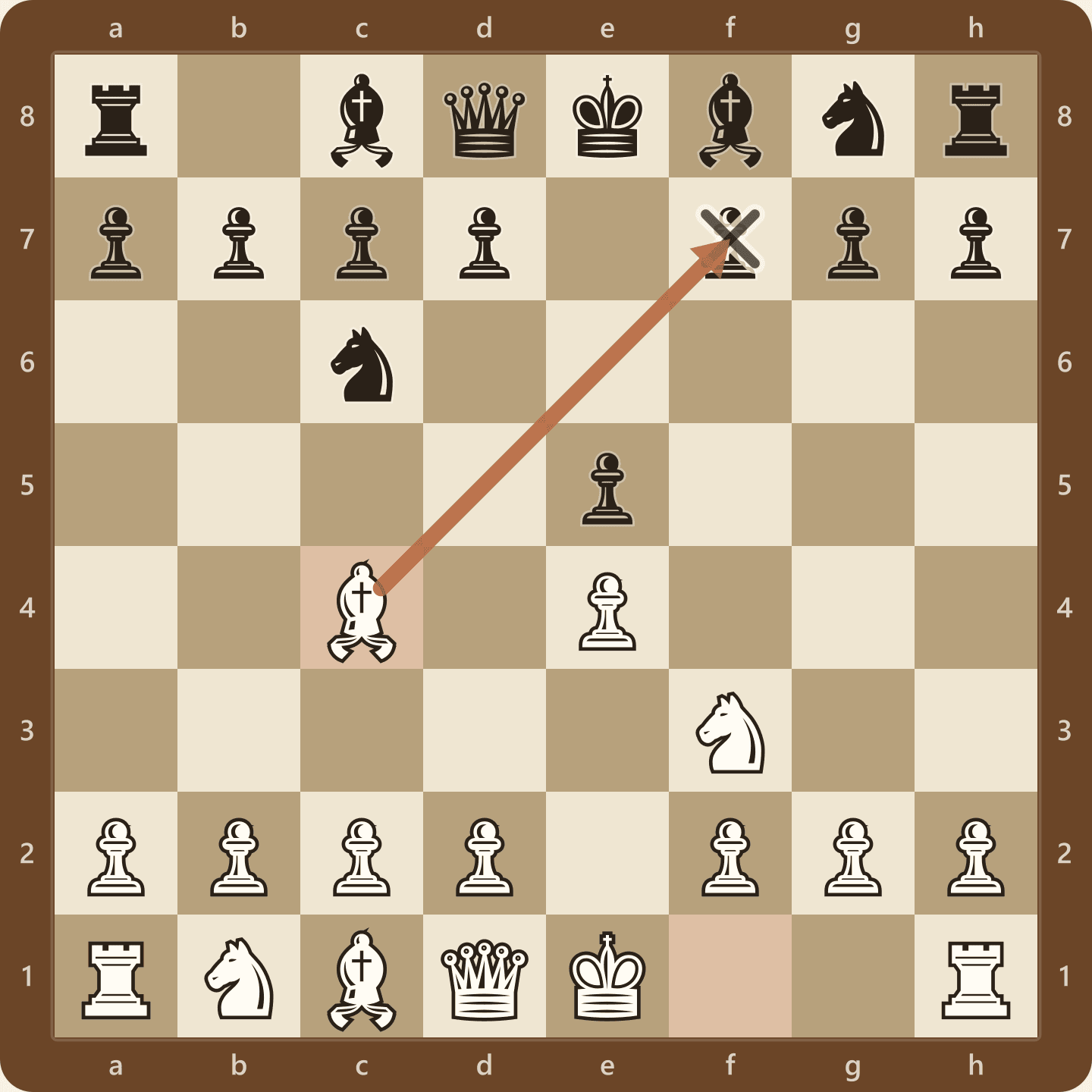
If Black answers 1...e5, White has three well-mapped routes. The Italian Game (1.e4 e5 2.Nf3 Nc6 3.Bc4) points a bishop at f7 and is the friendliest to learn. The Ruy Lopez (3.Bb5) is the most respected and scores 53.6% for White at the 1000 band across 369,070 games. The Scotch Game (3.d4) opens the centre immediately.
What Black actually plays against 1.e4
Only just over half of Black's replies are 1...e5. Here is the rest, as a share of 1.e4 games at the 1000 band:
- 1...e5, 54.7%. The Open Games. White scores 52.9%.
- 1...d5, the Scandinavian Defense, 10.1%. Black challenges the centre at once and usually recaptures with the queen. White scores 51.8%.
- 1...c5, the Sicilian Defense, 9.1%. Black fights for the centre with a flank pawn and refuses symmetry. White scores 49.2%, the weakest result any common reply produces.
- 1...e6, the French Defense, 7.8%. Solid, with an early pawn chain and a famously awkward light-squared bishop. White scores 50.0%.
- 1...c6, the Caro-Kann Defense, 7.1%. The same idea as the French with the bishop kept outside the chain. White scores 49.5%.
That variety is the honest cost of 1.e4. Not the number of moves to memorise, but the number of genuinely different positions to understand.
1.d4, the higher-scoring alternative
From the 1000 band upward, 1.d4 outscores 1.e4 by about one percentage point, and the gap widens slightly with rating. The structural reason is simple: the d4 pawn arrives defended by the queen and the e4 pawn does not, so queen's pawn games settle into slower, more manoeuvring positions where fewer things go wrong early.
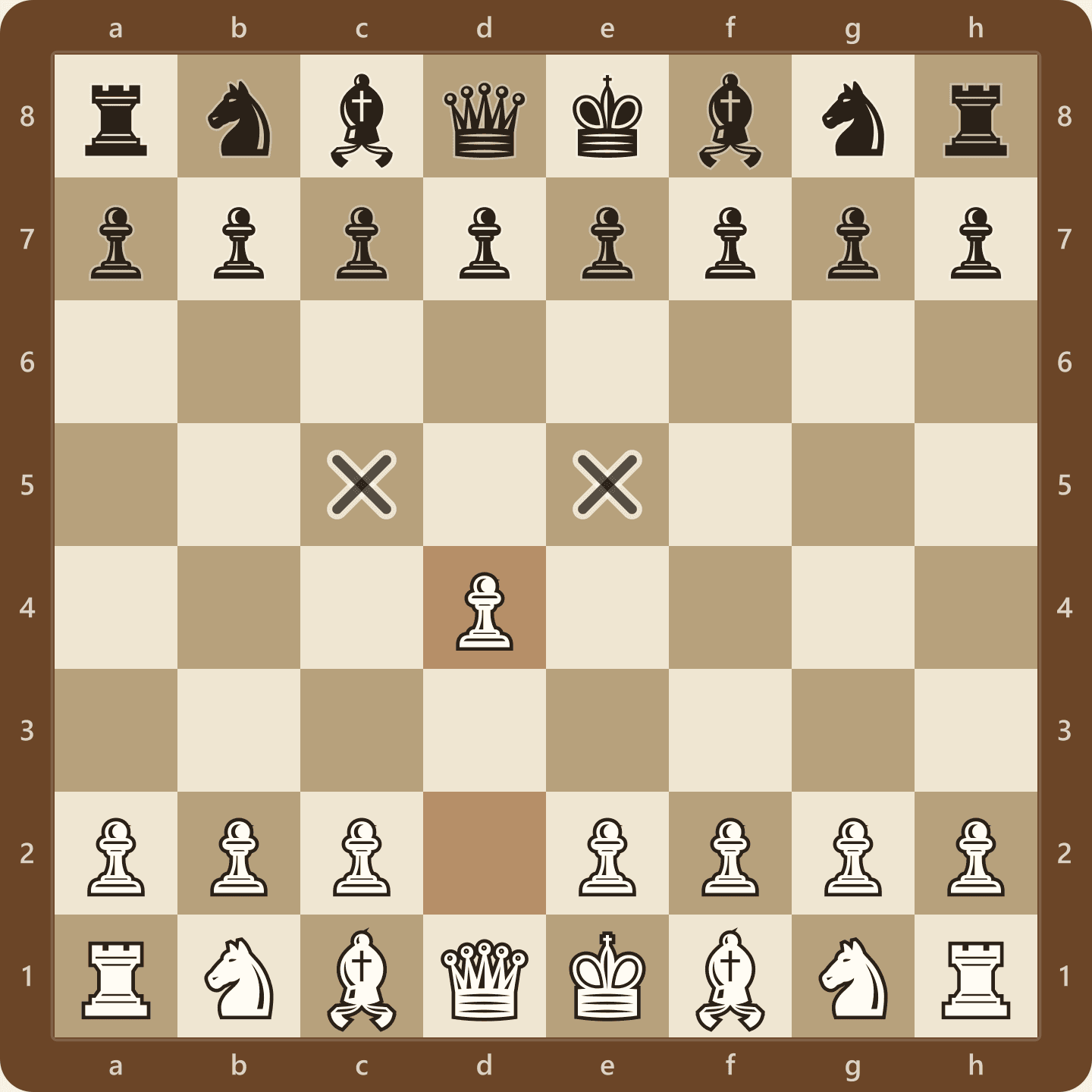
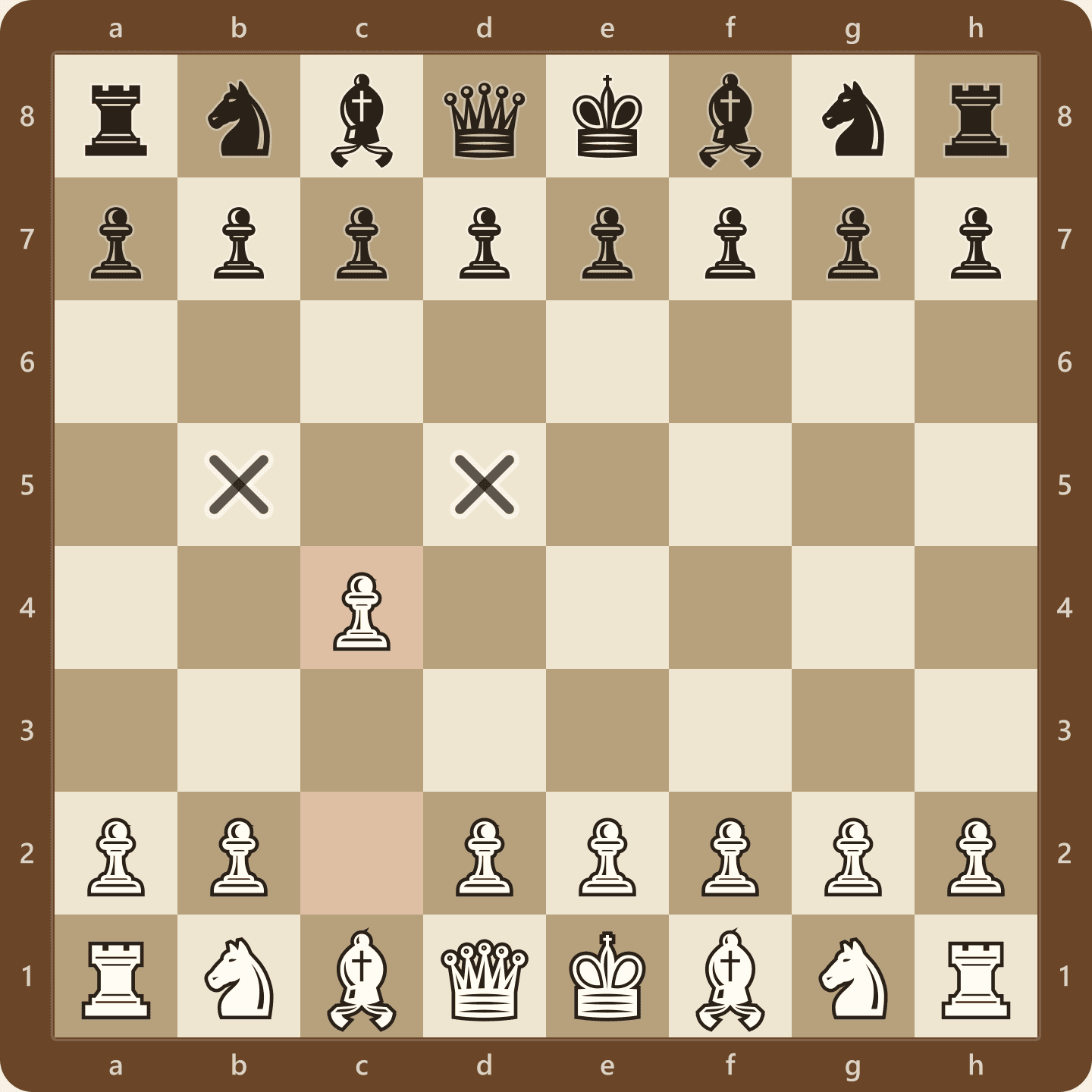
Two follow-ups dominate. The Queen's Gambit (1.d4 d5 2.c4) offers a pawn to pull Black's centre pawn off the centre, and it is usually recoverable, which makes it a gambit in name more than in risk. It scores 55.1% for White at the 1000 band across 455,625 games, the best result of any popular second move in the dataset. The London System (2.Bf4) develops the dark-squared bishop outside the pawn chain and repeats the same setup against almost anything Black does. It scores 54.3% across 438,927 games, which makes it the rare low-effort opening that is not also a compromise.
The flank openings
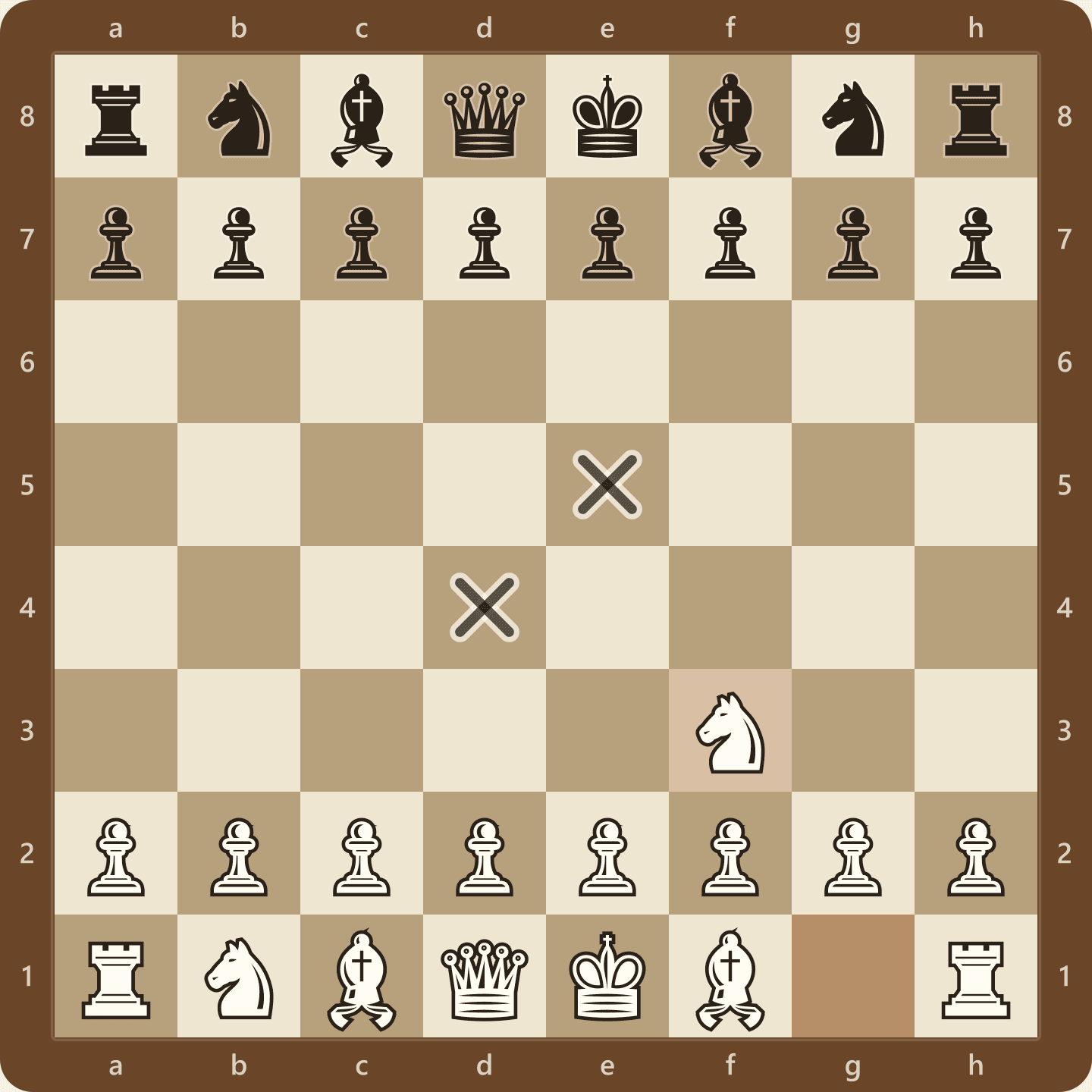
1.c4 and 1.Nf3 are the two respectable moves that do not occupy the centre with a pawn.
The English Opening (1.c4) attacks d5 from the side and scores 53.0% at the 1000 band on 265,462 games, which is genuinely strong. The Reti move order (1.Nf3) develops a knight, commits to nothing, and scores 53.2% at the 1800 band, its best band, on 644,679 games. Both frequently transpose into queen's pawn positions anyway, which is the main practical thing to know about them.
The offbeat moves, and the one that is genuinely bad
For curiosity value, here is the rest of the board.
1.b3 (Nimzo-Larsen Attack) is the most respectable of the odd ones, holding 51.6% to 52.0% across the upper three bands. 1.g3 (Hungarian Opening) is a normal fianchetto setup one move early and sits around 51%. 1.f4 (Bird Opening) climbs from 46.8% to 52.2%. 1.e3 (Van't Kruijs) is the flattest line in the table, scoring 49.3% to 49.4% at every band, which is what a move with no ambition and no weakness looks like.
1.g4 (Grob Opening) is the wild one. It scores 44.0% at the 600 band and 53.0% at the 1800 band, the steepest climb of any first move, which is the specialist effect in its purest form.
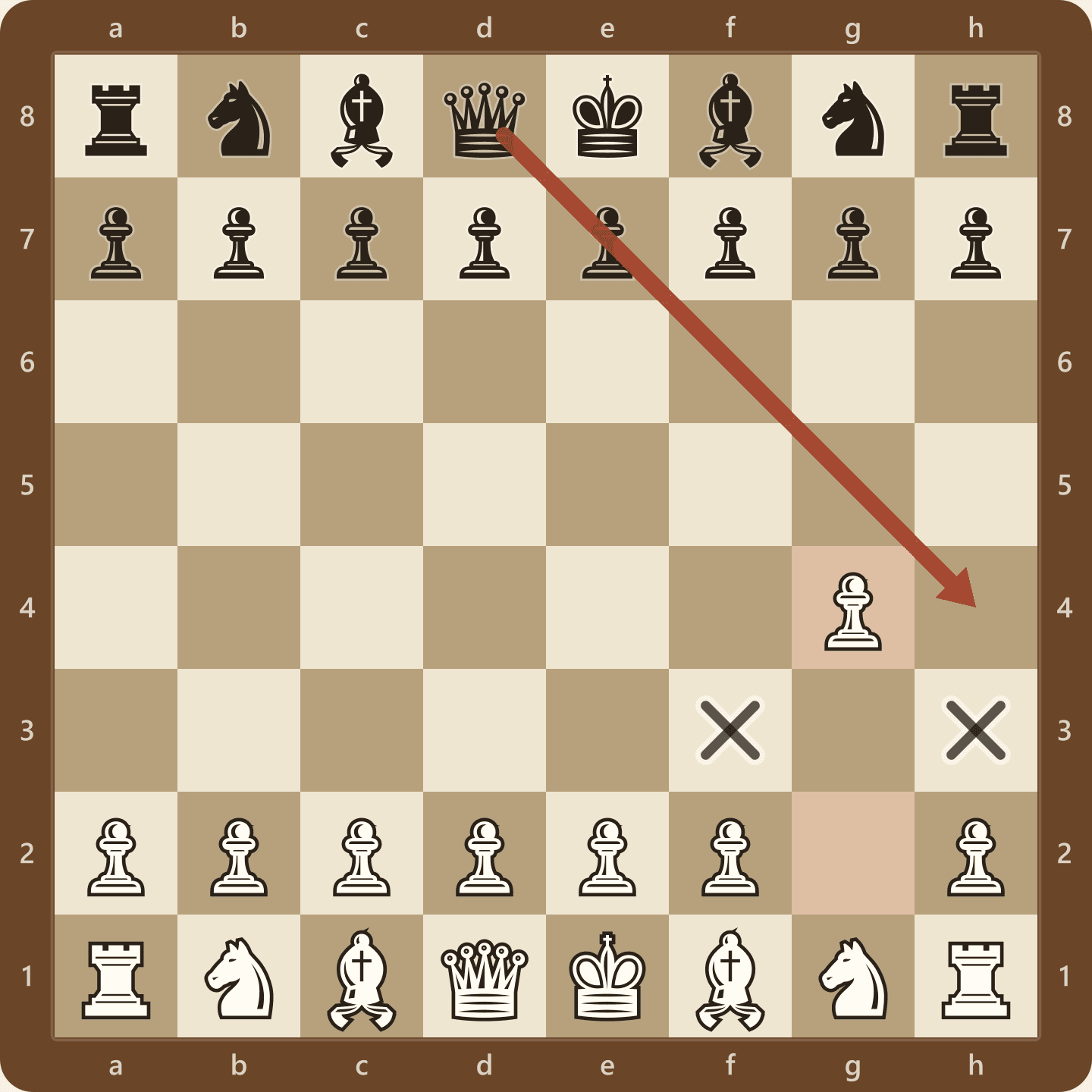
1.f3 (Barnes Opening) is last, and it is last at every band: 41.0%, 43.3%, 42.1%, 48.8%. It blocks White's own knight, develops nothing, and opens the e1 to h4 diagonal at White's king. It is also the first half of the fastest checkmate in chess.
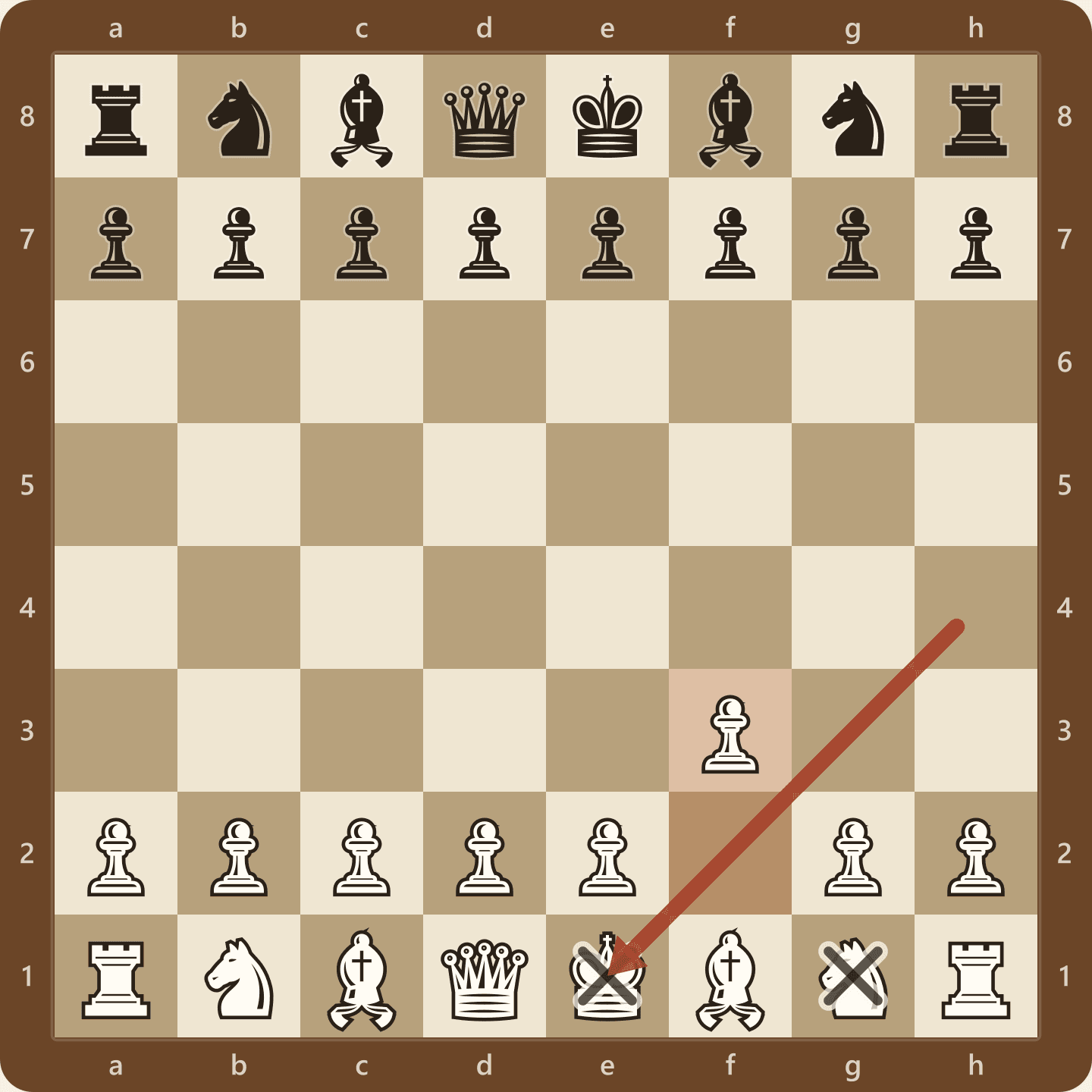
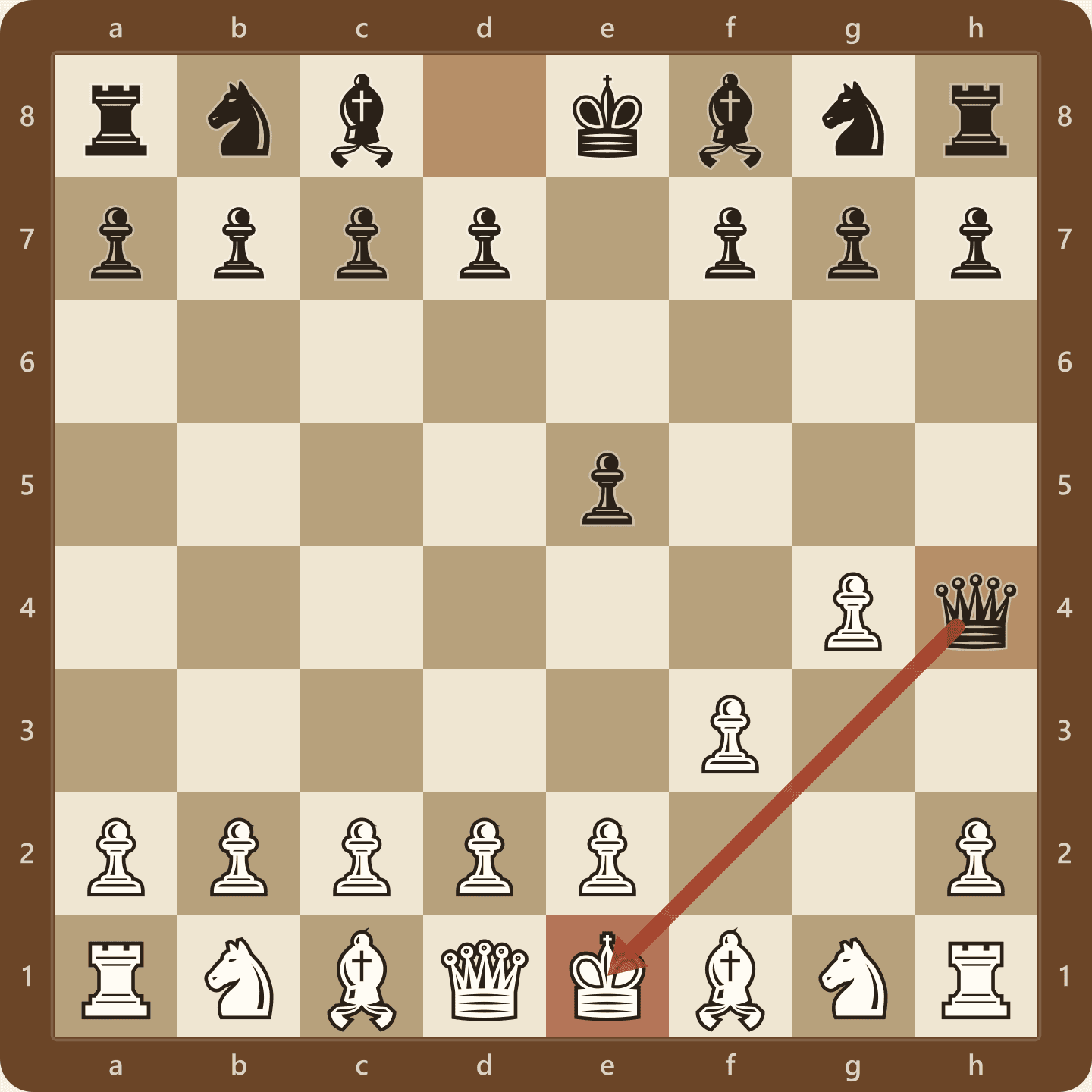
That is Fool's Mate, and while nobody walks into it twice, it is a clean illustration of what the bottom of the score table is measuring.
Opening principles beat opening theory
The single most common mistake below 1400 is studying the wrong thing. Opening theory means memorised move sequences. Opening principles mean the three ideas above: centre, development, king safety. Games at amateur level are almost never lost to a theoretical novelty on move twelve, because they are almost never still in theory on move twelve.
The average game leaves known opening theory around move four to five in this rating range. What decides the result after that is whether a piece hangs.
The other mistakes worth naming: bringing the queen out on move two to threaten a quick mate, which loses time once it is chased; moving the same piece repeatedly in the opening; and delaying castling because the position looks quiet.
Aggressive gambits sit in a middle category. The King's Gambit (1.e4 e5 2.f4) is a real pawn sacrifice and scores 53.6% for White at the 1000 band on 164,805 games, which is a strong result. It is also sharp enough that a mistake ends the game immediately. That trade-off is covered in the best chess gambits, ranked.
So which first move should you play?
For a first opening move, 1.e4 and 1.d4 are the only two answers worth considering, and the difference between them is about one percentage point of score.
Pick 1.e4 if you want open positions, faster tactics, and the shortest route to understanding why pieces do what they do. It is also the only band where the king's pawn actually outscores the queen's pawn: 52.4% against 52.3% at the 600 band.
Pick 1.d4 if you prefer slower games with plans rather than fireworks, or if you want the small statistical edge that persists from the 1000 band upward.
Style is a real tiebreaker, but it matters less than people say at amateur level, because the openings that suit "aggressive players" and "positional players" both come down to the same three principles for the first ten moves. The move you will actually study beats the move that scores one percent better.
Frequently asked questions
Frequently asked questions
What is the strongest opening chess move?
Among first moves played at scale, 1.d4 scores highest: 52.8%, 52.4% and 52.4% at the 1000, 1400 and 1800 rating bands in the Lichess open database for May 2026, on 3.2 to 5.5 million games per band. 1.e4 is roughly one point behind and slightly ahead at the 600 band. Two rare moves, 1.b4 and 1.g4, post higher percentages, but only because the small group of players who choose them are specialists facing unprepared opponents.
What is the best first move in chess for beginners?
1.e4. It is the only rating band where the king's pawn outscores the queen's pawn (52.4% against 52.3% at the 600 band, on 2,849,881 and 836,518 games), it opens lines for two pieces in one move, and it produces open positions where tactics decide games. Tactics are the skill that lifts a beginner's rating fastest, so the opening that generates the most of them is the one that teaches the most.
What is the first move in chess called?
The first move is called the opening move, and White always plays it. Each one also has a name: 1.e4 is the King's Pawn Opening, 1.d4 the Queen's Pawn Opening, 1.c4 the English Opening, 1.Nf3 the Zukertort or Reti, and 1.f3 the Barnes Opening. The named sequence of moves that follows is the opening itself, and the standard classification groups them into Open, Semi-Open, Closed, Semi-Closed and flank openings.
Is 1.e4 or 1.d4 better?
1.d4 scores about one percentage point higher from the 1000 band upward, and 1.e4 is marginally ahead at the 600 band. Both are far ahead of everything else played at volume. The gap is small enough that the better question is which positions you enjoy studying. There is a fuller head-to-head in 1.e4 vs 1.d4.
Is there a first move that loses?
No first move loses by force. 1.f3 is the worst measured, scoring 41.0% at the 600 band and 42.1% at the 1400 band, which is roughly ten points below 1.e4 at the same level. It blocks a knight, develops nothing, and weakens the diagonal leading to White's king. 1.g4 is the next worst at beginner level, at 44.0% in the 600 band.
Does the first move matter much at my level?
Less than almost anything else you could work on. The gap between the two best mainstream first moves is about one percentage point of score, and the gap between the best and worst defenses Black can choose is more than twice that. Below 1400, games are decided by hanging pieces rather than by opening choice.
Read next
- The full head-to-head on the top two: 1.e4 vs 1.d4
- Playing Black: best openings against 1.e4 and against 1.d4
- Every line graded per band: the chess opening tier list and chess opening win rates
- Building a repertoire: best chess openings and chess opening principles