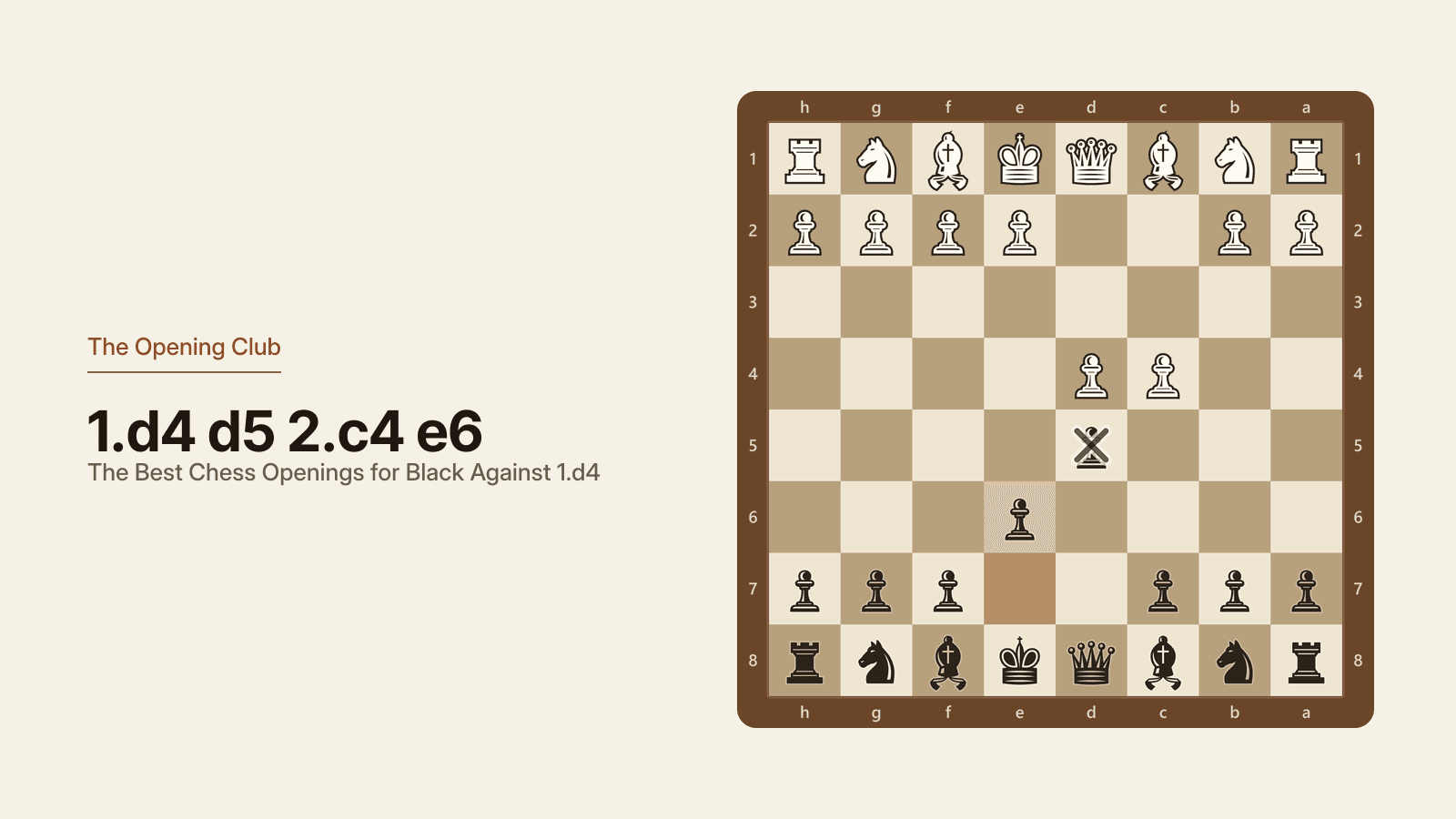
Almost every guide to chess openings for Black against d4 gives the same advice: play the Queen's Gambit Declined, it is solid. Run that advice against 49.8 million games from the Lichess open database for May 2026 and it collapses. The QGD is the worst-scoring of the six main defenses at three of the four rating bands.
What actually works is the opposite instinct. The defenses that let White build a big centre and then attack it, the King's Indian setup and the Benoni, beat the classical ones at every band by three to four points.
The six defenses compared
A "score" is wins plus half of draws from Black's side. Anything above 50% means Black is outperforming the player who moved first. Rating bands are Lichess bucket lower bounds, so the 1000 band covers players rated 1000 up to the next bucket. There is no 800 or 1200 band. Any single line can be checked against the source in the Lichess opening explorer.
| Defense | Moves | 600 band | 1000 band | 1400 band | 1800 band | Games (1800 band) |
|---|---|---|---|---|---|---|
| Benoni (Old Benoni) | 1...c5 | 47.3% | 49.6% | 50.1% | 50.3% | 206,593 |
| King's Indian setup | 1...Nf6 and 2...g6 | 49.7% | 50.4% | 50.0% | 49.8% | 150,831 |
| Nimzo-Indian Defense | 2...e6, 3...Bb4 | not published | 48.0% | 48.3% | 49.3% | 62,586 |
| Dutch Defense | 1...f5 | 46.8% | 47.2% | 48.2% | 48.0% | 136,290 |
| Slav Defense | 1...d5, 2...c6 | 46.6% | 47.3% | 46.9% | 46.7% | 276,512 |
| Queen's Gambit Declined | 1...d5, 2...e6 | 45.8% | 46.3% | 46.4% | 46.6% | 353,257 |
Rankings use a Wilson lower bound rather than the raw percentage, which is what stops a small sample from outranking a large one. The Nimzo-Indian's 600-band cell is left blank on purpose: only 464 games reach that position at that level, which is not enough to publish a number from.
An important caveat about how these are measured
These six defenses do not all commit at the same move. The Dutch and the Benoni are decided on move one. The QGD and the Slav on move two. The King's Indian setup on move two, the Nimzo-Indian not until move three, and only if White cooperates by playing 3.Nc3.
That matters, because a figure measured deeper in the game is conditional on White having played along. The Nimzo's 49.3% at the 1800 band is not "what happens if you decide to play the Nimzo", it is "what happens in the games where you got to play it".
So here is the same question asked in a way that removes the problem entirely. These are all of Black's replies on move one, which form a genuinely disjoint set, at the 1400 band:
| Black's first move | Leads to | Black's score | Games (1400 band) |
|---|---|---|---|
| 1...c5 | Benoni structures | 50.1% | 75,568 |
| 1...e5 | Englund Gambit | 49.7% | 205,528 |
| 1...g6 | Modern / King's Indian | 49.3% | 119,087 |
| 1...Nf6 | All the Indian Defenses | 49.1% | 360,947 |
| 1...d6 | Old Indian / Modern | 48.7% | 86,083 |
| 1...b6 | English Defense | 48.4% | 52,235 |
| 1...f5 | Dutch Defense | 48.2% | 47,895 |
| 1...e6 | Usually transposes | 47.2% | 252,437 |
| 1...d5 | QGD, Slav, QGA | 46.5% | 1,269,910 |
| 1...Nc6 | Mikenas Defense | 44.0% | 17,907 |
1...d5 is the move Black plays 53% of the time. It finishes ninth of ten, ahead of only a move nobody recommends. The classical route into the Queen's Gambit is the worst-performing mainstream reply to 1.d4 at amateur level, on 1,269,910 games, with no depth conditioning to argue about.
The King's Indian Defense: the overall winner
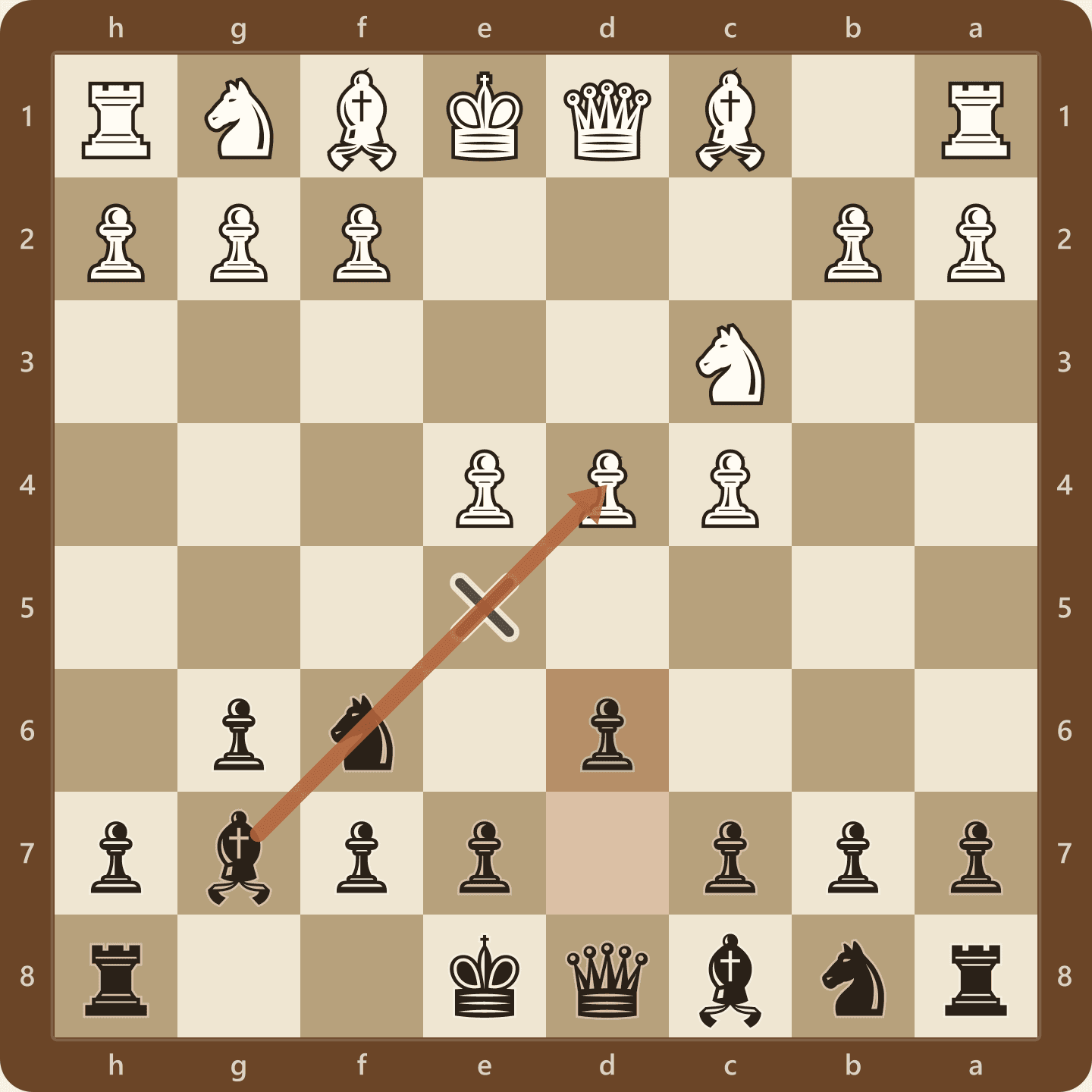
Black plays 1...Nf6 and 2...g6, fianchettoes the dark-squared bishop to g7, and lets White build the biggest pawn centre they like. The plan is to strike at it later with e5 or c5 and launch a kingside attack while White expands on the queenside. The sharpest version of that race is the Mar del Plata Variation, where both sides attack on opposite wings and the first one through wins.
It scores 49.7%, 50.4%, 50.0% and 49.8% across the four bands, on 2,836 to 150,831 games. It is the only defense here that tops two bands outright, and unlike the Nimzo-Indian, Black can always get it: White cannot prevent 1...Nf6 and 2...g6.
The trade-off is real. The King's Indian is a strategically committal opening in which Black is often objectively worse for twenty moves and wins anyway, because the attack arrives first. It is not a comfortable opening, it is an effective one.
The Benoni: best at the top two bands
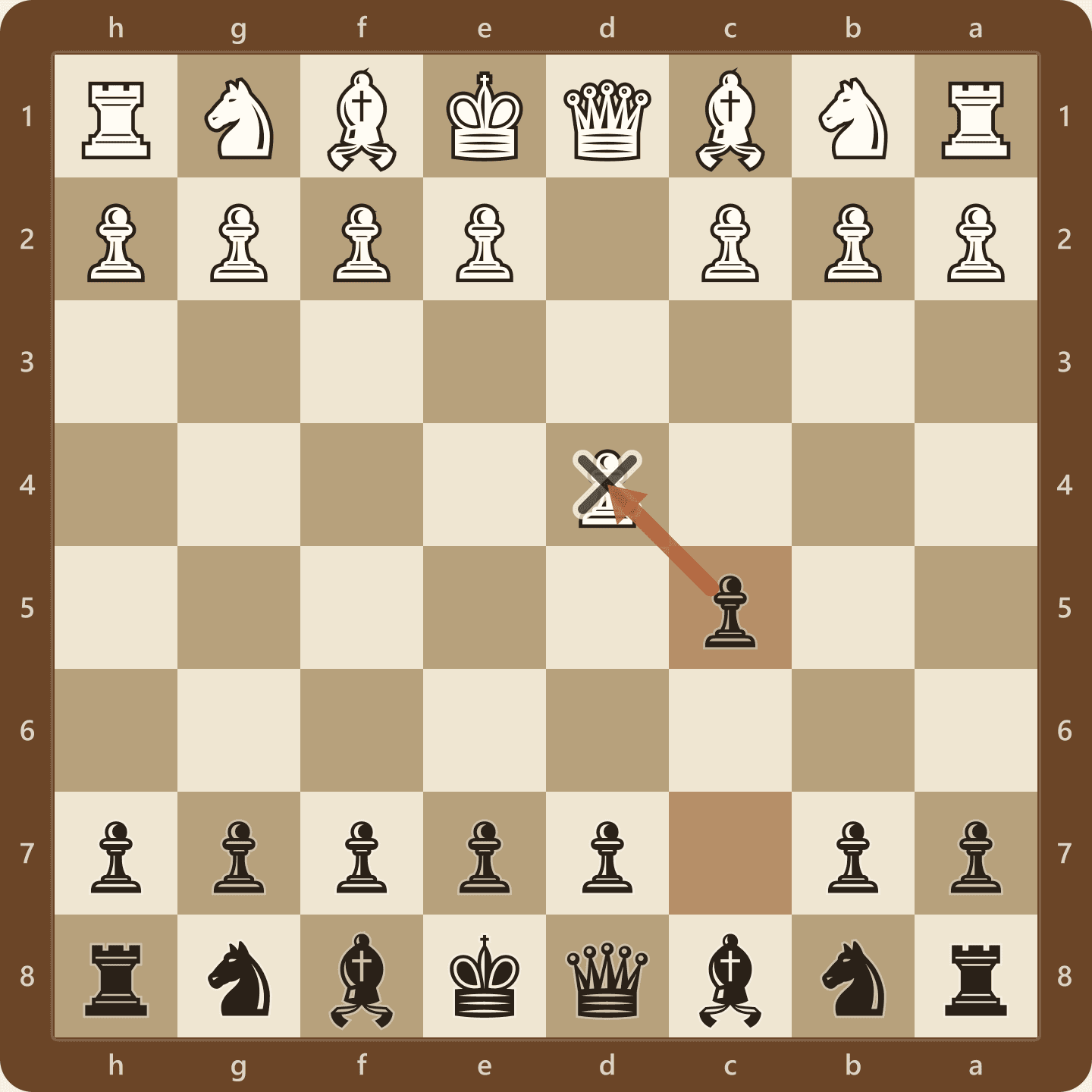
1...c5 is the Sicilian's queen's pawn cousin. Black refuses to mirror White and offers an immediate structural imbalance. It is the top scorer at the 1400 and 1800 bands, at 50.1% and 50.3% across 75,568 and 206,593 games, and it is the only defense in this comparison that improves steadily as the players get stronger.
That upward slope is the interesting part. The Benoni starts at 47.3% in the 600 band, well behind the King's Indian, and finishes ahead of everything. Benoni structures give Black a queenside pawn majority and a half-open e-file, and both of those are assets you have to know how to use. Below 1000 Black mostly does not, and it costs them.
The modern move order (1...Nf6 2.c4 c5) reaches a similar structure and scores 50.5% at the 1800 band on 42,977 games, though the sample thins out badly below 1400.
The Nimzo-Indian: excellent, when you get it
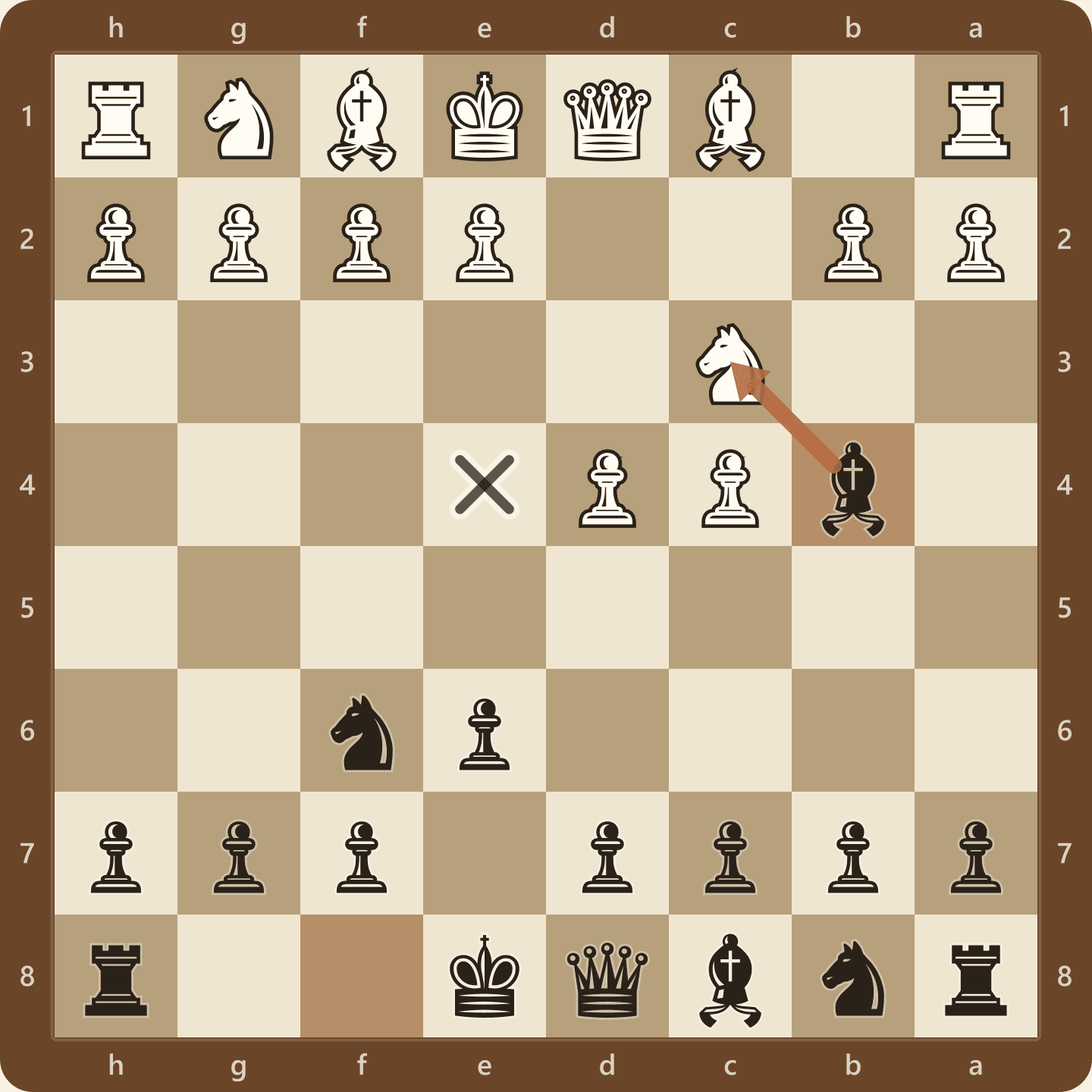
The Nimzo-Indian is the most respected defense to 1.d4 in serious play, and the numbers support that reputation once the sample is big enough to trust: 48.0%, 48.3% and 49.3% at the 1000, 1400 and 1800 bands, on 7,892 to 62,586 games. Anatoly Karpov and Viswanathan Anand both leaned on it heavily, and it rewards understanding rather than memorisation.
The catch is availability. Black only reaches it if White plays 3.Nc3, and White has plenty of ways not to. The main alternatives are worth knowing by name: the Queen's Indian Defense (1.d4 Nf6 2.c4 e6 3.Nf3 b6) and the Bogo-Indian Defense (3.Nf3 Bb4+), both of which are Black's answer when the knight goes to f3 instead. Neither appears often enough in this dataset to publish a figure for.
The Dutch Defense: the honest middle
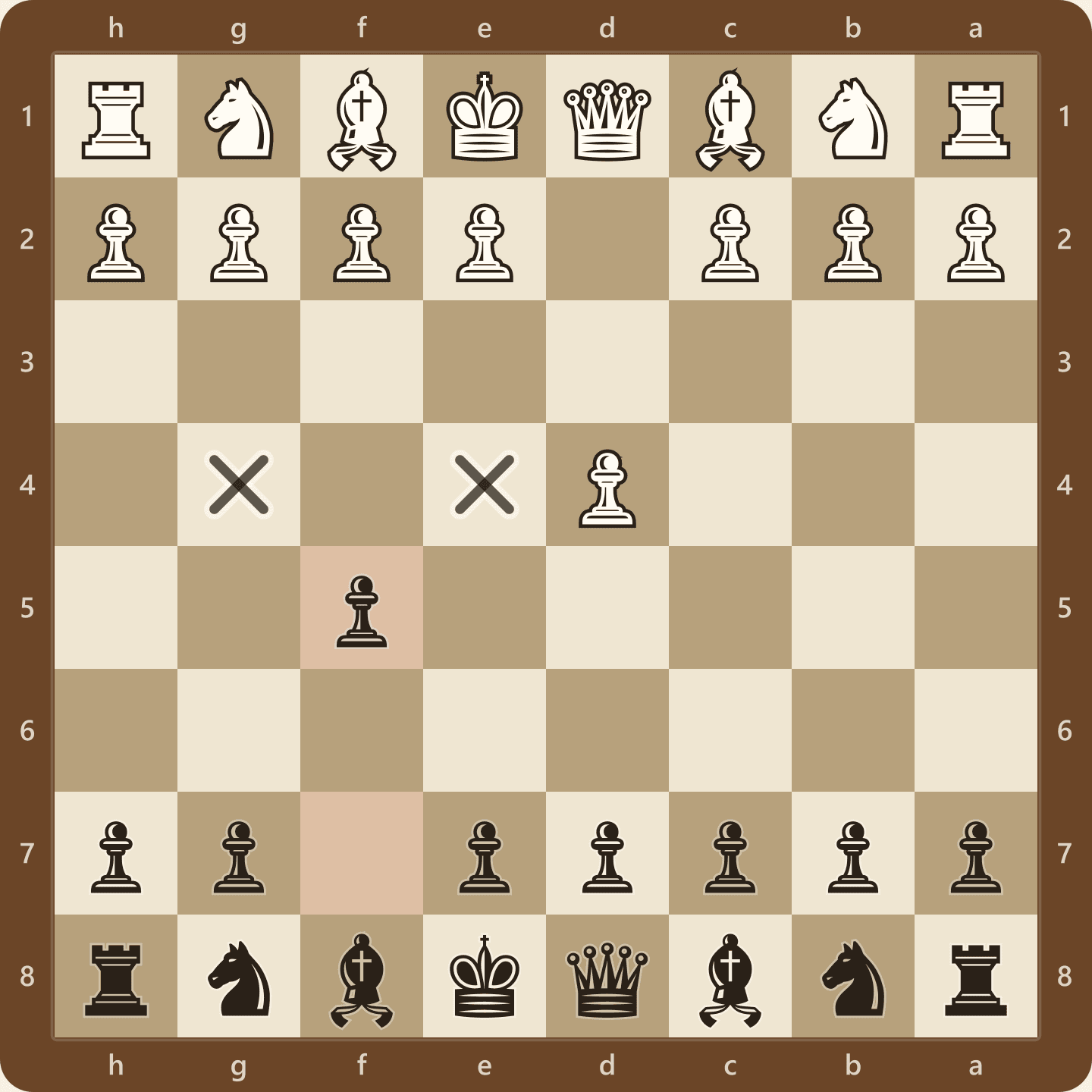
The Dutch scores 46.8%, 47.2%, 48.2% and 48.0%, which puts it comfortably ahead of the QGD and the Slav and clearly behind the King's Indian and the Benoni. It has the lowest tier grade in the group at the 1000 band, where its blunder rate is the highest of the six, and it recovers above that.
It comes in three flavours worth naming. The Leningrad Dutch (1.d4 f5 2.c4 Nf6 3.g3 g6) fianchettoes like a King's Indian. The Classical Dutch (3...e6, then ...Be7) plays it straight. The Stonewall locks in a pawn wall on d5, e6 and f5 and aims for a kingside attack. All three carry the same structural risk: 1...f5 opens the diagonal toward Black's king before anything is developed.
The Queen's Gambit Declined and the Slav: solid is not the same as good
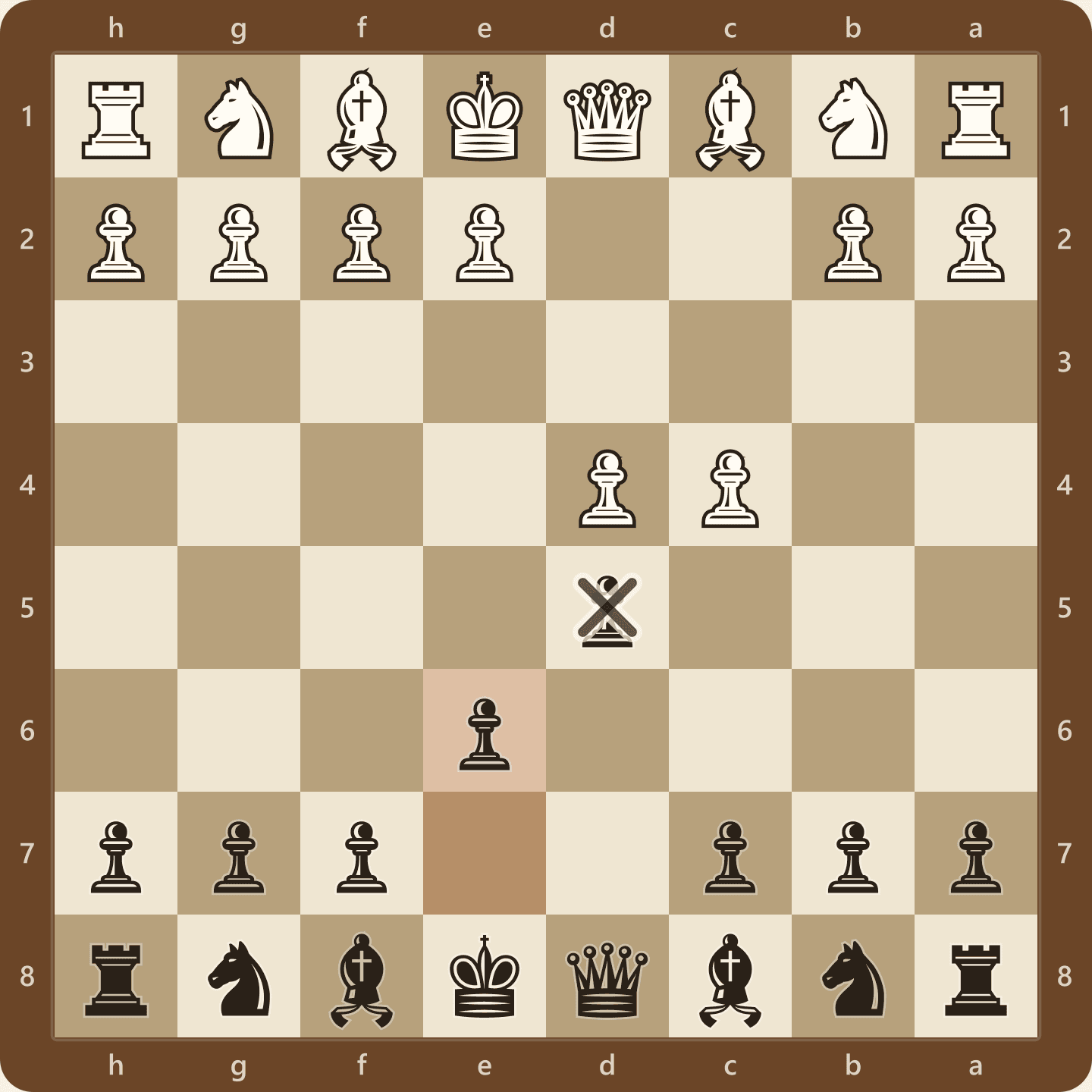
The Queen's Gambit Declined finishes bottom at 45.8%, 46.3%, 46.4% and 46.6%, on samples from 14,070 to 353,257 games. The Slav is a fraction better at 46.6%, 47.3%, 46.9% and 46.7%. Both trail the King's Indian by three to four points at every level.
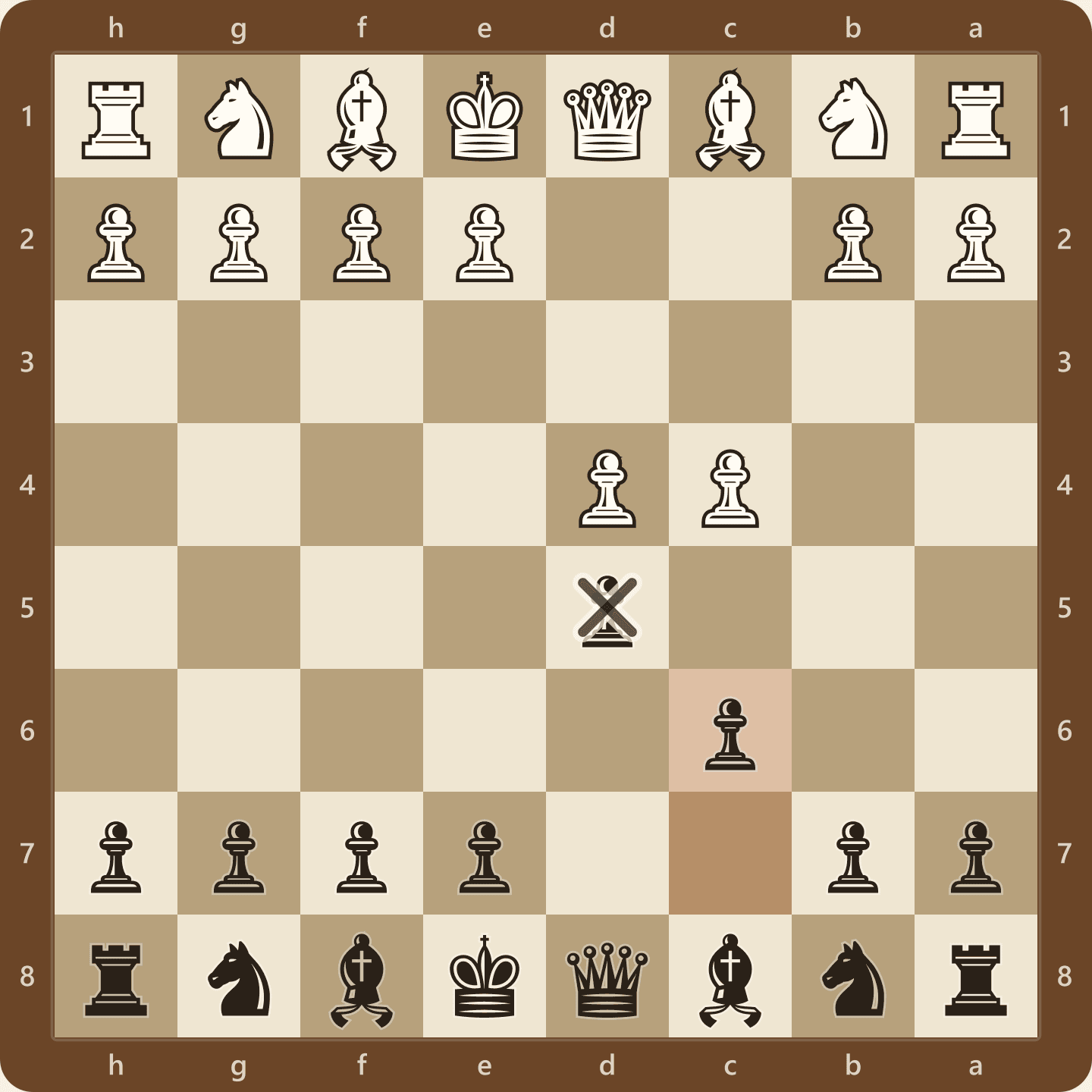
The obvious objection is that these openings are solid rather than winning, and a solid opening should show up as more draws rather than more wins. The draw rates do not support that. At amateur level roughly 96% of games are decisive regardless of opening, so "solid" is not buying Black draws. It is buying slightly worse positions that are harder to lose quickly and also harder to win.
The mechanism is straightforward. In the QGD, Black concedes space, shuts in the light-squared bishop behind the e6 pawn, and then has to find a freeing move. Below 1600, most players never find it, so White keeps a small pull for fifty moves and converts more often than not. The Semi-Slav (combining ...c6 and ...e6) does not fix this: it scores 44.7% for Black at the 1800 band on 47,463 games, worse than either parent. The Tarrasch Defense (1.d4 d5 2.c4 e6 3.Nc3 c5) is the sharper attempt at the same problem, and the Chigorin move orders with an early ...Nc6 score between 41.8% and 47.9% depending on the exact line, with the 1.d4 d5 2.Nf3 Nc6 version graded lowest of them all.
The one to actually avoid
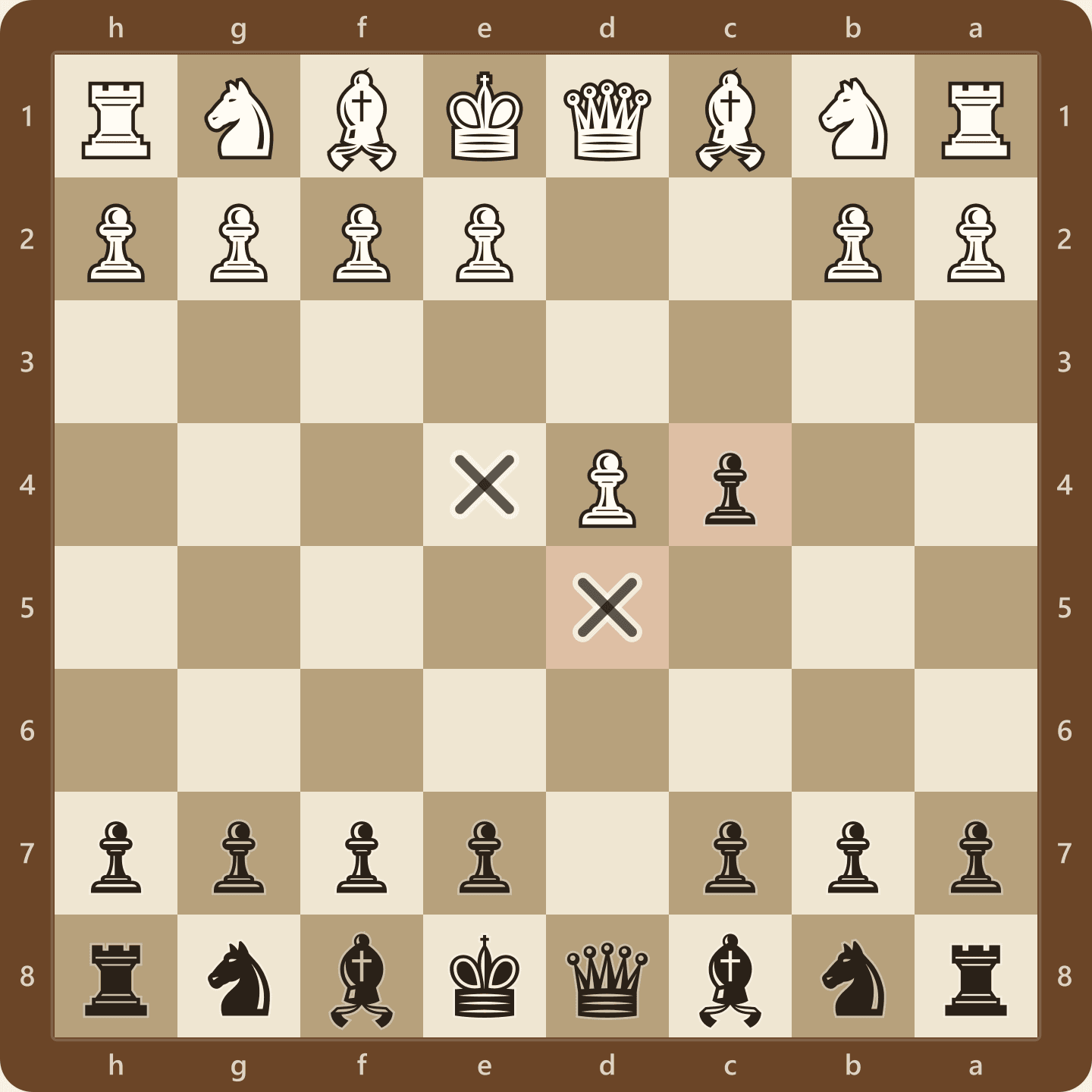
The Queen's Gambit Accepted, where Black simply takes on c4, is the single worst-performing choice in this whole comparison: 43.7%, 42.9%, 43.1% and 43.7%, bottom tier at all four bands, on 34,031 to 172,455 games.
The reason is that the pawn is not really winnable. White plays e3 or e4, rounds it up, and now Black has traded a centre pawn for a wing pawn and given away the centre for nothing. It is the most common way an amateur turns 1.d4 into a bad game in two moves.
Two defenses this dataset cannot rank
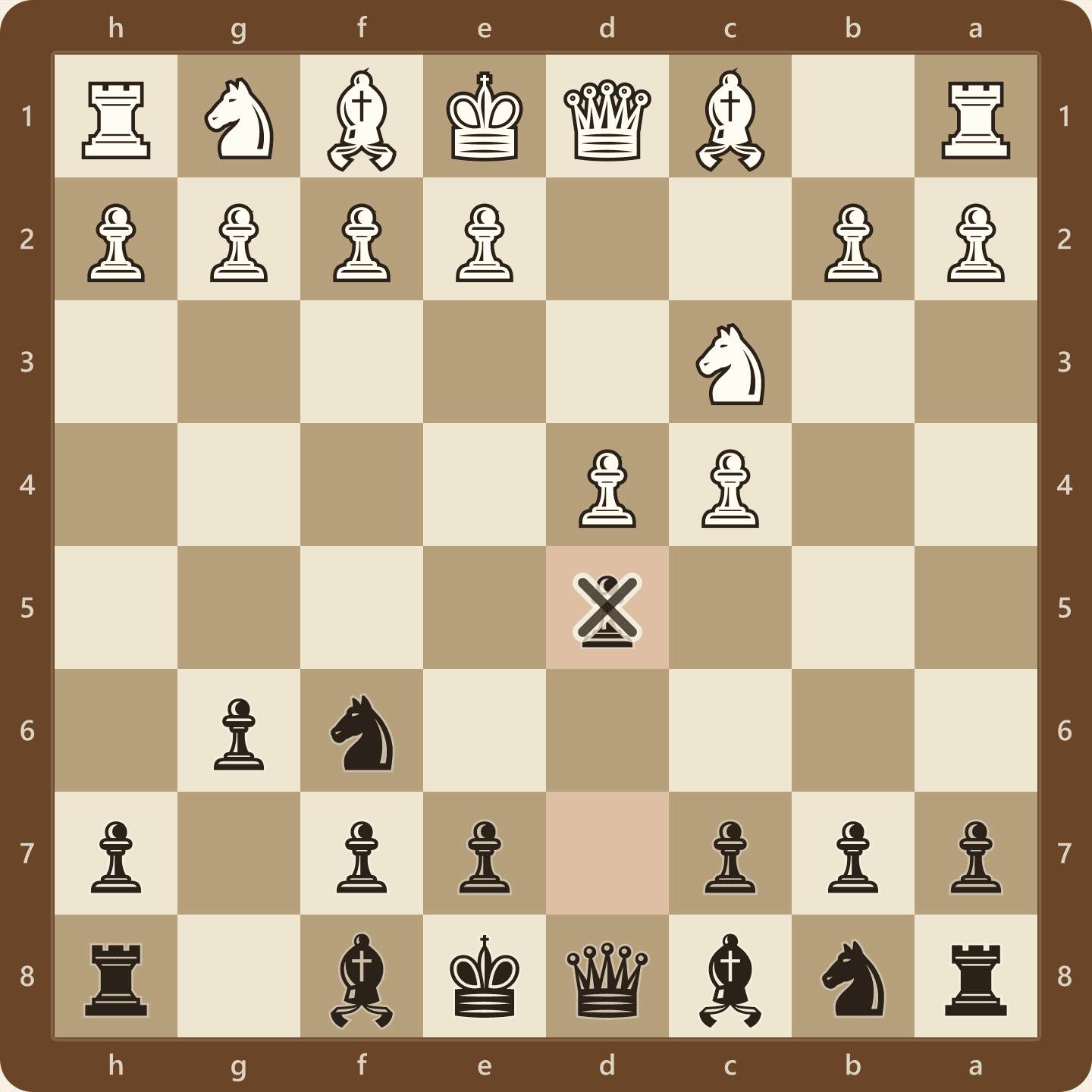
The Grünfeld Defense (1.d4 Nf6 2.c4 g6 3.Nc3 d5) and the Benko Gambit (1.d4 Nf6 2.c4 c5 3.d5 b5) are both well-regarded and both appear too rarely in this rating range to carry a published win rate. No figure is quoted for either here, because a win rate without a usable sample size is worse than no number at all.
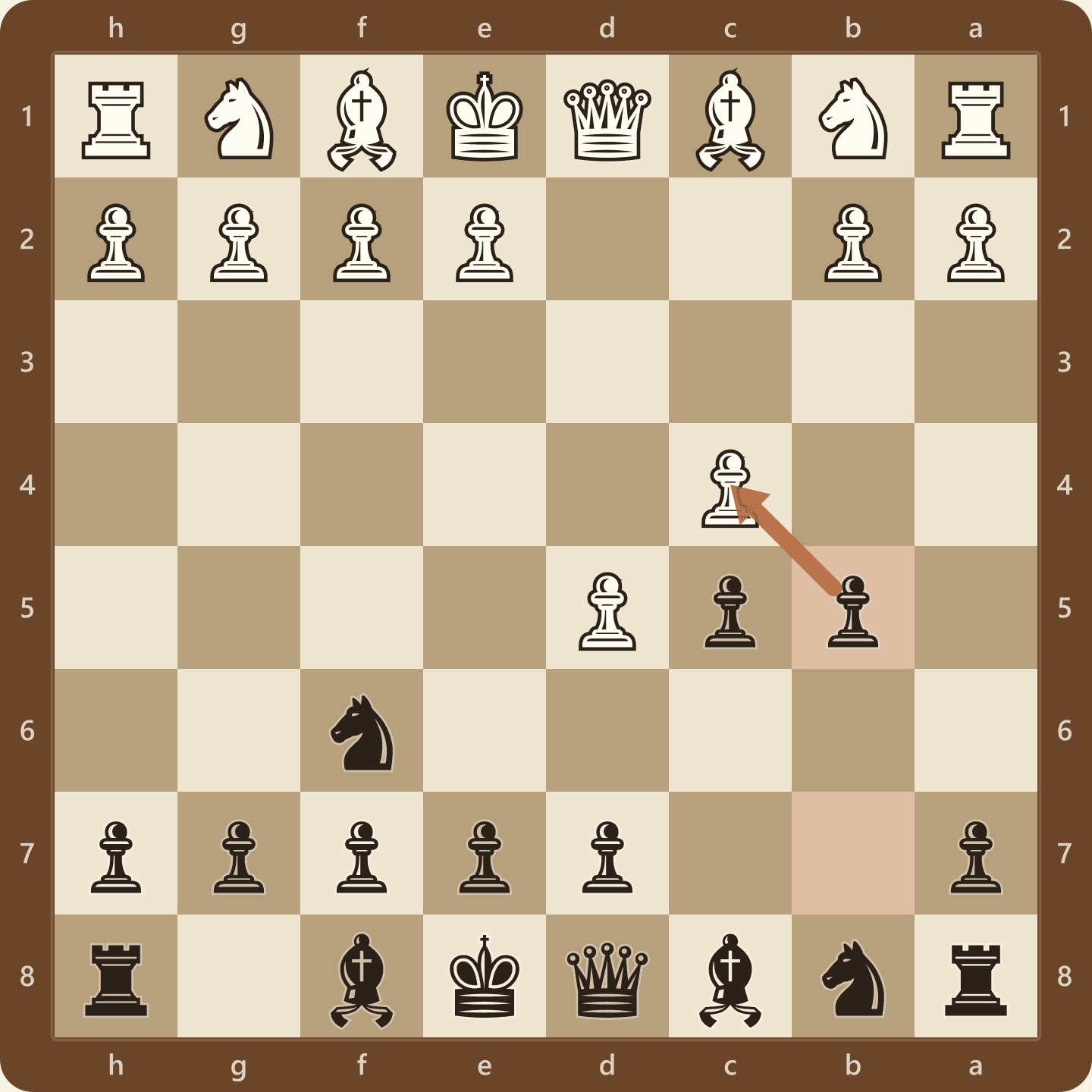
Qualitatively: the Grünfeld shares the King's Indian's first two moves and then does the opposite, striking at the centre immediately instead of allowing it, which makes it the more theory-heavy of the pair. The Benko is a genuine pawn sacrifice for lasting queenside pressure, and it is one of the easier gambits to play because the compensation does not expire.
The verdict
Frequently asked questions
Frequently asked questions
Which is the best opening for black against d4?
The King's Indian setup (1...Nf6 followed by 2...g6). It scores 49.7%, 50.4%, 50.0% and 49.8% for Black across the 600, 1000, 1400 and 1800 rating bands in the Lichess open database for May 2026, tops two of the four, and White has no way to prevent it. The Benoni (1...c5) edges it at the two higher bands, at 50.1% and 50.3%.
What do grandmasters play against d4?
Mostly the Nimzo-Indian, the Queen's Indian, the Grünfeld and the Slav, with the King's Indian used when a win is needed with Black. Garry Kasparov made his name on the King's Indian and the Grünfeld, Anatoly Karpov and Viswanathan Anand on the Nimzo-Indian, and Magnus Carlsen plays essentially all of them. Master practice is a poor guide below 1800 though, because those choices are made against prepared opponents.
What is the best opening against d4 for beginners?
The King's Indian setup, on the numbers, because it is one plan that works against almost anything White does and it scores best at the 600 and 1000 bands. If you want something simpler to grasp, the Benoni (1...c5) is a single move with a clear point. What the data does not support is the usual advice to play the Queen's Gambit Declined, which finishes bottom of the six at three of four bands.
What is the best opening to defend against d4?
If "defend" means avoid disasters rather than maximise score, the Slav Defense is the most robust of the classical options and beats the Queen's Gambit Declined at three of four bands. But it still trails the King's Indian and the Benoni by three to four points. Solidity in these positions buys fewer quick losses and also fewer wins, because at amateur level roughly 96% of games are decisive regardless of opening.
What does Magnus Carlsen play against d4?
Carlsen has played essentially the entire range at various points, including the Nimzo-Indian, the Queen's Gambit Declined, the Grünfeld and the King's Indian, and he switches deliberately to avoid being prepared for. That flexibility is a solution to a problem elite players have and you do not. Below 1800, picking one defense and playing it for six months is worth far more than variety.
Why does the Queen's Gambit Declined score so badly?
Because Black concedes space and locks the light-squared bishop behind the e6 pawn, then has to find a freeing pawn break to get the position moving. Below 1600 most players never find it, so White keeps a small, permanent pull. It scores 45.8% to 46.6% for Black across the four bands, on up to 353,257 games. It is not a bad opening; it is an opening whose payoff arrives above the level most people play at.
Read next
- The other half of your repertoire: best openings for Black against 1.e4
- Which first move you should face more of: 1.e4 vs 1.d4 and the best first move in chess
- The defenses in detail: the King's Indian Defense, the Nimzo-Indian, the Slav, the Queen's Gambit Declined, the Benoni and the Dutch
- What you are defending against: the Queen's Gambit and the London System
- Sharper options: the Benko Gambit, the Budapest Gambit and the best chess gambits, ranked
- Every line graded per band: the chess opening tier list and chess opening win rates