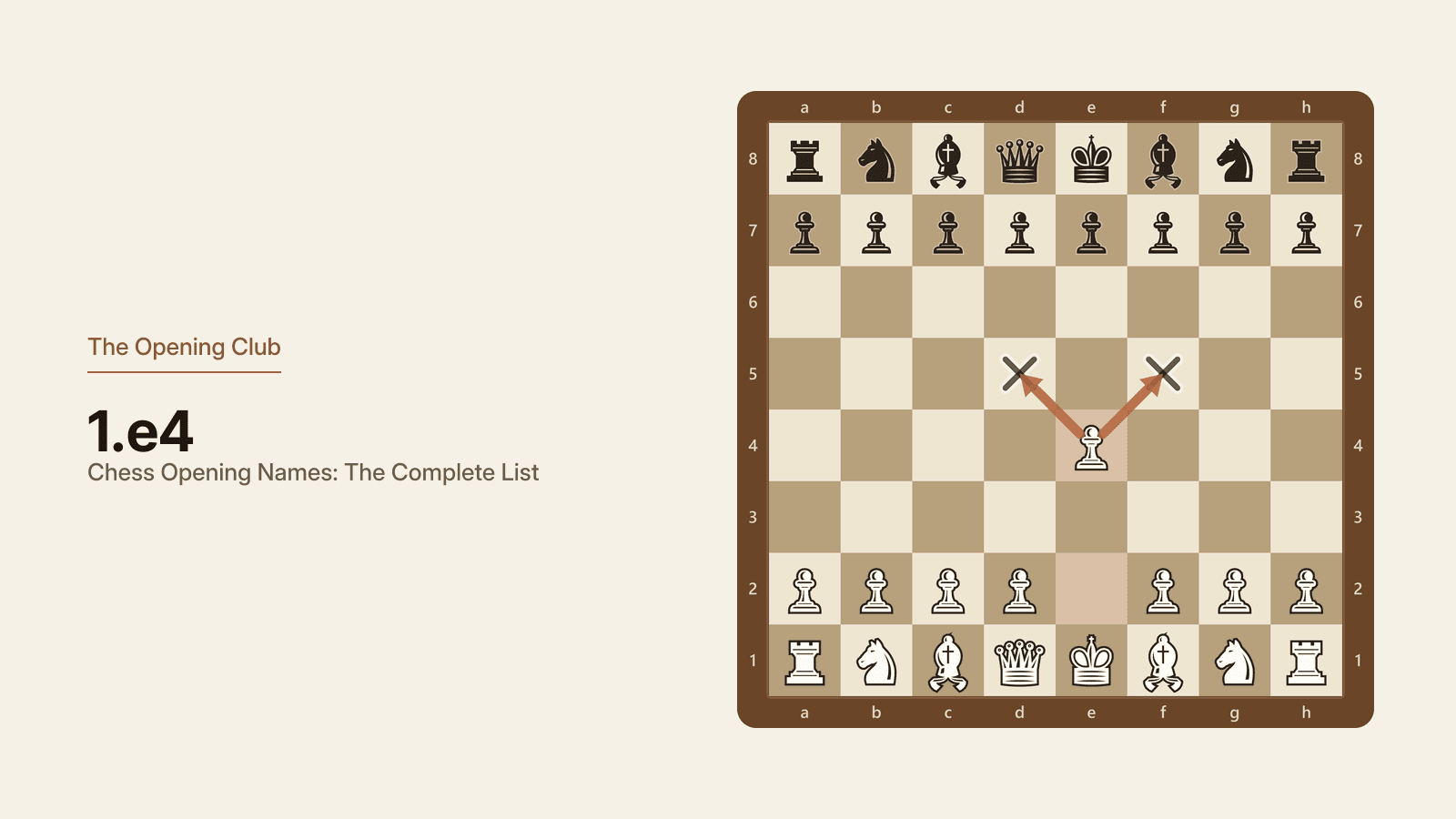
Chess opening names come from four places: the player who first analysed the line, the city or country where it was played, the tournament that made it famous, and, since the twentieth century, whatever animal somebody thought it looked like. Our opening database holds 3,810 named lines across 149 families and all 500 ECO codes.
This page is the list, sorted by first move, with a one-line identity for each name so you can tell what it actually is. Before the list, the short version of how the naming works, because that is the real question behind the search.
How openings get their names
There is no committee. Names accumulated over five centuries and stuck, which is why the system is a mess. Wikipedia's survey of opening nomenclature sorts them into roughly these buckets, and our database bears the pattern out.
Players. The most common source by far. Ruy Lopez (a 16th-century Spanish priest whose 1561 book argued with an earlier author about the move), Alekhine's Defense, the Réti Opening, the Najdorf. Some names credit two people who found the same idea separately, like the Caro-Kann, named for Horatio Caro and Marcus Kann, and the Smith-Morra Gambit.
Places. Mostly the oldest names. The Sicilian, the French, the English, the Spanish, the Dutch, the Scotch, the Italian, the Scandinavian: national names, usually attached because a player from there analysed it or a match between two cities featured it. City names show up too, from Vienna and Berlin to Wilkes-Barre, Pennsylvania.
Tournaments and events. The London System and the Budapest Gambit are named after the events that made them famous rather than anyone in particular. The Catalan is named after the region, invented for a Barcelona tournament.
Animals and jokes. A twentieth-century habit. The Orangutan, the Hippopotamus, the Elephant, the Hedgehog, the Cow, and, at the bottom of the barrel, the Monkey's Bum. The Sicilian Dragon is named for the shape of Black's pawns.
The second half of a name is usually a category word, and those are worth knowing because they carry real information.
| Word | What it tells you | Example |
|---|---|---|
| Game | Usually one of the oldest openings | Scotch Game, Vienna Game |
| Opening | Normally named for what White does | English Opening, Bird's Opening |
| Defense | Named for Black's choice, not necessarily passive | Sicilian Defense, King's Indian Defense |
| Gambit | Material given away on purpose, usually a pawn | Queen's Gambit, Evans Gambit |
| Countergambit | Black gambits back instead of accepting | Albin Countergambit, Falkbeer Countergambit |
| Variation | A branch inside a bigger named opening | Najdorf Variation of the Sicilian |
| System | A setup you can play against almost anything | London System, Colle System |
| Attack | The aggressive branch of a line | Fried Liver Attack, Stonewall Attack |
That is why "the London System" and "the Sicilian Defense" are not the same kind of object. One is a set of moves you play regardless of the reply; the other is a name for a whole continent of theory.
What the book actually looks like
Before the list, some perspective on scale. These are the biggest families in our database, counted by how many separately named lines sit under each heading.
| Opening family | Named lines beneath it |
|---|---|
| Sicilian Defense | 391 |
| Ruy Lopez | 235 |
| French Defense | 212 |
| Queen's Gambit Declined | 198 |
| Italian Game | 187 |
| English Opening | 175 |
| King's Gambit Accepted | 137 |
| King's Indian Defense | 119 |
| Caro-Kann Defense | 110 |
| Nimzo-Indian Defense | 99 |
Two things fall out of the full set. There are exactly 20 legal first moves in chess, and every single one of them has at least one named opening, including 1.Na3 (the Sodium Attack) and 1.h4 (the Kádas Opening). And 1,296 of the 3,810 names contain the word "Gambit", which tells you something about what chess players have historically found worth writing down.
Below is the curated list. It is not all 3,810, because a list of 3,810 is a database dump rather than a reference. It is the names you will actually meet.
Openings after 1.e4 and 1...e5
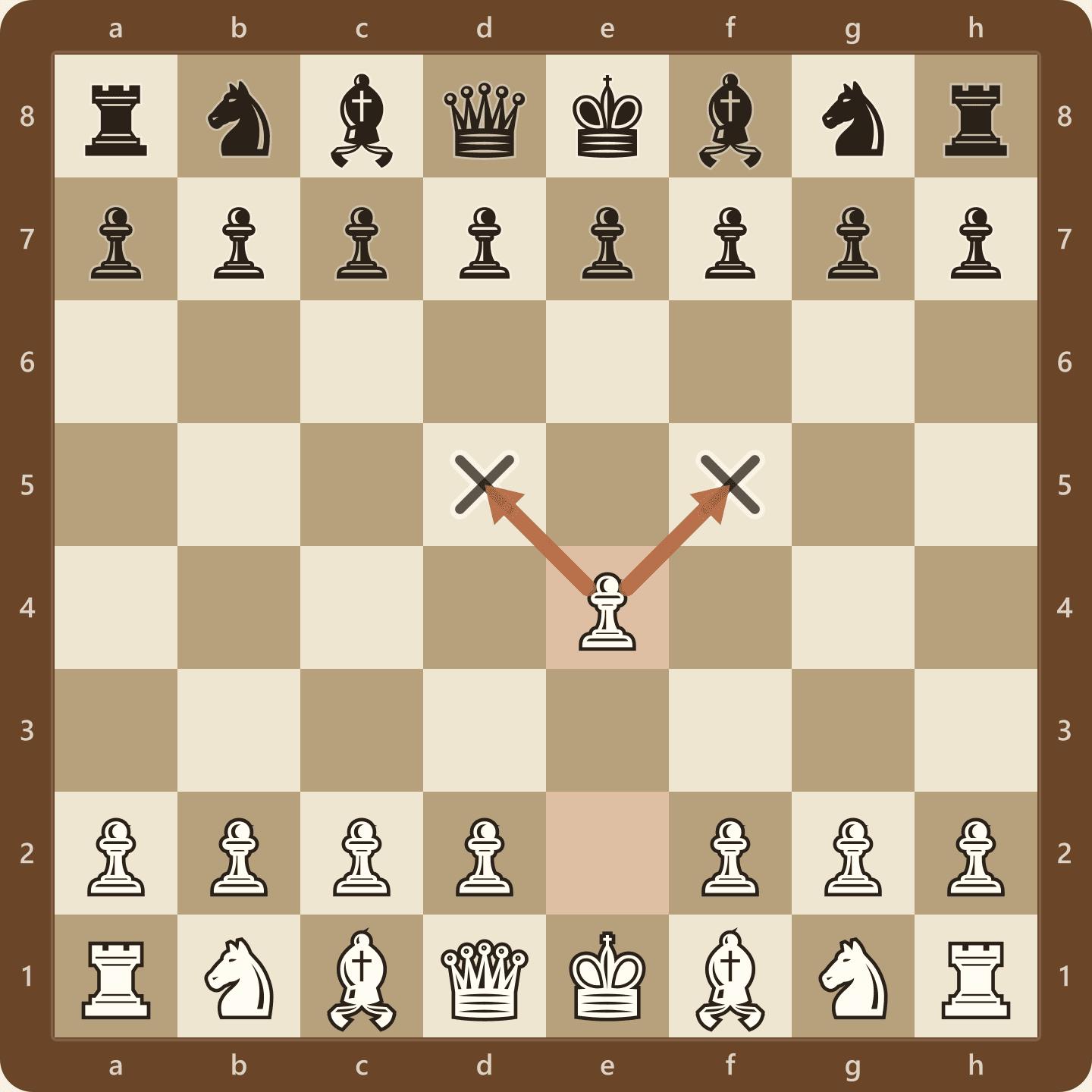
These are the Open Games, ECO C20 to C99.
- Ruy Lopez (Spanish Game), 3.Bb5. Attacks the knight defending e5. The most analysed opening in chess.
- Berlin Defense, 3...Nf6 in the Ruy Lopez. Black's solid, drawish, extremely modern answer.
- Italian Game, 3.Bc4. The bishop points at f7 instead. Friendlier than the Ruy Lopez and just as old.
- Two Knights Defense, 3...Nf6. Black's sharp reply to the Italian, and the gateway to a lot of chaos.
- Fried Liver Attack, 6.Nxf7 in the Two Knights. A knight sacrifice that drags Black's king to e6.
- Evans Gambit, 4.b4 in the Italian. A pawn for the centre and a fast attack.
- Scotch Game, 3.d4. Named after an 1824 correspondence match between Edinburgh and London.
- Four Knights Game, 3.Nc3 Nf6. Both sides develop symmetrically. Quiet, sound, still full of ideas.
- Vienna Game, 2.Nc3. Develops first and keeps the f-pawn free for a later f4 push.
- King's Gambit, 2.f4. The great romantic opening. Offers a pawn to blast open the f-file.
- Ponziani Opening, 3.c3. Builds a big centre at the cost of a tempo.
- Petrov's Defense (Russian Game), 2...Nf6. Black copies instead of defending. Famously hard to beat.
- Stafford Gambit, 3.Nxe5 Nc6. A trap-heavy Petrov sideline that is unsound and wildly popular online.
- Philidor Defense, 2...d6. Solid and passive, named after the strongest player of the 18th century.
- Bishop's Opening, 2.Bc4. Older than the Italian, and a common way to sidestep the Petrov.
- Center Game and Danish Gambit, 2.d4. Immediate central conflict, with the Danish sacrificing pawns for development.
- Latvian Gambit and Elephant Gambit, 2...f5 and 2...d5. Aggressive, dubious, entertaining.
- Scholar's Mate, 2.Bc4 and 3.Qh5. Not really an opening. Everybody meets it once.
Openings after 1.e4 and something else
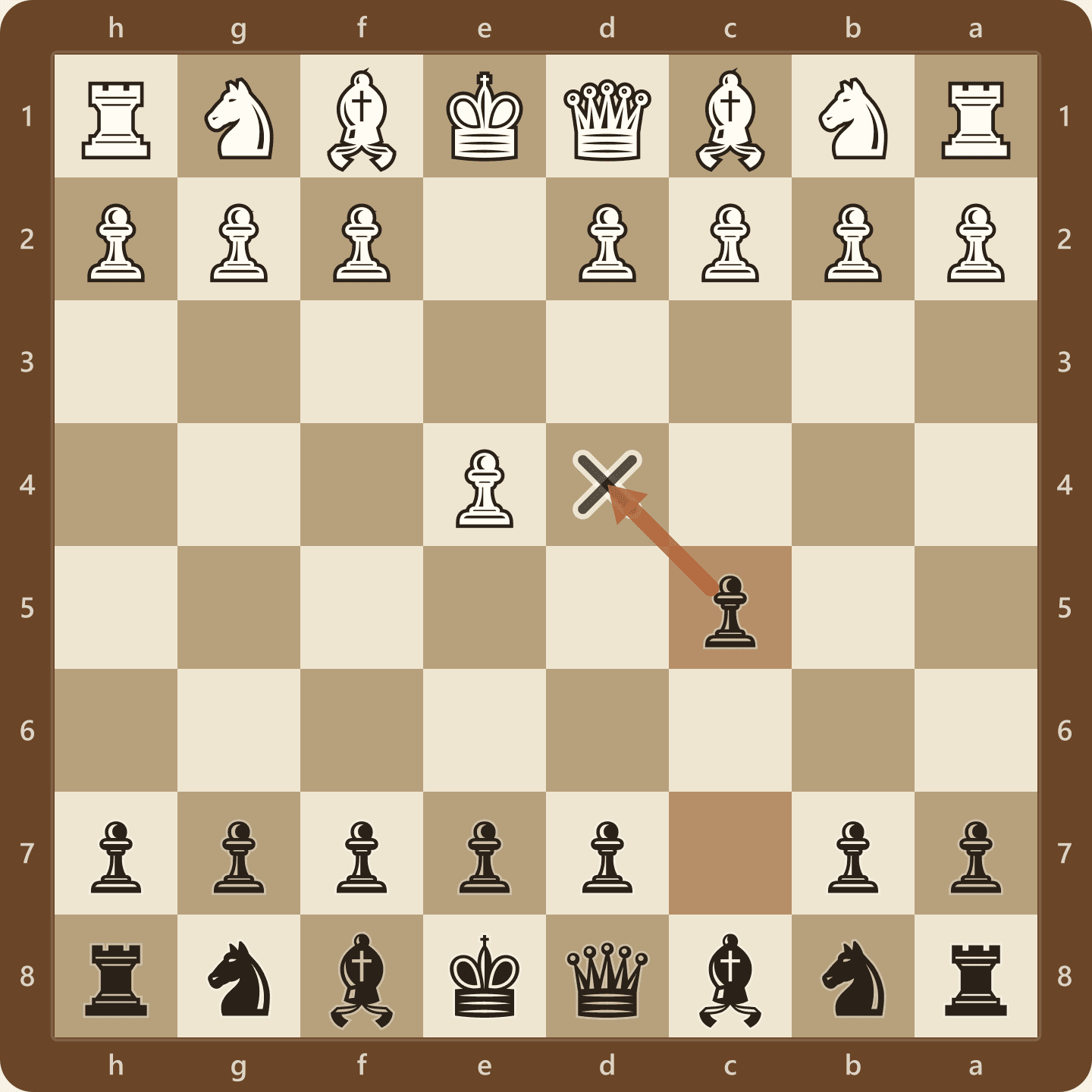
The Semi-Open Games, ECO B00 to B99 and C00 to C19.
- Sicilian Defense, 1...c5. Trades a wing pawn for a centre pawn. Black's most successful reply to 1.e4.
- Najdorf Variation, 5...a6. The most famous Sicilian branch, played by Fischer and Kasparov.
- Sicilian Dragon, 5...g6. Named for the pawn shape. Extremely sharp in both directions.
- Accelerated Dragon, an earlier ...g6. Skips ...d6 to save a move and dodge a whole attack.
- Alapin Variation, 2.c3. White's most solid way to avoid Open Sicilian theory.
- Smith-Morra Gambit, 2.d4 cxd4 3.c3. A pawn for a big lead in development.
- French Defense, 1...e6. Named after an 1834 city match. Solid, closed, with a permanently awkward bishop.
- Caro-Kann Defense, 1...c6. The French without the bad bishop, at the cost of speed.
- Caro-Kann Advance Variation, 3.e5, and the Exchange Variation, 3.exd5. The two ways White tries to punish it.
- Scandinavian Defense, 1...d5. Immediate central trade. One of the oldest recorded openings.
- Pirc Defense, 1...d6 and 2...Nf6. Give White the centre, then attack it.
- Alekhine's Defense, 1...Nf6. Invites White to chase the knight and overextend.
- Modern Defense, 1...g6. The Pirc's more flexible cousin.
- Nimzowitsch Defense, 1...Nc6, and Owen's Defense, 1...b6. Hypermodern sidelines, meaning they attack the centre from a distance rather than occupying it.
Openings after 1.d4
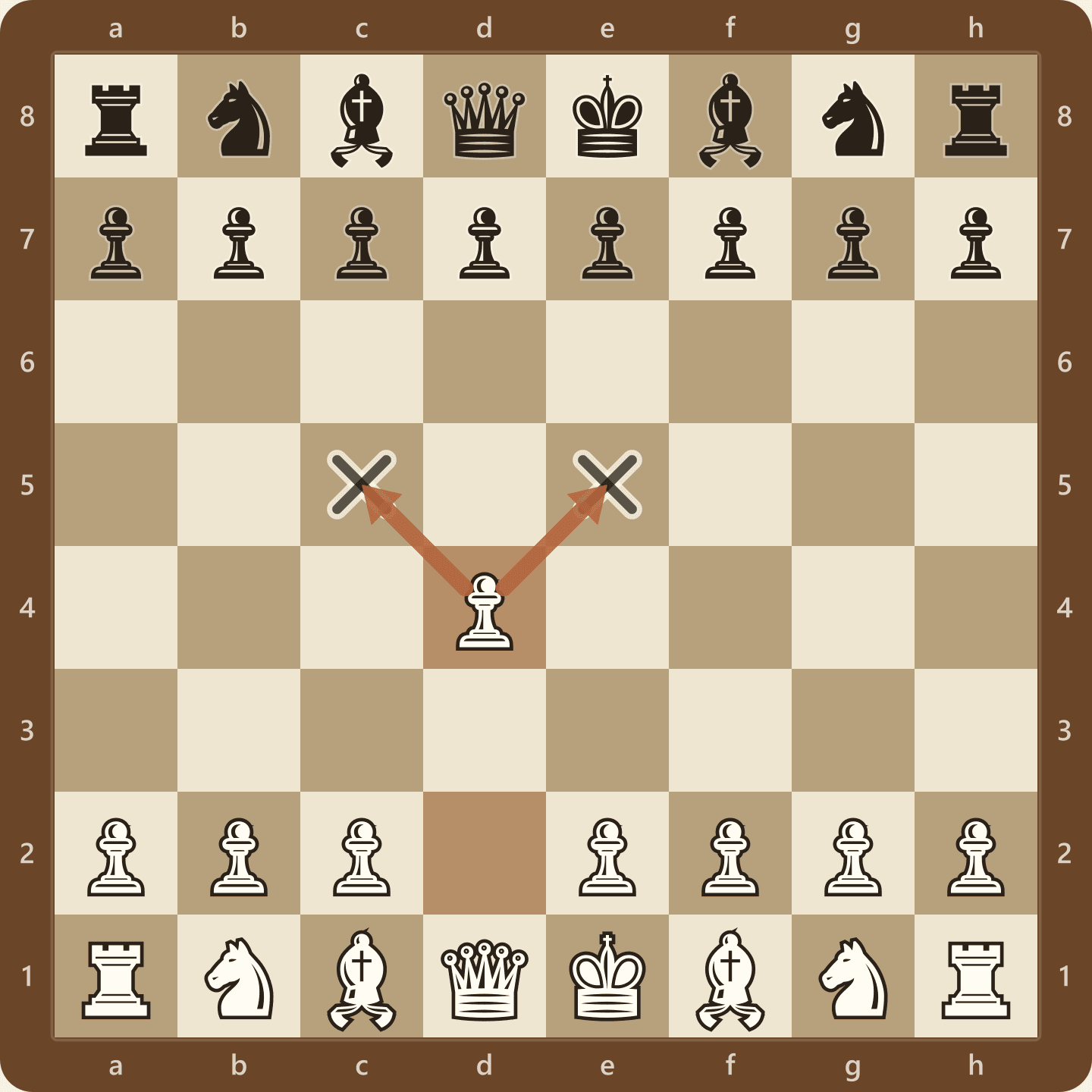
The Closed and Indian Games, ECO A40 to A99 and D and E entirely.
- Queen's Gambit, 2.c4. Not a real gambit: Black cannot hold the pawn.
- Queen's Gambit Accepted, 2...dxc4, and Declined, 2...e6. The two main roads.
- Slav Defense, 2...c6. Declines while keeping the light-squared bishop free.
- Semi-Slav Defense, ...c6 and ...e6 together. Solid, complex, and a modern main line.
- London System, an early Bf4. A setup rather than a theory, which is why it is everywhere.
- Jobava London System, Nc3 with Bf4. The aggressive rewrite of the same idea.
- Colle System, d4, Nf3, e3 and c3. Quiet buildup aimed at a central e4 break.
- Stonewall Attack, pawns on d4, e3 and f4. A rigid structure with one plan and a lot of conviction.
- King's Indian Defense, ...Nf6, ...g6 and ...Bg7. Concede the centre, then storm the kingside.
- Nimzo-Indian Defense, 3...Bb4. Named after Aron Nimzowitsch. One of Black's soundest options.
- Grünfeld Defense, 3...d5 after ...g6. Lets White build a huge centre in order to demolish it.
- Benoni Defense, ...c5 against d4 and d5. The name is Hebrew for "son of sorrow".
- Benko Gambit, ...b5 in the Benoni. A pawn for permanent queenside pressure.
- Budapest Gambit, 2...e5. Named after the 1918 tournament where it appeared.
- Dutch Defense, 1...f5. Black's aggressive, slightly loosening try.
- Catalan Opening, c4 and g3 together. Named after Catalonia, built for a 1929 Barcelona event.
- Englund Gambit, 1...e5. Objectively poor, home to a famous mate in eight.
- Trompowsky Attack, 2.Bg5. Avoids all Indian theory on move two.
- Queen's Indian and Bogo-Indian Defenses, 3...b6 and 3...Bb4+. The quieter members of the Indian family.
- Albin Countergambit and Tarrasch Defense, 2...e5 and 3...c5. Black counterattacks in the Queen's Gambit.
Openings after 1.Nf3 and 1.c4
- Réti Opening, 1.Nf3 d5 2.c4. Hypermodern: attack the centre before occupying it.
- King's Indian Attack, Nf3, g3, Bg2 and d3. The King's Indian setup played by White.
- English Opening, 1.c4. Named after Howard Staunton, who used it in 1843.
- Zukertort Opening, 1.Nf3 as a standalone. Mostly a way to transpose into something else.
Everything else
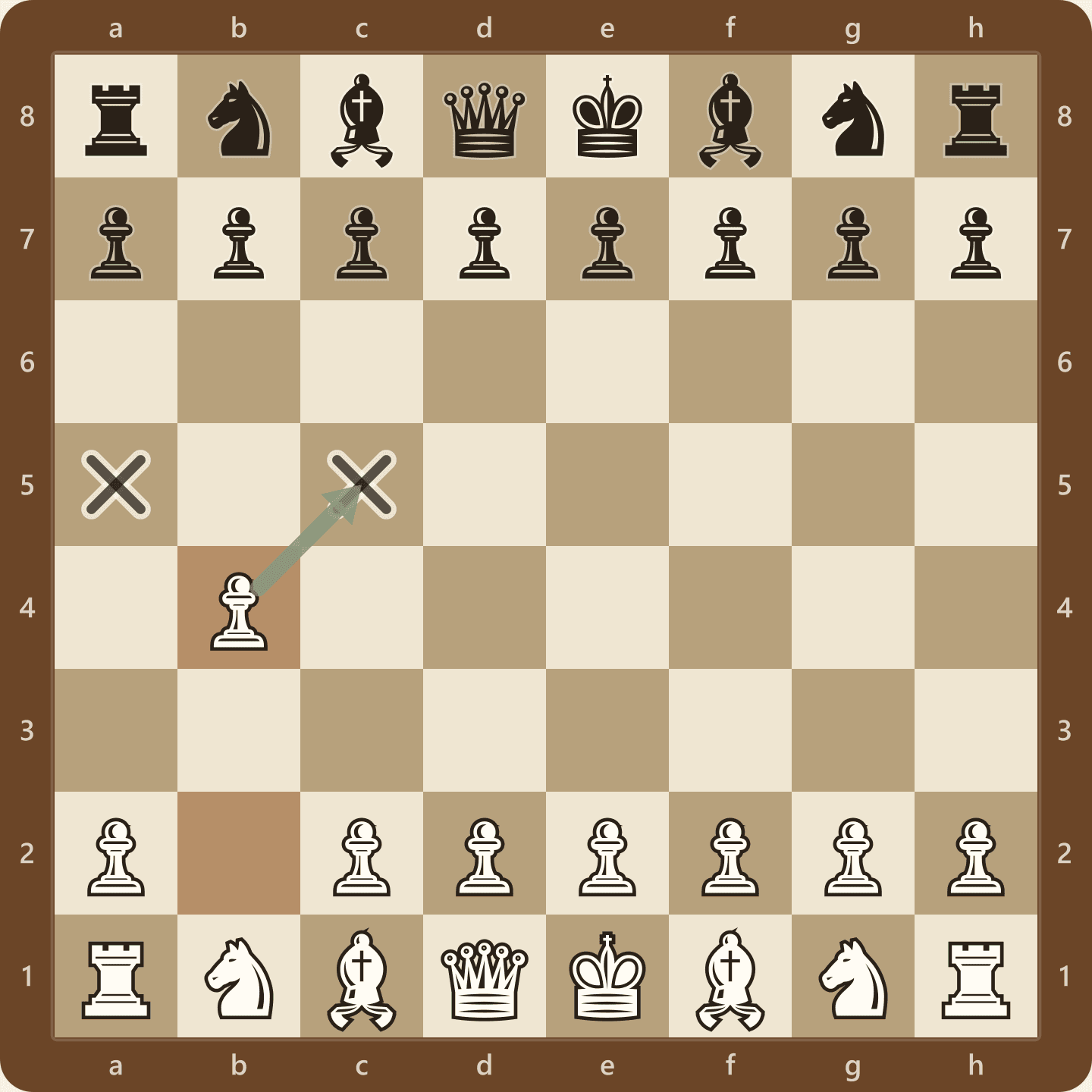
The remaining sixteen first moves are all ECO A00, the code that means "everything the encyclopedia could not be bothered to organise".
- Bird's Opening, 1.f4. The Dutch Defense with an extra move.
- Nimzo-Larsen Attack, 1.b3. Fianchetto the queen's bishop and aim at e5.
- Polish Opening or Orangutan, 1.b4. Named twice, once for a country and once for a zoo visit.
- Grob Opening, 1.g4, and Van Geet Opening, 1.Nc3. Sidelines with real followings.
- Sodium Attack (1.Na3) and Amar Opening (1.Nh3). The knight moves nobody recommends.
- Anderssen's (1.a3), Ware (1.a4), Saragossa (1.c3), Mieses (1.d3), Van't Kruijs (1.e3), Barnes (1.f3), Hungarian (1.g3), Clemenz (1.h3), Kádas (1.h4). One name each, mostly after the player who tried it first.
- Bongcloud Attack, 1.e4 e5 2.Ke2. The internet named this one, and it means exactly what you think.
Where the names came from, in one picture
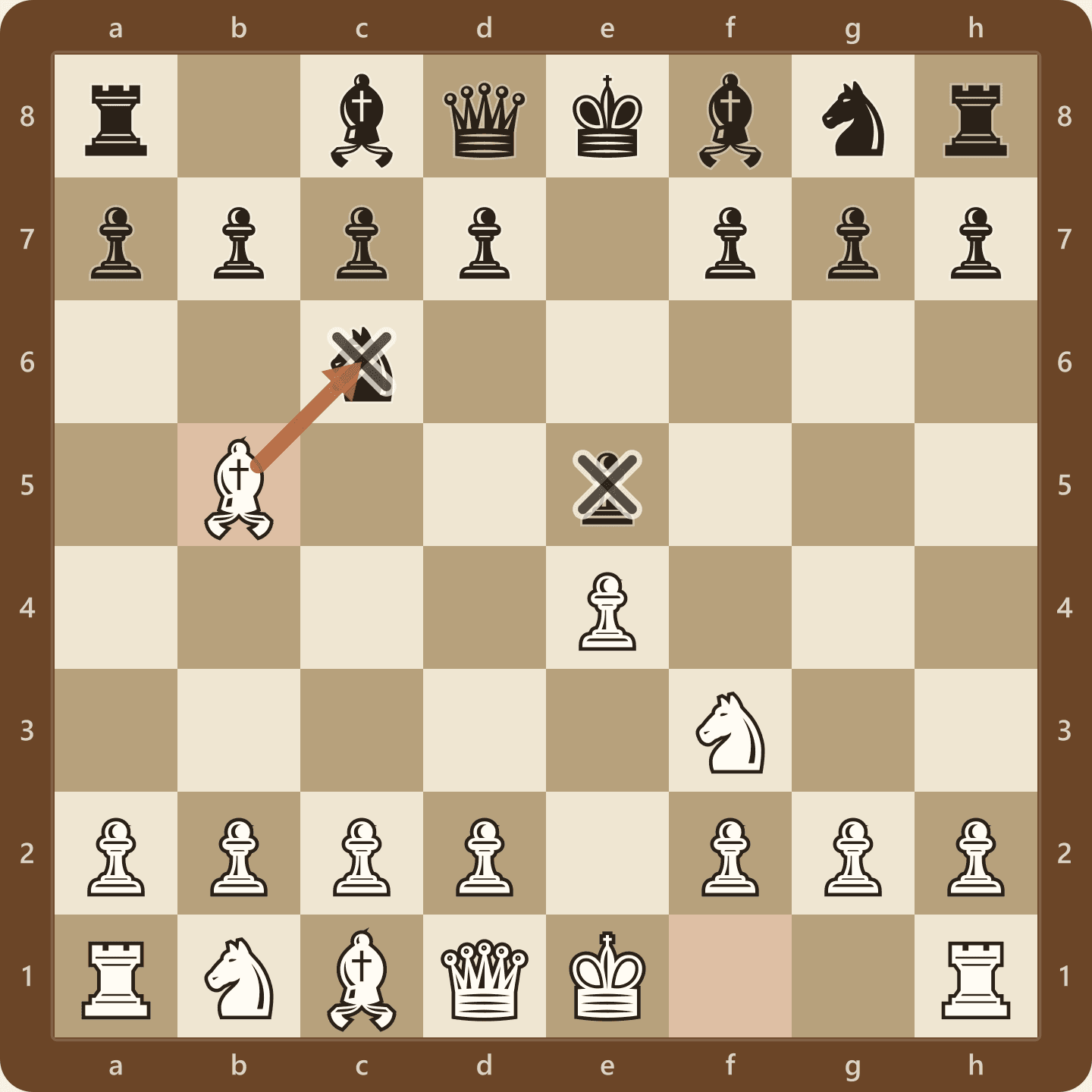
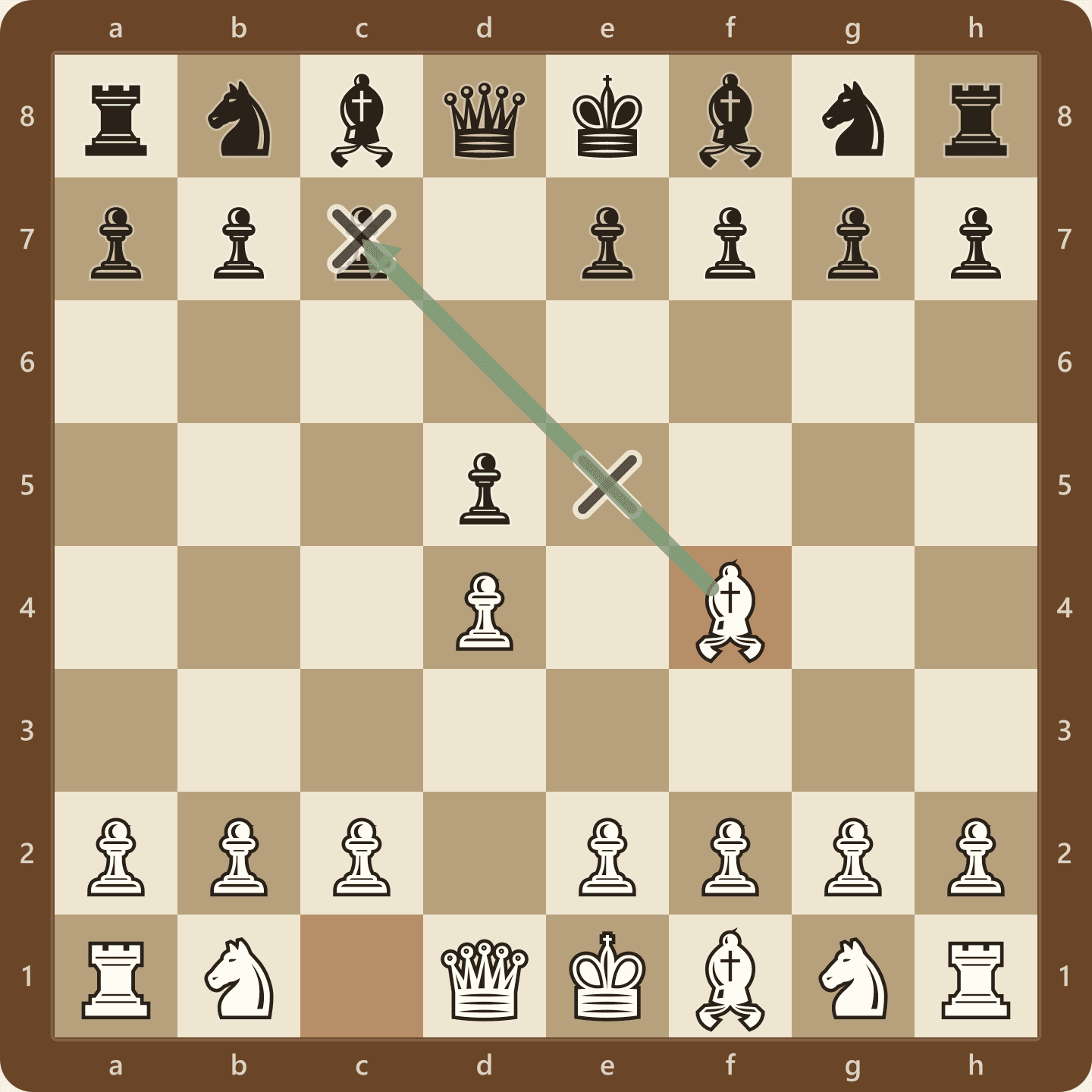
Put those two side by side and you have the history of opening names. The old ones carry a surname because one person wrote the book. The newer ones carry a place or an event, because by then chess had tournaments, magazines and dozens of people finding the same move at once.
Frequently asked questions
What are the most common chess opening names?
The names you meet most at amateur level are the Italian Game, the Ruy Lopez, the Sicilian Defense, the French Defense, the Caro-Kann Defense, the Scandinavian Defense, the Queen's Gambit, the London System and the King's Indian Defense. Those nine cover most of what appears in online rapid, and each has its own guide on this site.
How many chess openings are there?
It depends entirely on what you count. There are 20 legal first moves. The Encyclopaedia of Chess Openings uses 500 codes from A00 to E99. Our database holds 3,810 separately named positions grouped into 149 top-level families. All three numbers are correct answers to different questions.
Why do chess openings have such strange names?
Because nobody was in charge. Names were attached over roughly five hundred years by authors, magazines and tournament organisers, with no central authority. Player surnames are the most common source, national and city names cluster among the oldest openings, and twentieth-century players started naming lines after animals for fun. The Orangutan is named after a zoo visit.
What does gambit mean in an opening name?
That material, usually a pawn, is deliberately given away for something else: development, open lines, or time. A countergambit is the same thing played by Black in reply. Note that the Queen's Gambit is not really a gambit at all, since Black cannot hold the pawn, which is a good demonstration of how loosely these words got applied.
What is the difference between an opening, a defense and a system?
An opening is usually named for what White does, a defense for Black's reply, and a system is a fixed setup one side plays against almost any answer. The London System is the clearest example of the last one: the same four or five moves regardless of what Black does, which is exactly why it is so popular.
Where to go next
If you want the strategic overview rather than the vocabulary, start at the chess openings hub. If you want to know which of these names is worth your study time, the chess opening tier list ranks them by rating band, and how many chess openings are there digs into the counting problem above. If you want to browse the raw move tree instead, the Lichess opening explorer is the best free tool for it. If the notation in this list is slowing you down, chess notation explained fixes that in ten minutes, and chess opening traps covers the short games hiding inside several of these names.