If you are picking chess openings for White, the data gives you a clearer answer than the internet does. We scored every mainstream White opening across 49.8 million rapid and blitz games from the Lichess open database (May 2026 snapshot), inside four rating bands, and ranked them by Wilson lower bound rather than raw win percentage.
The headline: the Scotch Game is the best-scoring mainstream White opening at 600, 1000 and 1400, the Queen's Gambit is the best 1.d4 system in every band, and if you play the Italian Game your score falls steadily as you climb while the Vienna Game's rises. The full method lives on the main ranking page; the short version follows.
How the ranking works
Each line is scored as wins plus half of draws from White's side, then ranked by its 95% Wilson lower bound. That confidence floor is the whole point: a line with 200 games loses most of its headline score, a line with two million keeps nearly all of it. It is what stops a small-sample favourite from topping the table on noise, and it is why our order differs from any list built off the explorer's raw percentage.
The bands are 600, 1000, 1400 and 1800, which are Lichess rating-bucket lower bounds, not midpoints. The 49.8 million games split 4.2 million in the 600 band, 14.1 million at 1000, 10.7 million at 1400 and 20.8 million at 1800. (If you have seen a bigger total quoted from this dataset, it was produced by summing games across nested positions, which counts one game once per position it passes through.) Every figure below carries its band and its sample size, and if it does not, we got it wrong.
The ranking
| White opening | 600 | 1000 | 1400 | 1800 | Games at 1000 |
|---|---|---|---|---|---|
| Vienna Gambit (1.e4 e5 2.Nc3 Nf6 3.f4) | 0.584 S | 0.591 A | 0.583 B | 0.567 B | 34,510 |
| Scotch Gambit (3.d4 exd4 4.Bc4) | 0.545 B | 0.564 A | 0.560 A | 0.550 A | 50,294 |
| King's Gambit Accepted, 3.Nf3 | 0.545 A | 0.558 A | 0.552 A | 0.527 B | 61,167 |
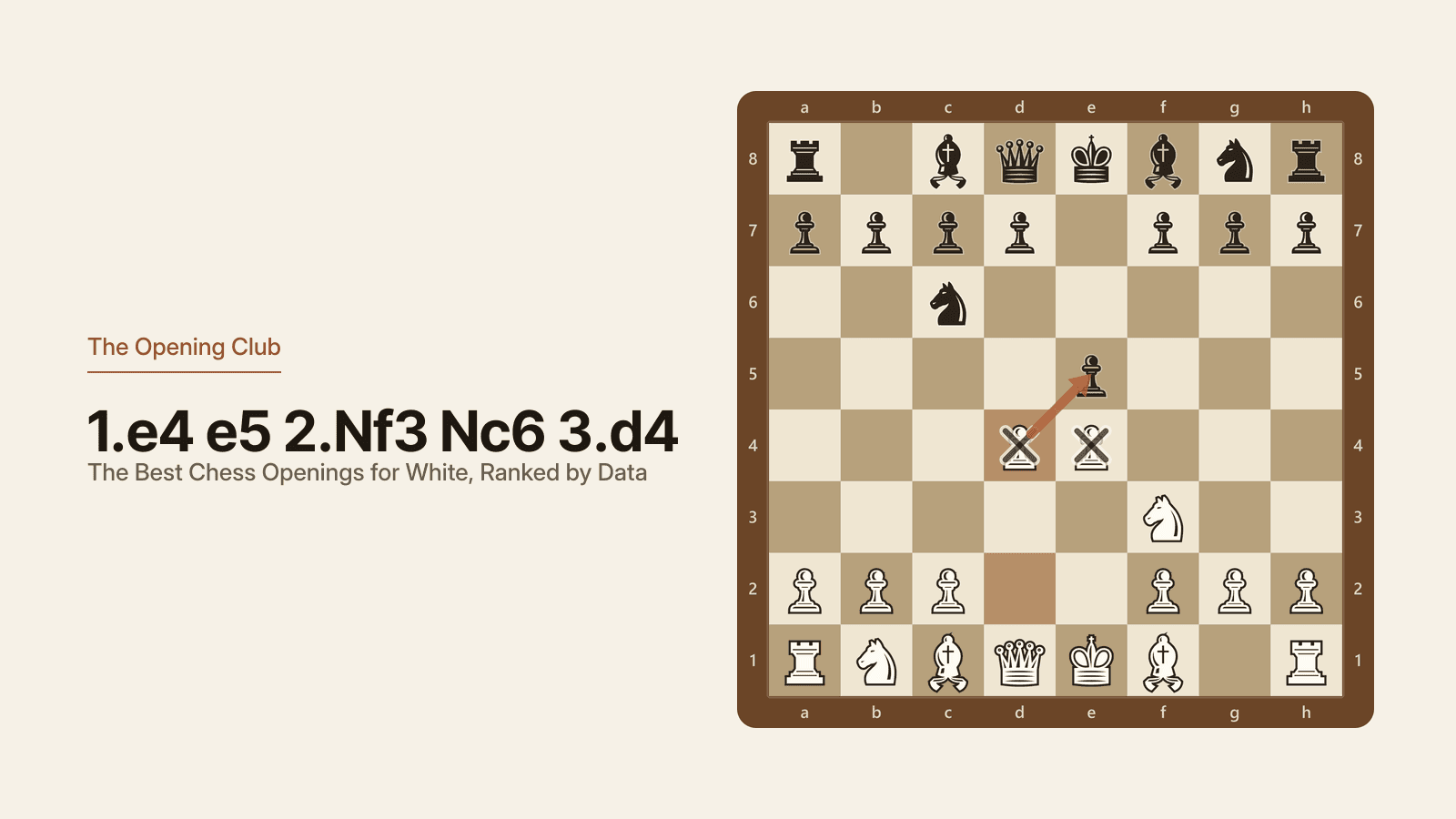
| Scotch Game (1.e4 e5 2.Nf3 Nc6 3.d4) | 0.546 A | 0.557 A | 0.549 A | 0.545 A | 394,743 |
| Two Knights, 4.Ng5 (Fried Liver route) | 0.578 S | 0.555 S | 0.528 B | 0.515 C | 127,363 |
| Queen's Gambit (1.d4 d5 2.c4) | 0.553 S | 0.550 A | 0.545 A | 0.542 A | 455,625 |
| King's Gambit (1.e4 e5 2.f4) | 0.522 B | 0.548 A | 0.546 B | 0.529 B | 164,805 |
| Four Knights, Scotch Variation (4.d4) | 0.541 B | 0.545 A | 0.546 B | 0.549 B | 56,649 |
| Italian, Classical 4.c3 | 0.555 S | 0.543 B | 0.537 B | 0.526 B | 59,735 |
| Accelerated London (1.d4 d5 2.Bf4) | 0.547 A | 0.542 B | 0.530 B | 0.528 B | 438,927 |
| Ruy Lopez (1.e4 e5 2.Nf3 Nc6 3.Bb5) | 0.535 A | 0.535 A | 0.532 A | 0.535 A | 369,070 |
| London System (2.Nf3 Nf6 3.Bf4) | 0.548 B | 0.536 B | 0.528 B | 0.522 C | 47,342 |
| English Opening (1.c4 e5 2.Nc3) | 0.528 B | 0.533 B | 0.537 B | 0.540 B | 63,473 |
| Queen's Pawn, 2.Nf3 (1.d4 d5 2.Nf3) | 0.520 B | 0.529 B | 0.530 B | 0.534 B | 311,568 |
| Bishop's Opening (1.e4 e5 2.Bc4) | 0.529 A | 0.527 A | 0.525 B | 0.520 B | 582,830 |
| Center Game (1.e4 e5 2.d4) | 0.517 B | 0.527 A | 0.537 A | 0.547 A | 329,560 |
| Italian Game (1.e4 e5 2.Nf3 Nc6 3.Bc4) | 0.537 A | 0.526 A | 0.520 B | 0.518 B | 965,410 |
| Vienna Game (1.e4 e5 2.Nc3) | 0.515 B | 0.525 B | 0.528 B | 0.536 B | 332,383 |
| Colle System (2.Nf3 Nf6 3.e3) | 0.509 C | 0.518 C | 0.518 B | 0.517 C | 40,322 |
| Three Knights (1.e4 e5 2.Nf3 Nc6 3.Nc3) | 0.501 B | 0.501 C | 0.503 C | 0.521 B | 366,559 |
| Trompowsky Attack (1.d4 Nf6 2.Bg5) | 0.468 C | 0.498 C | 0.503 B | 0.501 B | 13,476 |
Step one: pick a first move
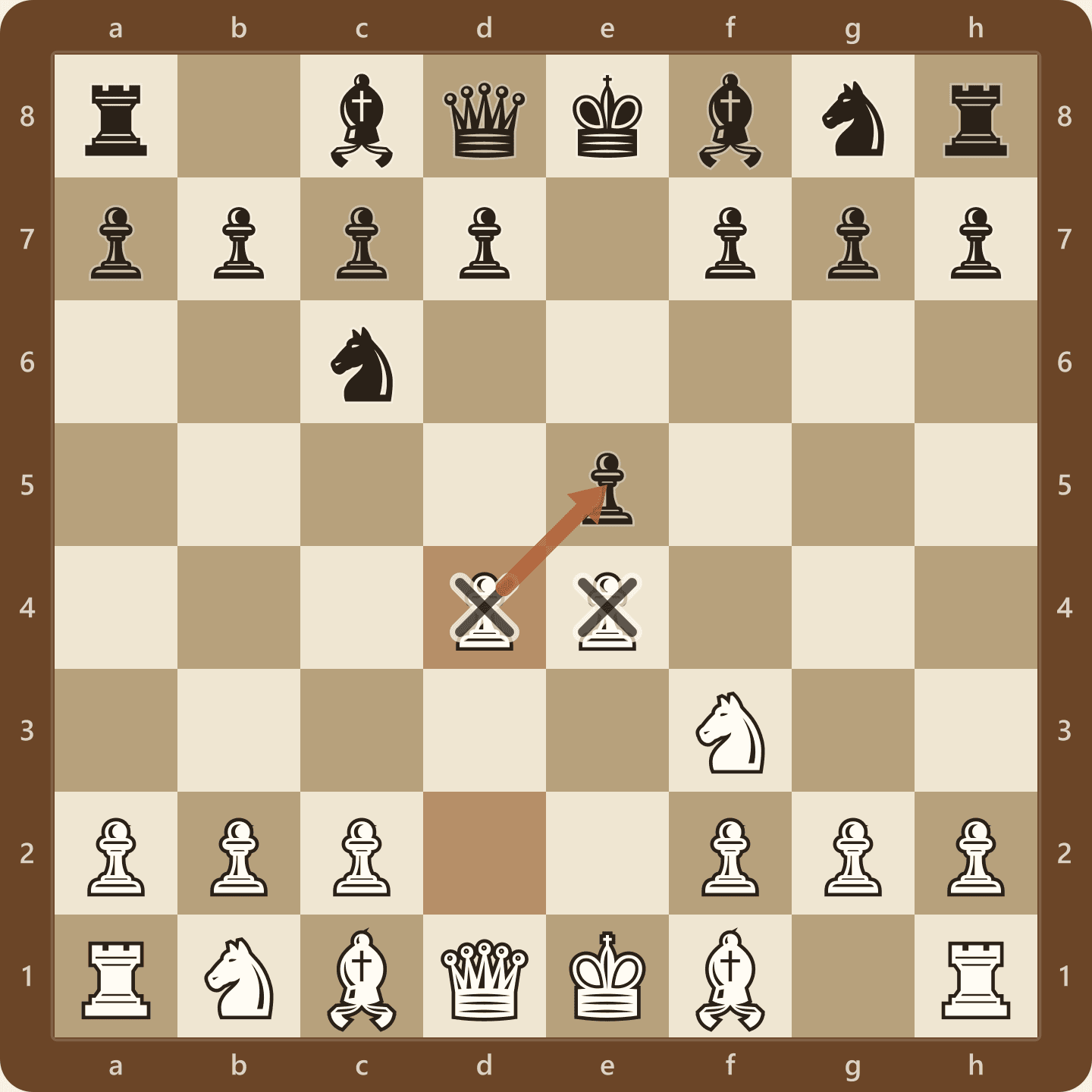
1.e4 scores 0.524 at the 600 band across 2,849,881 games and 0.519 at 1000 across 9,343,706. 1.d4 scores 0.522 and 0.527 in the same bands. So 1.e4 is ahead at 600 and behind from 1000 upward, and by 1800 it is the lowest-scoring of the four main first moves (0.512 across 12,493,284 games, against 0.524 for 1.d4, 0.530 for 1.c4 and 0.531 for 1.Nf3). The 1.e4 versus 1.d4 page has the full arithmetic.
That gap is small, roughly one point of score, and it is not the reason to choose. The reason to choose is what you have to learn. 1.e4 forces you to have an answer for the Sicilian, the French, the Caro-Kann, the Scandinavian, the Pirc and 1...e5. 1.d4 lets you play very nearly the same setup against most of them. If you dislike memorising, that asymmetry is worth far more than a point of score.
The best 1.e4 openings for White
The Scotch Game, and the Scotch Gambit
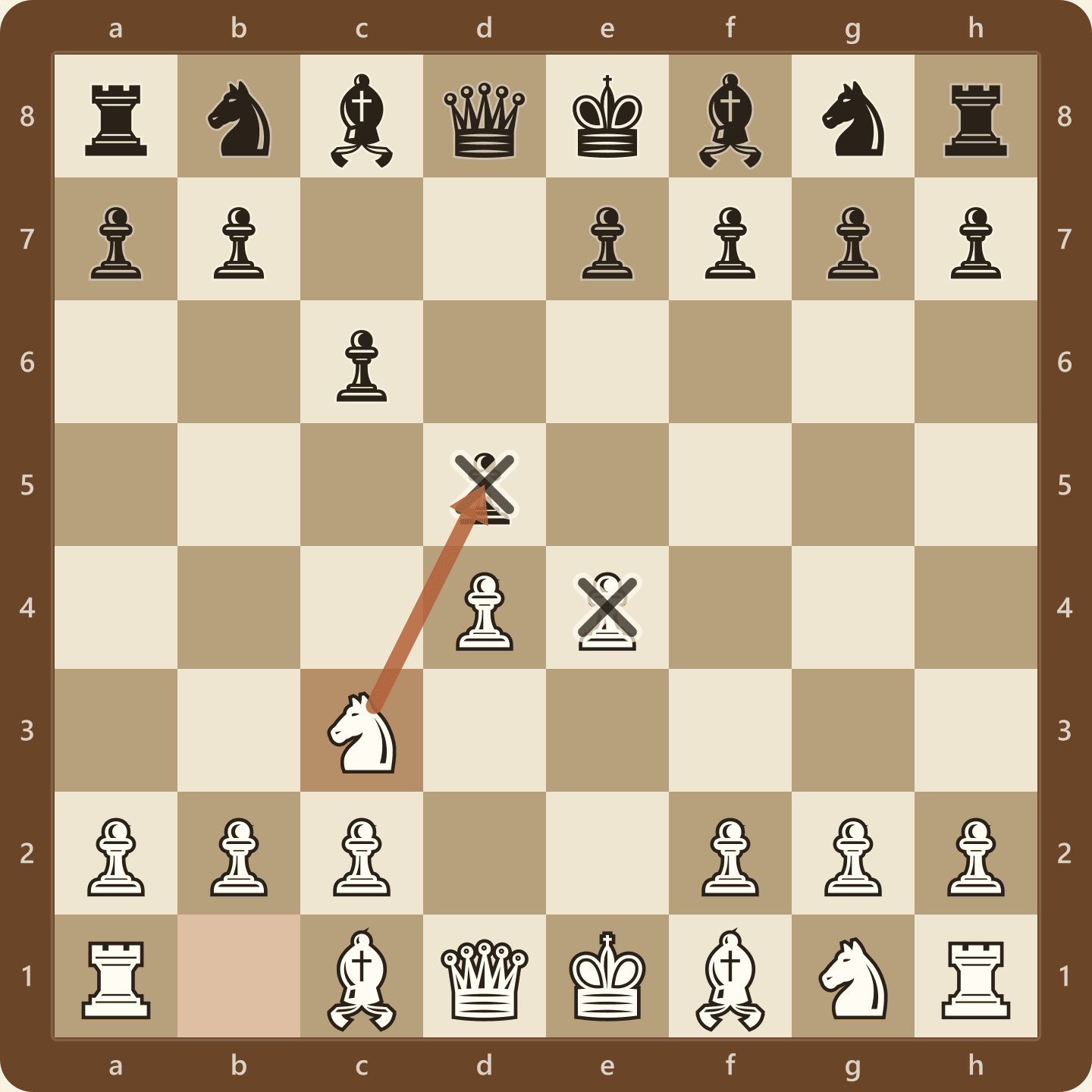
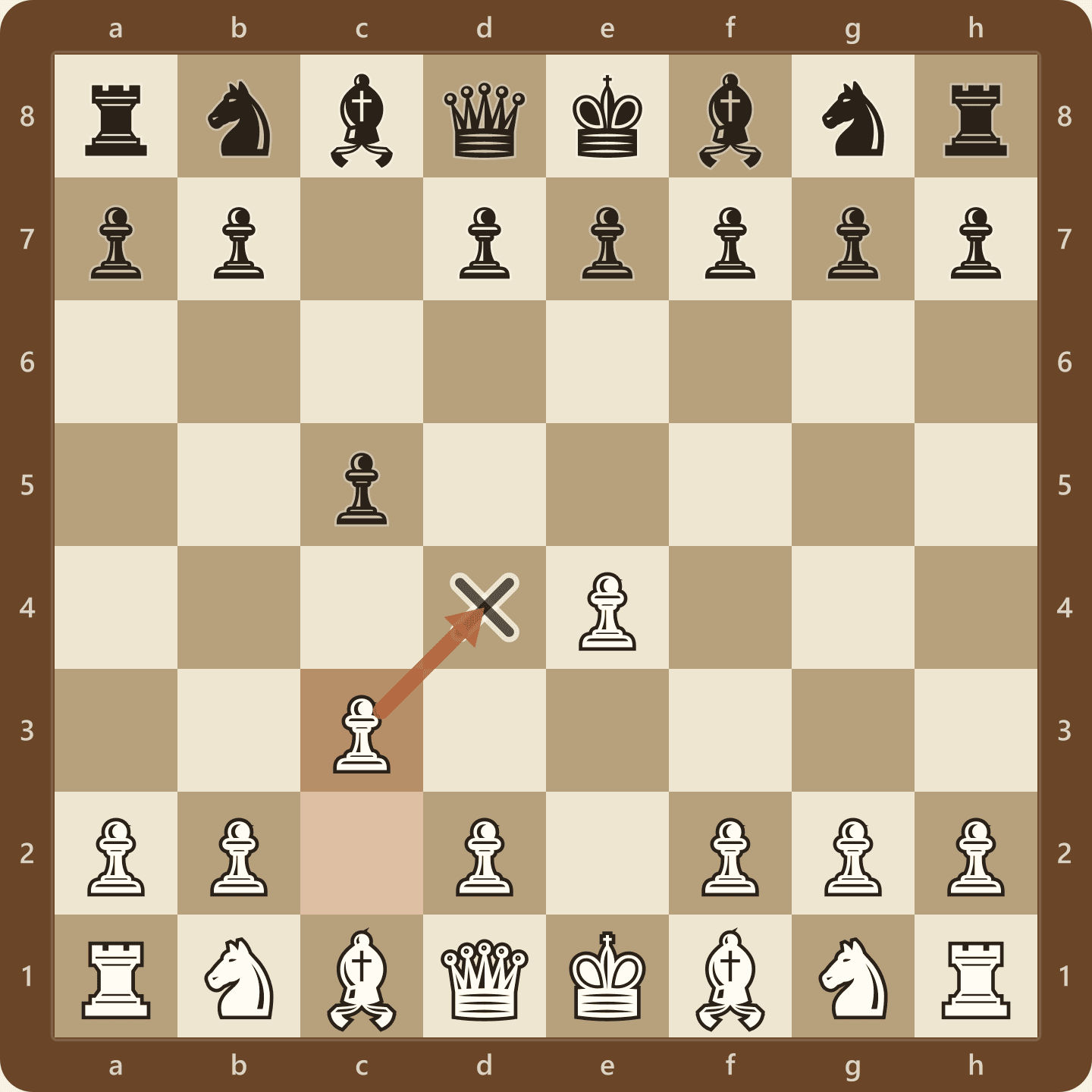
The Scotch (0.557 at 1000, 54.05% wins, 394,743 games) tops the mainstream list at 600, 1000 and 1400, and unlike the Italian it does not decay: 0.546, 0.557, 0.549, 0.545. Its sharp cousin the Scotch Gambit (3...exd4 4.Bc4) is even better, at 0.564 across 50,294 games at 1000 and an A grade in all three bands where it has a real sample.
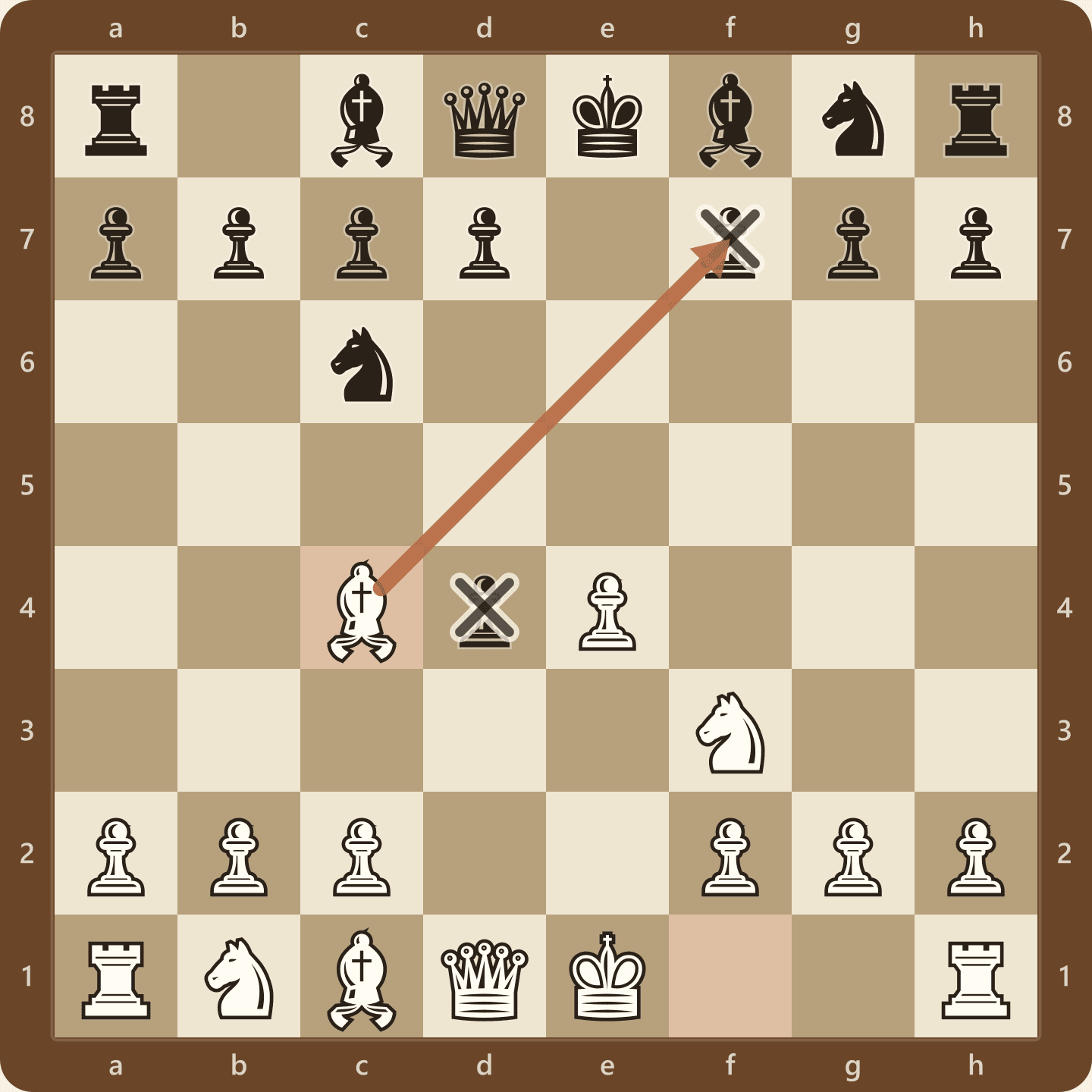
Neither line needs much theory. Full detail on the Scotch Game page.
The Ruy Lopez
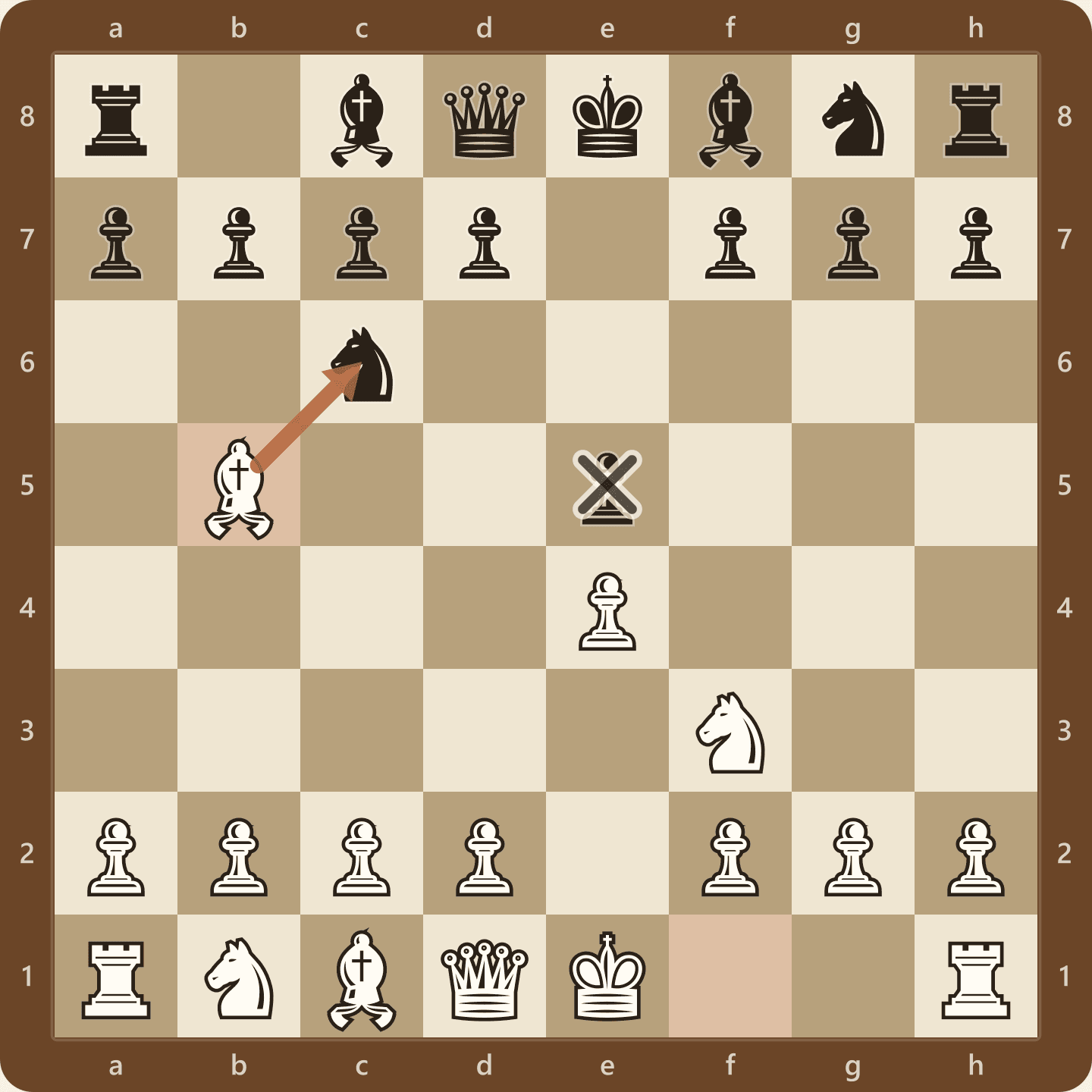
The Ruy Lopez is the most consistent opening in the entire dataset, an A grade at every band with 369,070 games at 1000. Bobby Fischer built a career on it and it still works, but note one thing the data is blunt about: the Exchange Variation (3...a6 4.Bxc6), often sold as the low-theory shortcut, grades C at 1000, 1400 and 1800, falling from 0.532 to 0.509. The shortcut costs you the opening's whole edge.
The Italian Game and the Giuoco Piano
The Italian Game is the most-played White opening in the set, 965,410 games at 1000, and it grades 0.537, 0.526, 0.520, 0.518 across the bands. Steady erosion. The main branches diverge sharply:
- Two Knights, 4.Ng5, the route to the Fried Liver Attack: S at 600 (0.578) and S at 1000 (0.555, 127,363 games), then B at 1400 and C at 1800 (0.515). See the Fried Liver Attack page.
- Giuoco Piano with 4.c3 (Italian Classical): S at 600 (0.555) and 0.543 at 1000 across 59,735 games, the strongest slow Italian line.
- 4.d3 (the Giuoco Pianissimo family): 0.531 at 1000 across 117,165 games, and the flattest of the three across bands.
The pattern is consistent: the Italian's aggressive branches are worth the most at low ratings and the least at high ones.
The Vienna Game and the Vienna Gambit
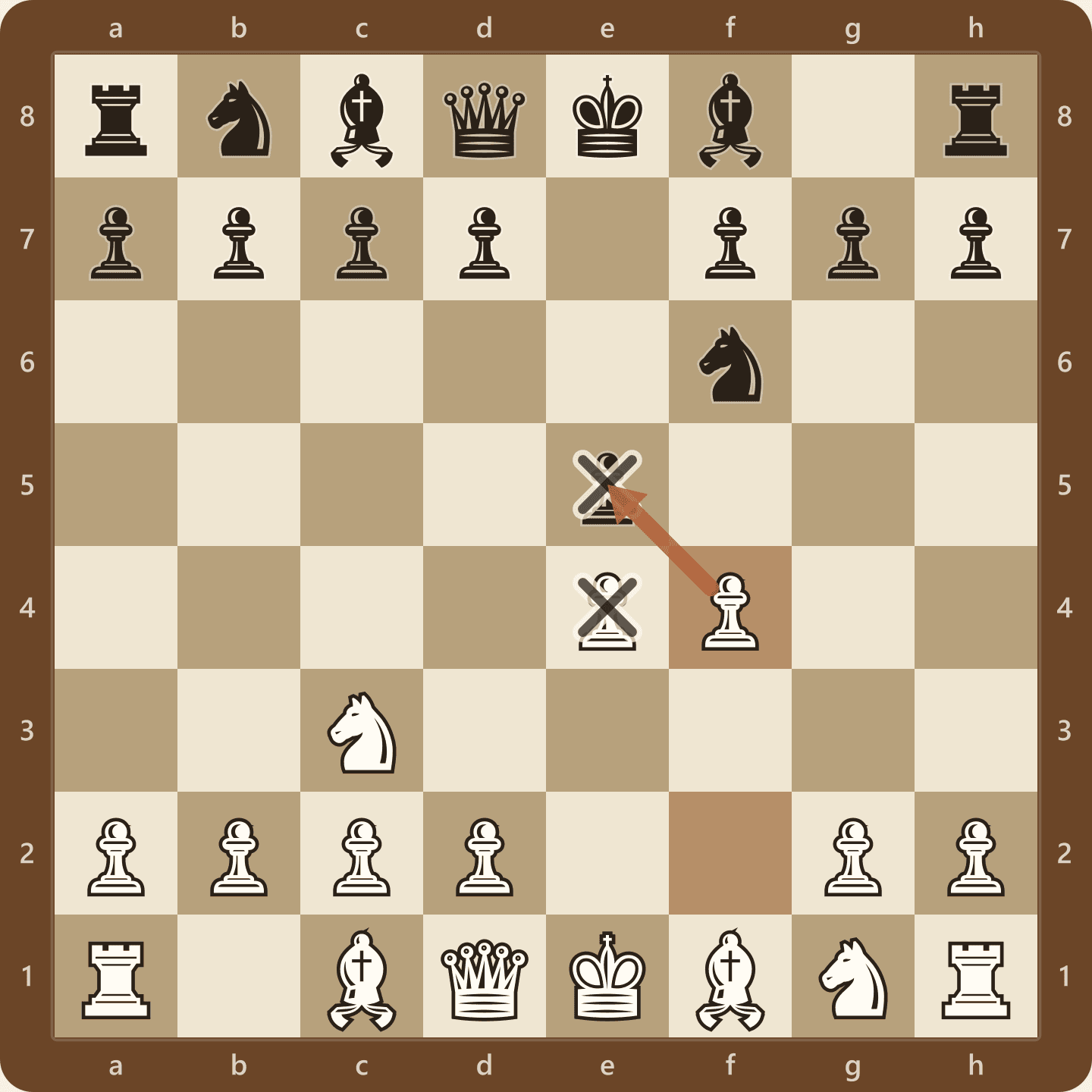
The Vienna Game grades 0.515, 0.525, 0.528, 0.536: one of only two mainstream White openings that gets better every band. Inside it, the Vienna Gambit (2...Nf6 3.f4) is the highest-scoring line in this article by a distance, 0.591 at 1000 with 58.04% outright wins across 34,510 games, and it stays above 0.567 even at 1800.
One caveat we are obliged to give you. The Vienna Gambit is played 0.24% of the time at the 1000 band. People who play it chose it deliberately, and their opponents mostly have not seen it. The Wilson bound corrects for sample size, not for that selection effect, so treat 0.591 as an upper estimate of what you would get by switching.
The King's Gambit
The King's Gambit peaks hard at the 1000 band: 0.548 across 164,805 games. Accepted with 2...exf4 3.Nf3, White scores 0.558 across 61,167 games, an A grade at 600, 1000 and 1400 that drops to B at 1800. Black accepting is the mistake: as Black, the King's Gambit Accepted grades D at 1000 (0.441, 71,025 games).
The best 1.d4 openings for White
The Queen's Gambit
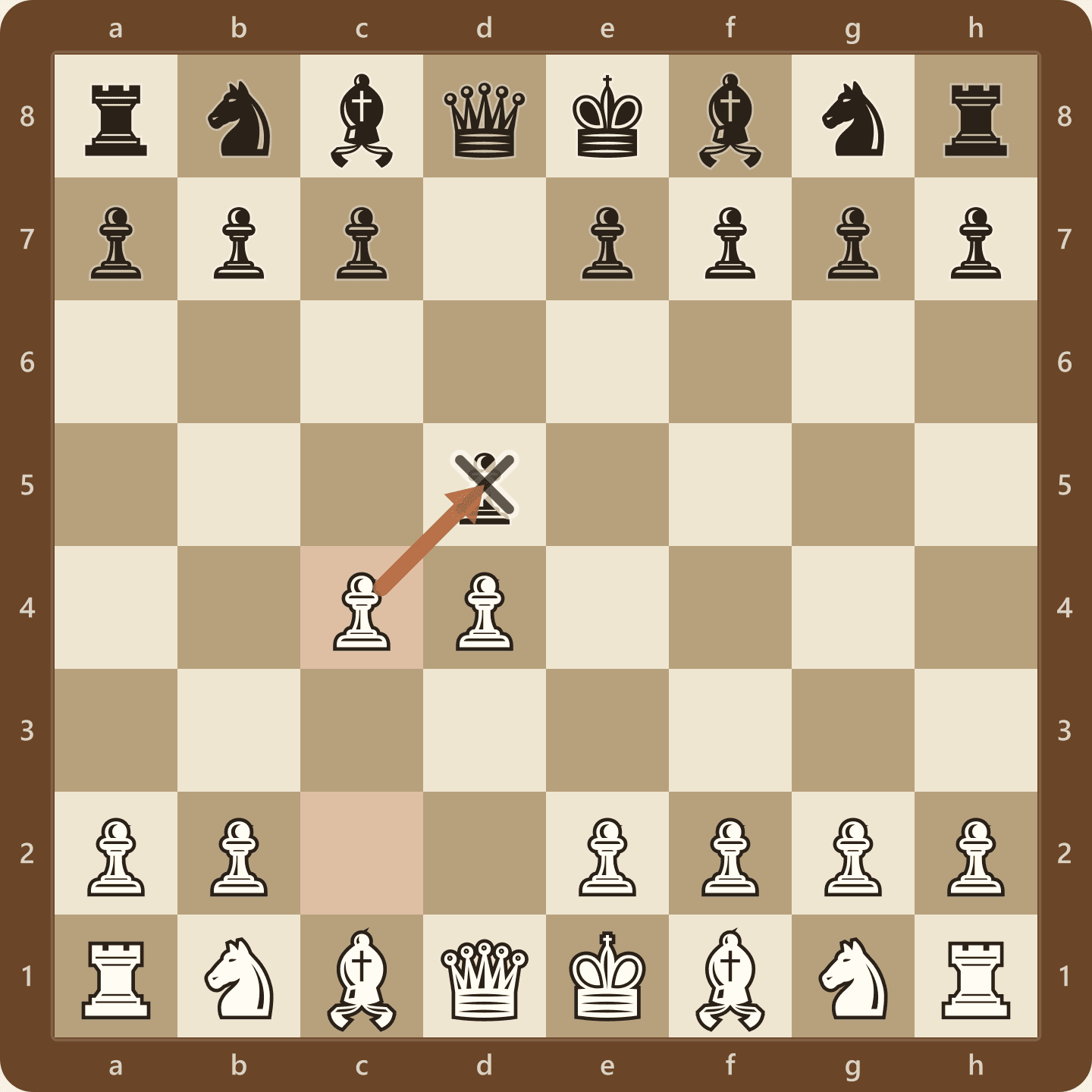
The Queen's Gambit grades S at 600 (0.553, 77,143 games) and A at 1000, 1400 and 1800, scoring 53.34% at the 1000 band across 455,625 games. If your opponent takes the pawn, you are in the best position on this page: the Queen's Gambit Accepted grades D for Black in all four bands, and White's 3.e3 follow-up scores an S grade of 0.586 at 1000 across 36,451 games. If your opponent declines with 2...e6 and you answer 3.Nc3, White scores 0.541 (53,005 games).
The London System, and the Jobava
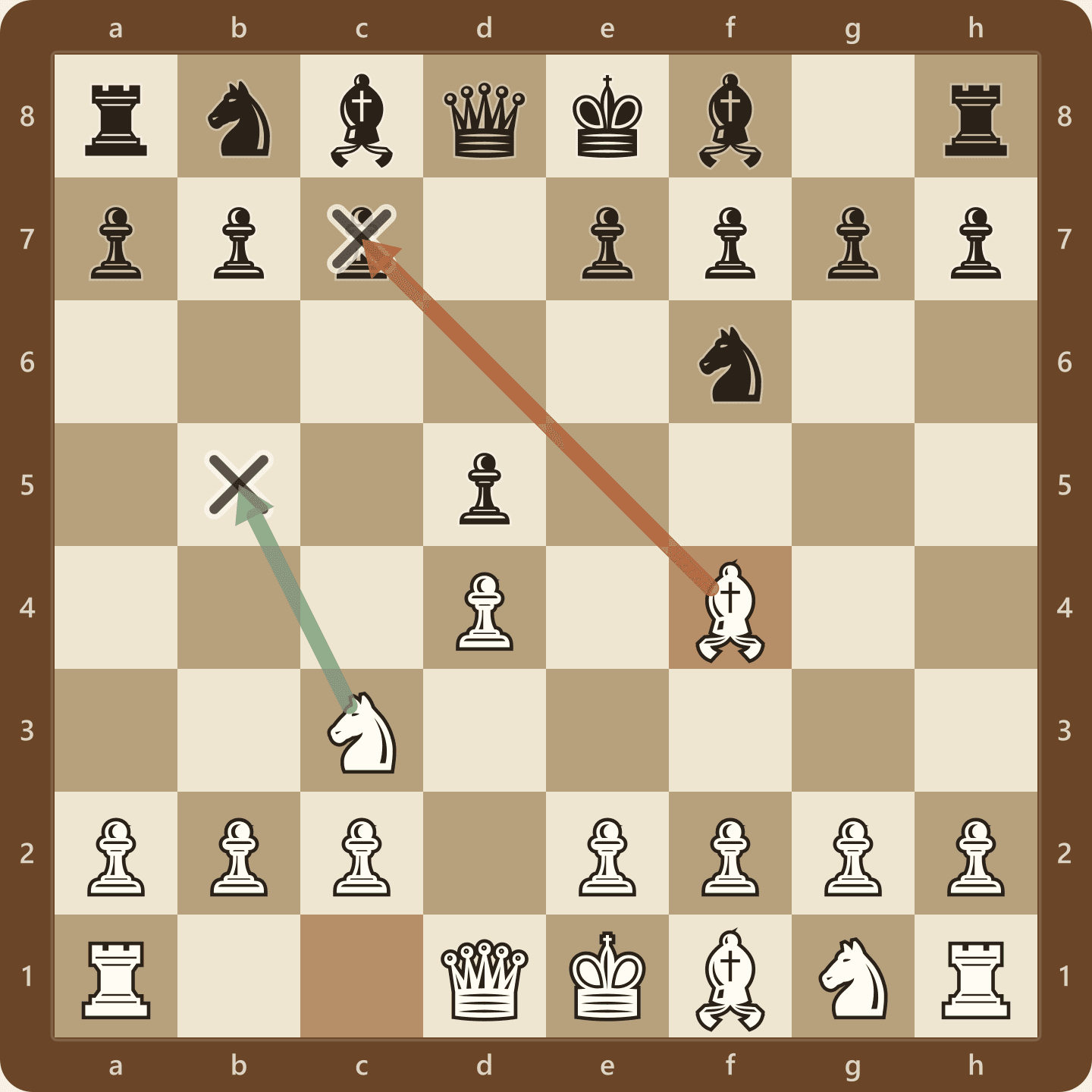
The London System at 0.542 (2.Bf4 move order, 438,927 games at 1000) is genuinely strong low down and progressively less so up high, falling to a C grade at 1800 in its strict 3.Bf4 form. The Jobava London (2.Nc3 Nf6 3.Bf4) actually outscores it: 0.553 at 600 and 0.551 at 1000 across 60,731 games.
The Colle System is the weakest of the three, grading C at 600, 1000 and 1800 and never clearing 0.519. The Trompowsky Attack sits at 0.498 at 1000 across 13,476 games, a C grade, and only becomes respectable at 1400 and above. Both are widely recommended as "easy systems for White" and neither is supported by the numbers at the ratings that recommendation targets.
Flank openings
The English Opening improves every band, from 0.505 at 600 to 0.530 at 1800, and its main branch 1.c4 e5 2.Nc3 does better still: 0.533 at 1000 across 63,473 games, rising to 0.540 at 1800. The Réti Opening (1.Nf3 d5 2.c4) reaches an A grade at 1800 (0.552, 41,177 games) but has only 11,305 games at 1000, so treat its low-band figures as provisional. The King's Indian Attack (1.Nf3 d5 2.g3) is similar: 0.517 at 1000 across 22,828 games, A grade at 1800.
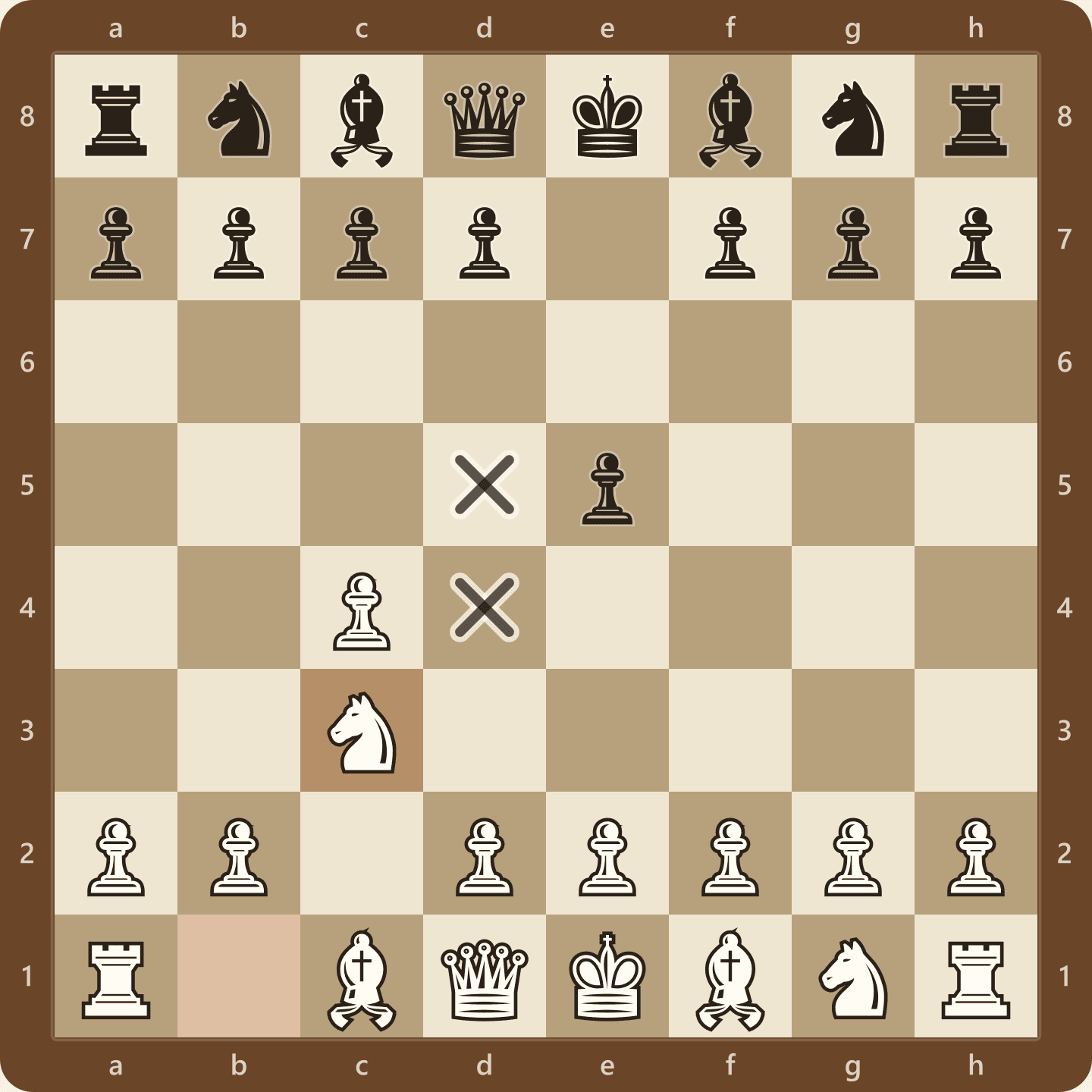
What to play against each Black defense
This is the part most White repertoire guides get wrong, because the popular anti-Sicilian is also the worst one in the data.
| Black plays | Best-scoring White reply | 1000 band | 1800 band | Avoid | 1000 band |
|---|---|---|---|---|---|
| Sicilian (1...c5) | 2.d4 cxd4 3.c3 (Smith-Morra) | 0.518 A (12,427) | 0.521 A (104,990) | 2.Bc4 (Bowdler) | 0.473 C (146,640) |
| Sicilian, slower option | 2.c3 (Alapin) | 0.516 B (37,465) | 0.516 B (191,864) | 2.Nc3 (Closed) | 0.482 C (69,437) |
| Sicilian, main road | 2.Nf3 Nc6 3.d4 (Open) | 0.517 B (54,581) | 0.510 A (288,986) | 2.f4 (McDonnell) | 0.495 B (24,482) |
| Caro-Kann (1...c6) | 2.d4 d5 3.Nc3 | 0.529 B (56,592) | 0.530 B (146,633) | 2.Bc4 (Hillbilly) | 0.453 C (73,277) |
| Caro-Kann, alternative | 2.d4 (any main line) | 0.513 A (259,700) | 0.512 B (631,289) | 3.e5 (Advance) | 0.508 C (133,351) |
| French (1...e6) | 2.d4 d5 3.exd5 (Exchange) | 0.512 C (45,851) | 0.499 C (183,245) | 2.d3 (King's Indian Attack) | 0.484 C (20,723) |
| French, alternative | 2.d4 (any main line) | 0.510 B (308,923) | 0.507 B (736,226) | 3.e5 (Advance) | 0.492 B (130,608) |
| Pirc (1...d6) | 2.d4 | 0.516 B (145,937) | 0.510 B (299,093) | n/a | n/a |
| Scandinavian (1...d5) | 2.exd5 main lines | see note | see note | 2.Nf3 (Tennison Gambit) | 0.485 C (80,706) |
| Indian (1...Nf6) | 2.c4 | 0.517 B (88,164) | 0.507 B (486,110) | 2.Bg5 (Trompowsky) | 0.498 C (13,476) |
| King's Indian setup | 2.c4 g6 3.Nc3 | 0.496 C (19,382) | 0.500 C (124,899) | n/a | n/a |
Three things worth saying out loud.
Stop playing 2.Bc4 against the Sicilian. The Bowdler Attack is the most popular amateur anti-Sicilian on the board (146,640 games at the 1000 band) and it grades C, at 0.473. That is worse than the average White score by more than four points. The Alapin at 0.516 and the Smith-Morra at 0.518 are both available for about the same amount of study.
The same mistake repeats against the Caro-Kann. 2.Bc4, the Hillbilly Attack, grades 0.453 at 1000 across 73,277 games, the worst figure in this entire article. Meanwhile 2.d4 d5 3.Nc3 grades 0.529 across 56,592 games. That is a swing of nearly eight points of score for one different move.
The Advance Variation is overrated in both defenses. Against the Caro-Kann, 3.e5 grades C at 1000, 1400 and 1800. Against the French, 3.e5 grades 0.492 at 1000 and worse above it. Both are the lines most commonly taught as "the way to punish" those defenses. See how to beat the Caro-Kann and how to beat the French.
Aggressive openings for White, and beginner-friendly ones
The most aggressive White option with a real sample and a real score is the Vienna Gambit (0.591 at 1000). Behind it: the Scotch Gambit (0.564), the King's Gambit Accepted with 3.Nf3 (0.558) and the 4.Ng5 Two Knights (0.555). The aggressive openings page separates the ones that keep working from the ones that only work because nobody has seen them.
For a genuine first repertoire, the numbers point somewhere quieter. At the 600 band the Queen's Gambit grades S, the Accelerated London A, the Scotch A, the Italian A and the Bishop's Opening A, and all five need less than five moves of preparation. The beginner ranking weights study cost as well as score, which changes the order.
The openings we cannot rank
The Catalan Opening has zero rows in our win-rate dataset at every band. It is in our move database with verified lines, but the explorer sample we ingested never reaches it, so we have no score. The same is true of the Evans Gambit (1.e4 e5 2.Nf3 Nc6 3.Bc4 Bc5 4.b4), the Grand Prix Attack in its named form, the Marshall Attack and the Stonewall.
Those openings are ungraded, which is a different statement from "they are bad". We are not estimating them. A guessed number would be indistinguishable from every other article's guessed number, and the whole reason to read this one is that its figures are checkable.
A softer version of the same problem is thin coverage. Where a line's sample runs to a few thousand games rather than a few hundred thousand, the Wilson lower bound holds its score down on purpose, so its place in our order is a floor rather than a measurement. The Réti at the 1000 band (11,305 games) and the Trompowsky (13,476) are both in that category, and both look considerably better at 1800 where the samples arrive.
Frequently asked questions
What is the best opening for White in chess?
The Scotch Game, at 0.557 Wilson lower bound at the 1000 band across 394,743 games, and top of the mainstream list at 600 and 1400 too. If you want 1.d4 instead, the Queen's Gambit at 0.550. If you want the highest raw number and can accept the small-sample caveat, the Vienna Gambit at 0.591 across 34,510 games.
What was Bobby Fischer's favourite opening as White?
1.e4, and within it the Ruy Lopez. The phrase 'best by test' is attributed to him and it is still repeated in every opening argument on the internet. Our data agrees with him at the 600 band, where 1.e4 leads, and disagrees from 1000 upward, where 1.d4 and 1.c4 both score higher. See Bobby Fischer for the career context, and note that his sample was world-championship chess, not 1,000-rated blitz.
What is the most aggressive opening for White?
By score, the Vienna Gambit (1.e4 e5 2.Nc3 Nf6 3.f4): 58.04% outright wins and a 0.591 Wilson lower bound at the 1000 band across 34,510 games. By popularity among aggressive players, the King's Gambit and the 4.Ng5 Two Knights. The 4.Ng5 line is the one to watch, because it grades S at 600 and 1000 and falls to C by 1800.
What are the best White openings for beginners?
At the 600 band: the Queen's Gambit (0.553, S grade, 77,143 games), the Accelerated London (0.547, 99,835 games), the Scotch (0.546, 75,690 games), the Italian (0.537, 217,726 games) and the Bishop's Opening (0.529, 228,138 games). All five are four moves or fewer of preparation. Garry Kasparov's repertoire is not the model here; the model is an opening you can play correctly without a book.
What is the deadliest chess opening?
For White below 1400, the 4.Ng5 branch of the Two Knights Defense, an S grade at both 600 (0.578, 37,919 games) and 1000 (0.555, 127,363 games). Its edge collapses to a C grade by 1800, which is the honest version of 'deadliest': it is deadly against people who have not met it yet.
Should I play 1.e4 or 1.d4?
1.e4 if you are under about 900 (0.524 at the 600 band, ahead of 1.d4's 0.522) and you want open, tactical games. 1.d4 from 1000 upward, where it leads 0.527 to 0.519 and keeps that lead through 1800. The real argument is preparation load: 1.e4 obliges you to answer six different defenses, 1.d4 lets you play close to the same setup against most of them.