Every list of aggressive chess openings is a list of openings that look aggressive. This one filters them by whether they win. We scored every attacking line across 49.8 million rapid and blitz games from the Lichess open database (May 2026 snapshot), inside four rating bands, and then ran a second filter that almost nobody applies: how often the trap the opening is famous for actually goes off.
The answer to that second question is brutal. Across the 1,193 opening and rating-band rows in our trap dataset, 1,146 of them show a trap hit rate of exactly zero. Only 16 rows have both a non-zero trap rate and 50 or more games behind it. If you are choosing an opening because of a trap you saw in a video, the base rate says the trap will never happen.
Two openings survive both filters comfortably. For White, the Vienna Gambit: 0.591 Wilson lower bound at the 1000 band across 34,510 games, 58.04% outright wins, and it still scores 0.567 at 1800. For Black, the honest answer is that nothing does, and we will show you why.
Two ways an aggressive opening wins, and only one of them lasts
Sound aggression wins because the position it creates is genuinely better: more space, faster development, a real initiative. Its score barely changes as you climb the rating bands, because it was never relying on your opponent's ignorance.
Trap-dependent aggression wins because your opponent walks into something. Its score is high at 600 and 1000 and falls off a cliff by 1800. Both kinds are worth playing, but only if you know which one you have bought, because the second kind has a shelf life measured in rating points.
The test is simple and it is the whole method of this page: look at the same opening in all four bands. Everything here is scored as wins plus half of draws from the attacking side's point of view, ranked by Wilson lower bound so a 3,000-game line cannot outrank a 300,000-game one on noise. Bands are 600, 1000, 1400 and 1800, and the 49.8 million games split 4.2 million, 14.1 million, 10.7 million and 20.8 million across them.
The aggression that holds up
| Opening | Side | 600 | 1000 | 1400 | 1800 | Games at 1000 |
|---|---|---|---|---|---|---|
| Queen's Gambit Accepted, 3.e3 (1.d4 d5 2.c4 dxc4 3.e3) | White | 0.558 A | 0.586 S | 0.575 S | 0.572 S | 36,451 |
| Vienna Gambit (1.e4 e5 2.Nc3 Nf6 3.f4) | White | 0.584 S | 0.591 A | 0.583 B | 0.567 B | 34,510 |
| Italian Center Attack (4.c3 Nf6 5.d4) | White | 0.563 A | 0.565 B | 0.558 B | 0.552 B | 22,768 |
| Scotch Gambit (3.d4 exd4 4.Bc4) | White | 0.545 B | 0.564 A | 0.560 A | 0.550 A | 50,294 |
| King's Gambit Accepted, 3.Nf3 | White | 0.545 A | 0.558 A | 0.552 A | 0.527 B | 61,167 |
| Danish Gambit (2.d4 exd4 3.c3) | White | 0.514 A | 0.550 A | 0.559 A | 0.558 A | 44,295 |
| King's Gambit (1.e4 e5 2.f4) | White | 0.522 B | 0.548 A | 0.546 B | 0.529 B | 164,805 |
| Smith-Morra Gambit (2.d4 cxd4 3.c3) | White | thin sample | 0.518 A | 0.517 A | 0.521 A | 12,427 |
| Blackmar-Diemer Gambit (1.d4 d5 2.e4) | White | 0.460 D | 0.507 B | 0.528 B | 0.535 B | 69,221 |
The Queen's Gambit Accepted, from White's side
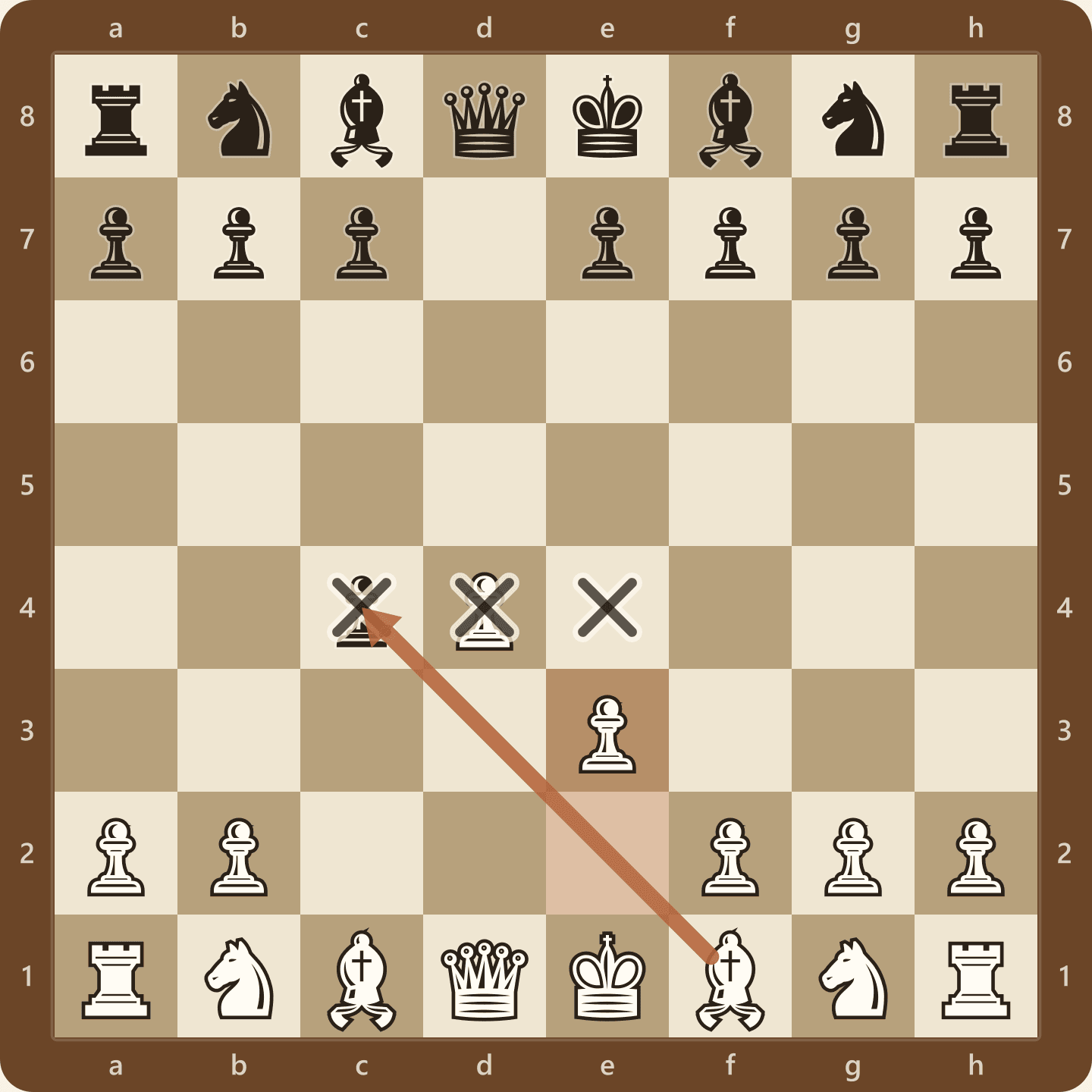
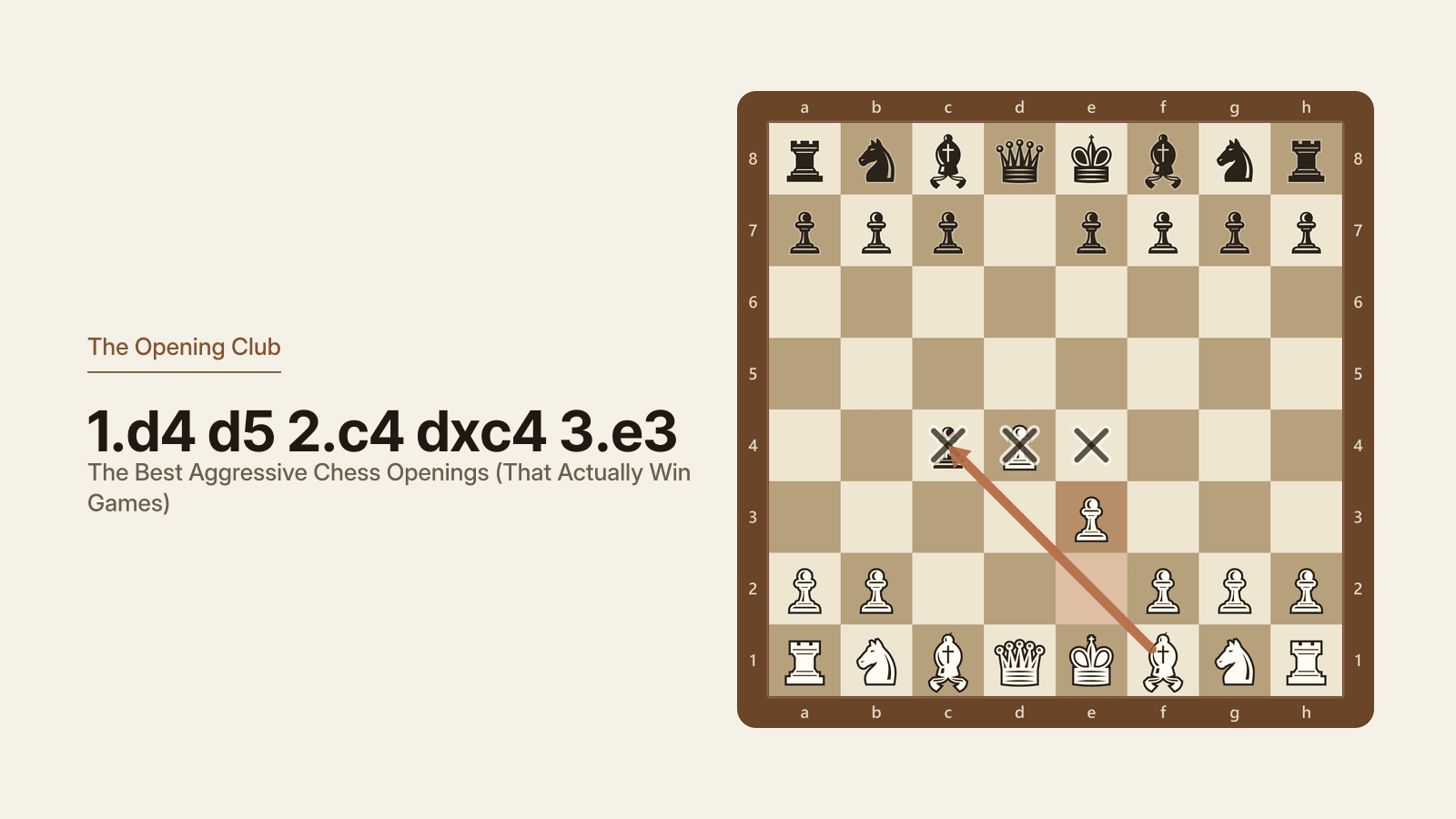
The highest-scoring attacking line in the entire dataset is not a gambit that anyone calls aggressive. When Black takes on c4 and White replies 3.e3, White grades S at 1000, 1400 and 1800 and scores 0.586 at the 1000 band across 36,451 games. Black keeps the pawn for a few moves and gives up the centre permanently.
This one is sound aggression by definition: its score is essentially flat from 1000 to 1800. If you want an attacking weapon that does not expire, this is it, and the price of admission is playing 1.d4. Details on the Queen's Gambit Accepted page.
The Vienna Gambit
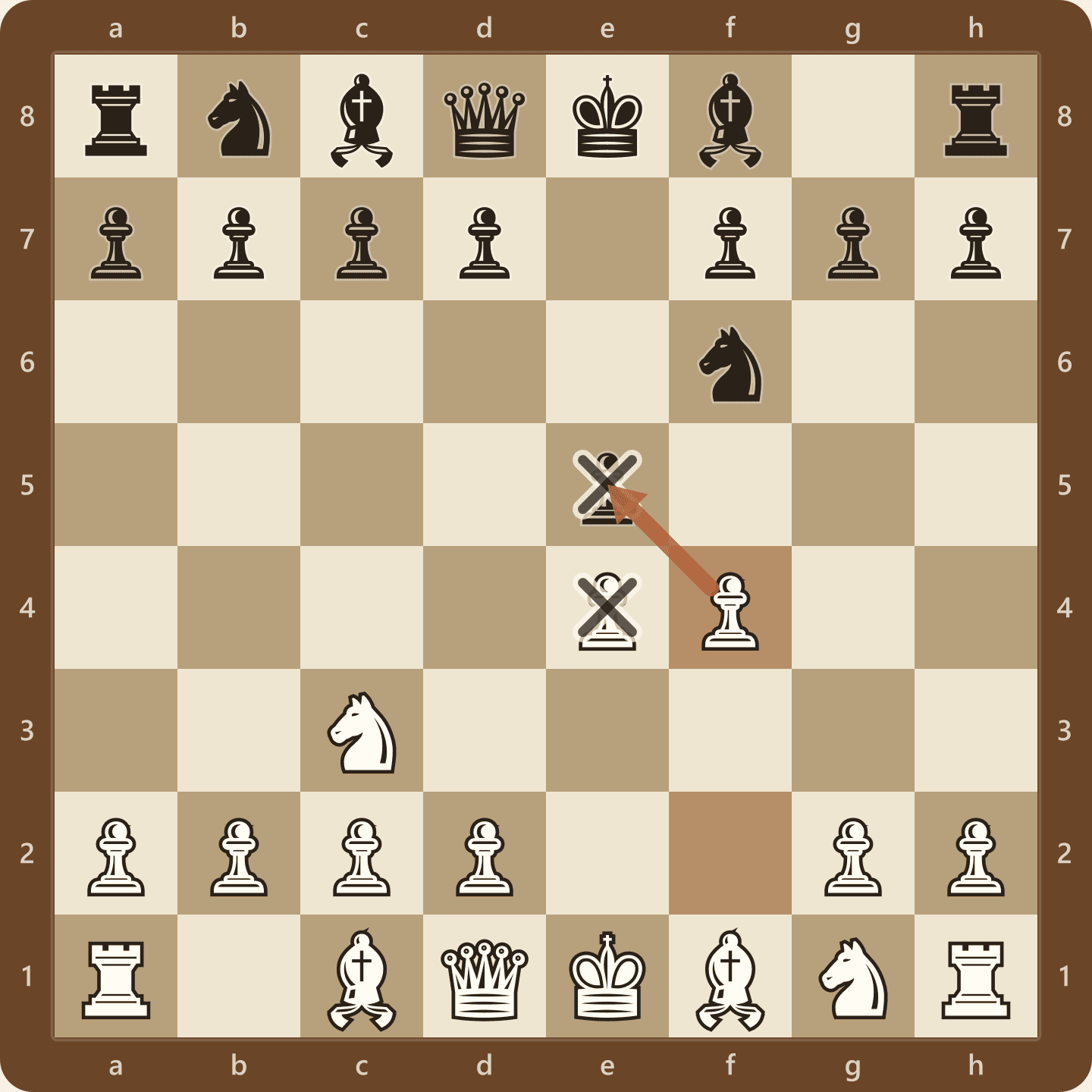
The Vienna Gambit is a King's Gambit with the knight already on c3, which is exactly the improvement it sounds like. It grades S at 600 and scores 0.591 at 1000, the highest 1.e4 figure on this page. Unlike almost every other line here, it is still scoring 0.567 at 1800.
One caveat, and we would rather give it than have you find out yourself. The Vienna Gambit appears in 0.24% of games at the 1000 band. Almost nobody plays it by accident, so the people producing that 58% chose it and studied it, and their opponents mostly have not seen it. The Wilson bound corrects for sample size, not for who is at the board. Treat 0.591 as the ceiling of what switching gets you.
The Scotch Gambit, the Danish and the King's Gambit
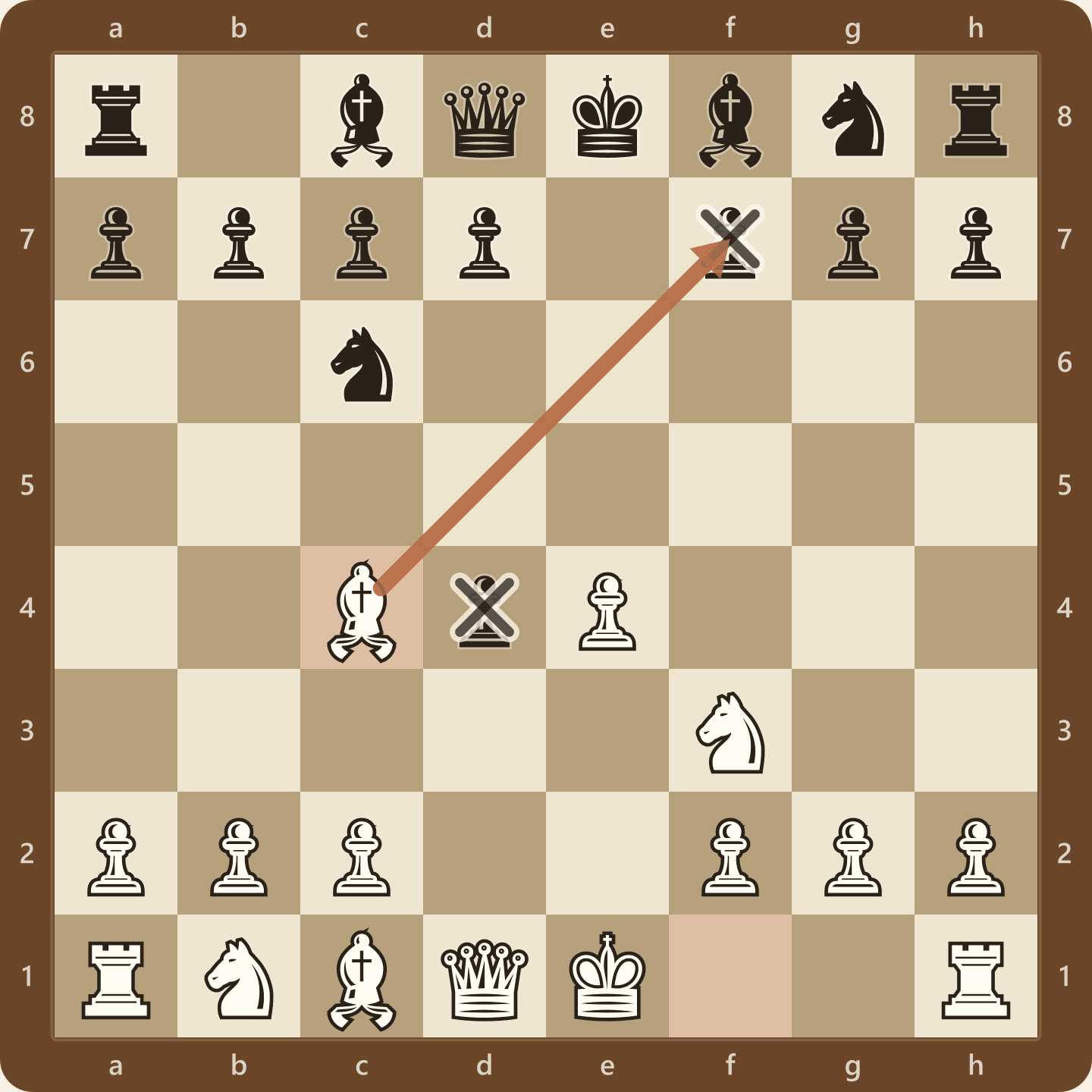
The Scotch Gambit is the best-behaved attacking opening after 1.e4: an A grade at 1000, 1400 and 1800, scoring 0.564, 0.560 and 0.550. Nothing else in the attacking set is that stable. See the Scotch Game page.
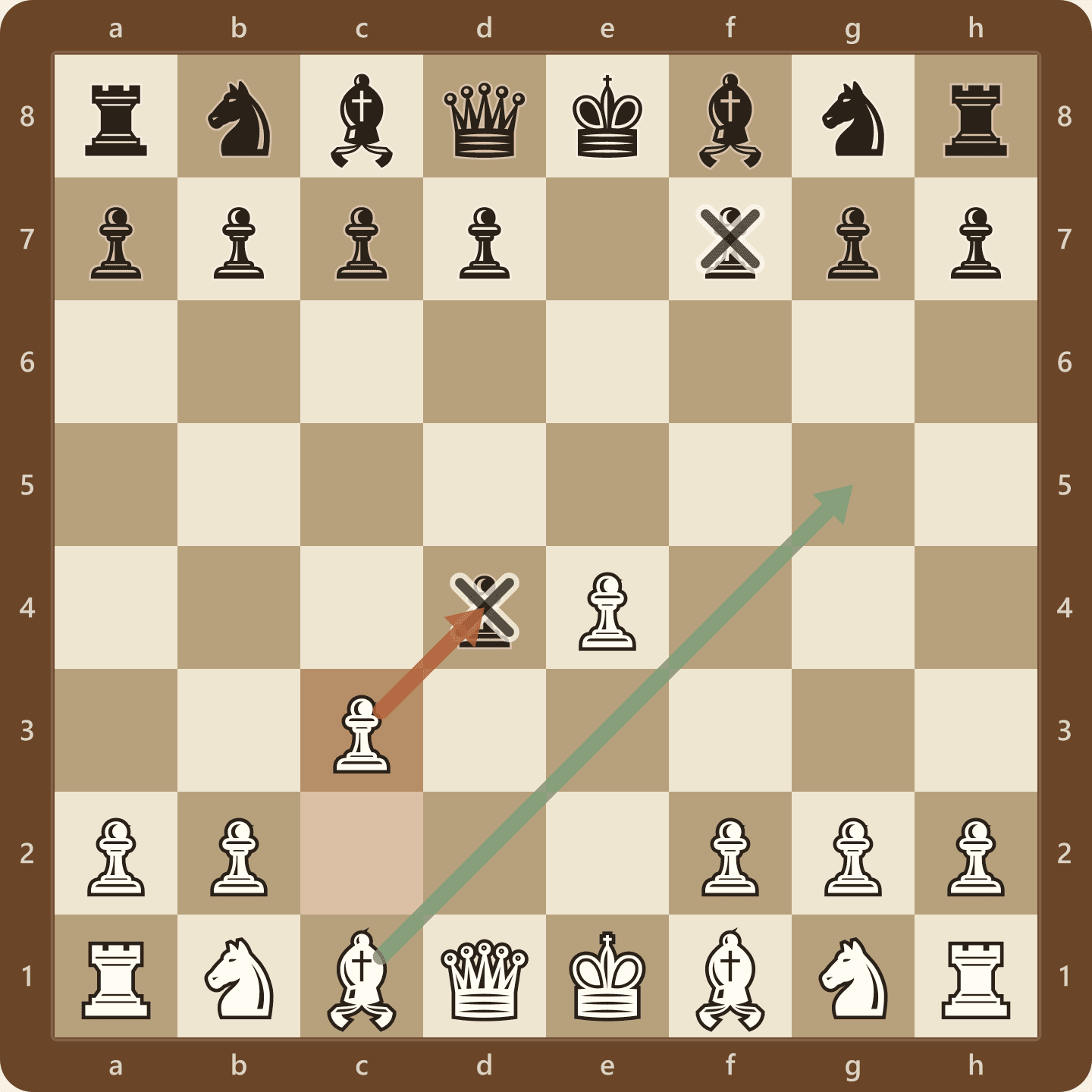
The Danish Gambit is the rarest good news on this page: an A grade in all four bands, and it improves with rating, from 0.514 at 600 to 0.558 at 1800. Black's most natural reply, taking the second pawn with 3...dxc3, grades D for Black in all three bands where it has a sample.
The King's Gambit is the opening most people mean by "aggressive", and it earns most of its reputation. Boris Spassky famously beat Bobby Fischer with it, and it grades A at 1000 (0.548, 164,805 games). Accepted with 2...exf4 3.Nf3, White scores 0.558 across 61,167 games, an A grade at 600, 1000 and 1400. It does slip to B at 1800, which is the first hint of the pattern the next section is about.
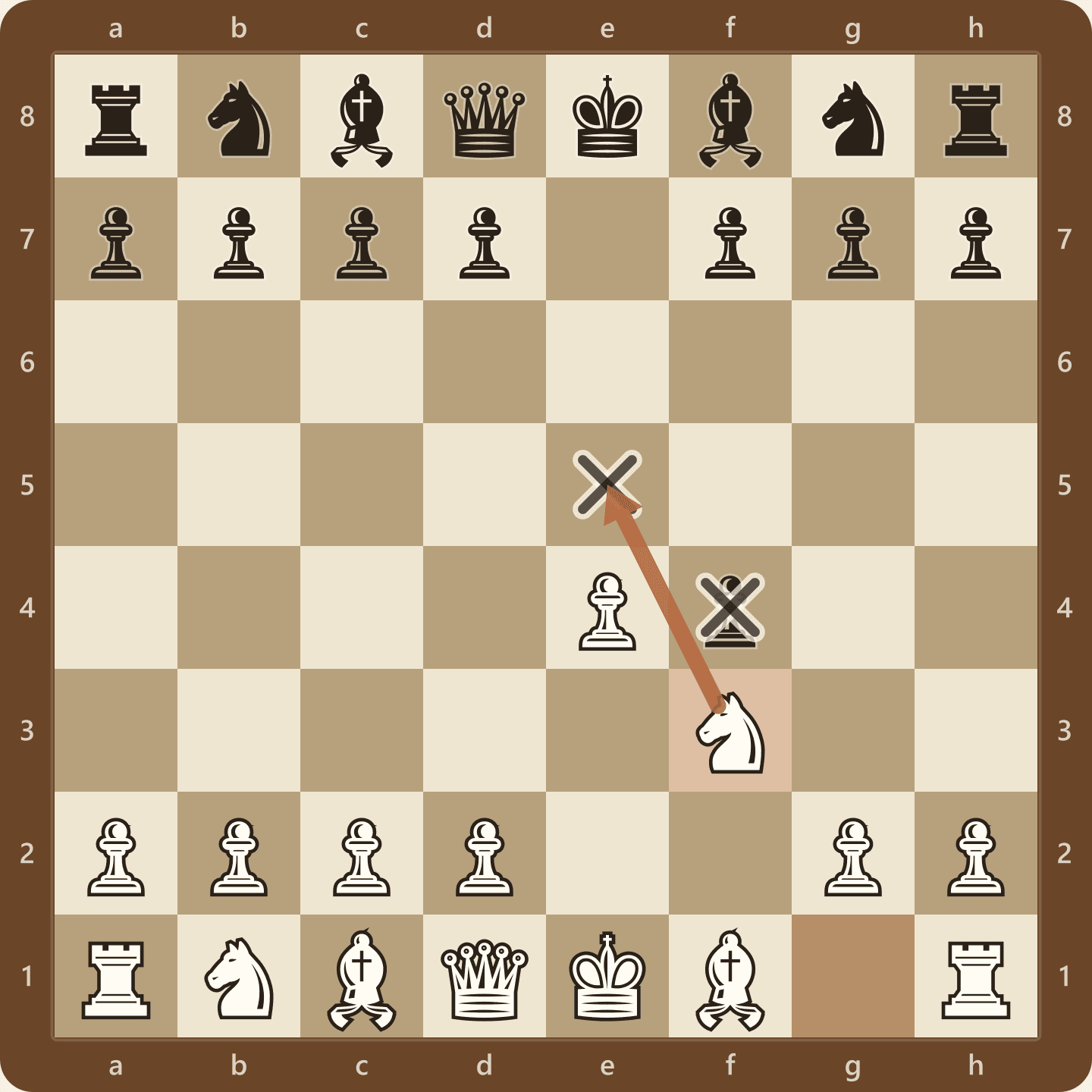
The Smith-Morra Gambit deserves a line of its own because it is the standard recommendation for attacking the Sicilian Defense and the data mostly agrees, in a specific form. Played through to 2.d4 cxd4 3.c3 it grades A at 1000, 1400 and 1800 (0.518, 0.517, 0.521). Taken as the whole 2.d4 move (90,636 games at 1000) it is only 0.491, because a lot of those games never get to the gambit. See the Smith-Morra Gambit page.
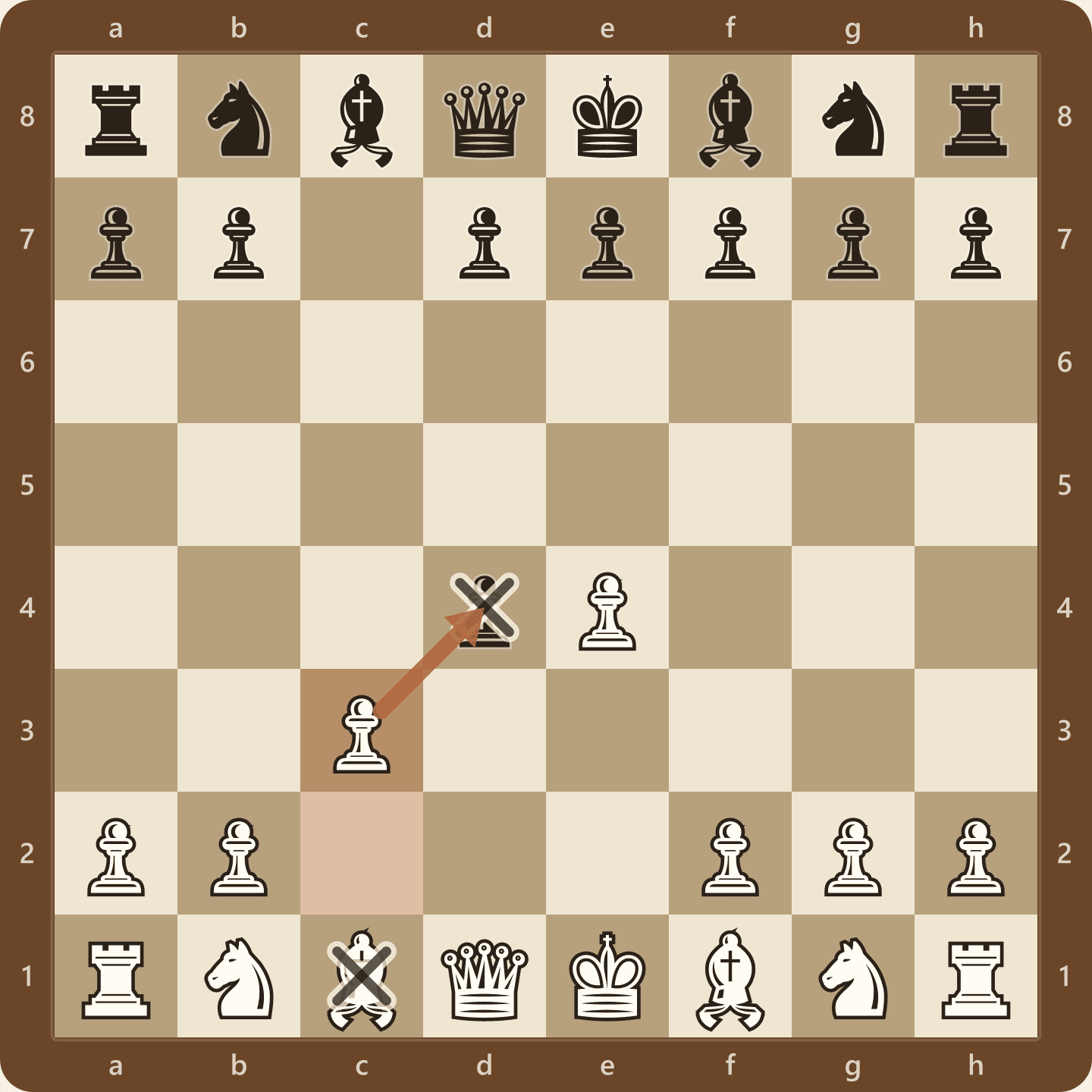
The aggression that expires
| Opening | Side | 600 | 1000 | 1400 | 1800 | Drop, 600 to 1800 |
|---|---|---|---|---|---|---|
| Two Knights, 4.Ng5 (Fried Liver route) | White | 0.578 S | 0.555 S | 0.528 B | 0.515 C | -0.063 |
| Traxler Counterattack, White's 5.Nxf7 | White | 0.564 A | 0.487 C | 0.478 C | 0.460 C | -0.104 |
| Stafford Gambit Accepted (4.Nxc6 dxc6) | Black | 0.499 B | 0.548 A | 0.540 B | 0.506 C | -0.042 from peak |
| Stafford Gambit (2...Nf6 3.Nxe5 Nc6) | Black | 0.470 C | 0.533 A | 0.524 B | 0.497 C | -0.036 from peak |
| Englund Gambit, main line (3...Qe7) | Black | 0.514 C | 0.527 A | 0.501 B | 0.474 C | -0.053 from peak |
| Blackburne-Kostić Gambit (3...Nd4) | Black | 0.509 C | 0.529 C | 0.513 C | 0.489 D | -0.040 from peak |
| Damiano Defense (2...f6) | Black | 0.418 D | 0.398 D | 0.374 D | 0.378 D | never worked |
The Fried Liver, and what happens to it
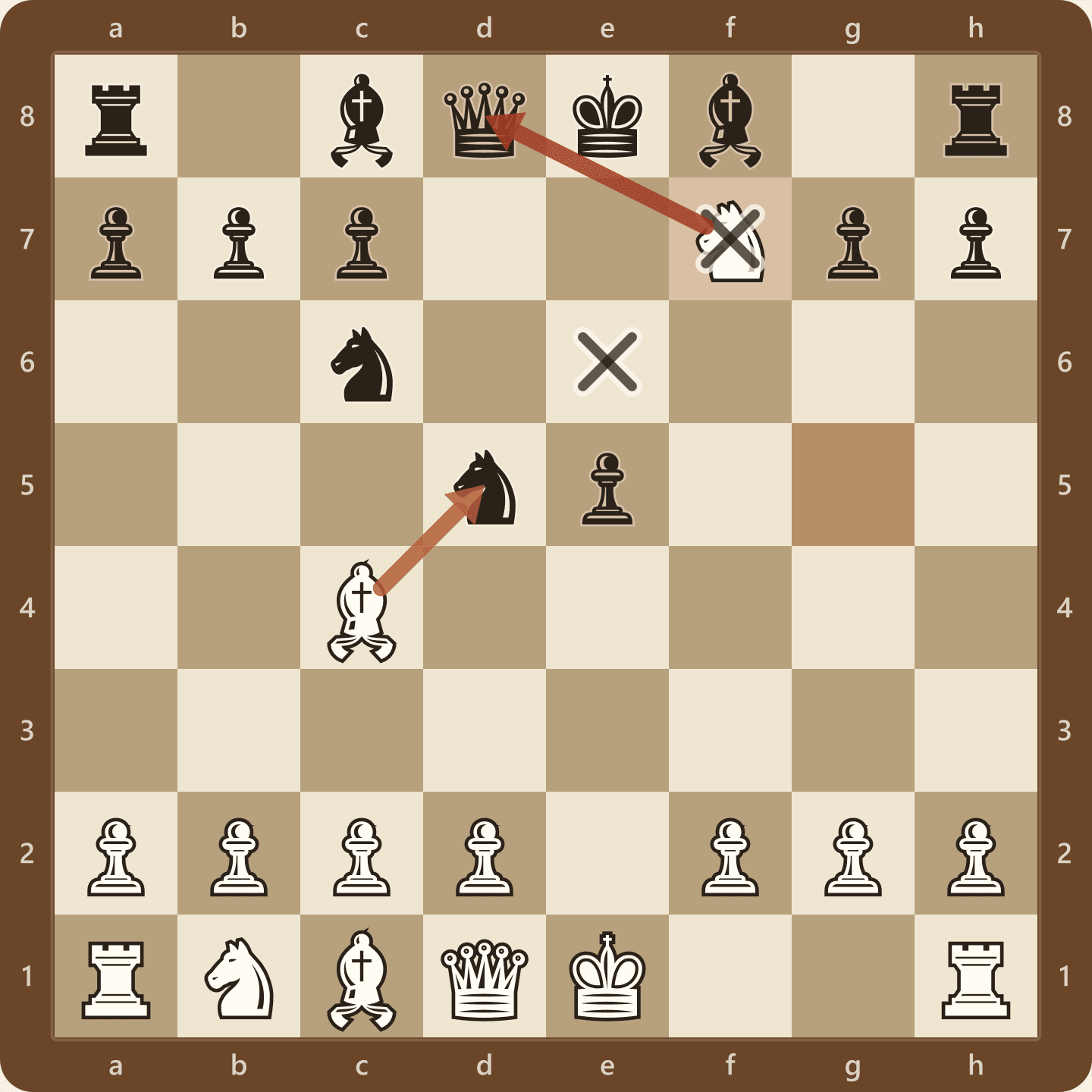
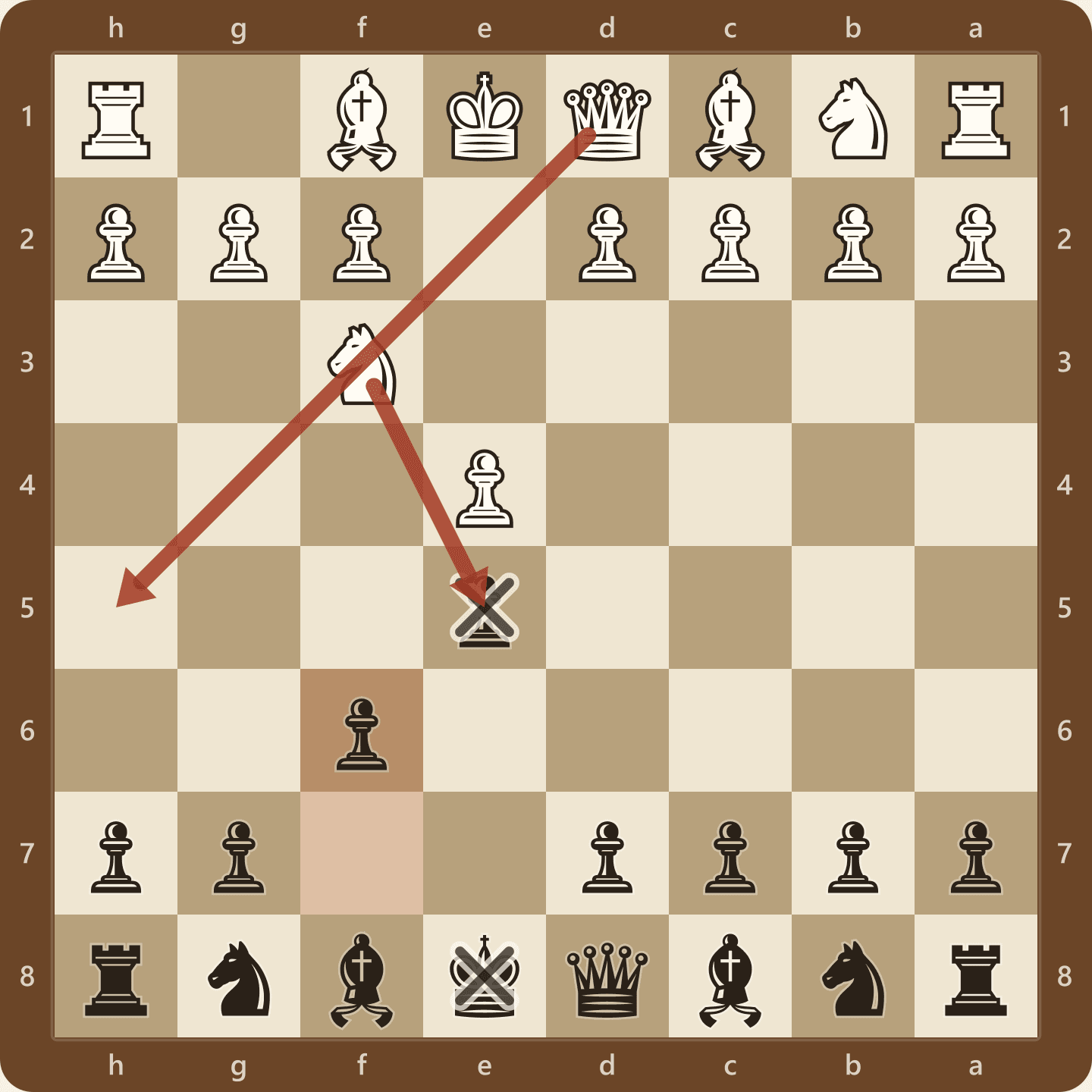
The Fried Liver Attack is the internet's favourite aggressive opening and the clearest case study on this page. Its gateway, 4.Ng5, grades S at 600 (0.578) and S at 1000 (0.555), then B at 1400 and C at 1800 (0.515). That is a 0.063 drop, the second largest on this page, and every point of it is the opponent learning one thing.
Here is the trap rate that goes with it. In the position after 4...d5, our blunder dataset records a trap hit rate of 0.63 at the 1000 band, across 92 games. That is easily the highest trap rate we measure, and it is also based on 92 games, so treat the exact number as indicative and the ordering as reliable. It is the reason the line works down low: the trap genuinely fires.
The Traxler Counterattack is Black's aggressive answer, and White's 5.Nxf7 into it is where the decay is starkest: 0.564 for White at the 600 band and 0.460 by 1800, a drop of 0.104, the largest on this page.
The Stafford Gambit
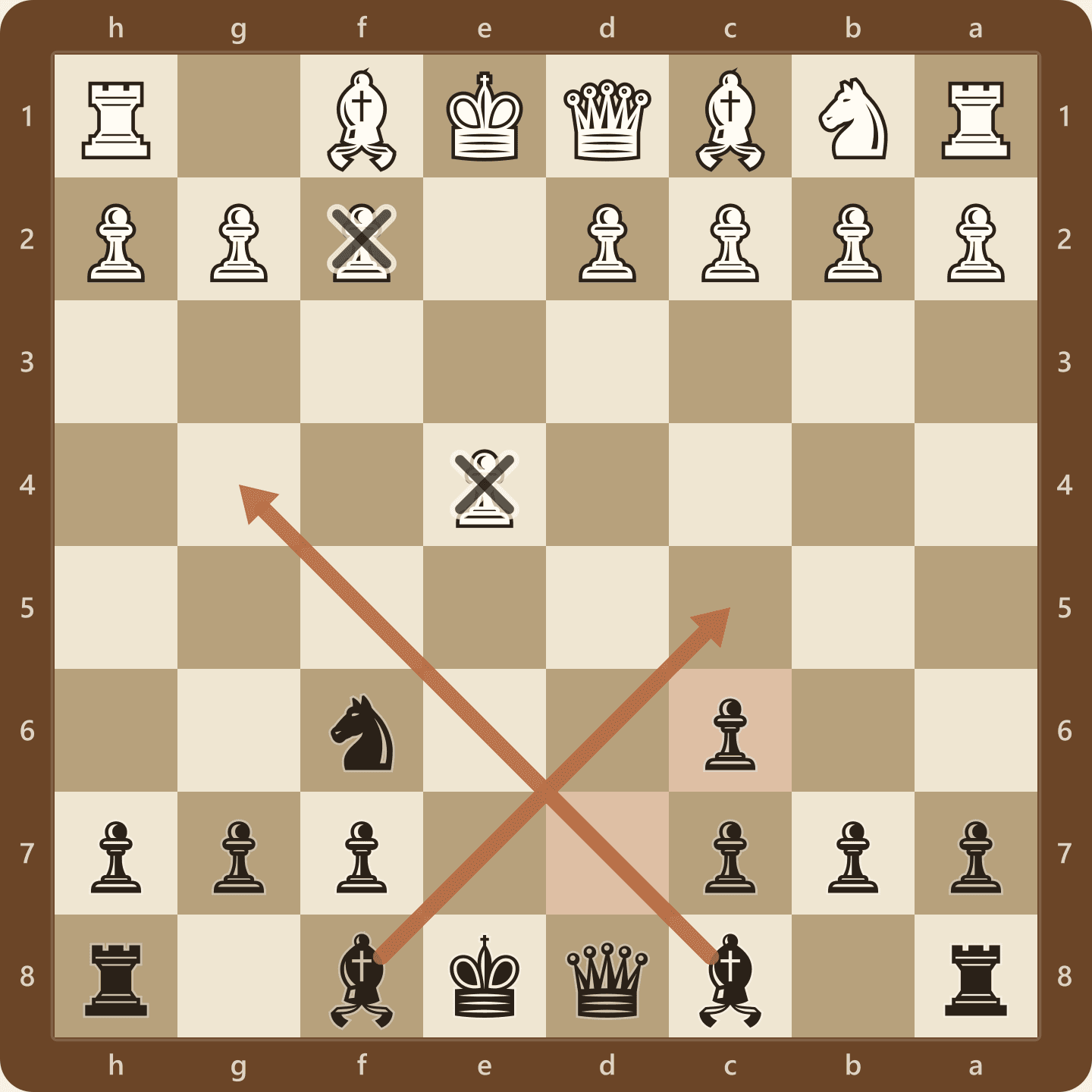
The Stafford Gambit is the best aggressive option Black has, and it is textbook trap-dependent. Once White accepts with 4.Nxc6 dxc6, Black grades A at 1000 (0.548 across 20,426 games) and C at 1800 (0.506). At the 600 band it is only 0.499, which is the other end of the same story: at 600 nobody plays the accurate White moves that make the traps available either.
That is the honest shape of the Stafford. It works in a rating window, roughly 900 to 1500, and outside it in both directions it is just a pawn down.
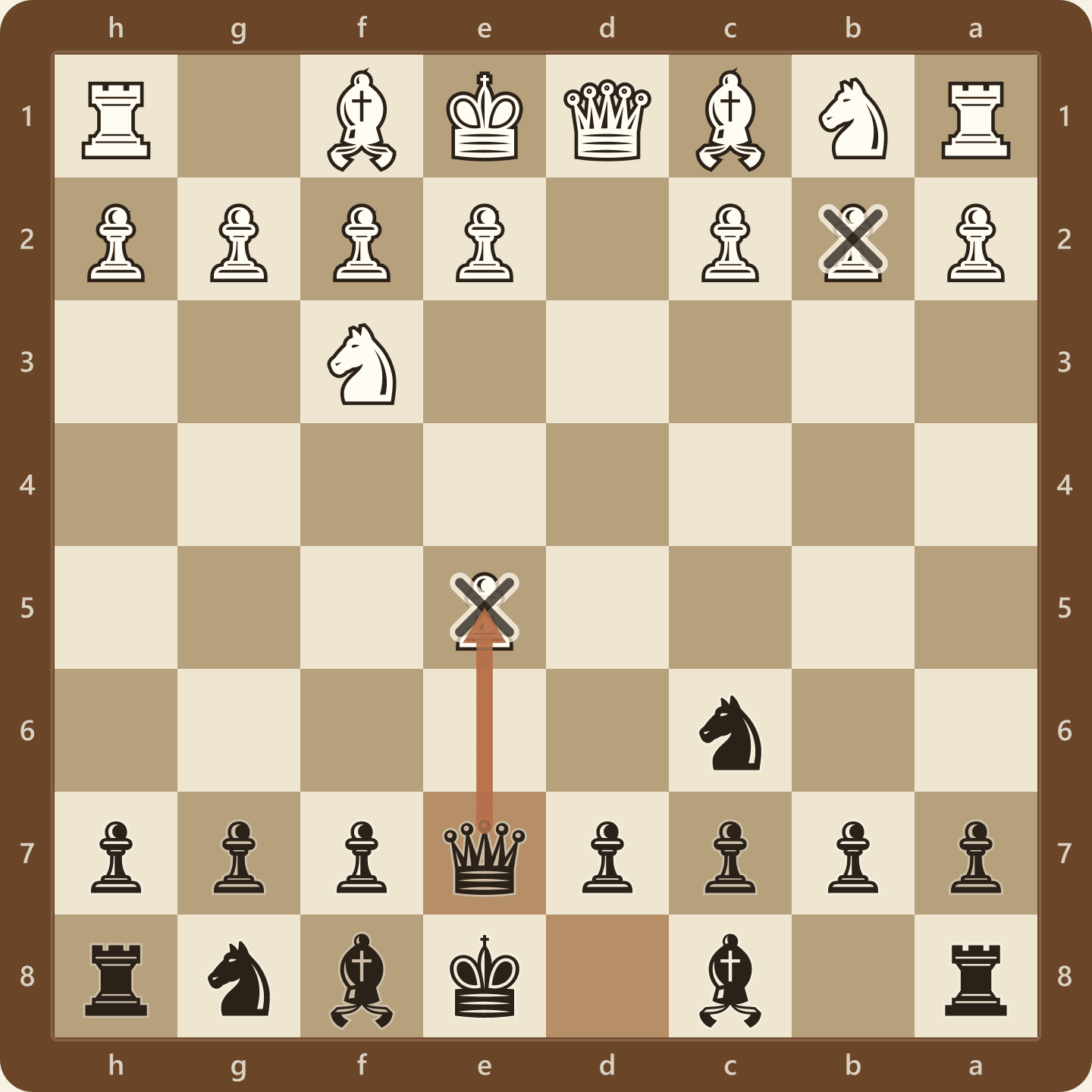
The Englund Gambit main line is the same pattern against 1.d4: an A grade at 1000 (0.527 across 30,834 games) collapsing to C at 1800 (0.474). Its trap rate is the interesting part, and it runs the wrong way: 0.14 at the 1000 band (50 games) but 0.33 at 1800 (92 games). Stronger opponents fall into the b2 trap more often, and still beat you, because the trap is a two-move flurry inside a position where Black is simply worse.
What a trap hit rate really tells you
This is where most aggressive-opening advice quietly falls apart, so here is the number laid out plainly.
Our trap data is a companion dataset (mat-swing-v1 methodology, July 2026, roughly 97,740 games in total against 49.8 million for the win rates, so it is much thinner and we treat it as such). Two limits before the numbers. The per-line cells are small, a median of about 40 games, which is why we quote the sample beside every rate and lean on the ordering rather than the exact value. And trap positions sit deeper in a line than ordinary ones by construction, so a raw comparison of trap rates across lines of different depth would be measuring depth as much as danger. The dataset-level facts below do not have that problem, which is why they are the ones we lead with. Across all 1,193 opening and band rows:
- 1,146 rows show a trap hit rate of exactly zero. The trap never fires, not once, in any of the games we sampled for that line and band.
- Only 47 rows are non-zero at all, and only 16 of those have 50 or more games behind them.
- Band averages run from about 0.9% at 600 and 1000 to 1.7% at 1800.
For comparison, the Bishop's Opening (1.e4 e5 2.Bc4), which sits behind Scholar's Mate and half the f7 traps ever posted, records a trap rate of 0.0034 at the 1000 band across 594 games. Three games in a thousand.
A low trap hit rate is not a knock on the opening. It is a statement about what you are actually buying: the trap is a lottery ticket, and the opening has to be good enough to play when the ticket loses. That is exactly why the Vienna Gambit, the Scotch Gambit and the Danish belong at the top of this page and the Damiano Defense (1.e4 e5 2.Nf3 f6, a 0.398 D grade at the 1000 band across 56,331 games, the worst mainstream figure we have) belongs nowhere.
Aggressive openings we cannot grade
Four staples of every "most aggressive openings" list have no rows at all in our win-rate dataset, at any rating band: the Evans Gambit (1.e4 e5 2.Nf3 Nc6 3.Bc4 Bc5 4.b4), the Grand Prix Attack in its named form, the Latvian Gambit (1.e4 e5 2.Nf3 f5), the Icelandic Gambit and the Marshall Attack. They exist in our move database with verified lines, but the explorer sample we ingested never reaches them, so we have no score and we are not estimating one. Ungraded is not the same as bad.
Two more figures we chose not to publish. The Traxler position after 5.Nxf7 reports a trap hit rate of 1.00 in our data, which is an artefact of that position being registered as a trap rather than a measurement of how often anybody falls for it. And the Smith-Morra at the 600 band rests on 627 games, which is not enough to separate it from noise, so the table above says "thin sample" rather than a number.
The closest thing to a Grand Prix Attack we can grade is the McDonnell Attack (1.e4 c5 2.f4), and it does not support the reputation: 0.495 at the 1000 band across 24,482 games, and a D grade at 600. The Bird's Opening (1.f4) is in similar shape, 0.506 at 1000 but a C grade at 600 across 30,145 games. Aggression that starts by moving the f pawn on move one is not, on this evidence, aggression that wins.
Aggressive openings for Black
Black's problem is structural. Attacking with the second move means attacking without a tempo, so every genuinely aggressive Black line in our data is trap-dependent and every one of them decays. The Sicilian Defense is the exception that proves it: it is Black's best-scoring reply to 1.e4 at 600, 1000 and 1400, and it is aggressive in the sense that matters, producing the lowest draw rate of the major defenses (3.34% at the 1000 band). It does not decay because it is not a trap.
The sharp Sicilian branches are thin below 1400 and we say so: the Dragon Variation has 3,312 games at the 1000 band and the Najdorf Variation 5,223, which is why the Wilson bound holds both down there. At 1800 they grade 0.505 and 0.501 respectively, on samples of 26,111 and 70,702. See the Sicilian Dragon and the Najdorf.
Two more Black options that get recommended as aggressive and do not earn it: the Dutch Defense (1...f5) grades D at 1000 and never clears 0.478, and Alekhine's Defense grades C at 600, 1000 and 1400, only reaching a B at 1800. The King's Indian Defense is too rare below 1400 to grade honestly, with 11,111 games at the 1000 band and 788 at 600.
Frequently asked questions
What is the most aggressive chess opening?
By score, the Vienna Gambit (1.e4 e5 2.Nc3 Nf6 3.f4): 58.04% outright wins and a 0.591 Wilson lower bound at the 1000 band across 34,510 games, still 0.567 at 1800. By reputation, the King's Gambit and the Fried Liver Attack. The difference matters: the Vienna Gambit keeps working as you climb and the 4.Ng5 Fried Liver route falls from an S grade at 600 to a C grade at 1800.
What are the best aggressive chess openings for White?
In order of Wilson lower bound at the 1000 band: the Queen's Gambit Accepted with 3.e3 (0.586, 36,451 games, an S grade in three bands), the Vienna Gambit (0.591, 34,510), the Italian Center Attack with 5.d4 (0.565, 22,768), the Scotch Gambit (0.564, 50,294) and the King's Gambit Accepted with 3.Nf3 (0.558, 61,167). The Danish Gambit is the only one that improves at every band.
What are the best aggressive chess openings for Black?
The Stafford Gambit accepted (0.548 at the 1000 band across 20,426 games) and the Englund Gambit main line (0.527 across 30,834). Both grade A at 1000 and C at 1800, so treat them as a weapon for a specific rating window rather than a repertoire. The Sicilian Defense is the only aggressive Black choice in our data that does not decay.
Are aggressive openings good for beginners?
Some are, and the good ones are not the famous ones. At the 600 band the Vienna Gambit grades S (0.584), the 4.Ng5 Two Knights grades S (0.578, 37,919 games) and the King's Gambit Accepted with 3.Nf3 grades A (0.545). Meanwhile the Blackmar-Diemer grades D at 600 (0.460 across 27,577 games) and the Bird's Opening grades C. Aggression is not one thing, and a beginner should pick the ones with a sound follow-up rather than the ones with the best highlight reel.
Do opening traps actually work?
Rarely, and the number is startling. In 1,146 of the 1,193 opening and rating-band rows in our trap dataset, the trap hit rate is exactly zero. Only 16 rows combine a non-zero rate with 50 or more games. The genuine exception is the position after 4.Ng5 d5 in the Two Knights, at 0.63 in the 1000 band across 92 games. Everything else you should treat as a bonus, not a plan.
Which aggressive openings did the great attackers play?
Mikhail Tal and Paul Morphy are the names that come up, and Boris Spassky beat Bobby Fischer with the King's Gambit. That history is real and it is also the wrong input for your decision: Garry Kasparov, Viswanathan Anand, Ian Nepomniachtchi and Magnus Carlsen all attack from positions they have prepared for years. Our data stops at the 1800 band and says nothing about master play. Pick from the first table on this page, which is measured at your rating.